
42.8K+
TRAVEL RECORDS PROCESSED

EaseMyTrip API Scraping for Real-Time Flight Fares, Hotel Rates, Availability, Competitive Pricing, Travel Intelligence, and Analytics
This case study is based on a real-world enterprise travel intelligence scenario where a digital analytics organization needed to collect, normalize, and analyze continuously changing flight and hotel information from a major online travel ecosystem. The objective was to create a structured data layer that could support fare comparison, hotel intelligence, availability monitoring, travel product analytics, and booking strategy optimization.
It is designed for:
EaseMyTrip API Scraping can help organizations convert continuously changing travel information into structured datasets that are easier to monitor, compare, analyze, and integrate into downstream applications. Instead of manually collecting flight and hotel information, organizations can establish automated extraction workflows that capture relevant fields at predefined intervals.
The use case is particularly relevant for businesses that need structured travel intelligence across multiple destinations, booking dates, hotel categories, flight routes, and pricing conditions. By organizing this information into consistent records, analytics teams can identify pricing patterns, availability changes, competitive movements, and customer-facing opportunities more efficiently.
Scrape EaseMyTrip travel API workflows can further support businesses that require systematic access to travel-related information for analytical and operational applications. Such workflows can be designed around required data fields, refresh frequencies, destination coverage, and output formats, allowing enterprises to build datasets that align with their specific travel intelligence requirements.
The client operated in a highly competitive travel technology environment where flight fares, hotel prices, availability, schedules, room categories, and destination information changed frequently. Their existing approach depended on manual monitoring and disconnected data collection processes, creating delays in identifying price movements and inventory changes.
The project focused on building a structured travel data pipeline capable of collecting relevant flight and hotel information, standardizing fields, removing duplicate records, and preparing datasets for analytics and business applications.
The implementation enabled the organization to Extract EaseMyTrip Hotel API information into structured records containing hotel identifiers, destination details, room information, pricing indicators, availability attributes, review signals, and related metadata. This created a consistent foundation for accommodation intelligence and competitive analysis.
A parallel flight data workflow captured route-level information such as origin, destination, departure and arrival details, fare categories, airline information, journey duration, availability indicators, and other relevant travel attributes.
The resulting dataset allowed analysts to compare travel products across destinations and booking windows while reducing the dependence on manual research. Data normalization also made it easier to combine information from different collection cycles and create historical datasets for trend analysis.
The EaseMyTrip Flight API integration guide approach within the project focused on understanding required flight fields, extraction frequency, response structures, validation requirements, and downstream integration needs. Instead of treating extraction as a one-time activity, the team designed the workflow as an ongoing travel intelligence pipeline.
The client faced several operational and analytical challenges while attempting to monitor large volumes of flight and hotel information. Travel inventory changes rapidly, and information that is accurate during one collection cycle can become outdated during another. This created significant difficulties for teams attempting to maintain reliable datasets.
The first challenge was the complexity of collecting flight information across multiple routes and travel dates. Manual collection required teams to repeatedly check origin-destination combinations, departure dates, fare categories, airline details, and availability conditions.
The client also needed to evaluate the B2B travel booking API by EaseMyTrip as part of its broader travel technology intelligence requirements. The objective was to understand how structured travel information could support business applications, booking workflows, partner systems, and analytical processes without creating unnecessary manual dependencies.
Another challenge involved continuously changing prices. Flight fares could vary according to travel date, availability, demand, booking conditions, and other market factors. Hotel rates similarly changed based on room category, occupancy, cancellation terms, destination demand, and inventory availability.
The organization therefore required Real-time travel booking API integration capabilities that could support frequent data refreshes and provide timely information for downstream applications and analytical systems.
Hotel data presented another layer of complexity. A single property could contain multiple room types, occupancy configurations, prices, amenities, ratings, review counts, and availability conditions. Collecting these details consistently required a structured methodology.
The absence of standardized Hotel Data Extraction Services also created difficulties in maintaining comparable accommodation datasets. Different records could contain inconsistent naming conventions, incomplete fields, or duplicated hotel entries.
By implementing an automated travel intelligence pipeline, the client moved away from fragmented manual monitoring toward structured and repeatable data collection.
| Dimension | Manual Travel Monitoring | Client API Scraping System |
|---|---|---|
| Data Collection | Manual searches across routes and properties | Automated collection across defined travel parameters |
| Flight Monitoring | Periodic manual checking | Scheduled route and fare monitoring |
| Hotel Monitoring | Individual property searches | Structured property and room-level extraction |
| Data Freshness | Dependent on analyst activity | Automated refresh cycles |
| Data Structuring | Spreadsheet-based organization | Normalized database-ready records |
| Price Tracking | Manual snapshots | Historical fare and rate comparison |
| Availability | Limited monitoring coverage | Continuous availability tracking |
| Duplicate Handling | Manual review | Automated deduplication |
| Validation | Human quality checks | Rule-based validation workflows |
| Scalability | Limited by team capacity | Expandable across routes and destinations |
| Analytics | Delayed reporting | Analytics-ready structured datasets |
| Integration | Manual file transfers | API-ready and database-ready outputs |
The new pipeline provided a repeatable framework where extraction, cleaning, validation, storage, and reporting could operate as connected stages.
The brand in focus is a travel technology and intelligence organization operating across online flight and hotel ecosystems. Its business model depends on timely travel information that can support pricing analysis, inventory comparison, customer-facing applications, and strategic planning.
As travel markets became increasingly competitive, the organization needed better visibility into changing airfare and accommodation rates. Travelers increasingly compare multiple options before making booking decisions, making accurate and timely travel information an important component of digital travel experiences.
The organization therefore wanted to develop a structured intelligence framework capable of capturing travel information at scale while maintaining consistency across collection cycles.
Its requirements extended beyond simple data collection. The client needed datasets that could be analyzed historically, connected with internal systems, and transformed into useful business indicators.
We delivered an end-to-end travel data extraction framework designed to convert changing flight and hotel information into structured, analytics-ready datasets.
The first stage involved defining the client's data requirements. Required fields were mapped according to the intended analytical use cases, including competitive fare analysis, hotel benchmarking, destination intelligence, inventory monitoring, and travel application development.
The extraction architecture was then configured around selected routes, destinations, travel dates, hotel properties, room categories, and other relevant parameters.
For flight information, the system captured structured attributes such as airline, origin, destination, departure time, arrival time, journey duration, fare information, availability indicators, and applicable travel conditions.
For hotel information, the workflow captured property names, locations, room categories, occupancy details, rates, availability, ratings, review information, amenities, and related metadata.
The project incorporated Hotel Rates and Review Datasets to create structured accommodation intelligence that could support hotel benchmarking, destination comparisons, rate monitoring, and customer behavior analysis.
These datasets could be organized by property, destination, room category, date, rate, rating, and review-related fields, enabling analysts to identify differences between properties and track changes over time.
The solution also incorporated Travel & Tourism App Datasets to support broader travel technology applications. Structured datasets could be prepared for recommendation engines, travel comparison tools, destination discovery applications, market intelligence platforms, and analytical dashboards.
Data cleaning was an important part of the architecture. Duplicate records were identified and removed, inconsistent property names were standardized, missing fields were flagged, and travel locations were normalized.
The first major finding was improved visibility into changing flight prices.
The automated extraction system enabled the client to monitor multiple routes and travel dates without depending entirely on manual searches. By collecting flight information at predefined intervals, analysts could identify price movements and changes in availability more quickly.
The system helped identify routes where fares remained relatively stable and those experiencing significant fluctuations.
This distinction was useful for travel businesses planning pricing strategies, promotional campaigns, and customer recommendations.
Historical flight records also allowed analysts to compare current fares with earlier observations. This created a stronger foundation for understanding pricing behavior across routes and booking periods.
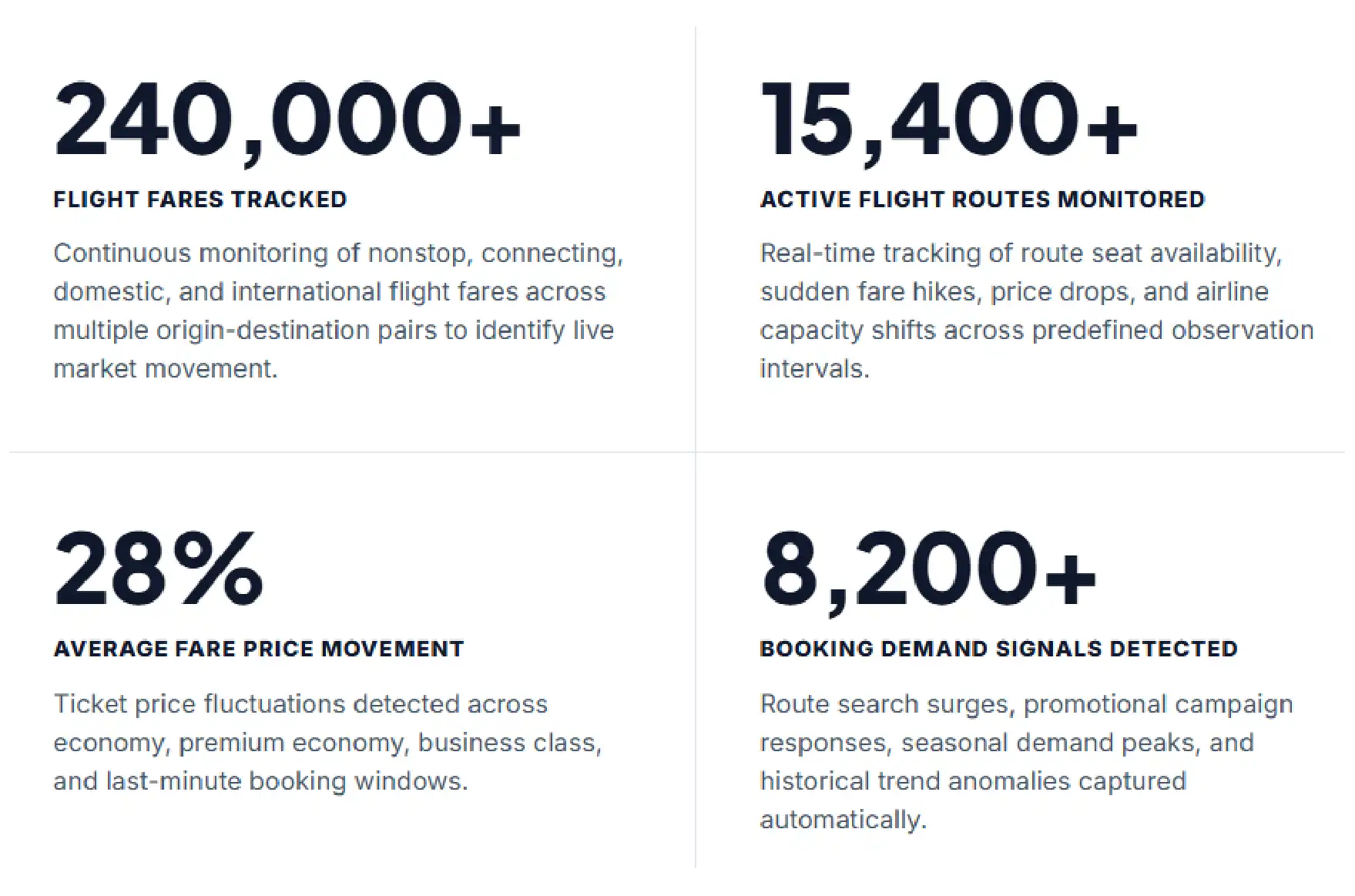
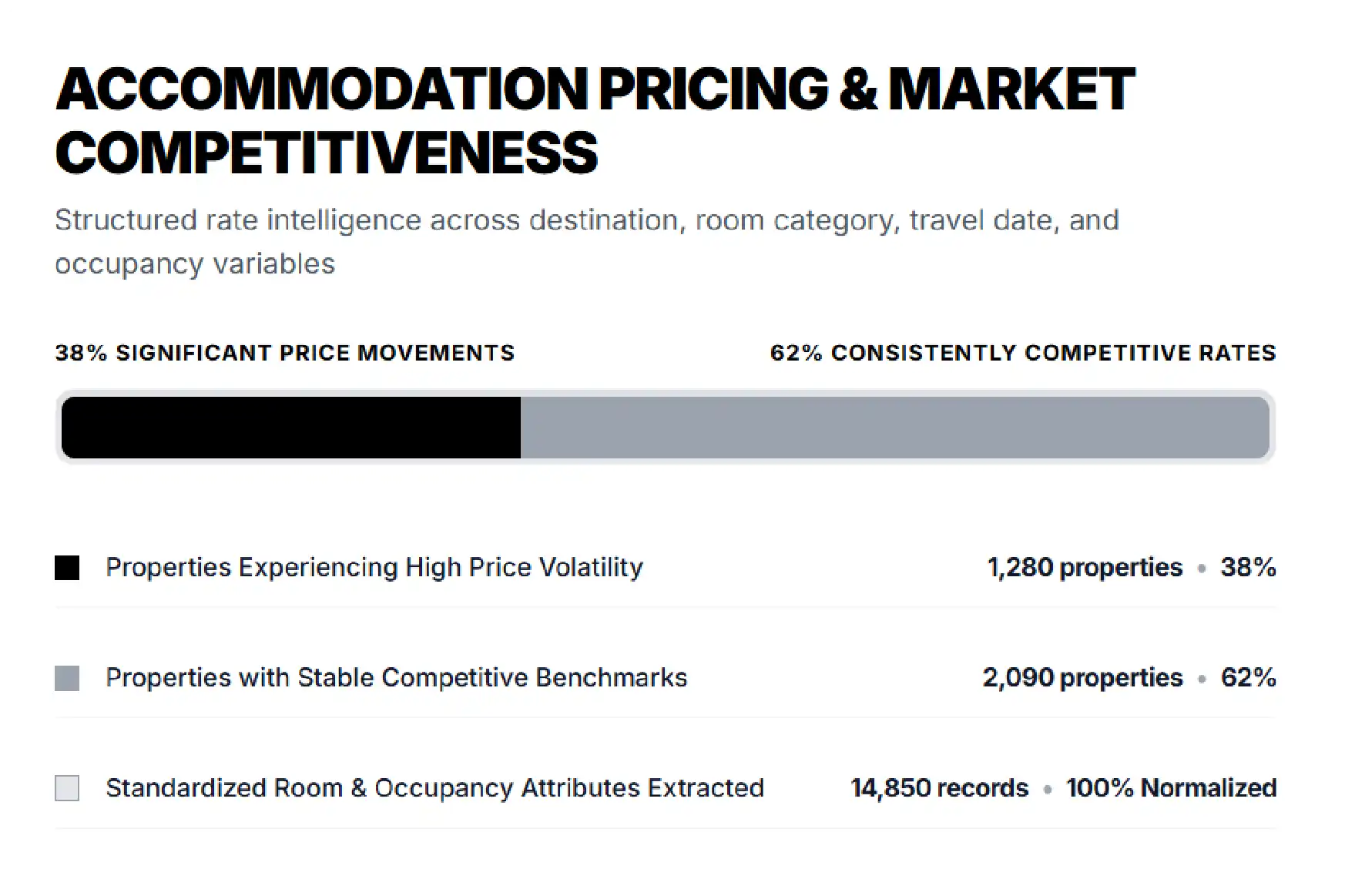
The second finding involved accommodation pricing.
Hotel rates can vary considerably according to destination, room type, travel date, occupancy, and availability. A structured extraction system allowed the client to organize these variables into comparable records.
Analysts could identify properties with consistently competitive rates and those experiencing significant price movements.
The dataset also made it easier to compare room categories within the same property. Instead of reviewing hotel pages individually, analysts could work with standardized records containing property, room, rate, and availability attributes.
This improved the efficiency of hotel benchmarking and destination-level accommodation research.
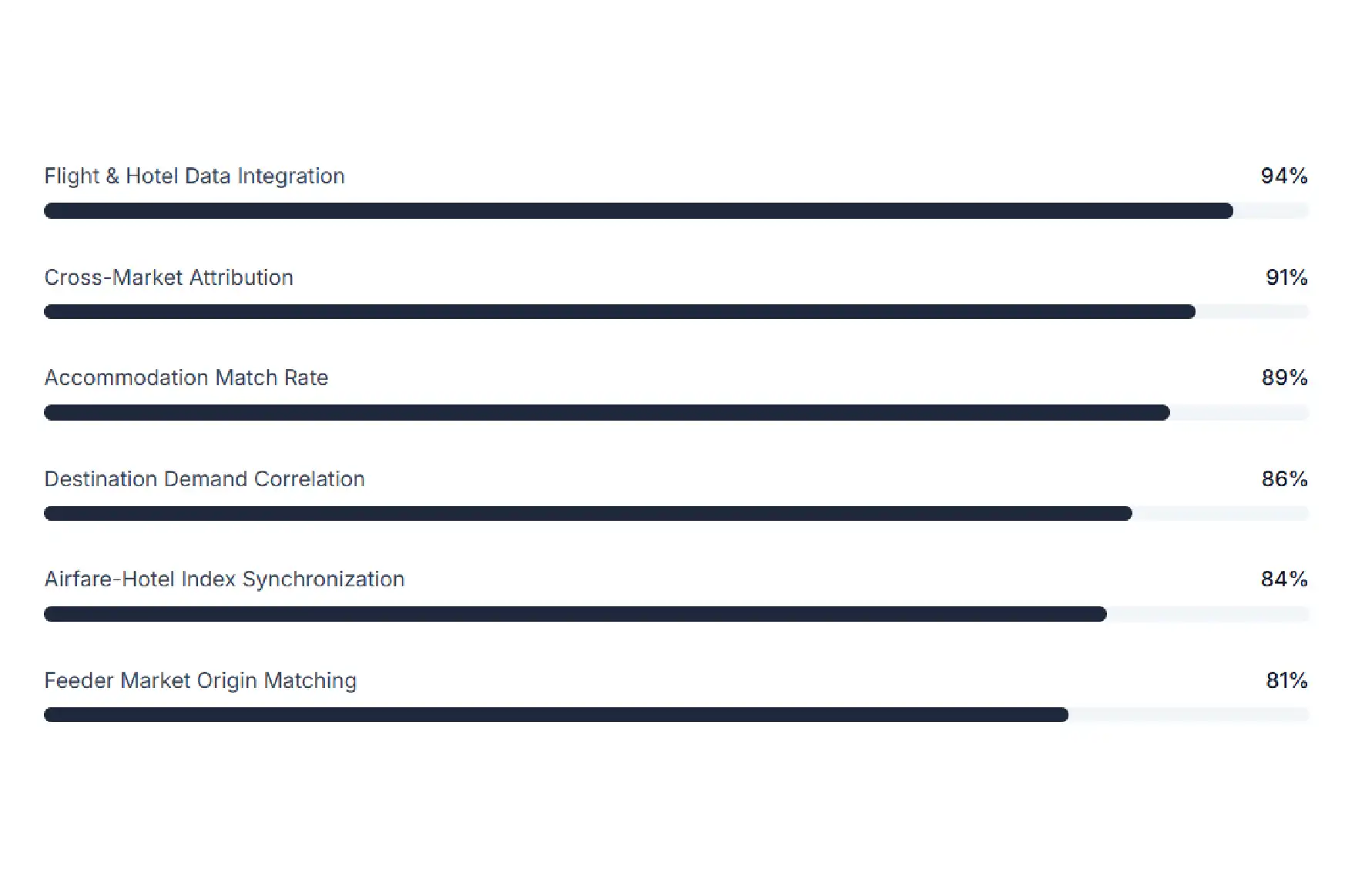
A major advantage of the new framework was the ability to analyze flight and hotel information together.
Previously, flight and accommodation data existed in separate workflows. The structured system enabled both datasets to be linked through destination, travel date, market, and other common attributes.
This allowed analysts to examine travel markets from a broader perspective.
For example, a destination experiencing increased flight demand could be compared with corresponding hotel rate movements. Similarly, markets with reduced airfare could be examined alongside accommodation availability.
This created opportunities for destination-level intelligence rather than isolated product analysis.
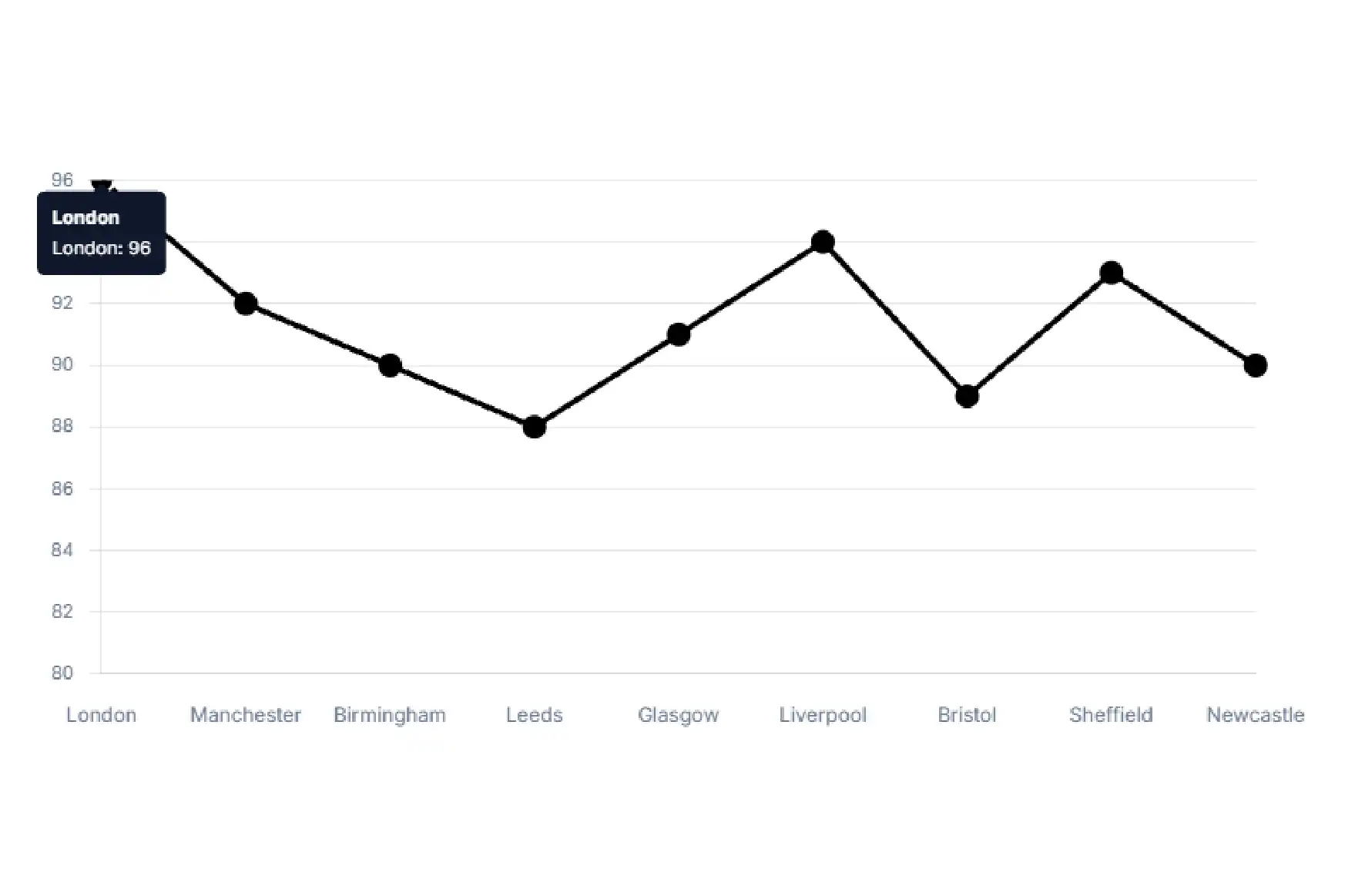
The fourth finding involved data quality.
Automated validation significantly reduced inconsistencies caused by manual collection. Standardized field structures ensured that similar flight and hotel records followed consistent formatting.
The pipeline also identified duplicates and incomplete records before they entered downstream analytical systems.
| Metric | Insight Captured | Business Impact |
|---|---|---|
| Flight Fare | Route-level price observations | Competitive airfare monitoring |
| Hotel Rate | Property and room-level pricing | Accommodation benchmarking |
| Availability | Inventory status | Faster travel product decisions |
| Destination | Market-level travel activity | Destination intelligence |
| Rating | Property quality indicators | Hotel comparison |
| Reviews | Customer perception signals | Accommodation evaluation |
| Journey Duration | Flight travel time | Route comparison |
| Room Category | Accommodation segmentation | Pricing analysis |
The resulting datasets were easier to query, compare, visualize, and integrate with analytical models.
The following sample illustrates how structured flight and hotel records can be organized for analytical purposes.
| Destination | Travel Product | Category | Price | Availability | Rating | Key Insight |
|---|---|---|---|---|---|---|
| Dubai | Flight | Economy | ₹18,450 | Available | — | High route activity |
| Dubai | Hotel | Deluxe Room | ₹7,850 | Available | 4.4 | Strong accommodation demand |
| Goa | Flight | Economy | ₹6,920 | Available | — | Competitive domestic fare |
| Goa | Hotel | Premium Room | ₹5,480 | Limited | 4.3 | Reduced room inventory |
| Bangkok | Flight | Economy | ₹21,600 | Available | — | International fare movement |
| Bangkok | Hotel | Superior Room | ₹6,920 | Available | 4.5 | Stable hotel pricing |
| Mumbai | Flight | Economy | ₹5,850 | Available | — | High-frequency route |
| Mumbai | Hotel | Business Room | ₹4,780 | Available | 4.2 | Strong business travel demand |
The sample illustrates how travel information can be transformed into structured records that support pricing, availability, destination, and accommodation analysis.
After implementing the structured travel data pipeline, the client achieved substantial improvements in travel intelligence operations.
These improvements allowed the client to move from reactive travel research toward proactive intelligence generation.
iWeb Data Scraping provides a structured approach to collecting travel information from complex digital ecosystems. Instead of treating travel data as isolated records, our methodology focuses on creating complete and reusable datasets designed around business requirements.
The approach begins with data-field mapping, ensuring that extraction workflows capture the information required for specific analytical use cases.
Our architecture also emphasizes data consistency. Flight and hotel records are standardized so that businesses can compare information across destinations, dates, properties, and travel products.
Scalability is another important component. Travel businesses frequently expand their coverage across additional destinations, routes, properties, and markets. The infrastructure is therefore designed to support increasing volumes without creating unnecessary operational complexity.
Data quality controls further strengthen the solution by identifying duplicates, incomplete records, abnormal values, and formatting inconsistencies.
Historical storage provides another strategic advantage. Rather than collecting information only for immediate use, organizations can build longitudinal datasets that support trend analysis, forecasting, benchmarking, and predictive modeling.
"We needed a reliable way to organize constantly changing flight and hotel information without depending on repetitive manual research. The solution delivered a structured travel intelligence layer that significantly improved our visibility into pricing, availability, and destination-level trends. The data quality and refresh capabilities helped our analytics teams work faster and make better-informed decisions. We now have a scalable foundation that can support additional travel markets and future analytical applications."
— Head of Travel Intelligence
The final outcome was a scalable travel intelligence ecosystem capable of transforming continuously changing flight and hotel information into structured datasets for business and analytical applications.
The client gained better visibility into airfare movements, hotel pricing, availability patterns, destination activity, and accommodation performance.
Automated collection reduced manual research requirements while improving the consistency and freshness of the information available to analysts.
Implementation of Travel Data Extraction Services enabled the organization to establish repeatable workflows for collecting travel information across multiple products, destinations, and analytical requirements.
The resulting datasets could support competitive benchmarking, travel pricing analysis, destination intelligence, hotel comparison, application development, and predictive analytics.
The architecture also supported Web Scraping API Services, enabling structured travel information to be delivered into downstream systems, databases, dashboards, and analytical environments according to business requirements.
EaseMyTrip API scraping refers to an automated approach for collecting relevant travel information and converting it into structured datasets for analytical, competitive intelligence, and travel technology applications.
Depending on the defined requirements and permitted access methods, travel datasets can include flight details, routes, fares, schedules, availability indicators, hotel information, room categories, rates, ratings, reviews, amenities, and destination attributes.
Structured flight data can help businesses monitor airfare movements, compare routes, identify pricing patterns, analyze availability, support travel recommendations, and improve competitive intelligence.
Hotel rate data allows businesses to compare properties, monitor pricing changes, evaluate room categories, identify competitive rates, and understand accommodation market movements across destinations.
Yes. Flight and hotel datasets can be structured around common attributes such as destination, travel date, market, and booking period, allowing businesses to create unified travel intelligence.
Build a scalable travel data ecosystem that converts flight, hotel, pricing, availability, and destination information into structured intelligence for faster decisions, stronger competitive analysis, and smarter travel technology applications.
Start a projectFields marked * are required. Everything else just helps us scope faster — skip what you don't know yet.