What Insights Can You Gain from Scraping Adidas SKU Data for eCommerce Intelligence?
Introduction
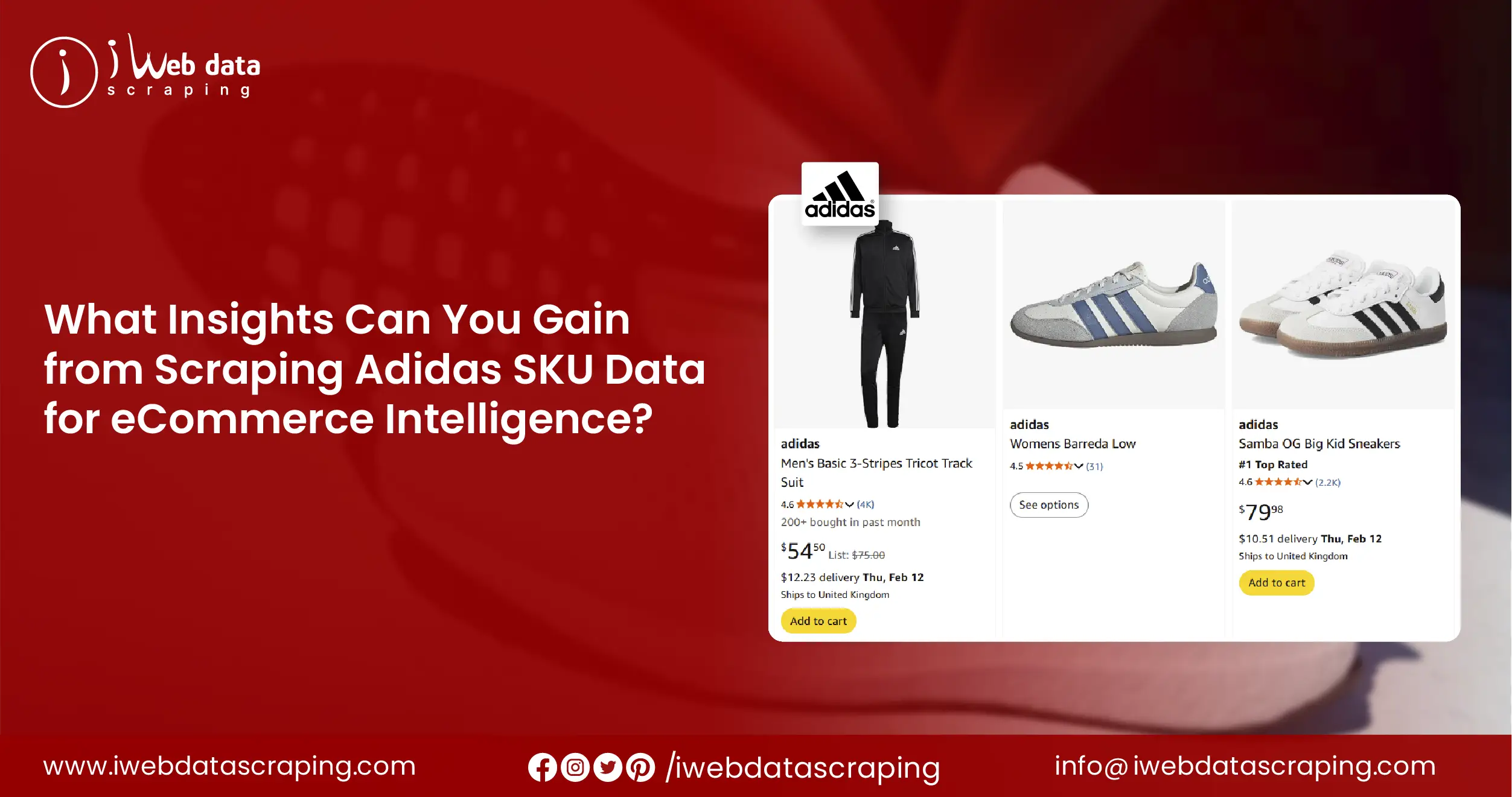
The modern eCommerce ecosystem is driven by precision—precision in pricing, inventory planning, product positioning, and regional strategy. As one of the world’s most influential sportswear brands, Adidas sets benchmarks that competitors, retailers, and analysts closely observe. This makes Scraping Adidas SKU Data for eCommerce Intelligence a powerful method for understanding how a global brand structures its online success.
In competitive digital markets, Adidas SKU data extraction for eCommerce enables businesses to move beyond surface-level product tracking and into granular intelligence. When companies Scrape Adidas product SKU data, they gain visibility into how Adidas manages product variants, regional assortments, price adjustments, and inventory signals across multiple online touchpoints.
Why Adidas SKU-Level Data Matters More Than Ever?
SKU-level data acts as the DNA of eCommerce operations. Each Adidas SKU reflects a specific product configuration that includes size, color, category, technology, and market availability. Unlike general product listings, SKU data provides clarity on how individual variations perform and how demand differs across regions.
By analyzing SKU-level patterns, businesses can uncover which variants drive the highest conversions, which sizes sell out fastest, and how Adidas balances global consistency with regional customization. This depth of insight is essential for brands benchmarking their own assortments and for retailers aligning inventory with real consumer demand.
Pricing and Inventory Intelligence as a Competitive Lever
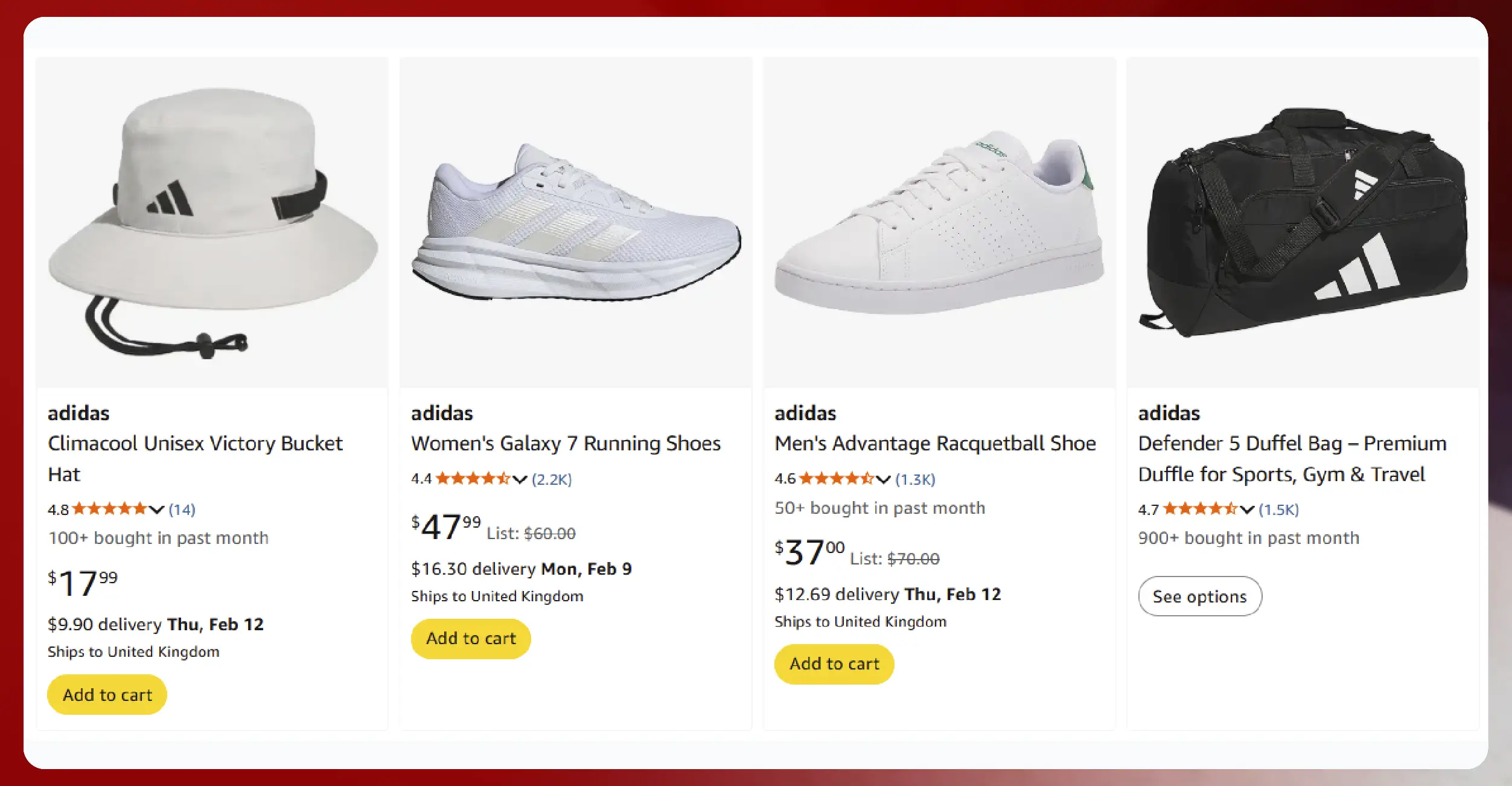
One of the most strategic applications of Adidas SKU data lies in the ability to Extract Adidas pricing and inventory data continuously. Adidas frequently adjusts prices based on demand cycles, seasonal promotions, and regional purchasing power. Tracking these changes at the SKU level reveals patterns that are otherwise invisible.
Inventory signals further strengthen this intelligence. Low stock indicators often precede price increases or product discontinuations, while surplus inventory may signal upcoming discounts. When pricing and inventory insights are combined, businesses can anticipate market movements rather than react to them after the fact.
Mapping Adidas’ Digital Assortment Strategy
Understanding how Adidas structures its online assortment requires comprehensive visibility into its catalog. Through Adidas product catalog web scraping, businesses can capture the complete range of products offered across categories such as footwear, apparel, and accessories.
This data highlights how frequently Adidas refreshes its catalog, how limited-edition releases are handled, and how long products remain active before being phased out. Over time, catalog intelligence supports lifecycle analysis, launch timing optimization, and category-level trend forecasting.
Regional Availability and Market-Specific Insights
Global brands rarely follow a one-size-fits-all approach. The ability to Track Adidas SKU availability across regions reveals how Adidas adapts its offerings for different markets. Some SKUs may be exclusive to specific countries, while others appear globally with subtle variations.
This regional intelligence is invaluable for businesses planning international expansion or tailoring local assortments. It also helps identify emerging markets where Adidas is increasing product depth, signaling future growth opportunities and shifting consumer demand patterns.
Transforming Data into eCommerce Intelligence
Collecting SKU data is only the first step. True value emerges when data is transformed into structured intelligence. With Adidas eCommerce intelligence data scraping, raw product information is converted into datasets that support analytics, forecasting, and strategic decision-making.
These insights empower pricing teams, merchandising managers, and market analysts to track trends, measure competitive positioning, and evaluate performance across time and geography. Instead of relying on assumptions, decisions are grounded in real-time product data.
Unlock actionable insights and drive smarter eCommerce decisions—start leveraging our Adidas SKU data scraping services today!
Monitoring Product Listings in Real Time
Digital storefronts are dynamic environments where listings change frequently. Through Web scraping Adidas product listings, businesses maintain continuous visibility into updates such as new launches, discontinued items, promotional banners, and stock status changes.
Real-time monitoring ensures that intelligence remains accurate and actionable. It also enables rapid response to competitor moves, helping retailers adjust pricing or promotions before losing market share.
Extracting Detailed Product Attributes for Deeper Insights
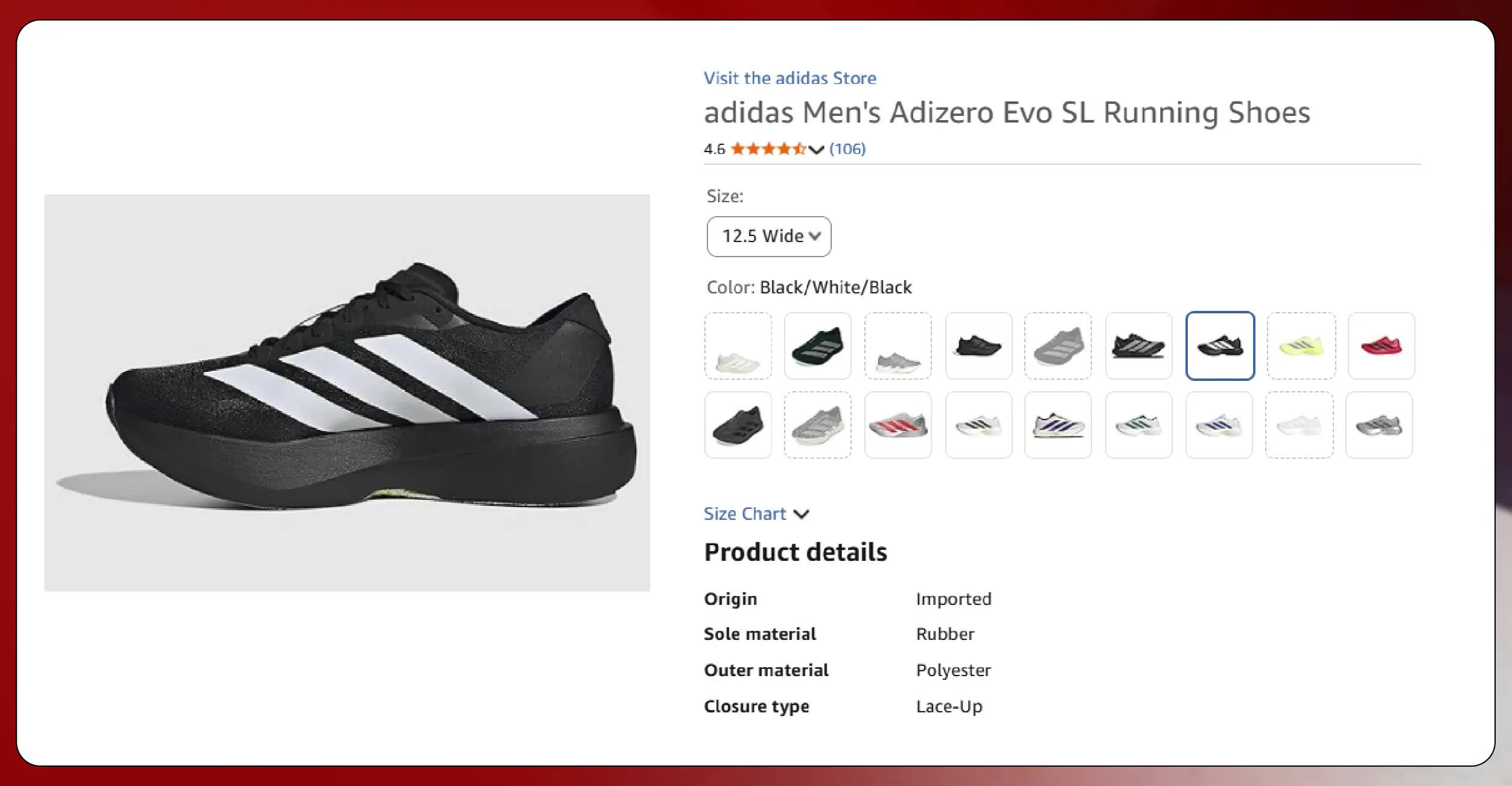
Beyond SKUs and pricing, Adidas product pages contain rich attribute data that reveals how products are positioned. An Adidas product attributes data extractor captures details such as materials, sustainability certifications, performance technologies, and intended use cases.
This attribute-level intelligence supports advanced use cases including feature comparison, sustainability benchmarking, and product innovation analysis. It also improves catalog enrichment for marketplaces and enhances search relevance across eCommerce platforms.
The Role of Structured SKU and Product Datasets
When Adidas data is standardized and organized, it becomes part of broader Product SKU Datasets that fuel enterprise analytics. These datasets allow organizations to study long-term trends, monitor SKU performance over time, and evaluate the success of marketing campaigns or seasonal launches.
When combined with eCommerce Product Data Datasets, Adidas intelligence provides a holistic view of the competitive landscape. This cross-brand perspective supports smarter assortment planning, pricing optimization, and category strategy development.
Ensuring Accuracy, Compliance, and Scalability
High-quality SKU intelligence depends on reliable extraction methods. Accurate data mapping, consistent attribute classification, and frequent updates are essential for meaningful analysis. Just as important is compliance with legal and ethical data collection standards.
Scalability also plays a critical role. As Adidas expands its digital footprint, data pipelines must handle increasing volumes without compromising accuracy or speed. Robust infrastructure ensures that insights remain timely and trustworthy as market complexity grows.
How iWeb Data Scraping Can Help You?
- Unlock Comprehensive Product Insights: We provide deep visibility into Adidas SKUs, catalog updates, and product variations, empowering your business with actionable insights across multiple markets.
- Monitor Prices and Market Trends: Our solutions track pricing, discounts, and promotions in real time, enabling you to make informed decisions and stay ahead of competitors.
- Improve Inventory and Supply Decisions: By analyzing SKU availability and stock movement, you can optimize inventory planning, reduce overstock risks, and meet customer demand efficiently.
- Access Rich Product Attribute Data: We capture detailed information such as features, materials, and categories, allowing your team to refine product offerings and enhance catalog intelligence.
- Drive Smarter eCommerce Strategies: With structured datasets and actionable analytics, your business can plan marketing campaigns, forecast demand, and enhance overall eCommerce performance with confidence.
Conclusion
In today’s fast-paced digital retail environment, success depends on visibility, accuracy, and speed. Scraping Adidas SKU data equips businesses with the intelligence needed to understand pricing behavior, inventory strategies, regional focus, and product positioning at a granular level.
By leveraging eCommerce Data Extraction Services :, organizations can convert raw Adidas data into structured insights that power smarter decisions. Partnering with expert Retail Data Scraping Services : ensures compliance, scalability, and data reliability, while advanced Product Data Scraping API Services enable seamless integration into analytics platforms, dashboards, and business systems.
When approached strategically, Adidas SKU data scraping becomes more than a technical process—it becomes a foundation for sustained eCommerce intelligence and competitive growth.
Experience top-notch web scraping service and mobile app scraping solutions with iWeb Data Scraping. Our skilled team excels in extracting various data sets, including retail store locations and beyond. Connect with us today to learn how our customized services can address your unique project needs, delivering the highest efficiency and dependability for all your data requirements.