Introduction
Airline pricing has undergone a significant transformation in recent years, moving beyond simple base fares to a complex structure dominated by ancillary charges. During peak holiday periods, passengers face fluctuating costs for seat selection, checked and carry-on luggage, and in-flight meals, making holiday travel fee intelligence an essential tool for both travelers and industry stakeholders. By understanding these trends, travelers can make informed, cost-effective decisions, while airlines can optimize revenue and enhance customer satisfaction.
Modern technology and analytics now enable holiday travel fees data extraction, allowing real-time monitoring of these add-on charges across multiple carriers and online travel agencies (OTAs). By using automated tools to Scrape airline fees during holidays season, analysts can identify pricing trends, measure travel cost inflation, and detect dynamic changes in ancillary fees. These insights provide a strategic foundation for airlines and OTAs to develop pricing strategies that reflect consumer behavior and market demand, ensuring competitive and profitable operations during high-demand holiday travel periods.
Key Components of Airline Add-On Fees
Seat Selection Charges
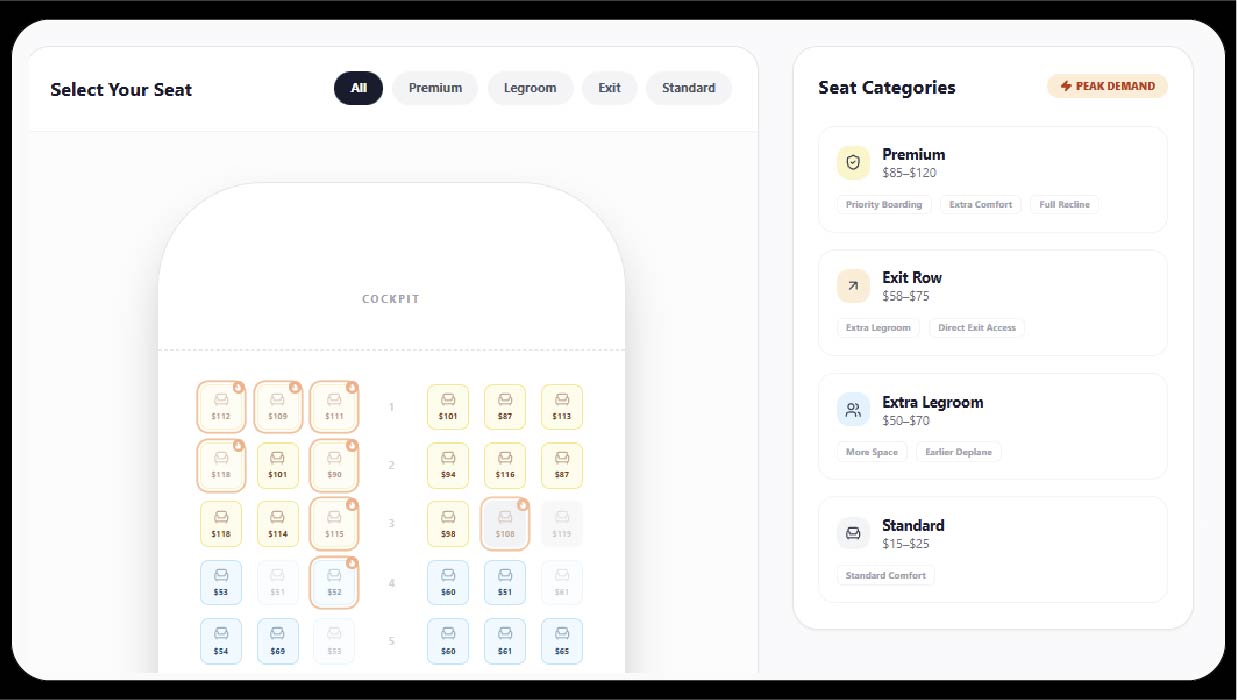
Airlines often segment seating into categories such as standard seats, extra legroom, exit row, and premium options. Fees vary by route, aircraft type, and time of booking. By using method to Extract holiday booking fee trends data, airlines and analysts can identify which seat types experience the highest demand.
For example:
- Delta Air Lines: Standard seat $18, Extra legroom $55, Exit row $60, Premium $90
- American Airlines: Standard seat $15, Extra legroom $50, Exit row $58, Premium $85
- Emirates: Standard seat $25, Extra legroom $70, Exit row $75, Premium $120
During peak holiday weeks, these fees can increase by 2–3 times the normal rate, reflecting both demand and willingness to pay for comfort. Continuous travel surcharge Price tracking ensures airlines adjust fees dynamically to maximize revenue while responding to market demand.
Luggage Fees
Luggage fees, both for checked and carry-on bags, surge during peak periods:
- United Airlines: Carry-On $32, 1st Checked Bag $42, 2nd Checked Bag $65, Oversized Bag $95
- American Airlines: Carry-On $28, 1st Checked Bag $38, 2nd Checked Bag $58, Oversized Bag $85
- Emirates: Carry-On $35, 1st Checked Bag $50, 2nd Checked Bag $75, Oversized Bag $120
International travelers are particularly impacted, with airlines charging premium rates for additional luggage due to higher operational costs.
In-Flight Meal Fees
Meal options range from standard offerings to premium or special dietary meals. These fees often reflect route distance and airline service quality:
- Delta Air Lines: Standard Meal $12, Premium Meal $20, Special Meal $18, Snack Packs $8
- American Airlines: Standard Meal $10, Premium Meal $18, Special Meal $16, Snack Packs $7
- Emirates: Standard Meal $15, Premium Meal $25, Special Meal $22, Snack Packs $12
Premium meals see the most price volatility, especially on flights with higher seat occupancy during holidays.
Methodology: Monitoring Holiday Travel Fees
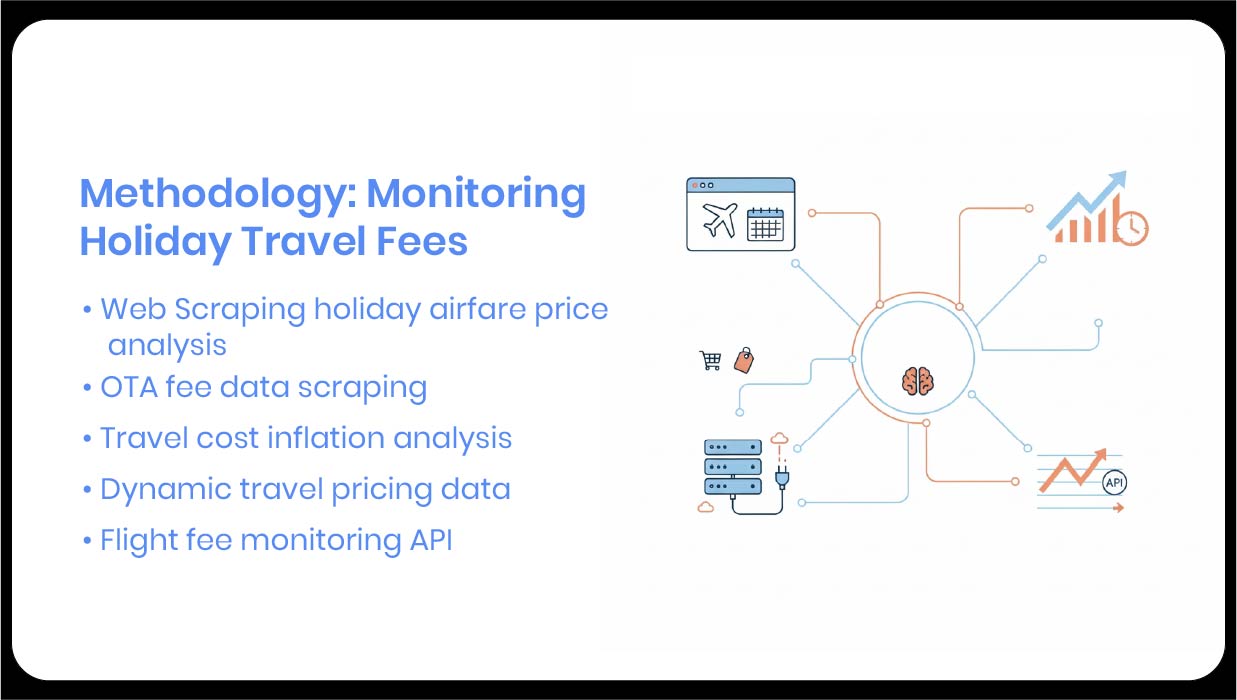
The research employed multiple techniques for accurate data collection:
- Web Scraping holiday airfare price analysis – Data collected daily across multiple airline and OTA websites.
- OTA fee data scraping – Tracking ancillary fees on Expedia and Booking.com to capture bundled and individual service fees.
- Travel cost inflation analysis – Comparing historical holiday fee data with current trends to calculate seasonal surges.
- Dynamic travel pricing data – Monitoring hourly fee changes using automated APIs.
- Flight fee monitoring API – Leveraging real-time API endpoints for continuous data extraction.
The study also integrated Travel & Tourism App Datasets to ensure comprehensive coverage of both domestic and international flights.
Airline-Specific Add-On Fee Analysis
Delta Air Lines
Delta shows a consistent increase in seat selection and luggage fees during peak holidays. Extra legroom and premium seat fees can increase up to 65% above regular rates. Baggage fees are moderately dynamic, while meal charges increase by 15–20% on transcontinental flights.
American Airlines
American Airlines implements dynamic pricing heavily influenced by occupancy. Exit row and premium seat fees show significant hourly fluctuations. Meal options, especially premium offerings, see a 25% increase closer to the holiday period. OTA platforms often bundle seat and meal fees, complicating comparison.
Emirates
Emirates demonstrates the highest ancillary charges among the monitored carriers. Premium seats, additional luggage, and meals on long-haul flights can double in price during peak holiday weeks. Emirates’ use of Travel Data Extraction Services ensures fees are adjusted in real time to match passenger demand.
United Airlines
United Airlines exhibits moderate dynamic fee adjustments. Baggage and meal fees see consistent inflation, especially for international routes. Early bookings offer cost savings, but last-minute travelers face steep surcharges, reflecting dynamic travel pricing data strategies.
Patterns Observed in Holiday Fee Trends
- Peak Demand Surge: Add-on fees typically increase 20–35% during peak holiday weeks.
- Dynamic Pricing Mechanisms: Airlines continuously adjust fees using algorithm-driven models to maximize revenue.
- Consumer Preference Shift: Premium seating and special meals are prioritized by travelers over basic seat options.
- Regional Variability: International flights experience higher fees due to longer distances and operational costs.
- OTA Influence: Online travel platforms significantly impact perceived fee structures, sometimes offering bundled discounts.
Data Tables: Holiday Add-On Fees Across Airlines
Table 1: Seat Fees (USD)
| Delta |
18 |
55 |
60 |
90 |
| American Airlines |
15 |
50 |
58 |
85 |
| United |
20 |
60 |
65 |
95 |
| Emirates |
25 |
70 |
75 |
120 |
Table 2: Luggage Fees (USD)
| Delta |
30 |
40 |
60 |
90 |
| American Airlines |
28 |
38 |
58 |
85 |
| United |
32 |
42 |
65 |
95 |
| Emirates |
35 |
50 |
75 |
120 |
Table 3: Meal Fees (USD)
| Delta |
12 |
20 |
18 |
8 |
| American Airlines |
10 |
18 |
16 |
7 |
| United |
11 |
19 |
17 |
9 |
| Emirates |
15 |
25 |
22 |
12 |
Consumer Insights from Fee Trends
- Travelers are increasingly willing to pay higher fees for comfort and convenience.
- Last-minute holiday bookings face inflated add-on fees.
- Meal and luggage fees are significant contributors to total holiday travel costs.
- Real-time monitoring enables travelers and travel agencies to plan effectively.
- Airlines leverage Travel Data Scraping API to anticipate peak-week surges and adjust pricing dynamically.
Conclusion
Holiday travel add-on fees play a crucial role in influencing consumer behavior, as passengers increasingly weigh costs for seat selection, luggage, and in-flight services. Airlines employ advanced travel pricing intelligence services to track real-time fee fluctuations and adjust pricing strategies accordingly. By utilizing Travel, hospitality, and tourism website scraper, carriers and online travel agencies can monitor trends, detect demand surges, and analyze competitive pricing across multiple platforms. These insights allow for effective peak season travel price monitoring, helping airlines and OTAs optimize revenue, manage capacity efficiently, and improve the overall traveler experience. Understanding these dynamic fees ensures both profitability for airlines and smarter, cost-effective choices for passengers during high-demand holiday periods.
Experience top-notch web scraping service
and mobile app scraping solutions with iWeb Data Scraping. Our skilled team excels in extracting various data sets, including retail store locations and beyond. Connect with us today to learn how our customized services can address your unique project needs, delivering the highest efficiency and dependability for all your data requirements.