How Can Businesses Benefit from Extracting Allegro Product Listings, Prices, and Availability?
Introduction
In today’s fast-paced eCommerce landscape, staying competitive on marketplaces like Allegro requires access to accurate, timely, and comprehensive product data. Extracting Allegro product listings, prices, and availability has become a strategic necessity for businesses, retailers, and data-driven decision-makers who aim to monitor competitors, optimize pricing, and manage inventory effectively. With millions of products spanning electronics, fashion, home goods, and more, Allegro provides an enormous pool of data—but accessing and making sense of it requires specialized tools and techniques.
By leveraging Allegro product listings data extraction availability services, businesses can efficiently gather essential product details, track pricing fluctuations, monitor stock levels, and gain actionable insights into the marketplace. Similarly, scrape Allegro prices and availability data to understand market trends, identify top-selling items, and respond proactively to competitor strategies. This article explores in depth how companies can utilize Allegro data, the key methods for data extraction, and the benefits of marketplace intelligence for business growth.
Why Allegro Product Data Matters?
Allegro is one of the largest online marketplaces in Poland, hosting millions of products and thousands of sellers. For retailers and brands, the platform represents both opportunity and competition. Understanding product availability, pricing trends, and seller performance can make the difference between maintaining market share and losing it.
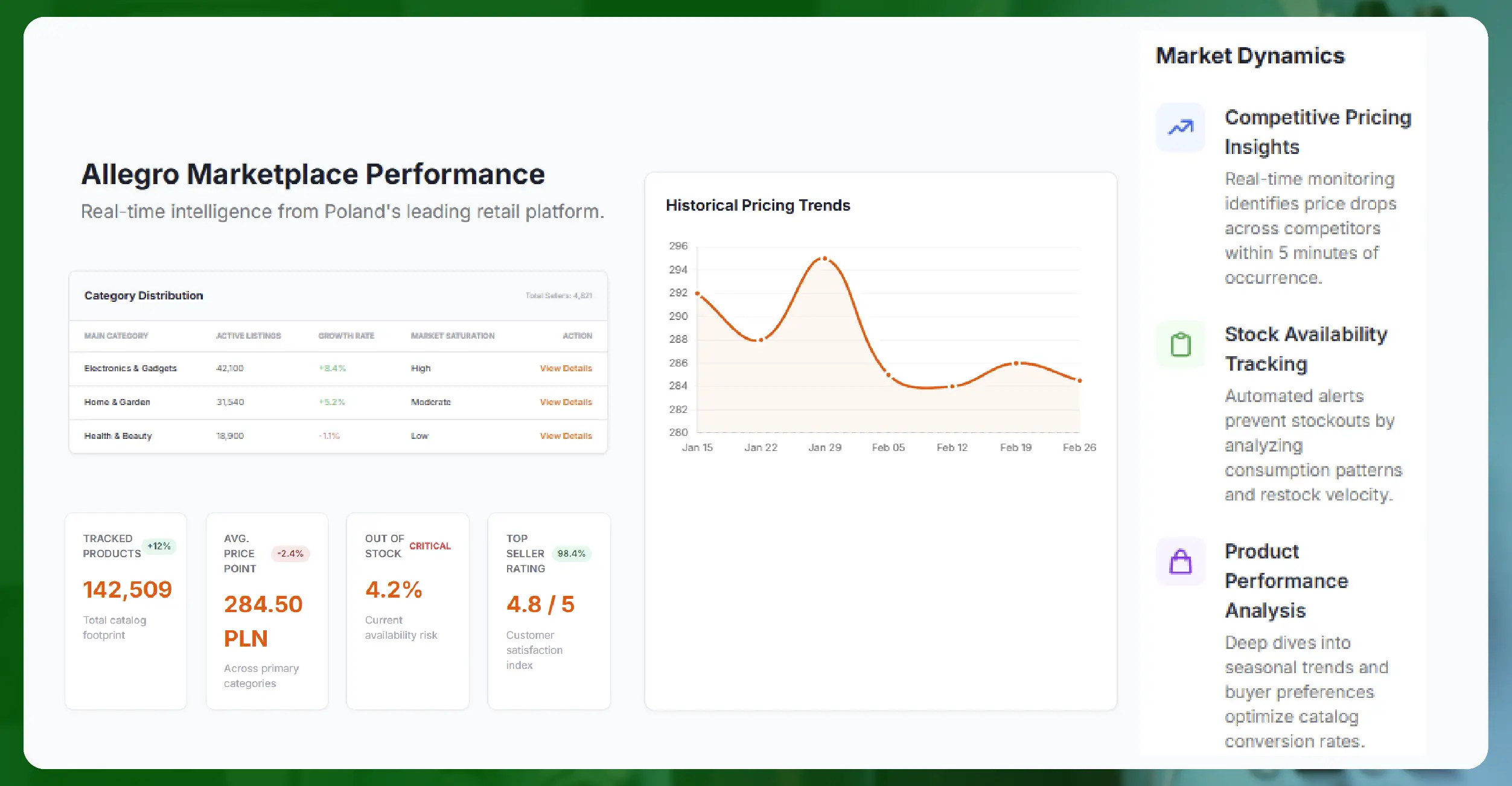
- Competitive Pricing Insights: Monitoring competitors’ prices in real-time ensures your products remain attractive to consumers.
- Stock Availability Tracking: Businesses can prevent stockouts or overstocking by keeping a close eye on inventory levels.
- Product Performance Analysis: Extracted data provides insights into customer preferences, top-selling products, and seasonal trends.
By using method to extract Allegro seller and product data techniques, companies gain a complete view of the marketplace, including detailed seller information, product descriptions, categories, ratings, and historical pricing.
Methods to Extract Allegro Product Listings and Availability
Extracting product data from Allegro requires careful planning and the right tools. Here are the most effective methods for Allegro marketplace web scraping:
1. Web Scraping Using Automated Scripts
Web scraping is one of the most common ways to extract Allegro product listings and availability data. Using programming languages like Python and libraries such as BeautifulSoup, Selenium, or Scrapy, businesses can automate data collection.
- Product Details: Titles, descriptions, images, categories, and specifications.
- Pricing Information: Current prices, discounts, promotions, and historical price changes.
- Availability and Stock Levels: Inventory data to understand supply and demand.
Automation allows large-scale data collection without manual effort, saving time and reducing errors.
2. Allegro API Integration
Allegro offers an official API that provides structured access to product, seller, and transaction data. Using the API ensures compliance with Allegro’s terms and delivers reliable, real-time information.
- Advantages: Faster extraction, structured data, higher accuracy.
- Limitations: API rate limits and authentication requirements may restrict large-scale data extraction.
By combining API access with web scraping, companies can ensure comprehensive web scraping Allegro product catalog coverage while remaining compliant with platform rules.
3. Price and Inventory Monitoring Tools
Specialized eCommerce data tools can automatically track Allegro product price changes. They also monitor Allegro inventory and stock monitoring data. These tools alert businesses to significant price shifts or stock changes, enabling timely action such as repricing, marketing campaigns, or inventory adjustments. Example features include historical pricing charts, competitor benchmarking, and product trend analysis.
Key Components of Allegro Data Extraction
When conducting Allegro eCommerce data intelligence extraction, it’s important to focus on the following key components:
- Product Listings Data: Includes product names, descriptions, categories, attributes, and images. This data forms the backbone of any analytical or competitive strategy.
- Pricing Data: Essential for price monitoring, competitor benchmarking, and sales strategy optimization.
- Availability Data: Provides insight into inventory levels, stock-outs, and replenishment cycles.
- Seller Data: Information on top-performing sellers, ratings, location, and fulfillment methods.
- Marketplace Trends: Aggregated data across product categories to identify emerging trends and opportunities.
By capturing these components, businesses can create Marketplace Product Datasets. They can also generate eCommerce Price Monitoring Datasets that drive strategic decisions.
Start leveraging precise Allegro product and pricing data now to make smarter, data-driven business decisions instantly.
Benefits of Extracting Allegro Product Data
Investing in Allegro data extraction offers multiple business advantages:
1. Enhanced Competitive Intelligence
Knowing competitors’ prices, stock levels, and promotional strategies allows businesses to make proactive decisions. Data-driven insights help brands maintain a competitive edge.
2. Improved Pricing Strategies
Scrape Allegro prices and availability data enables dynamic pricing models, discount strategies, and profit optimization.
3. Inventory Management Optimization
Real-time Allegro inventory and stock monitoring data ensures that businesses can avoid stock-outs and overstock situations, improving supply chain efficiency.
4. Data-Driven Marketing
Extracted product and seller data provide insights for targeted advertising, product placement, and promotional campaigns that resonate with consumers.
5. Marketplace Trend Analysis
By analyzing web scraping Allegro product catalog data, businesses can identify rising product categories, popular sellers, and seasonal trends, ensuring that marketing and inventory decisions align with market demand.
Challenges in Allegro Data Extraction
Despite its benefits, extracting Allegro data comes with challenges:
- Dynamic Website Structure: Allegro frequently updates its platform, which may break existing scraping scripts.
- Anti-Bot Measures: The marketplace uses measures like CAPTCHA and rate limiting to prevent automated data collection.
- Data Accuracy and Completeness: Ensuring that extracted data is clean, structured, and error-free requires robust data processing methods.
To overcome these challenges, businesses should employ a combination of API access, web scraping tools, proxy servers, and automated monitoring solutions.
Best Practices for Allegro Data Extraction
To maximize the effectiveness of Allegro marketplace web scraping, follow these best practices:
- Define Clear Objectives: Identify the exact data points needed, such as pricing, stock, or product details.
- Choose the Right Tools: Use reliable scraping frameworks or APIs that comply with Allegro’s terms.
- Monitor Data Quality: Regularly validate and clean extracted data to maintain accuracy.
- Automate Updates: Schedule automated data collection to ensure real-time insights.
- Respect Legal and Ethical Guidelines: Ensure compliance with data privacy regulations and platform policies.
How Our Allegro Data Scraping Services Can Help You?
Our specialized Allegro data extraction services are designed to address these challenges while delivering actionable insights. Here’s how we can help:
- Comprehensive Product Data Extraction: We gather all essential product details, including descriptions, specifications, categories, and images, ensuring a complete dataset for analysis.
- Real-Time Price and Availability Tracking: Our tools automatically track Allegro product price changes and stock levels to provide up-to-date intelligence.
- Seller and Marketplace Insights: We extract detailed seller information, ratings, and product performance metrics to support competitive benchmarking.
- Customizable Data Delivery: Data can be delivered in structured formats such as CSV, Excel, JSON, or integrated into BI tools for seamless analysis.
- Scalable Solutions: Our scraping services are designed to handle large datasets, allowing businesses to monitor thousands of products simultaneously without compromising performance.
Conclusion
In the modern eCommerce ecosystem, extracting Allegro product listings, prices, and availability is a critical strategy for brands and retailers aiming to stay competitive. With eCommerce Data Extraction Services, businesses can access accurate, structured, and actionable data for smarter decision-making. Marketplace Data Scraping Services help companies gather comprehensive marketplace insights efficiently. Product Data Scraping API Services provide automated access to product details, pricing, and stock information. By leveraging Allegro product intelligence, companies can optimize pricing, manage inventory efficiently, track competitors, and identify emerging marketplace trends—ensuring sustained growth and profitability in a dynamic digital marketplace.
Experience top-notch web scraping service and mobile app scraping solutions with iWeb Data Scraping. Our skilled team excels in extracting various data sets, including retail store locations and beyond. Connect with us today to learn how our customized services can address your unique project needs, delivering the highest efficiency and dependability for all your data requirements.