How Does Amazon Repricing Automation API Automate Dynamic Pricing Effectively?
Introduction
In today’s highly competitive e-commerce ecosystem, Amazon sellers face constant pressure to maintain optimal pricing to stay competitive. Manual pricing adjustments are not only time-consuming but also prone to errors, often resulting in lost sales or diminished profit margins. This is where the Amazon repricing automation API comes into play, enabling sellers to automate repricing strategies efficiently and effectively. By leveraging automation, sellers can dynamically adjust their prices in real time, respond to market trends, and enhance their overall sales performance.
When paired with Amazon repricing Data Scraping tools, sellers gain a comprehensive view of the marketplace. These tools extract real-time competitor data, product trends, and pricing fluctuations, helping sellers make data-driven decisions. Automated repricing eliminates guesswork, allowing sellers to maintain competitive prices without constant manual intervention, ensuring they capture the Buy Box more frequently.
Another critical aspect of automation is the ability to Extract Amazon seller analytics Data. By analyzing historical pricing trends, sales velocity, and competitor behavior, sellers can identify the best pricing strategies to maximize revenue. With the right API integration, sellers can track thousands of products simultaneously, eliminating the inefficiencies of manual monitoring.
How Competitor Price Scraping From Amazon Transforms Pricing Strategies?
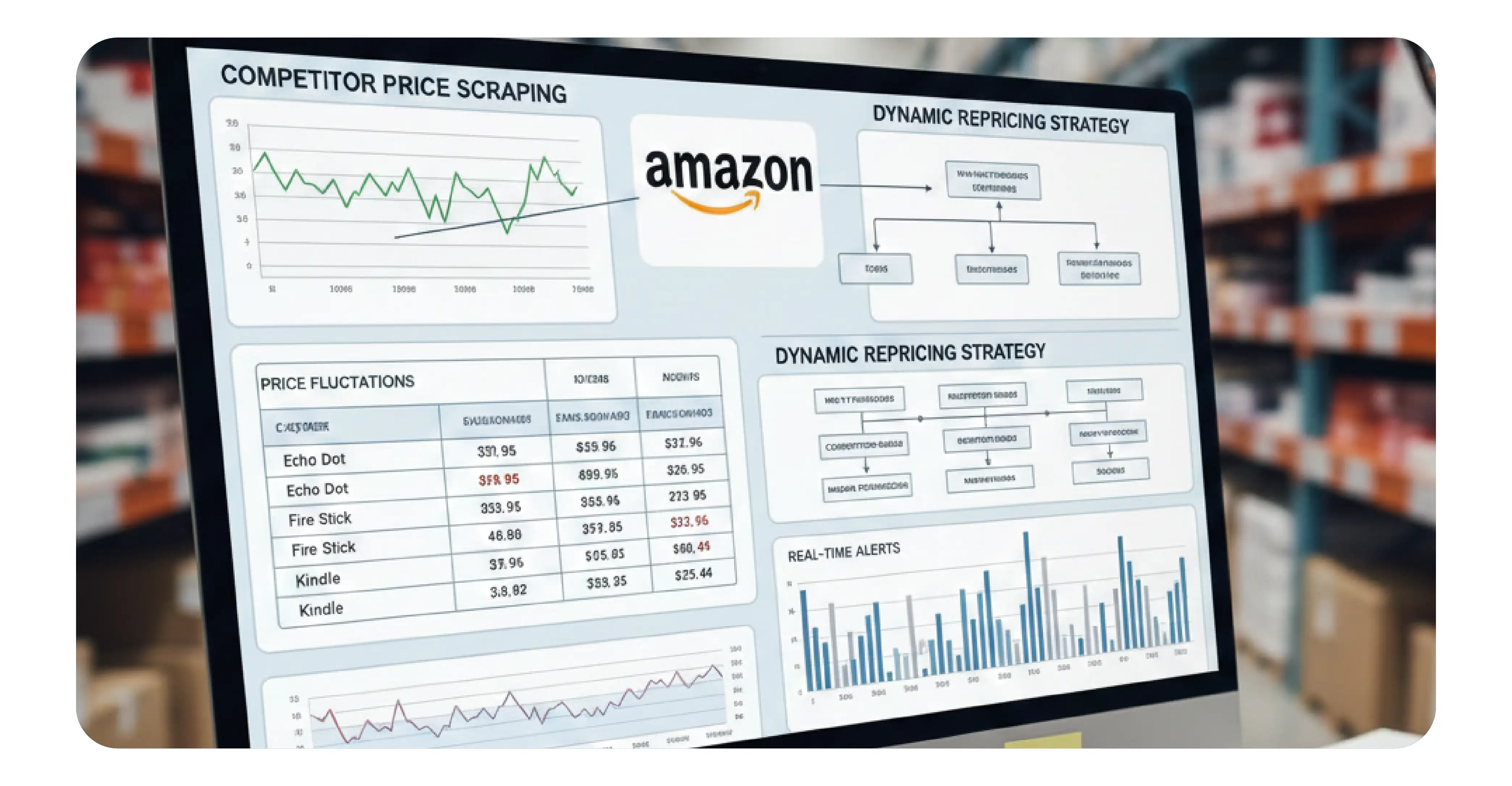
Competitor monitoring is at the heart of any successful repricing strategy. With competitor price scraping From Amazon, sellers can gain insights into their competitors’ pricing patterns, promotional strategies, and inventory availability. This data enables sellers to set competitive prices that not only attract buyers but also protect profit margins. Automated scraping ensures that this information is updated frequently, allowing sellers to react promptly to market changes.
Moreover, price monitoring for Amazon sellers allows them to track price fluctuations across multiple products and categories. Real-time alerts can inform sellers of sudden price drops or surges, enabling quick adjustments to remain competitive. With a robust repricing automation system, sellers can create rules such as minimum and maximum pricing thresholds, competitor-based pricing, and margin-based adjustments.
Amazon Product Matching + Price Tracking: Simplifying Market Intelligence

Amazon is a vast marketplace with thousands of similar products across categories. Effective Amazon product matching + price tracking ensures that sellers identify comparable products accurately, track their pricing, and optimize their listings. Automation tools can match products based on ASINs, product titles, or specifications, helping sellers avoid errors in price adjustments and ensuring strategic alignment with market trends.
This process is further enhanced by Amazon hourly price movement tracking, which captures pricing trends multiple times a day. Sellers gain insights into peak pricing periods, competitor behavior, and demand fluctuations, enabling more precise and timely repricing decisions. By integrating hourly tracking with automated rules, sellers can react instantly to competitive pricing changes, improving their chances of winning the Buy Box.
Leveraging Web Scraping Amazon ASIN Key Data for Smart Automation
Data is the backbone of automation. Web Scraping Amazon ASIN key data allows sellers to collect vital product details, including current prices, historical pricing, stock levels, and customer ratings. This information is crucial for making informed decisions when adjusting prices automatically. By combining ASIN-level data with advanced analytics, sellers can forecast demand, detect market trends, and optimize pricing strategies to maintain competitiveness.
A well-implemented Amazon Pricing API can centralize these functions, integrating real-time data collection, automated pricing adjustments, and reporting. Sellers can configure rules based on competitor pricing, profit margins, seasonal trends, and inventory levels, ensuring dynamic and strategic price management.
Start optimizing your prices today with our Amazon repricing automation API and maximize your sales effortlessly!
Benefits of Amazon Repricing Automation API
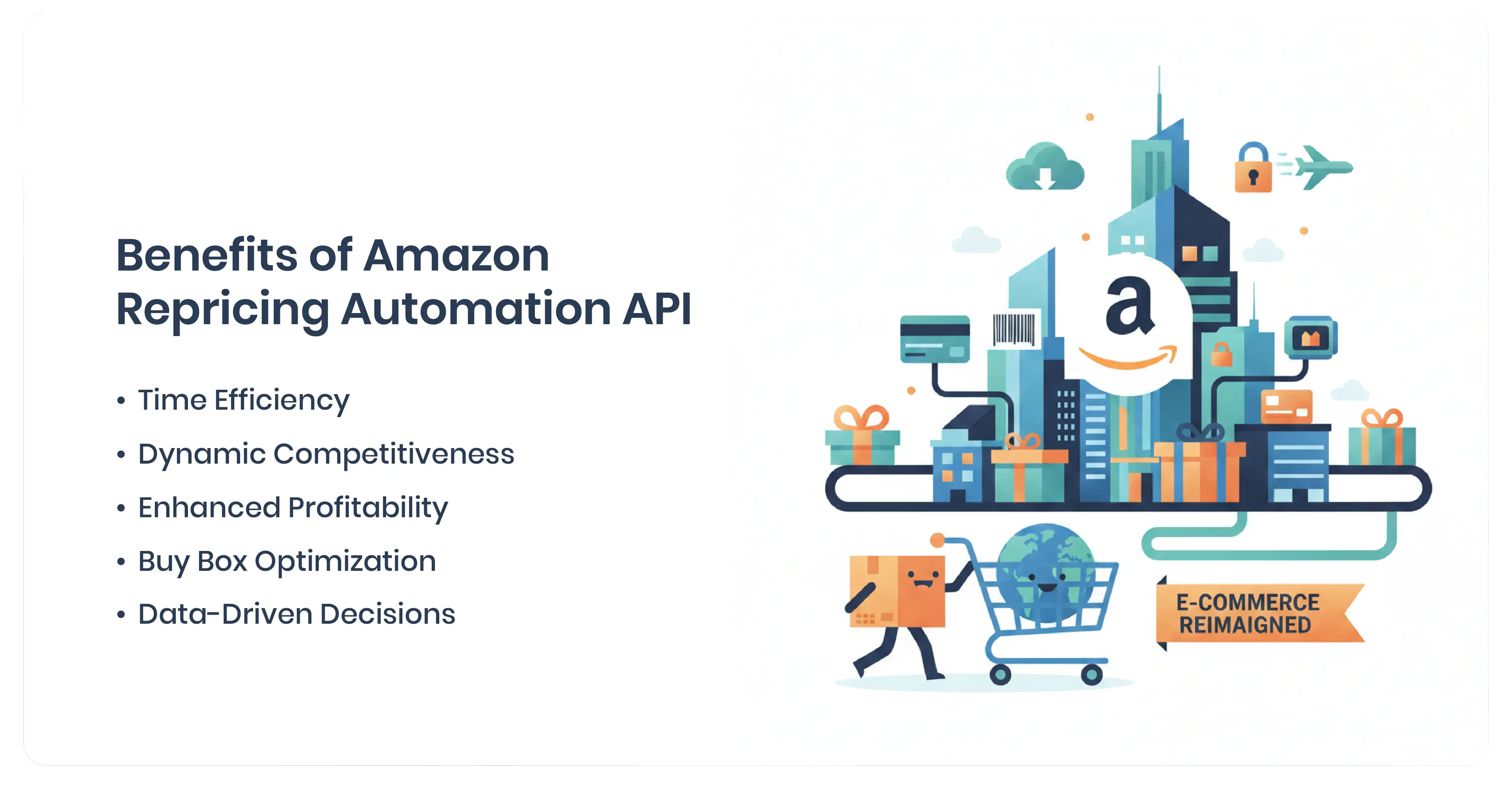
- Time Efficiency: Manual price adjustments are labor-intensive. Automation frees up sellers’ time to focus on other aspects of their business.
- Dynamic Competitiveness: Adjust prices in real-time based on competitor activity and market demand.
- Enhanced Profitability: Optimize prices to balance competitiveness and profit margins automatically.
- Buy Box Optimization: Increase the likelihood of winning the Buy Box by keeping prices competitive and compliant with Amazon rules.
- Data-Driven Decisions: Use historical and real-time data to develop effective pricing strategies.
How iWeb Data Scraping Can Help You?
- Real-Time Competitor Monitoring: We provide competitor price scraping From Amazon to deliver up-to-the-minute insights on market pricing, promotions, and inventory levels. This ensures that your pricing strategy stays competitive 24/7.
- Automated Price Adjustment Rules: Our price monitoring for Amazon sellers tools allow sellers to define rules for automatic price changes based on competitor prices, sales velocity, and profit margins, minimizing the risk of manual errors.
- Comprehensive Product Tracking: Through Amazon product matching + price tracking, we identify comparable products, track pricing trends, and highlight opportunities for competitive advantages, ensuring optimal repricing strategies.
- Frequent Market Updates: With Amazon hourly price movement tracking, sellers gain precise insights into hourly pricing trends and competitor adjustments, enabling more responsive and strategic pricing actions.
- Enhanced Data Collection: By Web Scraping Amazon ASIN key data, our services collect extensive product-level data, including price history, stock levels, and customer metrics, providing the foundation for smart automation.
Conclusion
The integration of Amazon Product Datasets into your selling strategy transforms how you manage product pricing on the platform. By combining automation with data-driven insights, sellers can stay competitive, improve profitability, and optimize their Amazon operations efficiently. Using advanced tools to Scrape Amazon Buy Box optimization Data, sellers gain a complete ecosystem for automated pricing, competitor monitoring, and market intelligence.
With these capabilities, businesses can focus on growth and strategy rather than tedious manual tasks, ensuring that every pricing decision is informed, timely, and effective. In a marketplace where fractions of a cent can impact sales, leveraging Amazon Product Data Scraper is no longer optional—it’s essential.
Experience top-notch web scraping service and mobile app scraping solutions with iWeb Data Scraping. Our skilled team excels in extracting various data sets, including retail store locations and beyond. Connect with us today to learn how our customized services can address your unique project needs, delivering the highest efficiency and dependability for all your data requirements.