How Can the Amazon vs. Home Depot Price Comparison Dataset Transform Your Competitive Pricing Strategy?
Introduction
In today’s fast-paced e-commerce environment, understanding pricing strategies across major retailers is crucial for businesses, analysts, and consumers alike. The Amazon vs. Home Depot Price Comparison Dataset provides a comprehensive look at product prices across two retail giants, enabling stakeholders to make informed decisions based on real-time and historical pricing insights. By analyzing this dataset, companies can optimize pricing strategies, monitor competitor pricing, and enhance revenue forecasting.
To truly understand the competitive landscape, it is essential to Extract Home Depot pricing strategy Analysis. Home Depot employs a mix of dynamic pricing, seasonal promotions, and bulk discounts, which are reflected in their online pricing structure. Extracting these pricing patterns allows businesses to anticipate market moves and adjust their own pricing strategies to maintain a competitive edge.
Moreover, companies can Scrape Amazon vs Home Depot comparison data to gain a broader view of market trends. Automated scraping ensures the collection of up-to-date information across thousands of SKUs, revealing discrepancies, promotions, and product availability in real-time. This granular level of analysis provides insights not only into individual product prices but also into category-level pricing patterns that can influence overall business strategy.
Leveraging Web Scraping for Retail Intelligence
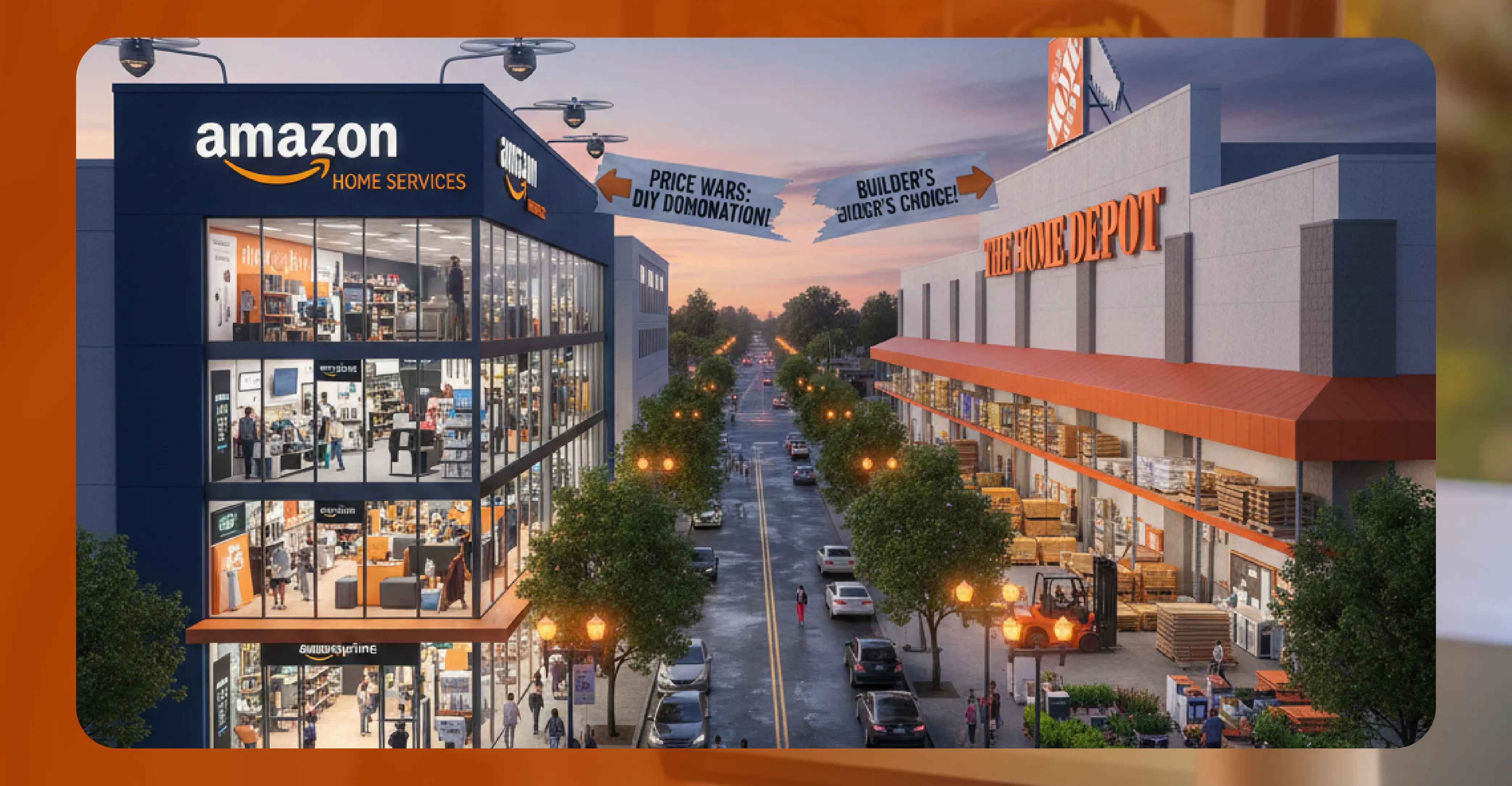
The first step in harnessing retail pricing data is to implement Web Scraping Amazon vs Home Depot data. By deploying web scraping techniques, businesses can extract structured datasets that contain product names, categories, current prices, historical price trends, stock levels, and discount patterns. These datasets are invaluable for pricing analysts, e-commerce managers, and decision-makers aiming to optimize their online presence.
For Amazon, the Amazon retail pricing dataset provides insights into pricing trends across multiple categories, from electronics to home improvement. Amazon’s pricing algorithms dynamically adjust product costs based on demand, competitor prices, and inventory levels. By collecting this data over time, businesses can uncover patterns that help predict future price movements, identify profitable product segments, and optimize promotions to maximize sales.
On the other hand, Home Depo ecommerce market insights offer a detailed look at the hardware and home improvement sector. Home Depot’s online platform reflects regional pricing variations, seasonal promotions, and inventory-driven discounts. By analyzing these insights, businesses can adapt pricing strategies to local markets, enhance inventory management, and identify gaps where competitors may have an advantage.
Utilizing Datasets for Strategic Decisions
Both Amazon Datasets are critical resources for businesses that rely on data-driven decision-making. By integrating these datasets, companies can perform cross-platform price comparisons, identify underpriced or overpriced items, and plan competitive promotions. Additionally, Home Depot Dataset allow analysts to track product lifecycle trends, from launch to discount phases, providing a complete picture of the retail ecosystem.
To streamline this process, businesses can leverage Amazon Data Scraping API Service. These services automate the extraction of relevant data, reduce manual effort, and ensure accuracy by providing structured and real-time datasets. Home Depot Data Scraping API Service allows companies to pull pricing information, product details, and stock availability systematically, enabling timely analysis and quicker decision-making.
Comparison Table: Amazon vs. Home Depot Pricing
| Power Tools |
$120 |
$115 |
+$5 |
Home Depot often offers seasonal discounts |
| Paint & Supplies |
$45 |
$50 |
-$5 |
Amazon features dynamic price adjustments |
| Home Appliances |
$220 |
$210 |
+$10 |
Both retailers provide bundle offers |
| Garden & Outdoor |
$85 |
$80 |
+$5 |
Home Depot offers loyalty member discounts |
| Lighting & Fixtures |
$60 |
$65 |
-$5 |
Amazon runs limited-time flash sales |
| Flooring & Tiles |
$70 |
$75 |
-$5 |
Prices vary regionally at Home Depot |
| Kitchen & Bath Fixtures |
$150 |
$145 |
+$5 |
Amazon pricing influenced by marketplace sellers |
This table illustrates that while there are small differences in average prices, the insights gained from monitoring Amazon retail pricing dataset and Home Depot Dataset can directly inform competitive pricing and promotional strategies.
Ready to unlock powerful competitive insights? Contact us today to get your customized retail data scraping solution.
Tools and Techniques for Efficient Analysis
To maximize the value of the datasets, businesses often use the Amazon vs. Home Depot Data Extractor. This tool automates the aggregation of product pricing, inventory, and discount information from both platforms, enabling seamless comparisons. By integrating this data into business intelligence tools, analysts can generate dashboards, track price fluctuations, and identify opportunities for cost savings or revenue growth.
Additionally, businesses that require continuous monitoring of Amazon products can utilize Amazon price tracking solutions. These platforms alert retailers when prices change, helping them to respond quickly and maintain competitive positioning. Similarly, leveraging Home Depot Data Scraping API Service ensures timely collection of updated pricing and promotional information, critical for dynamic pricing strategies.
Strategic Applications of Price Comparison Data
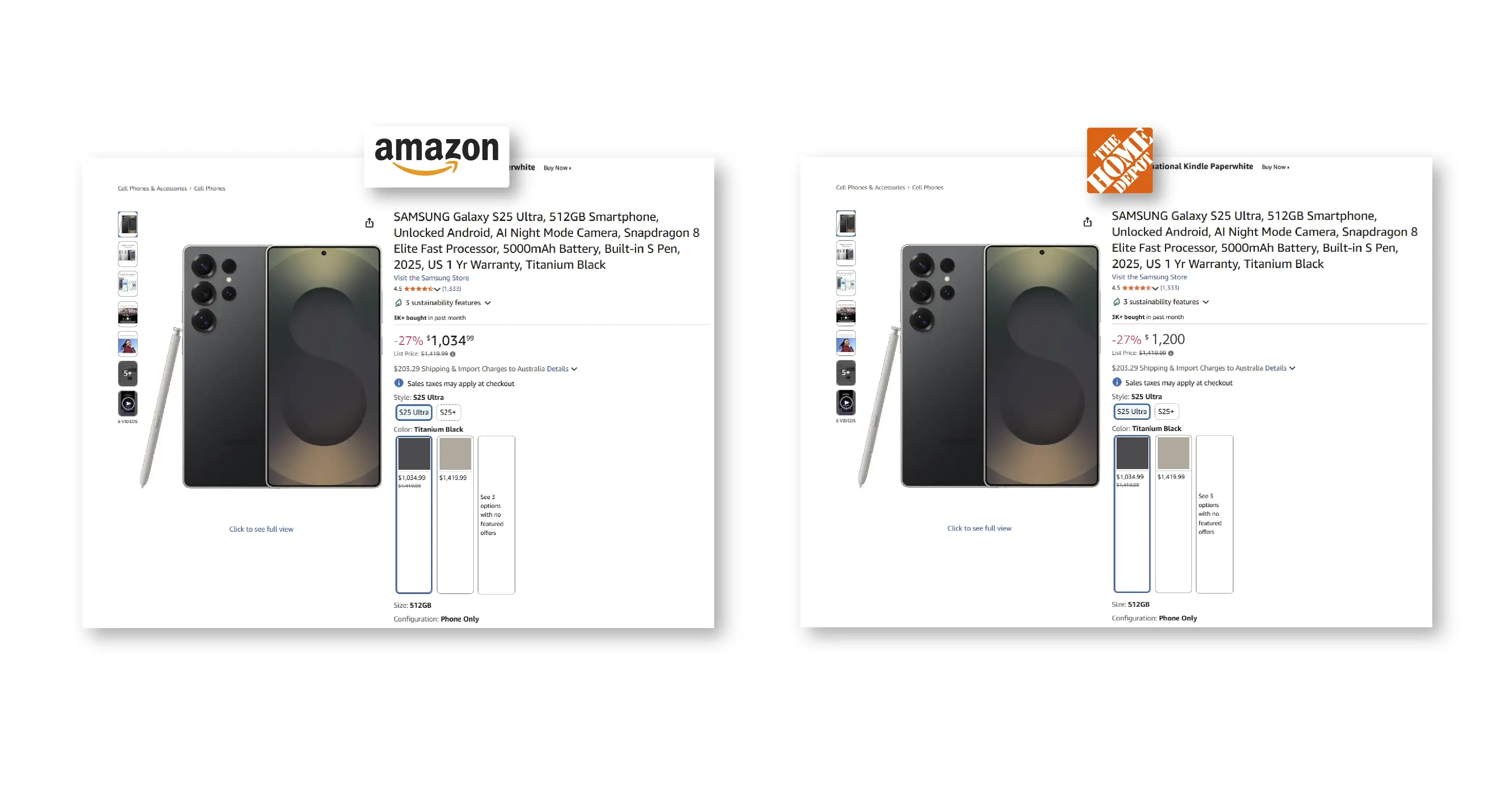
The insights derived from Amazon vs. Home Depot pricing datasets have multiple strategic applications:
- Dynamic Pricing Optimization: Businesses can adjust their prices based on real-time competitor data to maximize revenue.
- Inventory Management: Understanding which products are heavily discounted or in high demand allows for better stock allocation.
- Promotional Strategy Planning: Identifying patterns in competitor discounts helps brands plan targeted promotions.
- Market Intelligence: Continuous monitoring of prices and promotions provides a competitive advantage in retail decision-making.
- Customer Insights: Price variations and promotions can be analyzed to understand consumer behavior and preferences.
These applications are critical for companies looking to compete effectively in the online retail sector, particularly in categories where price sensitivity is high.
How iWeb Data Scraping Can Help You?
- Competitive Price Monitoring: Our data scraping services enable businesses to track competitor prices, promotions, and discounts across platforms like Amazon and Home Depot, ensuring timely pricing adjustments and maximizing profit margins.
- Real-Time Product Insights: We extract detailed product data, including availability, specifications, and category trends, helping companies make data-driven inventory and marketing decisions to meet consumer demand efficiently.
- Historical Price Analysis: By collecting historical datasets, our services allow businesses to analyze pricing patterns, seasonal trends, and competitor strategies, supporting smarter forecasting and strategic long-term decision-making.
- Automated Data Collection: Our web scraping APIs automate data extraction from multiple platforms, reducing manual effort, ensuring accuracy, and providing structured datasets ready for analytics and business intelligence tools.
- Market Intelligence & Strategy: Leveraging our scraping services, businesses gain actionable insights into e-commerce trends, customer behavior, and competitor strategies, enabling informed product launches, promotions, and competitive positioning in the market.
Conclusion
In conclusion, the Amazon vs. Home Depot real-time price monitoring capabilities, combined with historical datasets, provide unparalleled insights into retail pricing trends. The Amazon vs. Home Depot historical price comparison dataset allows businesses to analyze long-term pricing strategies, uncover patterns, and make informed decisions that impact profitability.
By leveraging Amazon vs. Home Depot product price intelligence, companies can not only stay competitive but also proactively anticipate market shifts, respond to competitor strategies, and optimize their product portfolios. Automated tools such as data extractors and APIs simplify the process, providing continuous, accurate, and actionable insights.
In a marketplace where pricing decisions can significantly influence consumer choices, understanding the nuances of Amazon vs. Home Depot Price Comparison Dataset is no longer optional—it is essential for strategic success. Businesses that harness these insights can transform raw data into a strategic asset, ensuring sustained growth in a competitive e-commerce landscape.
Experience top-notch web scraping service and mobile app scraping solutions with iWeb Data Scraping. Our skilled team excels in extracting various data sets, including retail store locations and beyond. Connect with us today to learn how our customized services can address your unique project needs, delivering the highest efficiency and dependability for all your data requirements.