The rapid growth of online food delivery platforms has transformed how restaurants, consumers, and food brands interact. In this data-driven environment, Category-Wise PedidosYa Menu Data Extraction has become a powerful way to understand how menus are structured, how prices evolve, and how customer demand shifts across different food categories. With the help of real-time PedidosYa menu data extraction, businesses gain immediate visibility into menu changes, item availability, and category performance. At the same time, PedidosYa menu price data scraping enables consistent monitoring of pricing dynamics in one of Latin America’s most competitive delivery ecosystems.
As digital ordering becomes the norm, access to organized, category-level menu intelligence is no longer optional—it is essential for sustainable growth.
Food delivery menus are complex. A single restaurant may list dozens of items across multiple cuisines, portion sizes, and price tiers. Without structure, this information remains fragmented and difficult to analyze.
Category-based menu intelligence brings order to this complexity by grouping items into meaningful segments. This allows stakeholders to quickly assess which sections of a menu generate the most interest, revenue, and repeat orders. For delivery-focused restaurants and cloud kitchens, this clarity supports better decision-making at both strategic and operational levels.
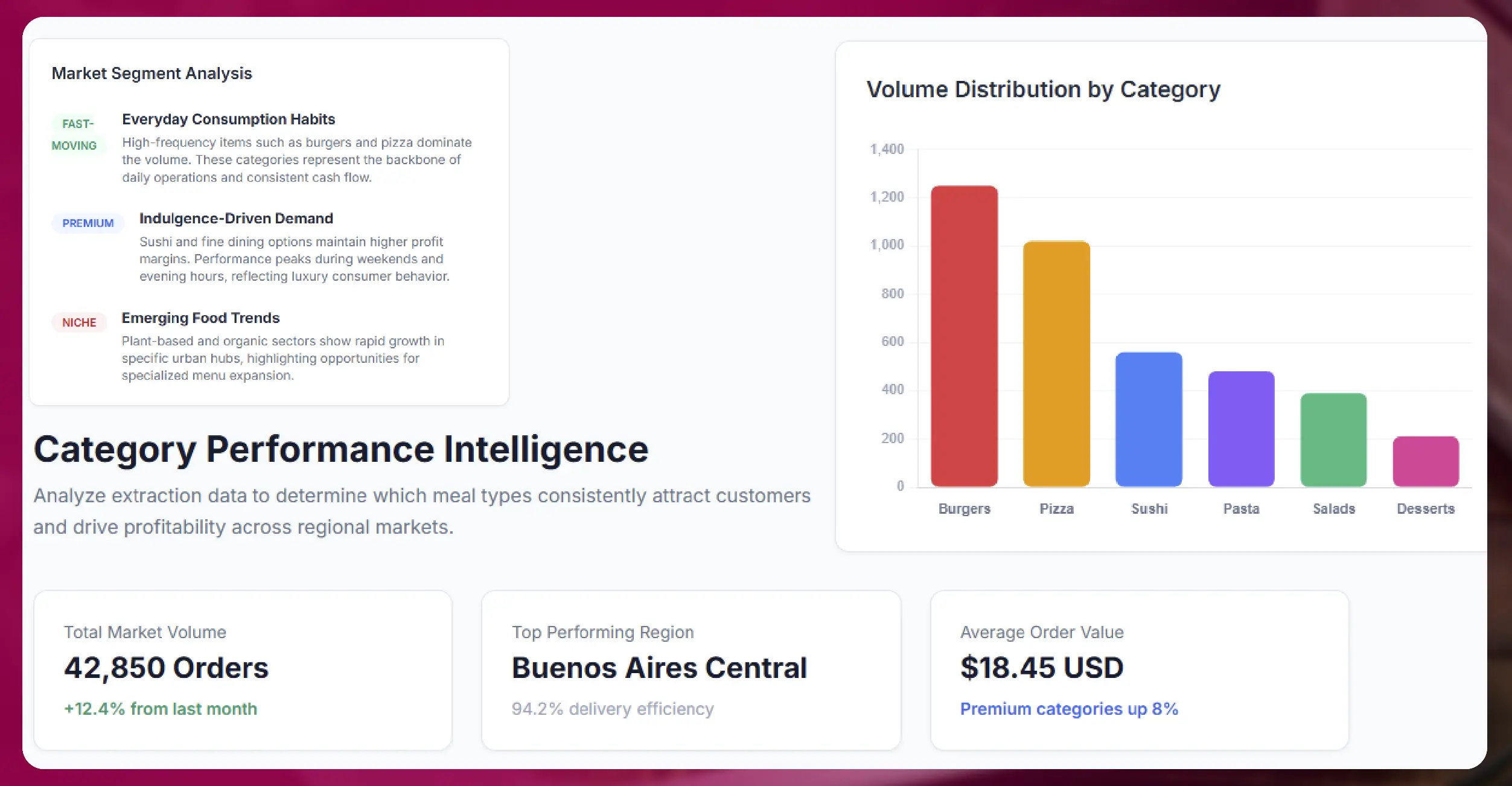
Understanding which food categories perform best is critical for maximizing profitability. Using a PedidosYa top categories data Extractor, businesses can determine which meal types consistently attract customers across different locations.
For example:
These insights help restaurants invest in menu sections that drive growth while minimizing reliance on underperforming offerings.
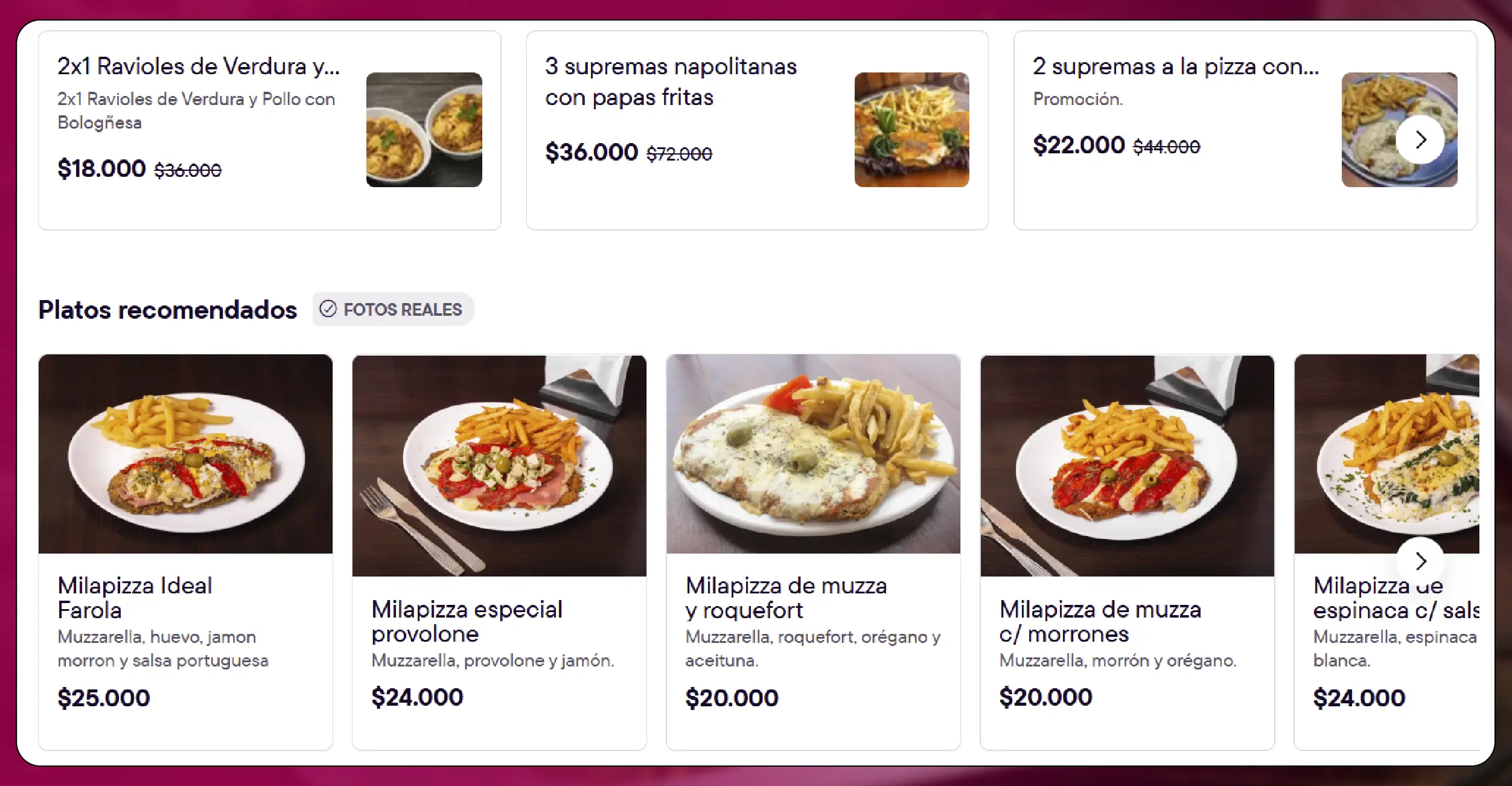
Pricing behavior varies significantly depending on cuisine type, preparation complexity, and consumer expectations. Through PedidosYa category-wise pricing data Tracking, it becomes possible to identify how customers respond to price changes within specific menu segments.
This analysis enables businesses to:
By studying pricing trends at the category level, restaurants can remain competitive without sacrificing profitability.
Food preferences differ widely between neighborhoods, cities, and delivery zones. With the ability to Extract urban food delivery demand data Extracting, businesses can observe how category popularity shifts based on geography and time.
Urban-level insights support:
This approach ensures menus are aligned with real demand rather than assumptions.
Detailed analysis derived from Argentina food delivery patterns Data Scrape reveals how consumer behavior is evolving in response to lifestyle changes, economic conditions, and cultural influences.
Key observations often include:
These insights allow businesses to anticipate demand shifts instead of reacting after trends peak.
Reliable menu intelligence depends on consistent and accurate data collection. PedidosYa data scraping automates the process of gathering menu listings, prices, item descriptions, and availability from thousands of restaurant pages.
Advanced methods such as Web Scraping Pedidosya ensure data is:
Automation eliminates manual tracking errors and enables continuous market visibility.
When menu data is structured by category, it delivers practical value across multiple business functions:
Menu Optimization
Restaurants can refine offerings by focusing on categories with high demand and strong conversion rates using Food Menu Data Scraping.
Competitive Benchmarking
Category-level comparisons reveal how similar cuisines are priced and promoted across the platform.
Demand Forecasting
Historical category trends help predict future spikes, enabling better inventory and staffing decisions.
Marketing Precision
Promotions can be targeted toward categories that respond best to discounts or visibility boosts.
To fully utilize menu intelligence, businesses rely on seamless system integration. Food Data Scraping API Services allow extracted menu information to flow directly into analytics dashboards, reporting tools, and internal platforms.
This integration supports:
APIs transform raw menu data into actionable intelligence.
Turn real-time food delivery data into actionable insights—partner with us today to power smarter, faster decisions.
Category-based menu intelligence supports long-term strategy, not just daily operations. With access to structured insights, businesses can:
Data-backed decisions reduce risk and improve scalability in a competitive delivery environment.
As online food ordering continues to grow, success increasingly depends on how well businesses understand menu performance and consumer behavior. Leveraging the PedidosYa Food Delivery Scraping API ensures continuous access to accurate, category-level insights.
Well-structured Food Delivery App Menu Datasets empower restaurants, brands, and analysts to evaluate performance across cuisines, locations, and price segments.
By adopting reliable Food Delivery Data Extraction Services, businesses can move beyond intuition, respond faster to market changes, and build a data-driven foundation for long-term success in Argentina’s dynamic food delivery market.
Experience top-notch web scraping service and mobile app scraping solutions with iWeb Data Scraping. Our skilled team excels in extracting various data sets, including retail store locations and beyond. Connect with us today to learn how our customized services can address your unique project needs, delivering the highest efficiency and dependability for all your data requirements.
It involves organizing menu items into structured categories to analyze pricing, availability, and performance across different food segments.
Menu data reveals demand trends, pricing behavior, and customer preferences, enabling smarter menu design, promotions, and operational planning.
Real-time monitoring helps track price changes, item availability, and new launches instantly, allowing businesses to react quickly to market shifts.
Category insights help target promotions toward high-demand food segments, improving campaign effectiveness and customer engagement.
Restaurant chains, cloud kitchens, food brands, aggregators, and market analysts all benefit from structured insights for growth and competitiveness.