How Does Competitor Data Scraping for Retail Planogram & Shelf Space Improve Store Performance?
Introduction
In today’s hyper-competitive retail landscape, success is no longer driven solely by
product quality or pricing—it is heavily influenced by how products are positioned, displayed,
and perceived in-store and online. Retailers and brands are investing significantly in
planograms and shelf optimization strategies to capture customer attention and maximize sales
per square foot. This is where Competitor Data Scraping for Retail Planogram & Shelf Space
becomes a game-changing approach.
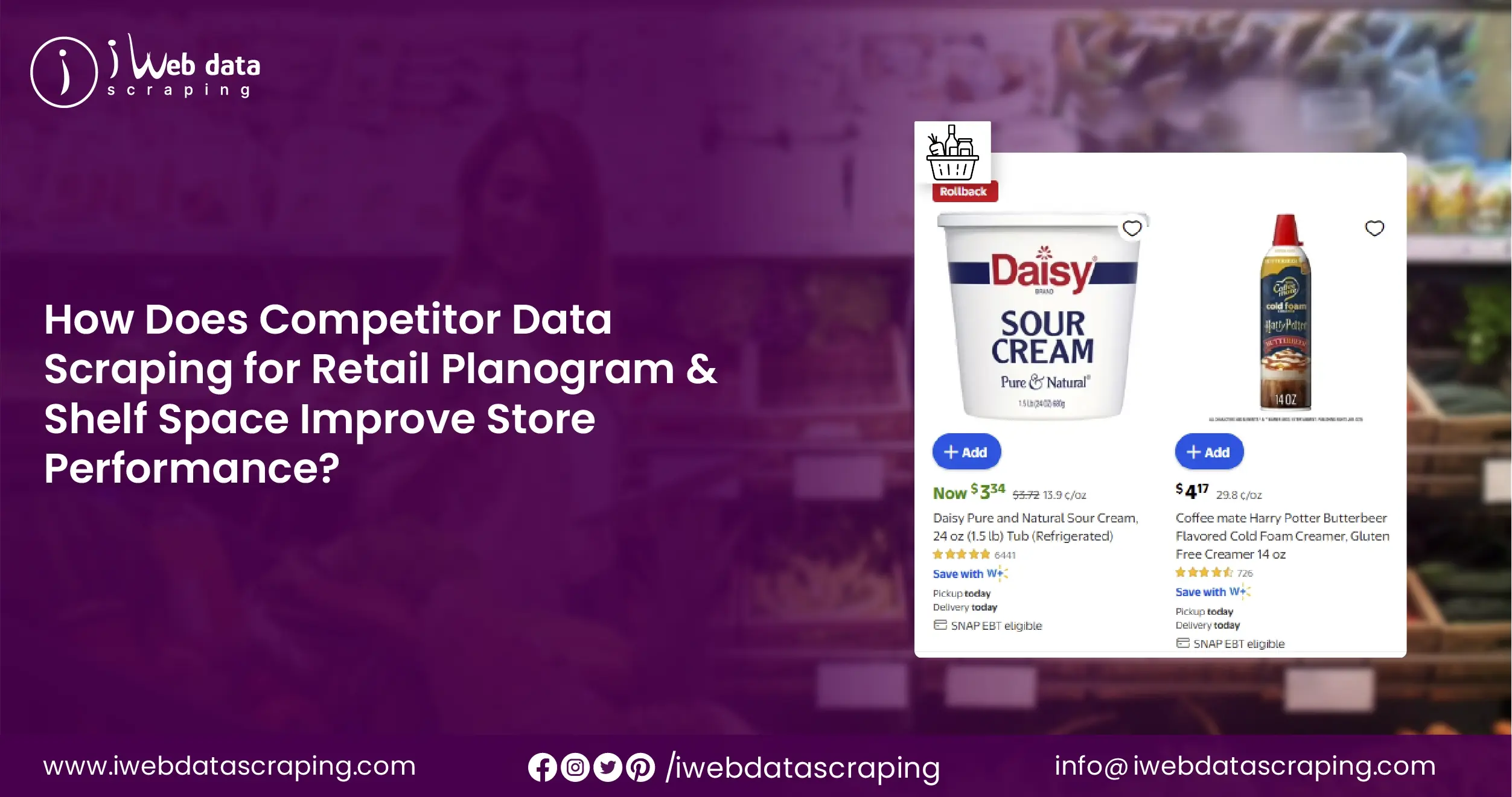
By leveraging advanced analytics and automation, businesses can Extract Competitor
Data for Planogram & Shelf Space and gain deep visibility into how competitors structure their
product displays, prioritize SKUs, and allocate shelf space across categories. Additionally, the
ability to Scrape competitor product placement data for retail insights enables brands to
uncover patterns in merchandising strategies that directly impact purchasing behavior.
This blog explores how competitor data scraping transforms retail shelf planning,
improves merchandising effectiveness, and empowers brands with actionable intelligence.
Understanding Retail Planograms and Shelf Space Strategy
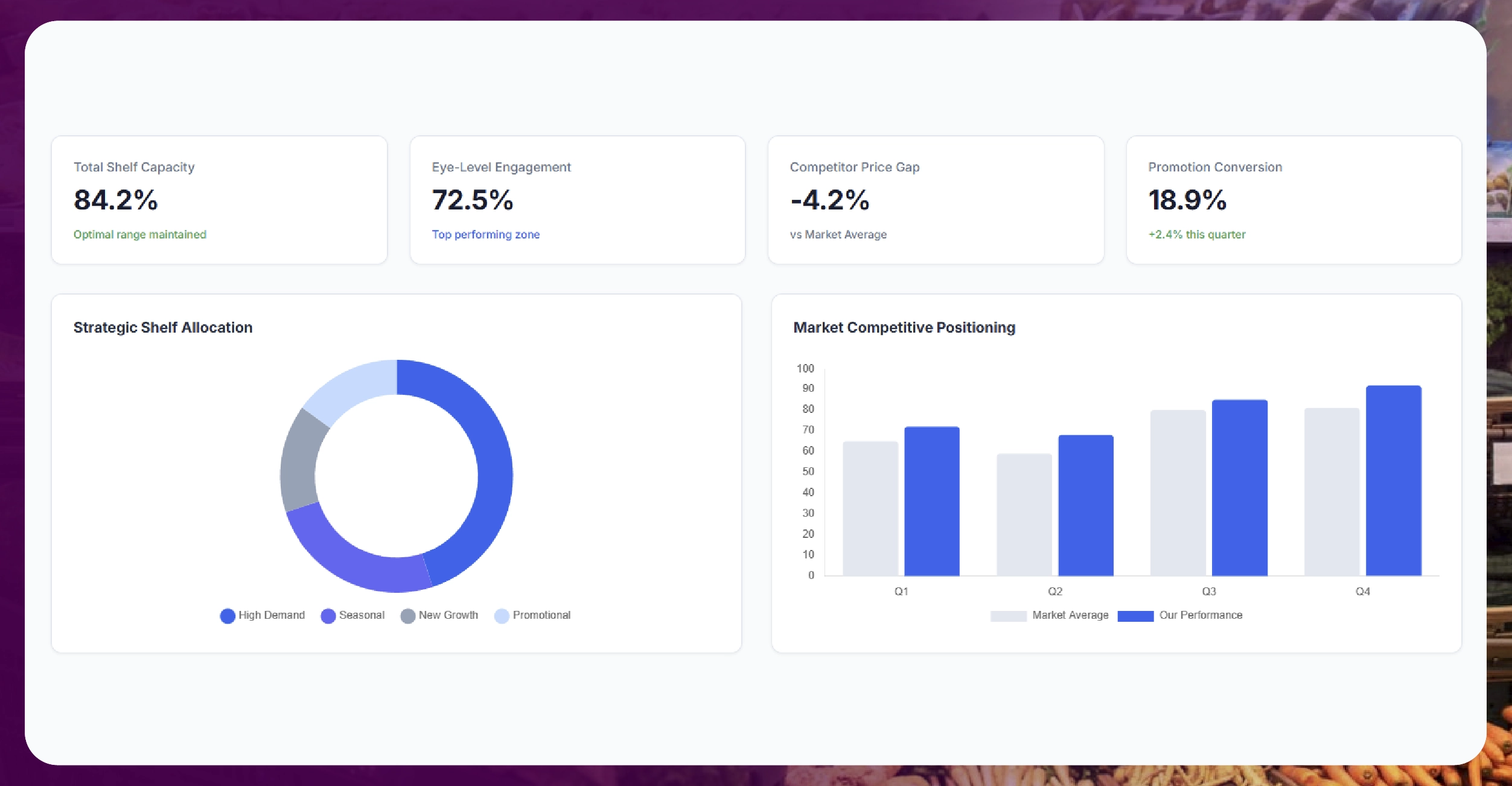
A retail planogram is a visual representation of how products should be arranged
on
shelves to maximize visibility and sales. Shelf space, on the other hand, is one of the most
valuable assets in retail—often determining which products succeed and which fail.
Retailers carefully design planograms based on:
- Product demand and seasonality
- Brand partnerships and promotions
- Customer behavior and store layout
- Pricing and competitive positioning
However, relying solely on internal data limits strategic potential. Without
competitor insights, retailers operate in a partial information environment. Competitor data
scraping fills this gap by providing real-time, external intelligence.
Why Competitor Data Scraping Matters in Retail?
Modern retail competition is dynamic, with frequent changes in product
assortment,
pricing, and shelf placement. Businesses need continuous insights to stay relevant.
- Visibility into Competitor Shelf Strategy
With Real-time competitor
tracking for shelf space decisions, brands can monitor how competitors allocate premium
shelf positions, adjust layouts, and rotate products based on demand.
- Smarter Merchandising Decisions
Using Competitor Planogram & Shelf
Space
data extraction, retailers can identify which product categories receive maximum
exposure
and replicate successful strategies.
- Improved Category Management
Data-driven insights help brands
optimize
product grouping, ensuring better cross-selling and upselling opportunities.
- Faster Response to Market Changes
Competitor data enables quick
adjustments in shelf placement strategies, ensuring businesses remain competitive during
promotions and seasonal shifts.
Unlock smarter retail strategies and maximize your shelf
impact—partner with us today to turn competitor data into actionable
growth
insights!
Key Components of Competitor Data Scraping
Competitor data scraping involves collecting structured information from online
retail platforms, store audits, and digital catalogs. The following components are
essential:
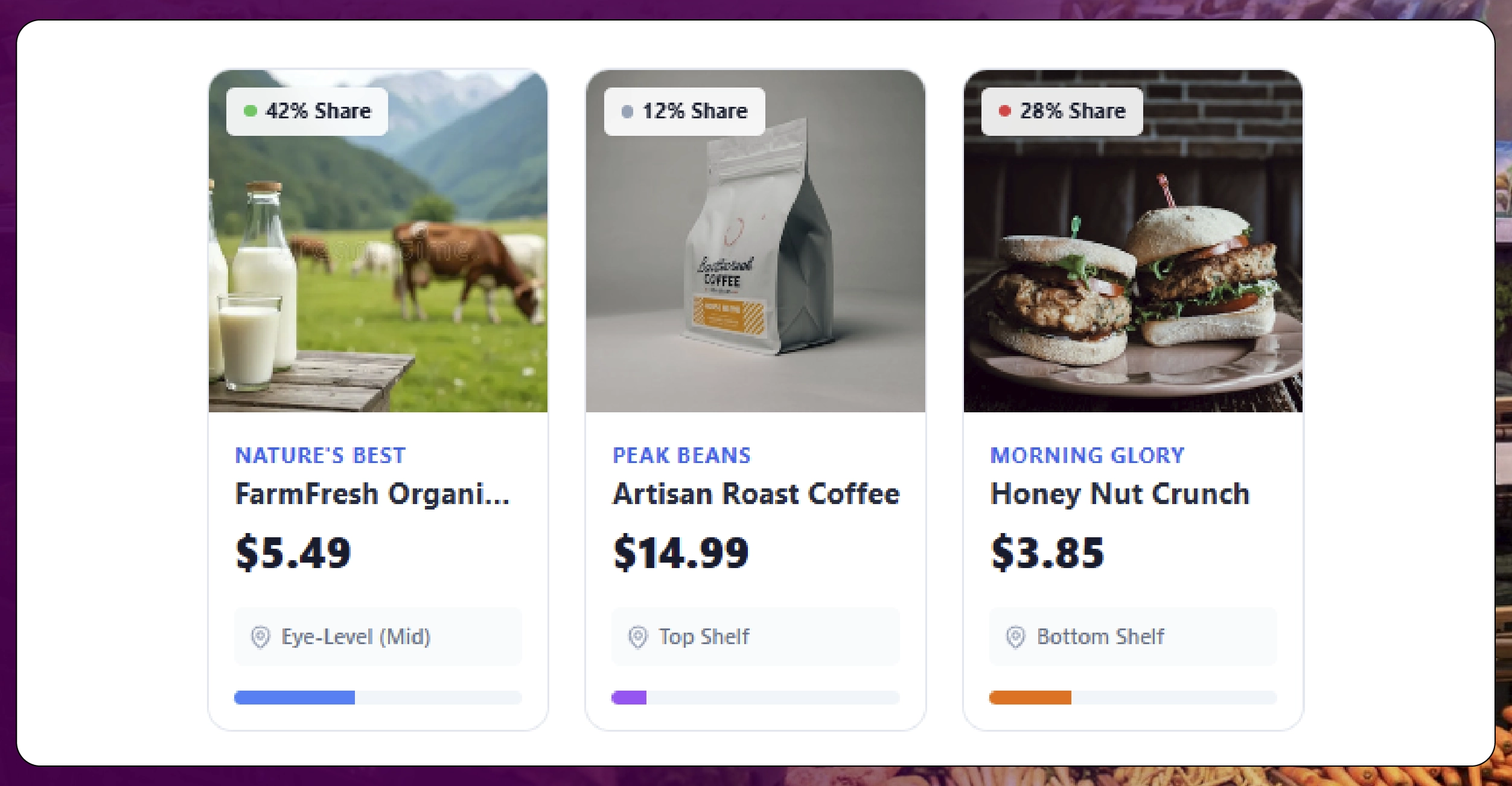
Product Placement Analysis
Understanding where products appear on shelves—top, middle, or bottom—helps
determine visibility impact.
Shelf Share Measurement
Brands can calculate how much shelf space competitors occupy within a category.
Pricing and Promotions
Through method to Scrape Competitor pricing and assortment data, businesses gain
insights into pricing strategies tied to shelf positioning.
Assortment Strategy
Using Competitor Assortment & Shelf Mapping Data, companies can analyze SKU
variety
and identify gaps in their own offerings.
How Data Scraping Enhances Retail Display Strategy?
Retail display strategy is a critical factor influencing consumer decisions.
Data
scraping provides a competitive edge by enabling:
- Optimized Product Positioning
With insights from Retail Display
Strategy
Analytics, brands can place high-margin
or high-demand products at eye level for maximum visibility.
- Better Promotion Planning
Understanding competitor promotions helps
brands
design more impactful campaigns.
- Category Dominance
By analyzing shelf share, businesses can aim to
dominate
specific categories within
stores.
- Enhanced Store Layout Decisions
Data-driven layouts ensure better
navigation
and improved customer experience.
Applications in Grocery and Supermarket Retail
The grocery sector is one of the most competitive retail segments, where shelf
space
directly impacts sales.
Real-Time Insights for FMCG Brands
With Grocery Data Scraping
Services, brands can monitor competitor product
placements across multiple stores and regions.
Data-Driven Inventory Planning
Using Grocery and
Supermarket
Store Dataset, retailers can align inventory with
shelf strategies and demand patterns.
Competitive Pricing Alignment
Scraping data ensures pricing strategies remain competitive without compromising
margins.
Seasonal and Regional Adjustments
Retailers can adapt planograms based on regional preferences and seasonal demand
trends.
Benefits of Competitor Data Scraping for Retailers
- Increased Sales Performance
Better shelf placement leads to higher
product visibility and increased conversions.
- Data-Driven Decision Making
Retailers can replace guesswork with
actionable insights derived from real-time data.
- Competitive Advantage
Understanding competitor strategies enables
proactive decision-making.
- Improved Supplier Negotiations
Brands can use shelf data to
negotiate
better placement with retailers.
- Enhanced Customer Experience
Optimized layouts improve product
discovery
and shopping convenience.
Challenges in Implementing Data Scraping
While the benefits are substantial, businesses must address certain challenges:
Data Accuracy and Consistency
Ensuring clean, structured, and reliable data is critical for meaningful
insights.
Dynamic Retail Environments
Frequent changes in layouts and product availability require continuous
monitoring.
Legal and Ethical Considerations
Businesses must adhere to compliance standards when collecting and using
competitor
data.
Integration with Existing Systems
Seamless integration with analytics platforms is essential for real-time
decision-making.
Future Trends in Retail Planogram Analytics
The future of retail lies in automation, AI, and predictive analytics.
Competitor
data scraping will play a central role in:
AI-Driven Planogram Optimization
Machine learning models will recommend optimal shelf layouts based on competitor
data.
Real-Time Store Monitoring
IoT and computer vision technologies will complement scraping for physical store
insights.
Hyper-Personalized Retail Experiences
Data will enable personalized product placements tailored to customer
preferences.
Omnichannel Integration
Retailers will align online and offline shelf strategies for consistent brand
experiences.
How iWeb Data Scraping Can Help You?
Advanced Competitive Intelligence
We deliver structured insights into competitor shelf strategies, enabling
smarter
merchandising decisions and improved retail performance across categories.
Real-Time Data Monitoring
Our solutions ensure continuous tracking of competitor activities, helping
businesses respond instantly to market changes and optimize shelf strategies.
Custom Data Solutions
We provide tailored datasets that align with specific business needs, ensuring
maximum relevance and usability for decision-making.
Scalable Data Infrastructure
Our systems handle large-scale data extraction efficiently, supporting
multi-store
and multi-region analysis without performance issues.
Actionable Analytics
We transform raw data into meaningful insights, helping businesses improve
planograms, pricing, and product placement strategies.
Conclusion
Competitor data scraping is revolutionizing how retailers approach planograms
and
shelf space optimization. By leveraging real-time insights, businesses can make informed
decisions that enhance product visibility, improve customer experience, and drive revenue
growth.
In a market where shelf space is limited and competition is intense, data-driven
strategies are no longer optional—they are essential. Solutions like Grocery Pricing Data
Intelligence Services empower retailers to align pricing with shelf strategies,
while
Web
Scraping API Services ensure seamless and automated data collection at scale.
Additionally,
comprehensive Web Scraping Services enable businesses to stay ahead by continuously
monitoring
competitor activities and adapting their strategies accordingly.
Organizations that invest in competitor data scraping today will be better
positioned to dominate retail shelves, optimize merchandising, and achieve long-term success
in
an increasingly data-driven world.
Experience top-notch web scraping
service
and mobile app scraping solutions with iWeb
Data
Scraping. Our skilled team excels in extracting various data sets, including retail store locations and beyond. Connect with us
today to learn how our customized services can address your unique project needs, delivering
the
highest efficiency and dependability for all your data requirements.