Why is Co-op Grocery Delivery Data Scraping Important for Real-Time Grocery Analytics?
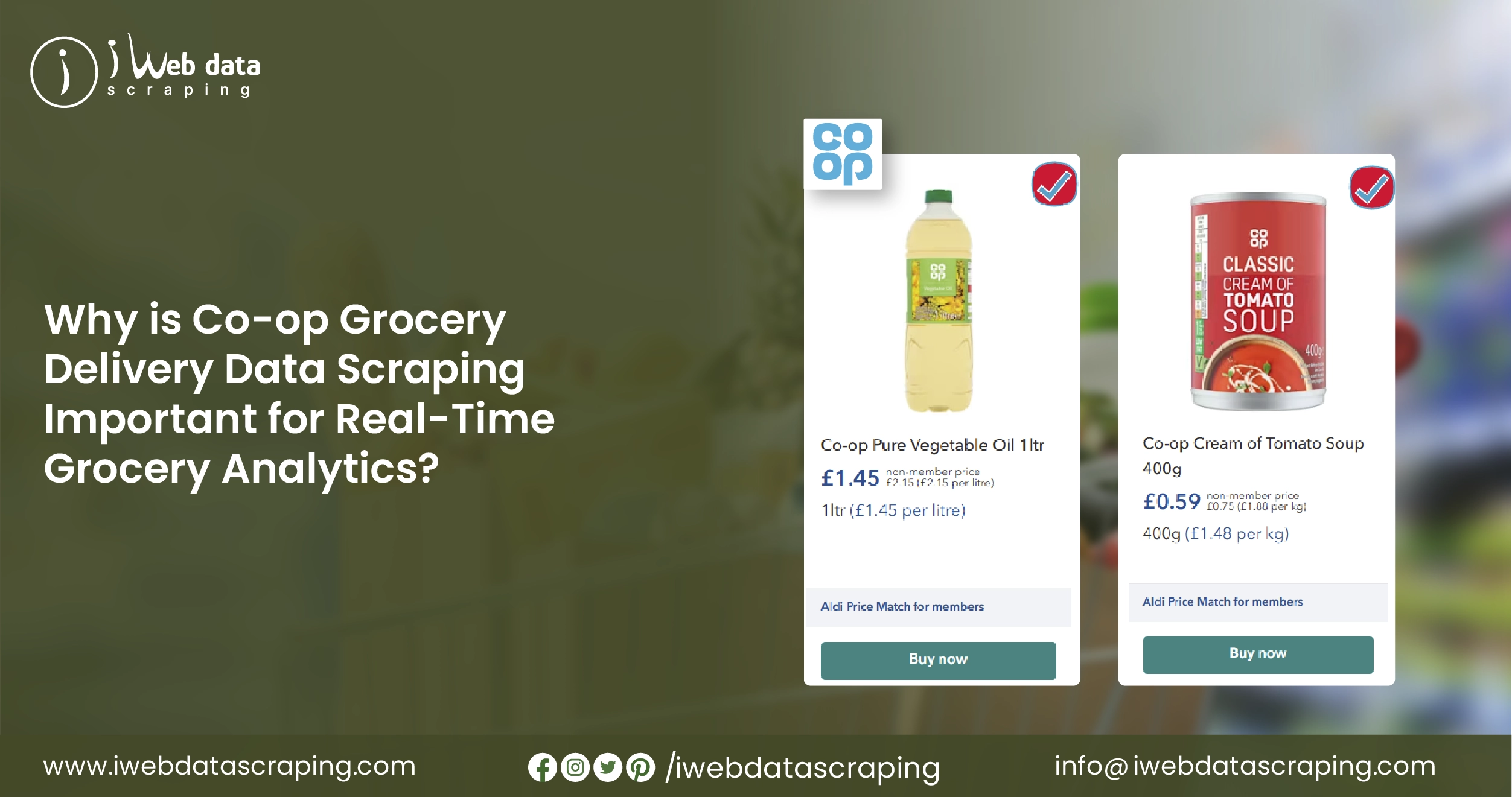
Introduction
The modern grocery industry is rapidly shifting toward data-driven decision-making,
where every price change, stock update, and delivery pattern matters. Retailers and analysts now
rely heavily on structured data pipelines to understand consumer demand, optimize inventory, and
stay competitive in fast-moving markets.
In this context, Co-op Grocery Delivery Data Scraping plays a crucial role in
extracting structured and actionable insights from online grocery platforms. By capturing
real-time product listings, pricing changes, and availability updates, businesses can transform
raw web data into meaningful intelligence.
One of the most valuable outcomes of this approach is the ability to Extract grocery
price trends from Co-op, helping retailers understand how product pricing evolves across
categories and seasons. At the same time, analysts can Scrape Co-op stock availability data to
track product shortages, restocking patterns, and demand spikes in different regions.
These insights are essential for building strong pricing strategies, improving
supply chain efficiency, and enhancing customer satisfaction in a highly competitive grocery
ecosystem.
Understanding the Importance of Co-op Grocery Data Extraction
Grocery retail is no longer just about selling products—it is about understanding
consumer behavior in real time. Co-op, being one of the most widely used grocery delivery
platforms, generates massive amounts of data every second.
To make sense of this, businesses deploy intelligent systems that continuously
monitor listings and extract structured datasets. This is where data scraping becomes essential,
as it converts unstructured product pages into usable analytics-ready formats.
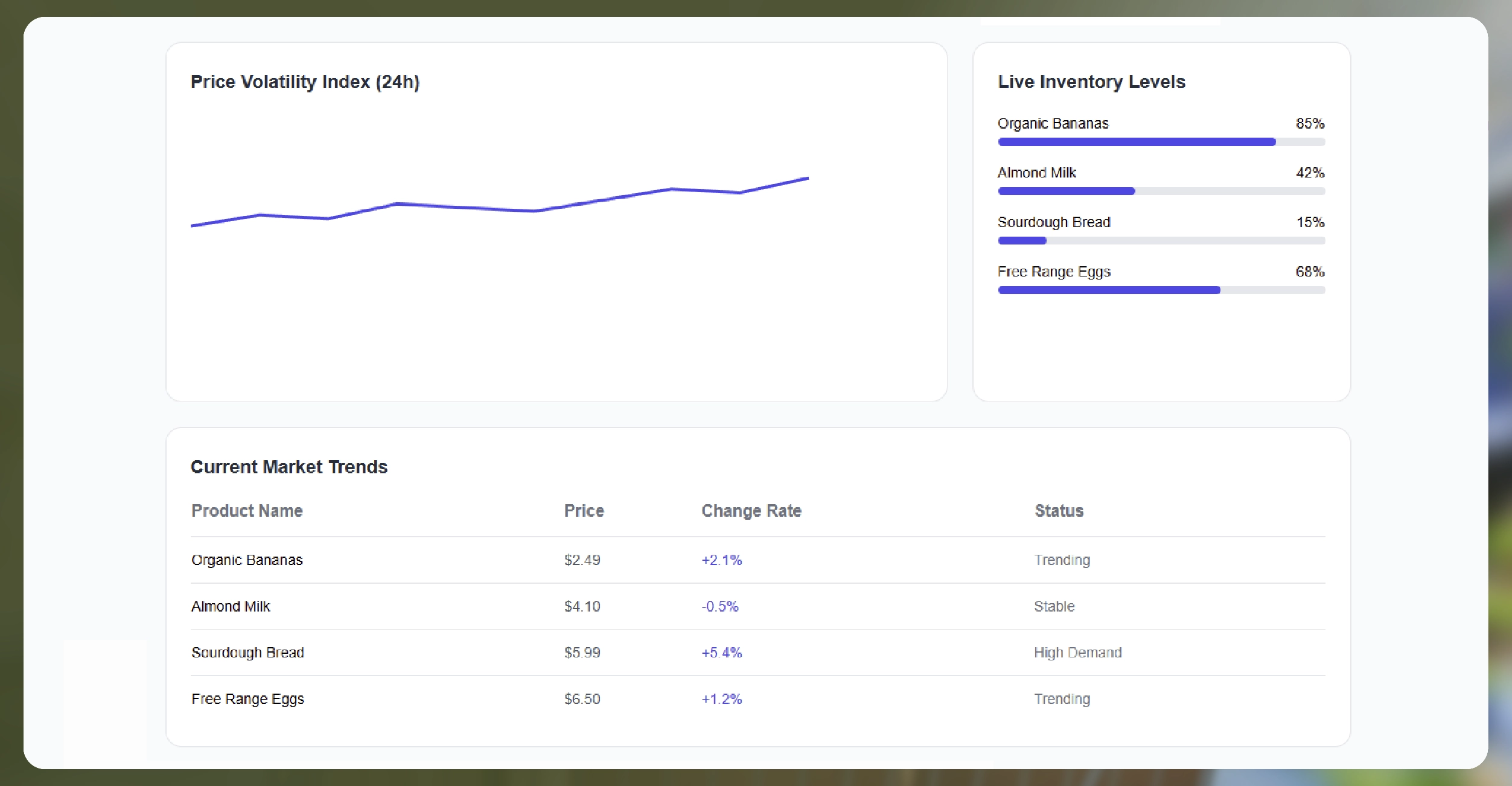
Through structured extraction methods, companies can observe how frequently prices
change, which products are trending, and how inventory levels fluctuate throughout the day. This
creates a strong foundation for predictive analytics and demand forecasting.
Real-Time Pricing and Market Monitoring
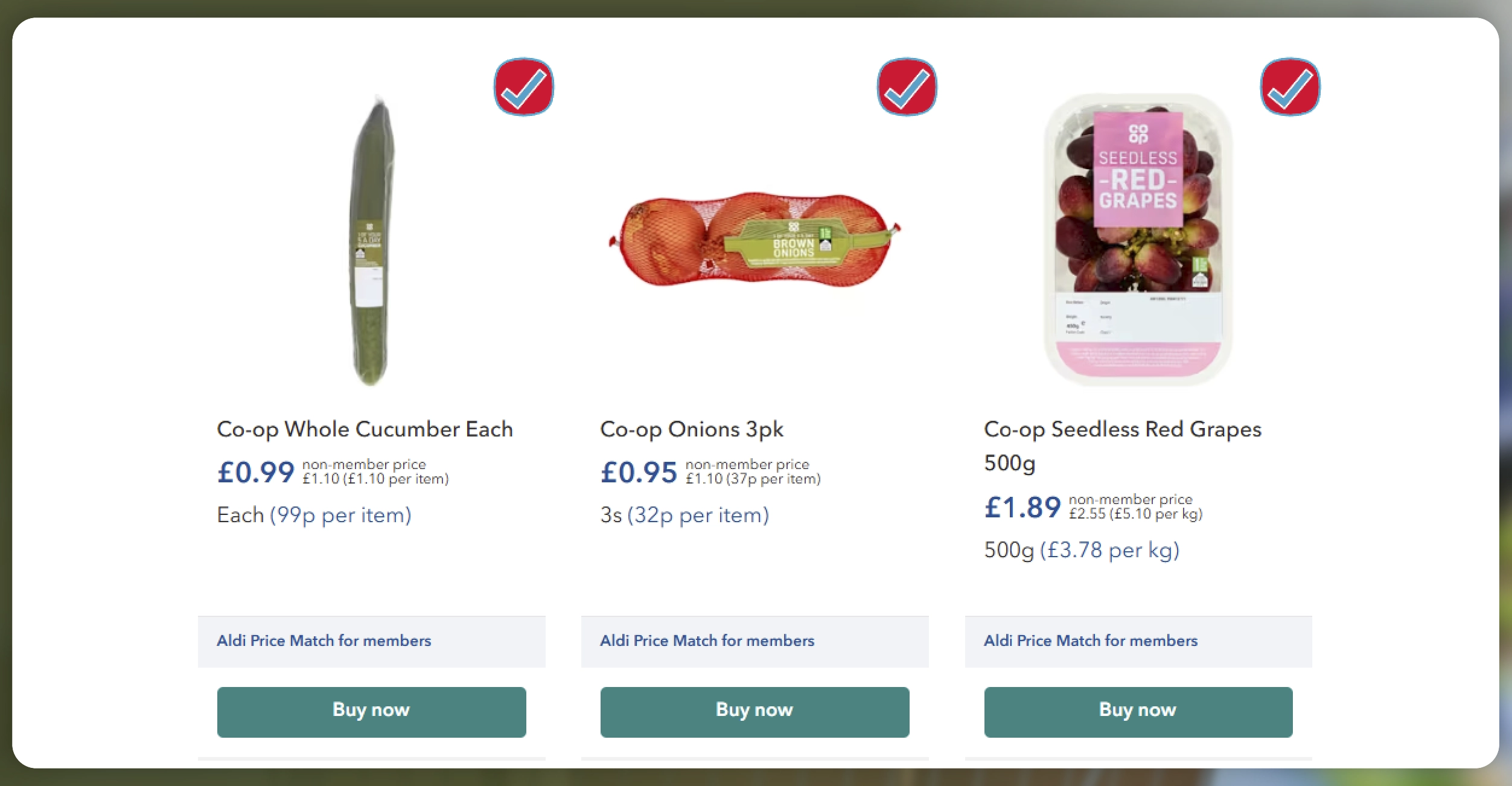
One of the biggest advantages of grocery data extraction is real-time visibility
into pricing dynamics. Retail prices in online grocery platforms often change multiple times per
day due to promotions, supply changes, and competitor pricing strategies.
With real time Co-op price monitoring, businesses can track these fluctuations
instantly and adjust their own pricing strategies accordingly. This ensures they remain
competitive while maximizing profit margins.
Additionally, companies can identify discount patterns and promotional cycles that
Co-op uses to attract customers. These insights help in building optimized pricing engines and
automated repricing tools for retailers and aggregators.
API-Based Data Access and Automation
Modern businesses prefer automated and scalable solutions for data collection rather
than manual extraction methods. This is where APIs and scraping frameworks come into play.
Using a strategy to Extract Co-op Grocery Delivery Data API, organizations can
automate the entire process of retrieving structured grocery data without manual intervention.
This improves efficiency, reduces operational costs, and ensures continuous data flow.
Such APIs are especially useful for enterprises dealing with large-scale grocery
analytics, where real-time updates are critical for decision-making. They also help in
integrating grocery datasets directly into dashboards, BI tools, and machine learning models.
Advanced Grocery Analytics and Insights
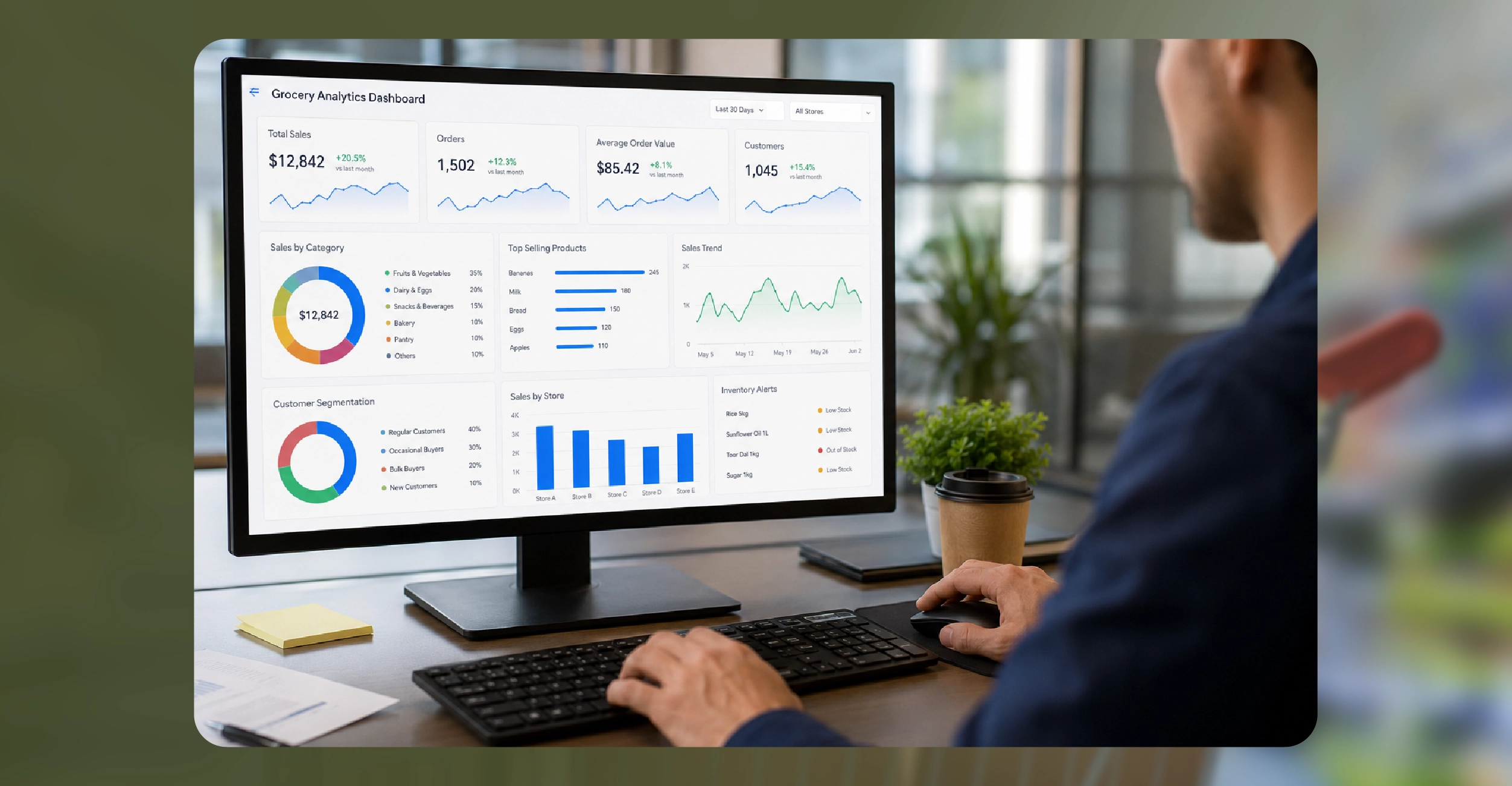
The real power of grocery data lies in analytics. Once data is extracted, it can be
processed to generate deep insights into consumer behavior, product demand, and market trends.
With real time Co-op grocery analytics, businesses can analyze purchasing patterns,
identify high-demand products, and detect seasonal shifts in grocery consumption. These insights
allow retailers to optimize stock levels and reduce wastage.
Analytics can also help in segmenting customers based on purchasing habits, enabling
personalized marketing campaigns and targeted promotions. Over time, this leads to better
customer retention and higher revenue growth.
Building Structured Grocery Datasets
Data becomes significantly more valuable when it is organized into structured
formats. A well-designed dataset allows businesses to perform large-scale analysis without
manual cleaning or preprocessing.
A Grocery Dataset from Co-op typically
includes product names,
prices, discounts,
availability status, category classification, and timestamped updates. This structured format
makes it easier for analysts and data scientists to build predictive models.
Such datasets are widely used in machine learning applications like demand
forecasting, price optimization, and inventory prediction. They also support competitive
benchmarking across multiple grocery platforms.
Enterprise-Level Data Extraction Solutions
Large organizations require scalable and reliable data extraction systems that can
handle high-frequency updates and large volumes of product data.
Professional solutions like Coop.co Grocery and Supermarket Data Extraction Services
are designed specifically for this purpose. These services ensure accurate extraction of grocery
listings, pricing updates, and stock changes from Co-op’s online platform.
They are particularly useful for retailers, market research firms, and analytics
companies that require continuous data streams for decision-making. By using such services,
businesses can eliminate manual effort and focus entirely on strategy and insights.
Expanding Grocery Data Ecosystems
The grocery industry generates vast datasets across multiple platforms, categories,
and regions. To fully leverage this information, businesses often combine multiple data sources
into unified systems.
This leads to the creation of Grocery and Supermarket Store
Datasets, which
integrate data from various grocery chains into a single analytical framework. These datasets
allow for cross-platform comparisons and competitive benchmarking.
With unified datasets, companies can identify pricing gaps, monitor competitor
strategies, and optimize their own product positioning in the market. This holistic view is
essential for large-scale retail intelligence systems.
Business Applications of Co-op Data Scraping
The applications of Co-op grocery data extraction extend across multiple industries
and use cases. Retailers use it to monitor competitors and adjust pricing dynamically. Market
analysts use it to study consumption trends and predict future demand.
1. Dynamic Pricing Optimization
Retailers use Co-op data to continuously adjust their product prices based on
competitor movements, demand shifts, and discount cycles. This ensures better profit margins
while staying competitive in fast-changing grocery markets.
2. Demand Forecasting and Inventory Planning
By analyzing historical and real-time grocery data, businesses can predict which
products will be in high demand. This helps in avoiding overstocking or understocking issues and
improves supply chain efficiency.
3. Competitor Benchmarking
Companies compare Co-op product prices, discounts, and availability with other
grocery platforms to identify market gaps. This helps in designing better pricing strategies and
promotional campaigns.
4. Promotion and Offer Strategy Building
Scraped data helps identify when and how Co-op runs discounts or seasonal offers.
Businesses use this insight to design similar or better promotional strategies to attract
customers.
5. Customer Behavior Analysis
By tracking product trends and category-level demand, businesses understand what
customers are buying most frequently. This supports personalized recommendations and targeted
marketing.
Unlock real-time grocery intelligence with our Co-op data
scraping solutions and transform your retail strategy today..
Challenges in Grocery Data Extraction
Despite its advantages, grocery data scraping comes with several challenges.
Websites frequently change their structure, making it necessary to update scraping systems
regularly. Additionally, large-scale data extraction requires strong infrastructure to handle
real-time updates.
1. Frequent Website Structure Changes
Co-op and similar grocery platforms often update their website layout, product
pages, and APIs. This requires continuous maintenance of scraping systems to avoid data
breakdown.
2. Real-Time Data Complexity
Capturing live updates such as price changes and stock availability in real time is
technically challenging due to high data velocity and frequent updates.
3. Data Accuracy and Consistency Issues
Dynamic pricing and stock fluctuations can lead to inconsistent datasets if data is
not captured and validated properly. Ensuring accuracy is critical for reliable analytics.
4. Anti-Scraping Mechanisms
Many grocery platforms use bot detection systems, CAPTCHAs, and rate limiting, which
make large-scale data extraction more complex and require advanced bypass strategies.
5. High Infrastructure and Scaling Costs
Handling large-scale grocery data scraping requires robust servers, proxies, and
storage systems, which increases operational costs for businesses.
6. Data Cleaning and Normalization
Raw scraped data often contains duplicates, missing fields, or inconsistent formats,
requiring strong preprocessing pipelines before it can be used for analytics.
How iWeb Data Scraping Can Help You?
1. Real-Time Grocery Market Intelligence
Our services deliver real-time Co-op pricing, stock, and trend data enabling faster,
smarter retail and business decisions every day.
2. Accurate Competitive Pricing Insights
We help you track competitor pricing strategies precisely, ensuring optimized
pricing decisions that improve margins and market competitiveness.
3. Automated Data Collection Systems
Our scraping solutions automate grocery data extraction, eliminating manual effort
while ensuring continuous, scalable, and reliable data flow.
4. Structured Analytics-Ready Datasets
We provide clean, structured grocery datasets ready for analytics, forecasting,
machine learning models, and advanced business intelligence applications.
5. Scalable Enterprise Data Solutions
Our infrastructure supports large-scale grocery data extraction, enabling seamless
handling of high-volume Co-op data across multiple regions efficiently.
Conclusion
Co-op grocery data extraction is transforming how businesses understand and respond
to market dynamics. From pricing insights to inventory tracking, it enables a complete view of
the retail ecosystem.
By leveraging structured datasets and real-time analytics, companies can make
smarter decisions, reduce operational inefficiencies, and improve customer satisfaction.
Ultimately, the integration of data-driven technologies ensures that grocery
retailers stay competitive in an increasingly digital marketplace. With the right tools and
strategies, organizations can unlock the full potential of grocery intelligence and future-proof
their operations.
In this evolving landscape, solutions like Grocery & Supermarket Data Extraction
Services are becoming essential pillars of modern retail analytics and automation.
Web Scraping Services enable businesses to collect structured grocery data at scale
for better decision-making.
Web Scraping API Services support automated,
real-time data access
for continuous
monitoring and seamless integration.
Experience top-notch web scraping service
and mobile app scraping solutions with iWeb Data
Scraping. Our skilled team excels in extracting various data sets, including retail store locations and beyond. Connect with us
today to learn how our customized services can address your unique project needs, delivering the
highest efficiency and dependability for all your data requirements.