
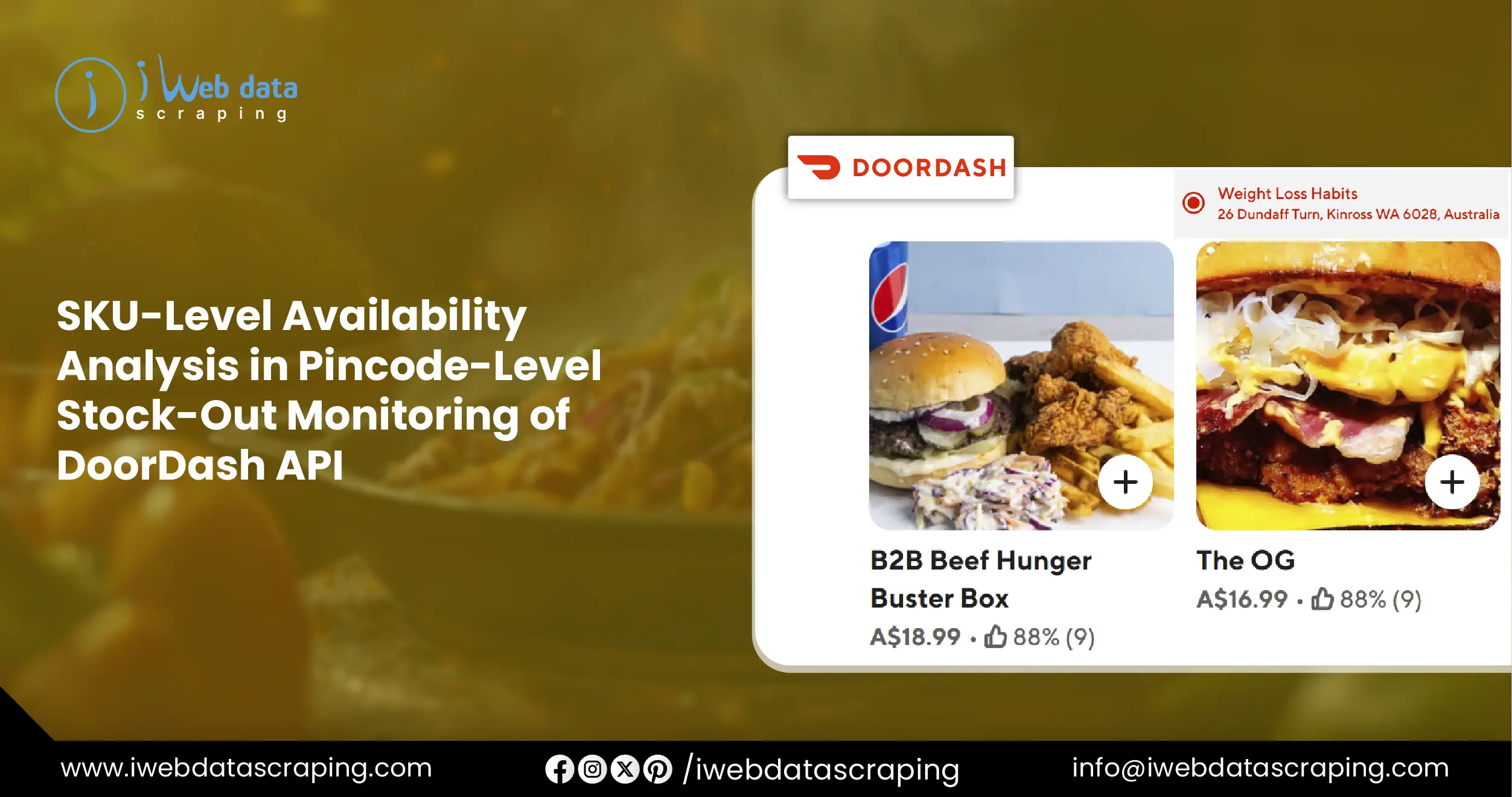
The rapid growth of online food delivery platforms has heightened the importance of understanding inventory and menu availability in real time. In this context, pincode-level stock-out monitoring of DoorDash API plays a pivotal role in enabling hyperlocal insights into food item availability. By integrating DoorDash availability data scraping techniques with advanced analytics, businesses can track stock-outs and menu trends with unprecedented precision.
Furthermore, DoorDash restaurant menu availability analytics allows food delivery businesses, suppliers, and third-party analysts to optimize supply chain operations, manage demand, and ensure a seamless user experience. This research focuses on evaluating stock-outs at the pincode level, monitoring item availability, and analyzing trends across multiple restaurants using DoorDash API data.
The primary objectives of this research are as follows:
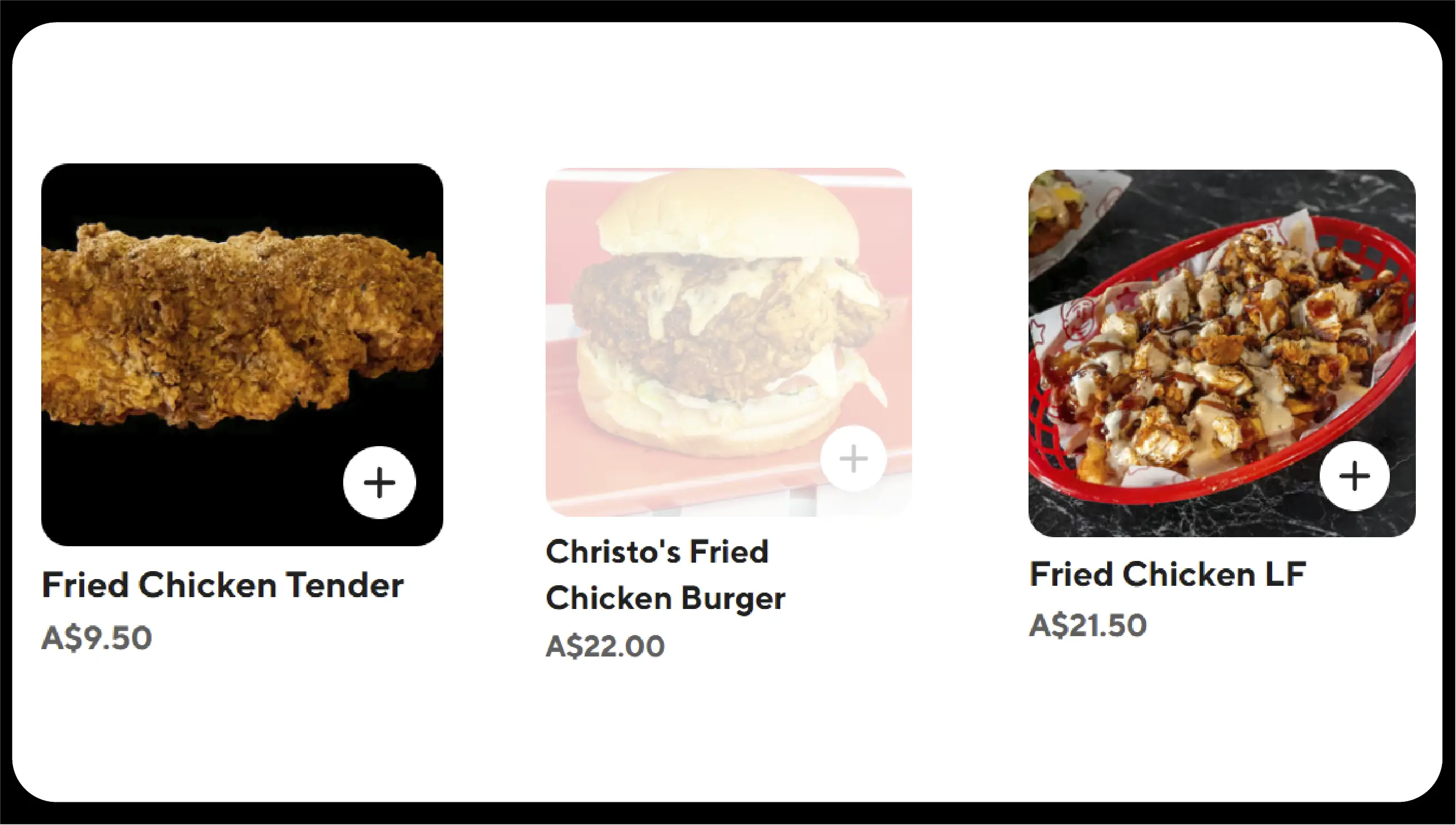
The research leverages track “currently unavailable” items using DoorDash API techniques, collecting data across multiple pincodes and restaurant chains. Key steps included:
Data was collected for a two-week period across 50 major urban pincodes in the U.S., including a mix of high-density metropolitan areas and suburban locations.
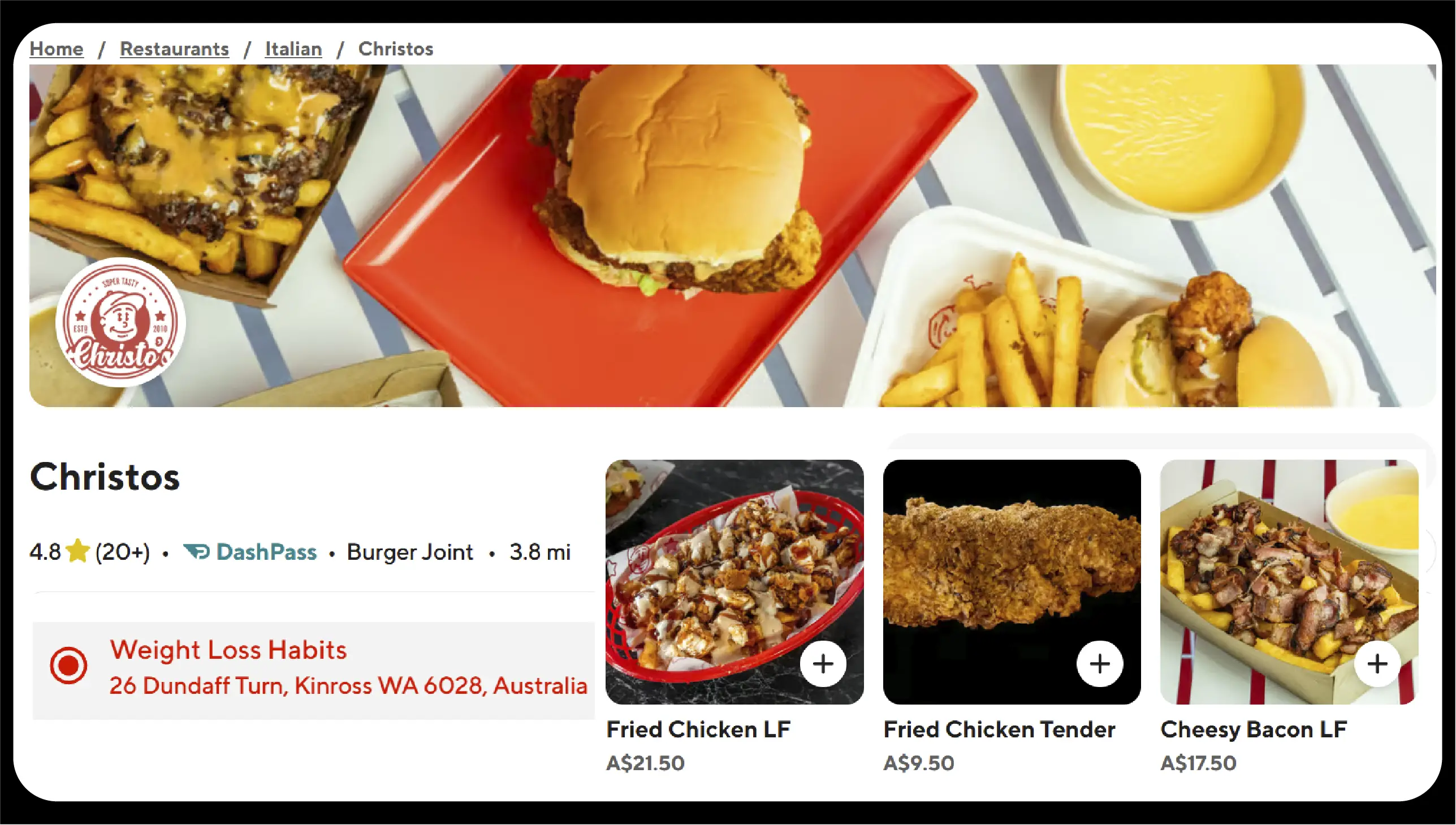
The research uncovered several critical insights about pincode-wise food item availability analytics from Doordash API:
| Pincode | Total Restaurants Monitored | Average Stock-Out Rate (%) | Peak Stock-Out Time | Most Frequently Unavailable Items |
|---|---|---|---|---|
| 10001 | 25 | 18 | 12:30 PM | Specialty Pizza, Veggie Bowls |
| 10002 | 30 | 22 | 1:00 PM | Burgers, Sushi Rolls |
| 10003 | 28 | 15 | 7:30 PM | Sandwiches, Salads |
| 10004 | 20 | 12 | 8:00 PM | Desserts, Beverages |
| 10005 | 18 | 20 | 12:45 PM | Wraps, Chicken Bowls |
| SKU ID | Item Name | Restaurant Type | Stock-Out Frequency (%) | Pincodes Most Affected |
|---|---|---|---|---|
| SKU001 | Pepperoni Pizza | Chain | 22 | 10001, 10002 |
| SKU002 | Veggie Bowl | Independent | 18 | 10003, 10005 |
| SKU003 | Sushi Roll | Chain | 25 | 10002, 10004 |
| SKU004 | Chocolate Cake | Independent | 15 | 10004, 10005 |
| SKU005 | Chicken Wrap | Chain | 20 | 10001, 10005 |
The tables highlight not only the pincode-specific stock-outs but also identify high-risk SKUs that require proactive management.
The study demonstrates the value of DoorDash hyperlocal supply chain intelligence. By continuously monitoring SKU-level availability across pincodes, restaurants can:
Furthermore, Food Delivery App Menu Datasets collected via DoorDash API serve as a foundation for predictive analytics, enabling forecasting models for inventory replenishment.
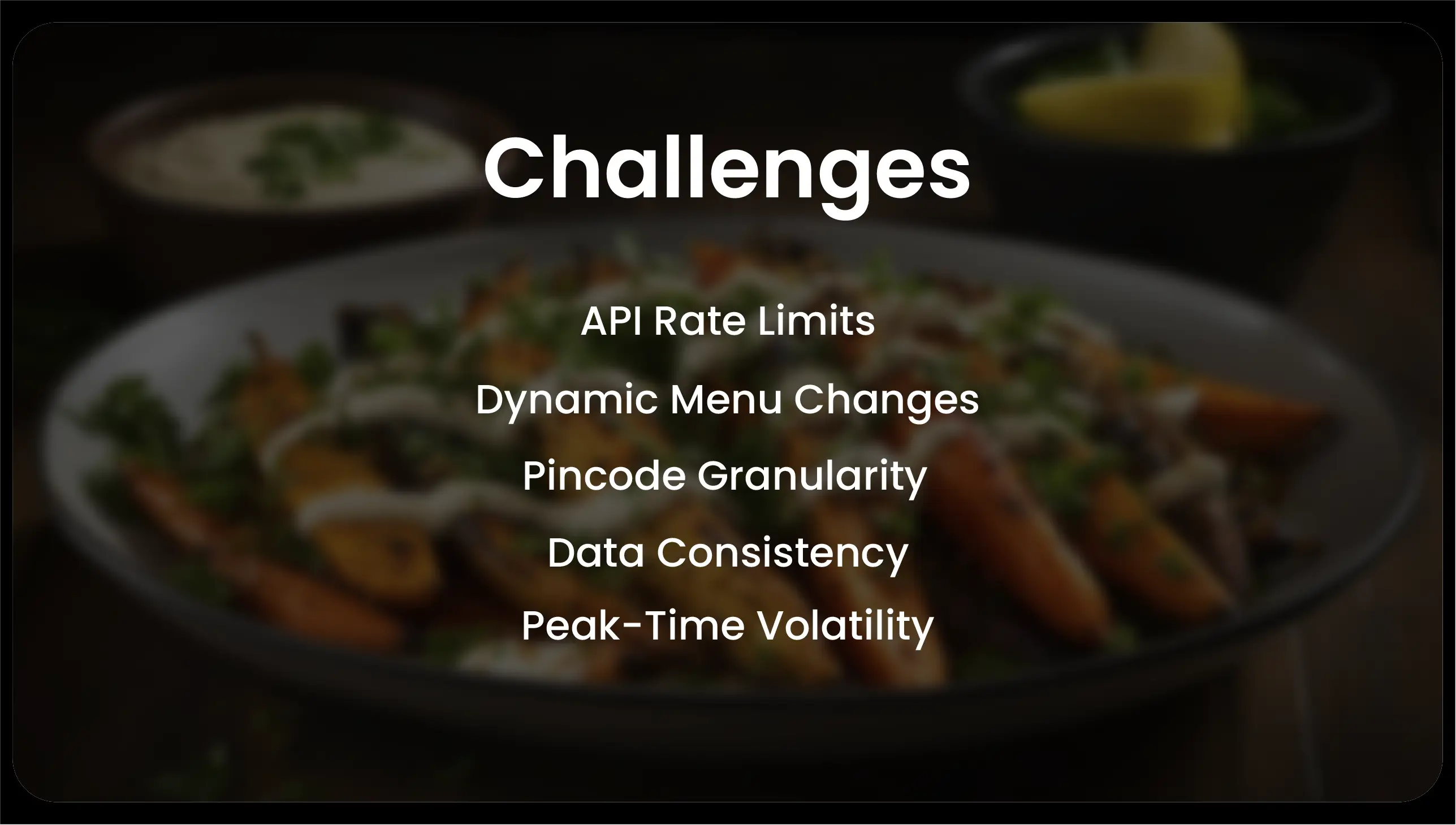
During the research, the following challenges were noted:
Based on the findings, the following strategies are recommended:
This research validates the importance of Food Delivery Data Extraction Services in tracking stock-outs and menu trends at a hyperlocal level. Businesses leveraging Food Data Scraping API Services can enhance supply chain visibility, reduce lost sales, and deliver better customer experiences.
By adopting Food Delivery Data Intelligence Services, stakeholders can gain actionable insights, optimize inventory, and improve operational efficiency, ensuring that restaurants are better prepared to meet real-time demand.
Experience top-notch web scraping service and mobile app scraping solutions with iWeb Data Scraping. Our skilled team excels in extracting various data sets, including retail store locations and beyond. Connect with us today to learn how our customized services can address your unique project needs, delivering the highest efficiency and dependability for all your data requirements.
We start by signing a Non-Disclosure Agreement (NDA) to protect your ideas.
Our team will analyze your needs to understand what you want.
You'll get a clear and detailed project outline showing how we'll work together.
We'll take care of the project, allowing you to focus on growing your business.