How Can EV Charging Data Scraping USA Reveal Real-Time Pricing Trends Across States?
Introduction
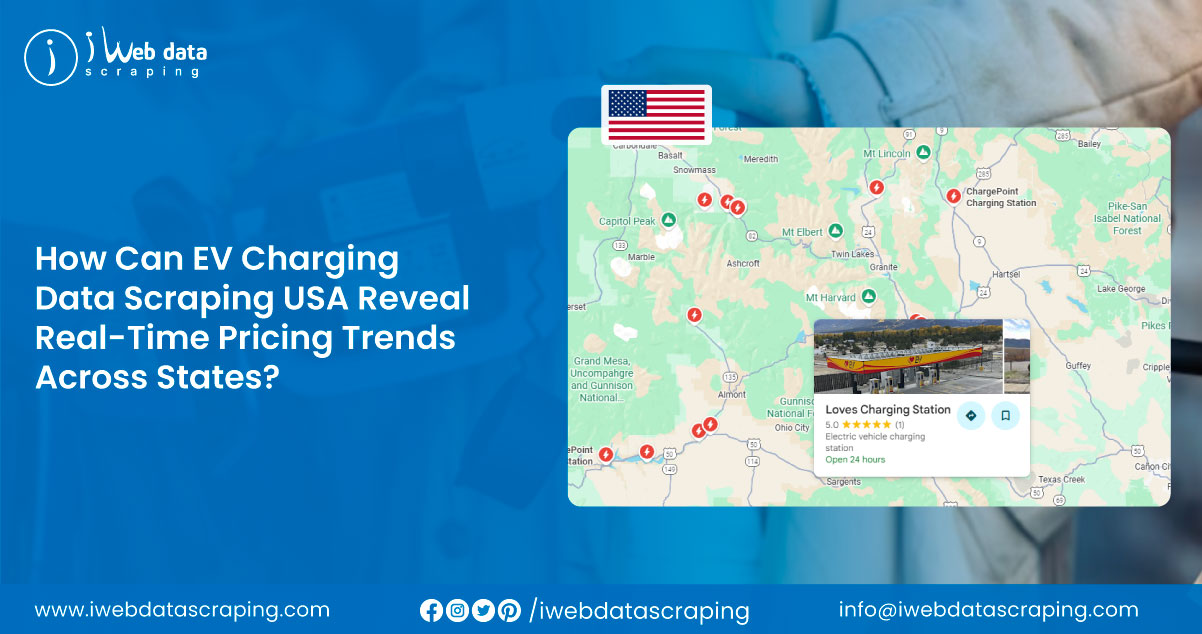
The electric vehicle (EV) industry in the United States is transforming at lightning speed. With more consumers embracing eco-friendly transportation and government initiatives accelerating EV adoption, understanding the dynamic pricing and infrastructure landscape has become crucial. Through EV charging data scraping USA, companies, investors, and analysts can uncover valuable insights about charging costs, station availability, and evolving trends that define the EV market’s direction.
One of the major areas of interest in 2025 is identifying EV charging price trends USA, as costs vary across cities, providers, and even times of day. The ability to track these changes in real time empowers businesses to develop competitive pricing models, and consumers to make more informed decisions about when and where to charge their vehicles. Complementing this, EV charging station price comparison data gives a clear picture of how networks like Tesla Supercharger, ChargePoint, and Electrify America differ in cost and accessibility across regions.
Understanding the Value of EV Data Scraping
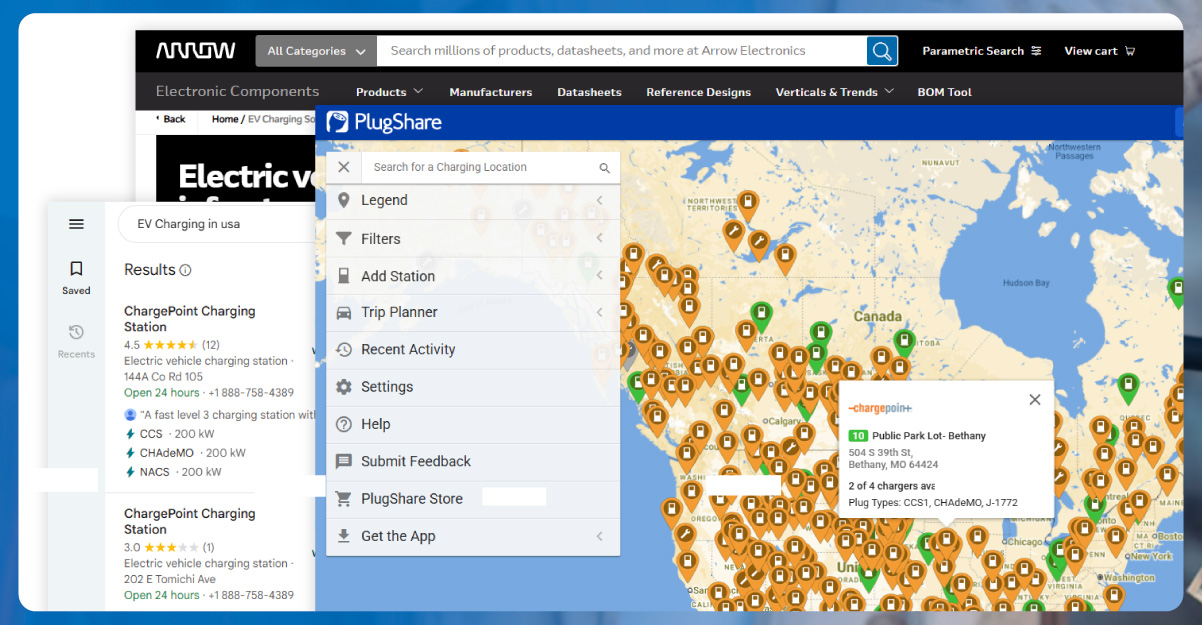
The EV market generates enormous volumes of data daily—from station locations and charger types to dynamic pricing and user reviews. Extracting this information manually is time-consuming, but automated scraping technology changes the game. By using advanced bots and APIs to Extract real-time EV charging data, analysts can gather structured datasets that reveal usage patterns, infrastructure gaps, and opportunities for market growth.
As EV adoption surges, understanding price behavior becomes essential for both businesses and policymakers. For example, some U.S. states offer peak and off-peak charging rates influenced by local electricity tariffs. Scraping platforms like PlugShare, ChargeHub, and Google Maps for EV data helps identify how these regional variations affect consumer preferences and station demand.
Why EV Pricing Trends Matter in the U.S. Market?
In a maturing EV ecosystem, price transparency plays a crucial role. Charging costs directly impact the total cost of EV ownership and influence decisions between home charging and public charging. By leveraging EV charging data extraction tools, data analysts and startups can monitor real-time fluctuations across thousands of public charging points.
For example, a dataset showing that Los Angeles charging prices increased by 8% over three months can help fleet operators adjust their budgets accordingly. Similarly, a downward trend in New York could indicate the entry of new, more affordable providers. With such data, businesses can tailor pricing strategies, predict peak usage times, and plan expansion with data-backed confidence.
Unlock real-time EV market intelligence — start your EV charging data scraping USA journey with our expert solutions today!
ChargePoint and Competitor Insights Through Scraping
One of the largest EV charging networks in the United States, ChargePoint, provides critical insights into the commercial EV charging landscape. With ChargePoint listings data scraping, analysts can collect information on station types (Level 2, DC Fast), charging fees, access restrictions, and availability patterns.
This information helps stakeholders track not only pricing but also uptime and maintenance quality. For instance, if ChargePoint’s average session fee for DC Fast Charging rises in California but drops in Texas, data-driven reports can explain these fluctuations in the context of local power costs, demand surges, or regulatory incentives. Competitor networks like EVgo and Electrify America can also be monitored to evaluate how pricing competition impacts user retention.
Using Real-Time Pricing Insights to Drive Growth
As the EV market matures, real-time EV pricing insights are invaluable for all players—from manufacturers to charging network operators. These insights highlight consumer response to price adjustments, energy sourcing strategies, and promotions.
Fleet management companies, for example, rely on up-to-date pricing data to optimize charging schedules and minimize operational costs. The same insights benefit property developers, who use this data to evaluate potential ROI on installing public charging infrastructure. By integrating real-time scraped data with analytics dashboards, organizations can visualize market trends and make more strategic business decisions.
Integrating Green Energy and EV Data Analytics
The intersection of renewable energy and electric mobility is another powerful data frontier. Through green energy data extraction, companies can understand how renewable-powered charging stations perform compared to those relying on the grid. For example, stations powered by solar or wind energy may offer lower rates or receive higher consumer ratings.
This information not only strengthens sustainability reports but also helps identify where future investments in green-powered EV stations are most viable. Governments and environmental organizations also use this data to monitor progress toward emission reduction goals, making scraping a valuable tool for environmental intelligence.
Mapping and Analyzing EV Infrastructure
To strengthen EV adoption, the availability and accessibility of charging stations must match the growing demand. Using tools to Scrape EV infrastructure analytics, analysts can map the distribution of charging stations nationwide, identify high-demand zones, and track under-served areas.
For instance, data scraping might reveal that Midwest states have a lower density of DC fast chargers compared to coastal regions, highlighting opportunities for infrastructure expansion. Real-time analytics can also pinpoint downtime, charger types, and even wait times—key performance indicators for network reliability.
When integrated with geographic information systems (GIS), this data becomes even more powerful, offering a visual overview of EV infrastructure health and expansion potential across the USA.
The Competitive Advantage of Data Scraping for EV Companies
In a fast-evolving market, data-driven decision-making is a game changer. Companies leveraging EV data scraping are not just collecting information—they’re building predictive intelligence. For example, by combining scraped data with machine learning models, businesses can forecast electricity demand, identify emerging markets, and predict when and where charging demand will peak.
Such forecasting allows EV manufacturers, energy suppliers, and government agencies to coordinate investments in infrastructure more efficiently. Moreover, car dealerships and fleet operators can use the same data to optimize pricing strategies for new EV sales or leasing programs based on local charging economics.
Future Outlook: Real-Time EV Data as a Market Enabler
As EV adoption accelerates in the U.S., real-time data collection will become an even more vital component of market success. From local energy pricing to infrastructure utilization, data scraping bridges the gap between raw information and actionable insights. In the coming years, integration between EV data, smart grids, and AI-driven analytics will create smarter charging networks that adapt dynamically to power availability and user demand.
For policymakers, real-time data will shape future regulations around sustainable transport and grid load management. For private companies, it will drive innovation in pricing, product development, and customer experience. The future of EV charging analytics lies in intelligent automation—and web scraping is the key to unlocking it.
How iWeb Data Scraping Can Help You?
- Comprehensive Data Extraction – We extract structured, accurate, and up-to-date EV charging and pricing data from multiple U.S. platforms.
- Customizable APIs – Integrate live EV data into your business dashboards or market research tools for continuous updates.
- Competitor Intelligence – Monitor EV charging networks like ChargePoint, EVgo, and Tesla Superchargers to benchmark against competitors.
- Predictive Market Insights – Analyze and forecast EV pricing and infrastructure trends with advanced AI-powered models.
- Sustainability Tracking – Identify renewable-powered stations, carbon savings, and energy efficiency insights.
Conclusion
In conclusion, the ability to Scrape Electric charging station Stores data helps businesses monitor new station openings, service quality, and charging rates across networks. f to the latest pricing and performance insights crucial for strategic decision-making. Finally, Electrify America Charging Station Data Scraping enables deeper competitive benchmarking, offering a clearer understanding of market trends shaping the EV industry in the United States.
By harnessing the power of data scraping, stakeholders can stay ahead in the race toward an electrified, sustainable, and data-driven future.
Experience top-notch web scraping service and mobile app scraping solutions with iWeb Data Scraping. Our skilled team excels in extracting various data sets, including retail store locations and beyond. Connect with us today to learn how our customized services can address your unique project needs, delivering the highest efficiency and dependability for all your data requirements.