How to Extract Zone-Level Pricing Data from Instamart: A Technical Breakdown for 2026?
Introduction
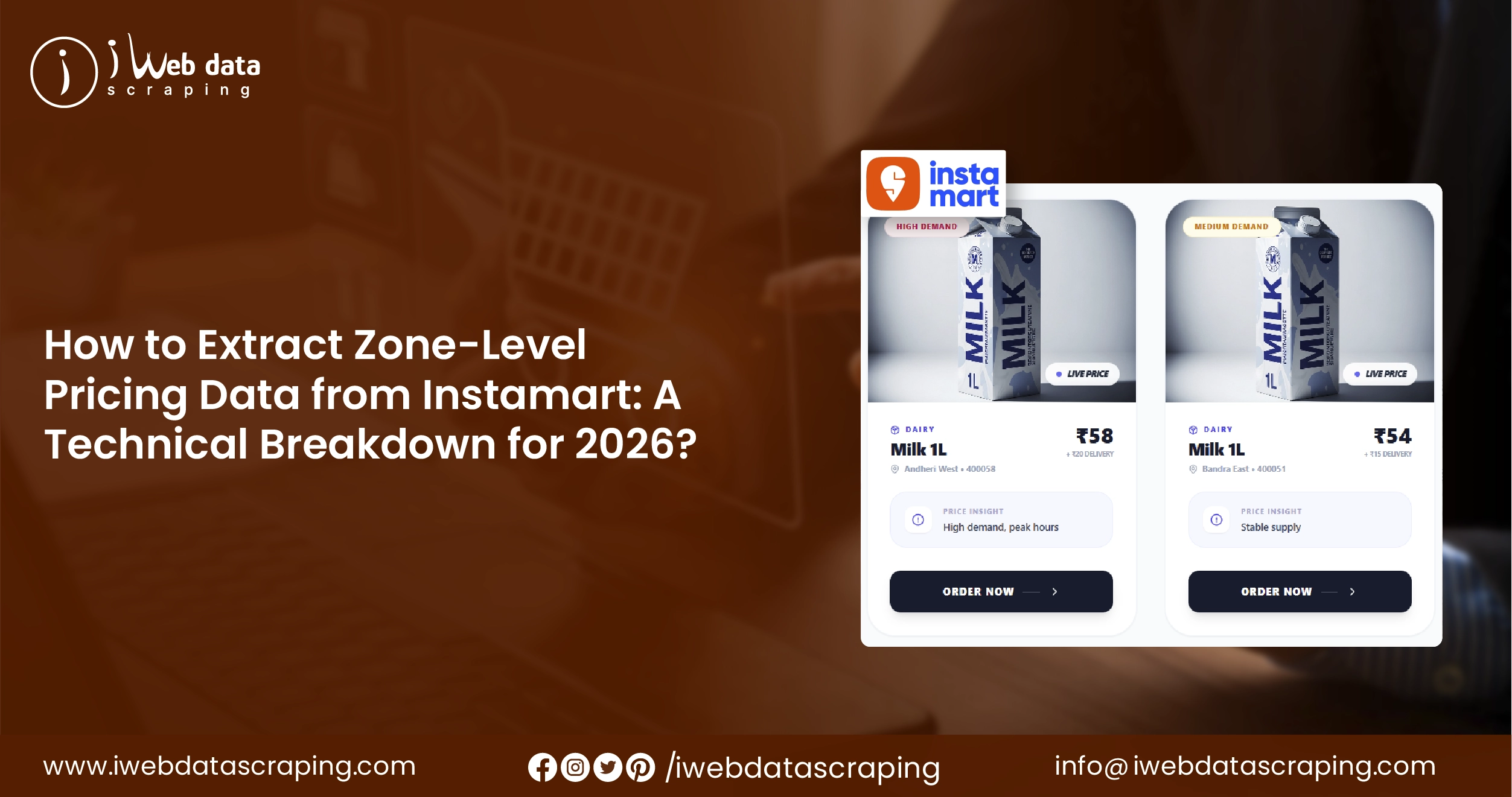
Modern quick-commerce platforms are transforming grocery retail by introducing highly dynamic and location-sensitive pricing models. Unlike traditional supermarkets, Instamart operates on a hyperlocal pricing system where product prices vary based on delivery zone, inventory levels, demand intensity, and logistics costs.
The need to Extract Zone-Level Pricing Data from Instamart has become a key requirement for businesses aiming to understand real-time pricing variations across micro-markets. Instead of relying on city-level averages, companies now need pin-code and zone-specific insights to make accurate pricing, marketing, and supply chain decisions.
In this ecosystem, Instamart zone-level pricing data Scraping enables structured extraction of pricing data across multiple geographic zones, converting raw product listings into actionable intelligence.
At the same time, Instamart Zone-Wise Price Monitoring ensures continuous tracking of price fluctuations across regions, helping businesses stay responsive to competitive and demand-driven changes.
How Zone-Level Pricing Works in Instamart?
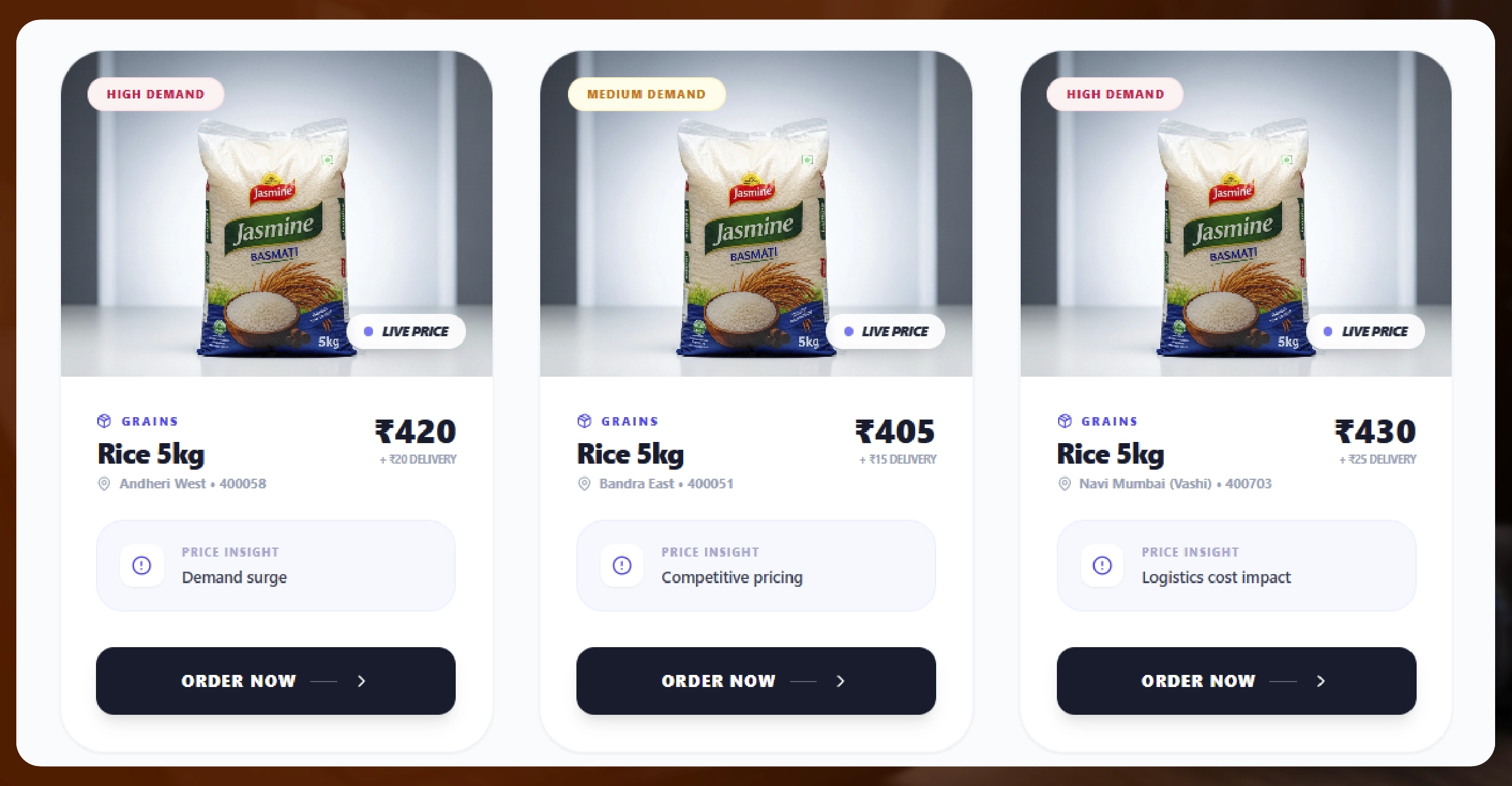
Instamart’s pricing engine is not static. It is built on real-time variables that continuously adjust product prices based on operational conditions. These variations are often invisible at a surface level but become clear when analyzed at scale.
Dynamic Pricing Factors
Prices fluctuate due to:
- Warehouse proximity to delivery zones
- Local demand spikes during peak hours
- Stock availability in micro-warehouses
- Delivery cost variations
- Competitive pricing pressure in nearby areas
Scrape Instamart product prices across Different locations to capture these fluctuations and convert them into structured datasets for analysis.
Micro-Market Price Differences
Even within the same city, two nearby zones can show different pricing for identical products. These differences often reflect underlying operational inefficiencies or strategic pricing decisions.
Importance of Granular Visibility
Understanding pricing at this level allows businesses to move beyond average pricing models and focus on real-world consumer pricing behavior. Extracting Location-Based Pricing Data from Instamart enables mapping of these micro-market variations across geography and time.
Sample Zone-Level Pricing Data from Instamart
Below is a sample of zone-level pricing data extracted from Instamart:
| Andheri West |
400058 |
Milk 1L |
58 |
20 |
High |
High demand, peak hours |
| Bandra East |
400051 |
Milk 1L |
54 |
15 |
Medium |
Stable supply |
| Navi Mumbai (Vashi) |
400703 |
Milk 1L |
60 |
25 |
High |
Longer delivery distance |
| Andheri West |
400058 |
Rice 5kg |
420 |
20 |
High |
Demand surge |
| Bandra East |
400051 |
Rice 5kg |
405 |
15 |
Medium |
Competitive pricing |
| Navi Mumbai (Vashi) |
400703 |
Rice 5kg |
430 |
25 |
High |
Logistics cost impact |
| Andheri West |
400058 |
Cooking Oil 1L |
165 |
20 |
High |
Limited stock availability |
| Bandra East |
400051 |
Cooking Oil 1L |
158 |
15 |
Medium |
Balanced inventory |
| Navi Mumbai (Vashi) |
400703 |
Cooking Oil 1L |
170 |
25 |
High |
Higher demand pressure |
Pin-Code and Zone Intelligence in Pricing Analysis
Role of Pin-Code Segmentation
Pin-code segmentation provides one of the most accurate ways to study hyperlocal pricing behavior. It helps businesses break down large cities into smaller analytical units. Instamart Pincode-Wise Pricing Data extraction allows companies to identify pricing clusters and understand how pricing behaves across small geographic distances.
Behavioral Pricing Patterns
Certain zones consistently show higher or lower prices based on:
- Demand density
- Income demographics
- Delivery infrastructure
- Local competition levels
Hyperlocal Consumer Insights
These pricing differences often reflect consumer willingness to pay and local market maturity, making them valuable for strategic planning.
Building Structured Pricing Intelligence Systems
Data Collection and Structuring
Once pricing data is collected across zones, it needs to be cleaned, structured, and standardized for meaningful analysis.
Price Benchmarking Across Regions
Area-Wise Instamart Price Benchmarking helps businesses compare product pricing across multiple zones to identify inconsistencies and opportunities.
Key outcomes include:
- Identifying overpriced zones
- Detecting underpriced markets
- Evaluating competitor pricing behavior
- Improving regional pricing consistency
Time-Based Pricing Tracking
Pricing is not only location-based but also time-sensitive. Many products fluctuate in price during peak hours or promotional periods.
Role of Automation in Data Collection
Manual tracking is not scalable in quick commerce environments. Automation becomes essential for continuous monitoring.
Grocery Data Scraping Services enable automated extraction of large-scale pricing, availability, and product data across multiple zones and time intervals.
Unlock powerful market insights today with our advanced data scraping solutions and transform raw data into smarter business decisions.
Data Transformation and Dataset Development
Creating Structured Grocery Databases
Grocery and Supermarket Store Dataset helps organize pricing, product categories, availability, and regional variations into usable formats.
Use Cases of Structured Datasets
These datasets are used for:
- Demand forecasting models
- Price elasticity analysis
- Market basket studies
- Seasonal trend evaluation
- Competitive intelligence systems
Historical vs Real-Time Analysis
Combining historical data with real-time pricing allows businesses to identify long-term trends and short-term fluctuations simultaneously.
Strategic Business Applications of Pricing Intelligence
Dynamic Pricing Optimization
Businesses can adjust their pricing strategies based on competitor and zone-level insights to maximize margins while staying competitive.
Demand Prediction and Inventory Planning
Pricing patterns often indicate demand shifts, which helps in optimizing inventory distribution across warehouses.
Hyperlocal Marketing Strategy
Companies can design targeted promotions based on zone-specific pricing sensitivity.
Competitive Intelligence
Understanding competitor pricing behavior at the zone level helps businesses position themselves more effectively in the market.
Role of Advanced Data Technologies
API-Based Data Collection
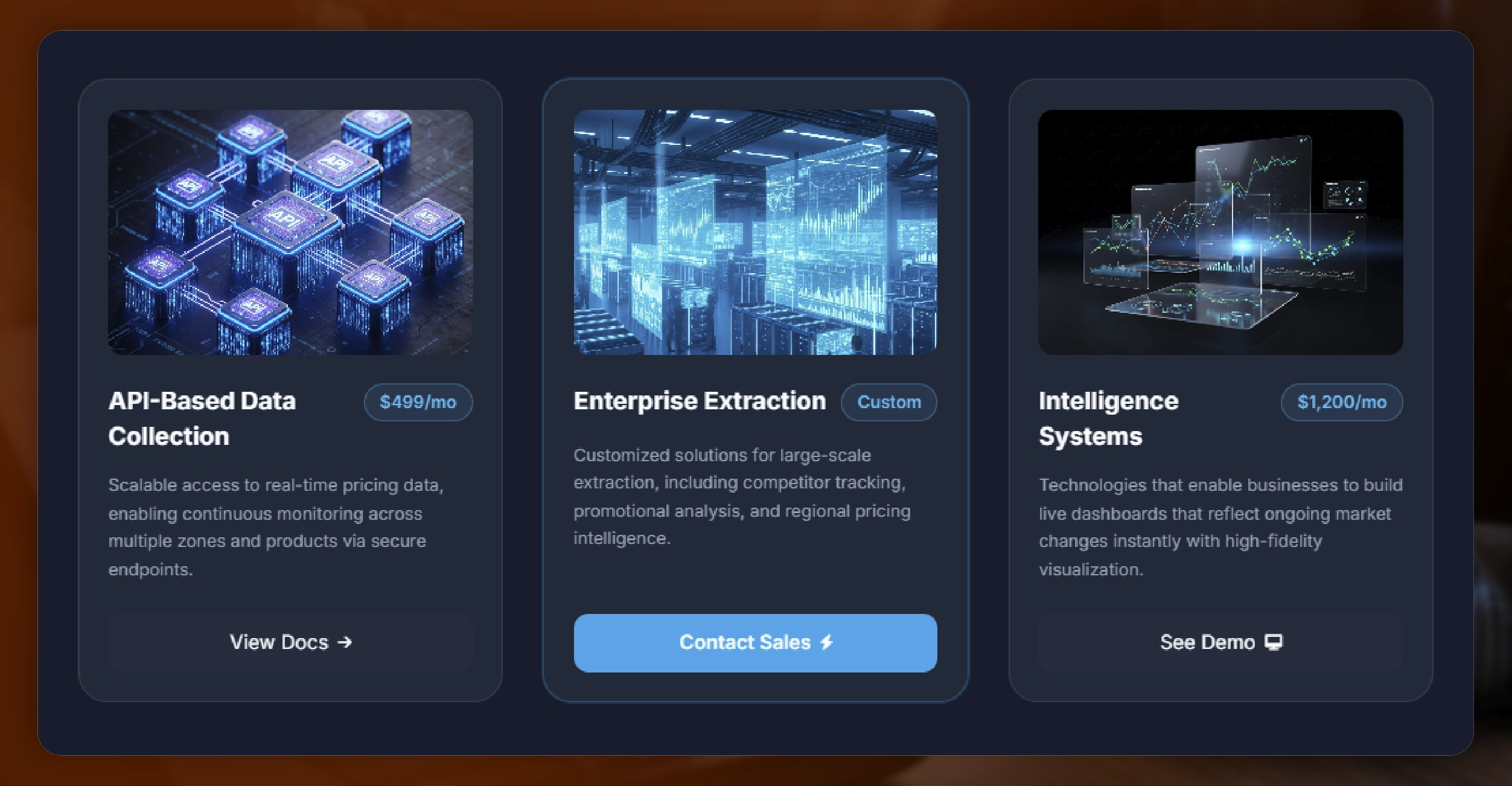
Web Scraping API Services enable scalable access to real-time pricing data, enabling continuous monitoring across multiple zones and products.
Enterprise-Level Data Extraction
Web Scraping Services further strengthen this ecosystem by providing customized, enterprise-grade data extraction solutions tailored to business needs.
Real-Time Intelligence Systems
These technologies enable businesses to build live dashboards that reflect ongoing market changes instantly.
How iWeb Data Scraping Can Help You?
1. Real-Time Price Monitoring
Our data scraping services enable continuous tracking of real-time product prices across multiple platforms and zones. This helps businesses instantly detect price changes, market shifts, and competitive movements for faster decision-making and improved pricing strategies.
2. Competitor Intelligence Gathering
We collect structured competitor data including pricing, promotions, and availability across different regions. This helps businesses understand competitor strategies, identify gaps, and respond effectively with optimized pricing and marketing actions in highly competitive markets.
3. Hyperlocal Market Insights
Our solutions extract zone-level and pin-code-level data to reveal hyperlocal consumer behavior patterns. This enables businesses to understand regional demand differences, optimize inventory distribution, and design targeted marketing campaigns for specific geographic areas.
4. Scalable Data Automation
We automate large-scale data collection from multiple sources, eliminating manual effort and reducing errors. This ensures consistent, accurate, and scalable data flow for analytics, dashboards, and business intelligence systems across industries.
5. Better Business Decision-Making
By converting raw data into structured insights, our services support smarter decision-making. Businesses can improve pricing strategies, forecast demand, enhance supply chain efficiency, and increase profitability using reliable, data-driven intelligence systems.
Conclusion
Zone-level pricing intelligence is now a core component of modern grocery and quick-commerce strategy. Businesses that rely on granular data instead of generalized assumptions gain a significant competitive advantage in pricing, marketing, and operations.
Grocery Pricing Data Intelligence Services help convert raw pricing data into structured insights that support better decision-making and strategic planning. Web Scraping API Services enable scalable, real-time access to Instamart pricing data across multiple zones, ensuring continuous visibility into market changes. Web Scraping Services further strengthen this ecosystem by providing customized, enterprise-grade data extraction solutions tailored to business needs.
Together, these technologies empower organizations to build powerful hyperlocal intelligence systems, improve pricing accuracy, and stay ahead in the fast-evolving quick-commerce industry.
Experience top-notch web scraping service and mobile app scraping solutions with iWeb Data Scraping. Our skilled team excels in extracting various data sets, including retail store locations and beyond. Connect with us today to learn how our customized services can address your unique project needs, delivering the highest efficiency and dependability for all your data requirements.