A leading restaurant chain conducted a detailed case study to understand pricing inconsistencies between delivery platforms and physical outlets. By leveraging Food Delivery vs In-Store Pricing Gap Analysis, the brand identified significant variations caused by platform commissions, dynamic pricing, and localized demand.
Using advanced Scraping Food Delivery vs In-Store Price Data, the company collected menu-level pricing across multiple apps and compared it with in-store POS data. This revealed that certain high-demand items were marked up by 15–30% online, impacting customer trust and repeat purchases.
Through Real-Time Restaurant Pricing Data Extraction, the business monitored daily fluctuations and competitor benchmarks. This enabled them to standardize pricing strategies, optimize margins, and introduce transparent pricing policies.
As a result, the brand improved customer satisfaction, reduced cart abandonment rates, and strengthened brand credibility. The case study clearly highlights how data-driven pricing intelligence can bridge the gap between digital and physical dining experiences while boosting overall revenue performance.
A Well-known Market Player in the Restaurant Industry
iWeb Data Scraping Offerings: Leverage our data crawling services to Scrape Food Delivery vs In-Store Price Gap Analysis.
The client faced significant challenges in maintaining consistent pricing across delivery platforms and physical outlets. Due to varying commission structures and platform-driven discounts, achieving accurate Food Delivery Pricing Intelligence vs In-Store Benchmarking became difficult. This led to inconsistent markups, impacting both profitability and customer trust.
Additionally, the absence of automated tools made Delivery App vs Offline Menu Pricing Comparison a manual and error-prone process. Pricing discrepancies often went unnoticed, resulting in delayed responses to market changes and competitor strategies.
Another major issue was the lack of real-time visibility into pricing fluctuations. Without continuous Delivery vs In-Store Price Monitoring, the client struggled to balance competitive pricing with sustainable margins. These gaps caused confusion among customers, increased cart abandonment rates, and weakened brand perception.
Overall, fragmented data systems, operational inefficiencies, and limited insights prevented the client from implementing a cohesive pricing strategy across channels.
To address the client’s pricing inconsistencies, we implemented advanced Price Monitoring Services that enabled real-time tracking of menu prices across delivery platforms and in-store systems. This helped the brand instantly identify gaps and maintain pricing consistency.
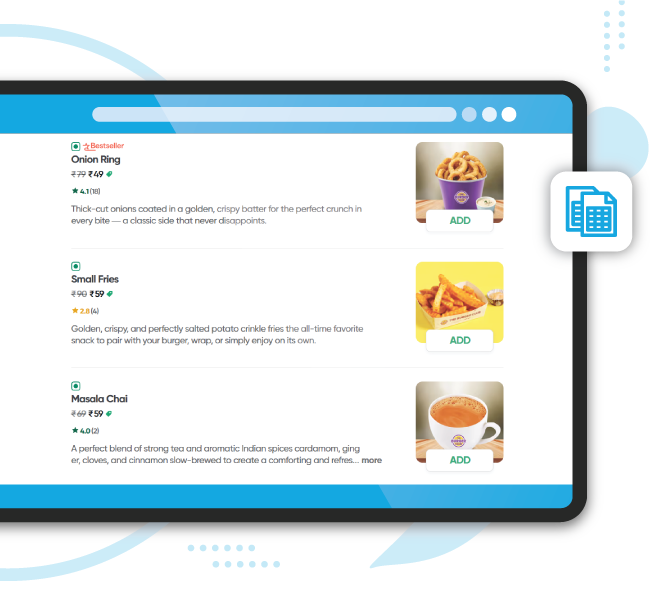
We further deployed Food Delivery Data Scraping Services to extract accurate, location-wise pricing, discounts, and competitor insights from multiple apps. This automated data pipeline eliminated manual errors and provided actionable intelligence.
Additionally, we structured unified Food Delivery App Menu Datasets to standardize menu items, variants, and add-ons across all channels. This ensured seamless comparison and better decision-making.
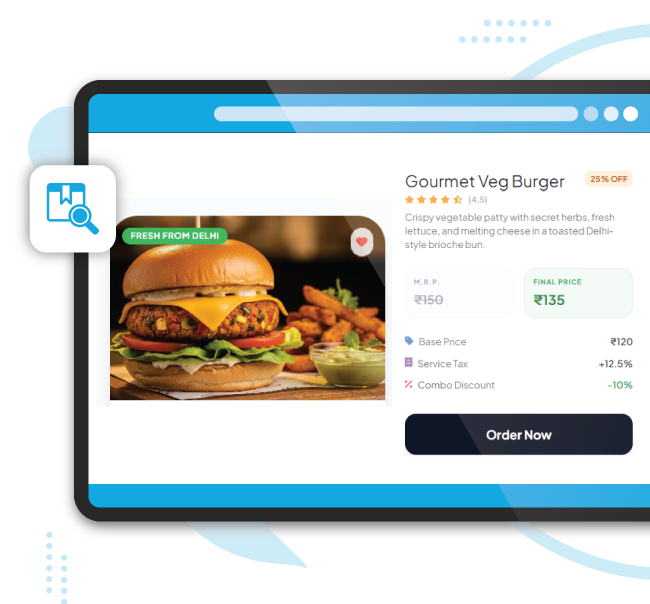
Below is a sample of the pricing intelligence table we delivered:
| Item Name | In-Store Price | Delivery Price | Platform Fees (%) | Discount Applied | Final Price | Price Gap (%) | Location |
|---|---|---|---|---|---|---|---|
| Veg Burger | ₹120 | ₹150 | 25% | 10% | ₹135 | +12.5% | Delhi |
| Chicken Pizza | ₹300 | ₹360 | 20% | 15% | ₹306 | +2% | Mumbai |
| Pasta Alfredo | ₹250 | ₹310 | 22% | 5% | ₹295 | +18% | Bangalore |
| Paneer Wrap | ₹180 | ₹220 | 18% | 10% | ₹198 | +10% | Pune |
| Cold Coffee | ₹90 | ₹120 | 30% | 0% | ₹120 | +33% | Hyderabad |
The final outcome delivered measurable improvements in pricing consistency, operational efficiency, and customer satisfaction. By implementing advanced Web Scraping API Services, the client gained real-time visibility into pricing variations across delivery platforms and in-store channels. This enabled faster decision-making and proactive price adjustments.
With robust Web Scraping Services, the business successfully automated data collection, reduced manual errors, and established a centralized pricing intelligence system. As a result, the client achieved optimized profit margins, minimized price discrepancies, and improved transparency across all touchpoints.
Additionally, enhanced competitor benchmarking and demand-based pricing strategies led to increased customer trust and reduced cart abandonment rates. Overall, the solution empowered the client to scale confidently while maintaining consistent and data-driven pricing strategies.
“Working with this team has completely transformed how we manage pricing across our delivery and in-store channels. Their data scraping solutions provided us with real-time visibility into pricing gaps, competitor benchmarks, and platform-driven variations. We were able to standardize our pricing, improve margins, and significantly enhance customer trust. The automation reduced manual effort and improved accuracy across all our outlets. Their insights have become a critical part of our decision-making process, helping us stay competitive in a fast-changing market. I highly recommend their services to any restaurant brand looking to scale efficiently.”
— Head of Operations
It is the process of comparing menu prices across delivery platforms and physical outlets to identify inconsistencies, optimize pricing strategies, and ensure better alignment between online and offline channels.
Data scraping automates the collection of pricing, discounts, and menu data from multiple delivery apps, providing accurate, real-time insights for better decision-making and competitive positioning.
Price variations arise due to platform commissions, promotional discounts, delivery fees, and dynamic pricing strategies applied by restaurants or third-party platforms.
Yes, inconsistent pricing can reduce customer trust, increase cart abandonment rates, and negatively affect brand perception, especially when customers notice significant differences.
Pricing intelligence helps optimize margins, maintain consistency, track competitors, improve customer satisfaction, and enable data-driven strategies for sustainable growth across all sales channels.
We start by signing a Non-Disclosure Agreement (NDA) to protect your ideas.
Our team will analyze your needs to understand what you want.
You'll get a clear and detailed project outline showing how we'll work together.
We'll take care of the project, allowing you to focus on growing your business.