How Can Businesses Leverage Google Maps Location Intelligence for Smarter Expansion?
Introduction
In today’s hyper-competitive marketplace, understanding customer behavior and market
dynamics at a granular level is critical. Google Maps location intelligence offers businesses
the ability to unlock valuable insights about foot traffic, consumer movement, and local market
conditions. By leveraging Google Maps data scraping, companies can gather structured data to
support strategic decision-making and identify the best opportunities for expansion.
Businesses that invest in Google Location Data intelligence for business gain a
comprehensive understanding of location-based factors, such as proximity to competitors, nearby
amenities, and customer density patterns. This empowers organizations to make smarter choices
about store placement, marketing campaigns, and operational planning.
Unlocking Market Insights Through Location Data
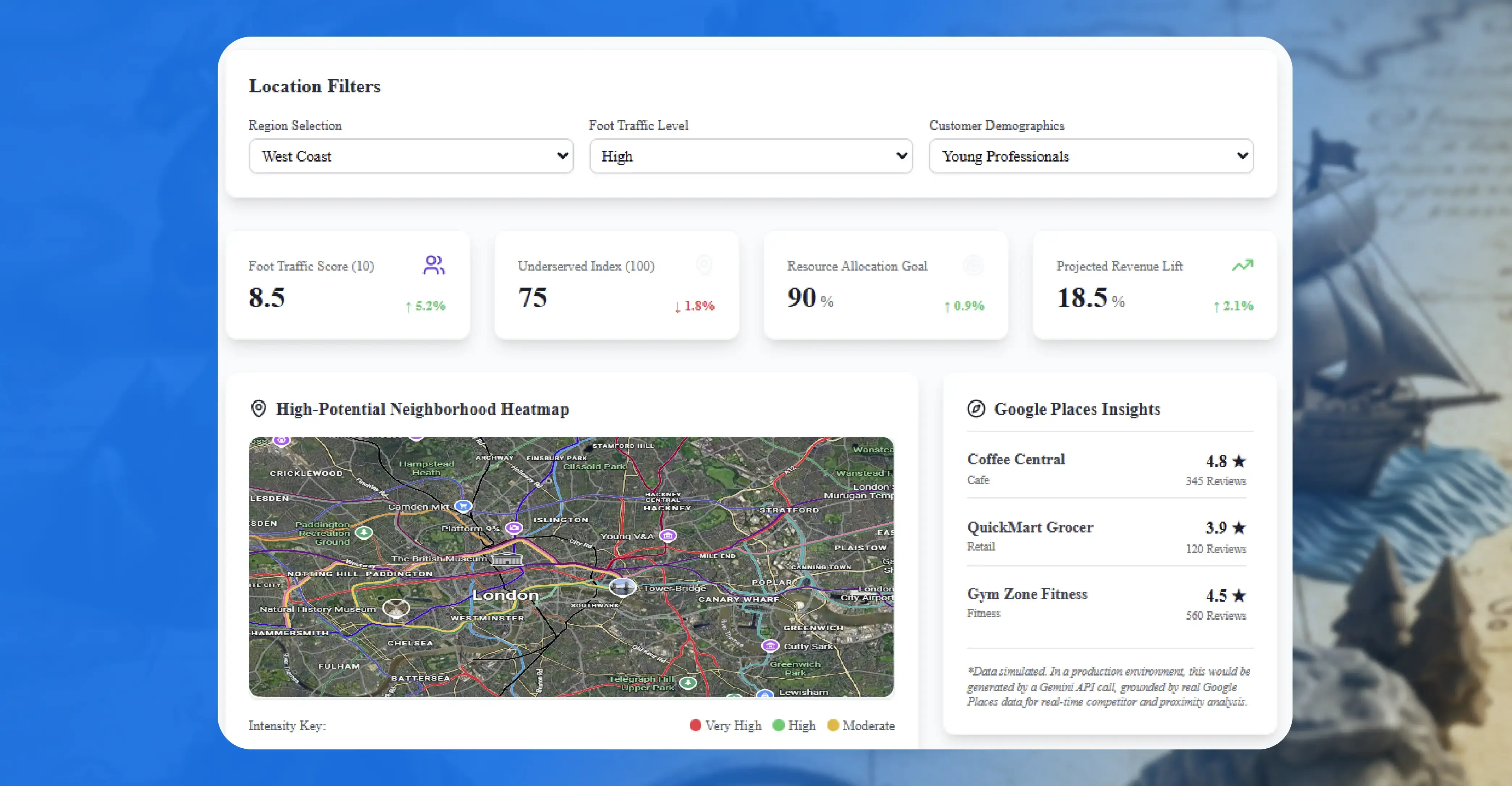
A successful expansion strategy requires more than intuition; it demands precise,
data-driven insights. Using a business expansion strategy data Extractor, companies can analyze
large volumes of geospatial and location data to uncover patterns that indicate high-potential
areas. For instance, identifying neighborhoods with growing foot traffic or underserved
demographics can inform store placement and promotional strategies.
By utilizing Google Places API insights, businesses can access real-time information
on local points of interest, reviews, ratings, and customer preferences. This intelligence
enables brands to assess the competitiveness of a location, understand local consumer sentiment,
and tailor offerings to meet the specific needs of a community.
Geospatial insights are not limited to static maps; geospatial business intelligence
Data Scraping allows brands to monitor trends dynamically. By tracking footfall patterns,
competitor locations, and seasonal variations, organizations can refine expansion strategies and
allocate resources efficiently.
Hyperlocal Consumer Behavior Analysis
The ability to Extract hyperlocal consumer movement data provides businesses with an
unprecedented understanding of their target audience. By analyzing location data, brands can
determine the busiest areas, peak visiting times, and preferred routes, helping optimize store
operations, inventory, and staffing schedules.
Automated Google geodata extraction ensures that this information is continuously
updated and reliable, giving businesses the confidence to act on insights promptly. Automation
reduces manual effort and ensures consistency, allowing companies to focus on strategy and
execution rather than data collection.
By applying method to Scrape demand modeling using Google maps data, companies can
predict potential sales and identify areas with the highest likelihood of customer conversion.
This enables data-driven decisions about where to launch new stores, promotional campaigns, or
delivery services.
Competitive Analysis with Google Maps
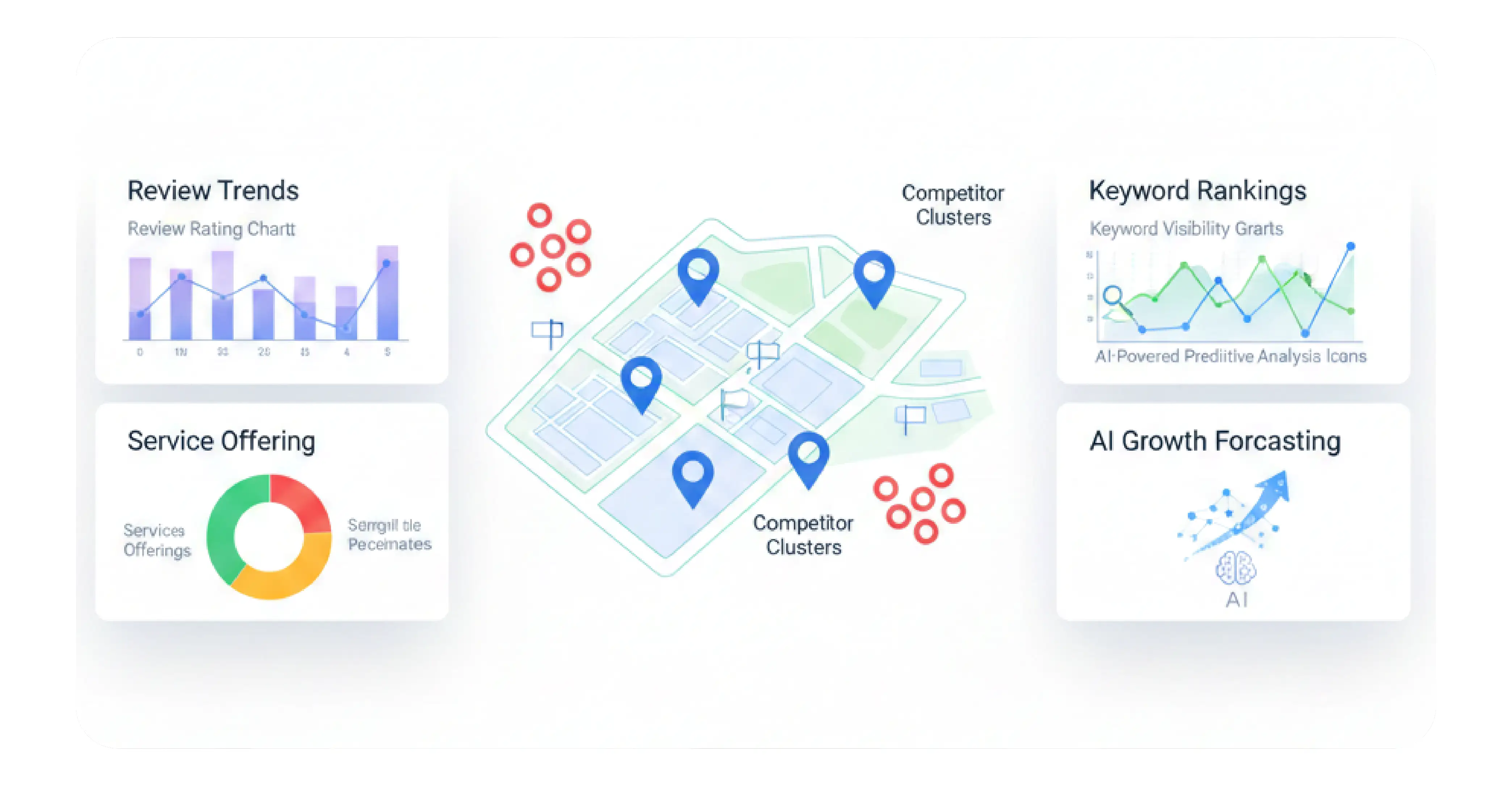
Understanding your competition is crucial for informed business expansion. Through
Web Scraping Google My Business Data, companies can gather insights about competitor locations,
services offered, pricing, customer reviews, and overall brand presence.
In addition, Search Engine
Data Scraping enables businesses to monitor how competitors are performing in local
searches, track keyword visibility, and understand which services or products resonate most with
customers in specific areas. This comprehensive view allows organizations to position themselves
more strategically and identify gaps in the market.
For brands looking to integrate advanced analytics, the ability to Extract AI Data from location intelligence
platforms facilitates predictive modeling. Using AI, businesses can forecast growth
opportunities, optimize marketing efforts, and anticipate changes in consumer behavior before
competitors do.
Integrating Location Intelligence into Business Strategy
Web Scraping API Services provide businesses with
scalable solutions to gather and process large volumes of location data efficiently. These APIs
ensure that businesses can access up-to-date geospatial information for multiple regions
simultaneously, streamlining the process of market research and site selection.
By leveraging insights from Mobile App Data
Scraping Services, businesses can understand how customers interact with apps in
specific locations, analyze app usage trends, and optimize app-driven promotions for maximum
engagement. This type of location intelligence bridges the gap between digital and physical
consumer behavior, enhancing omnichannel strategies.
Driving Smarter Expansion Decisions
Using Google Maps location intelligence, companies can answer critical questions
about market opportunities, including:
- Where should the next store or outlet be opened for maximum foot traffic?
- Which areas have high competitor density, and where is there an underserved audience?
- What local trends can inform product or service offerings?
- How do seasonal and temporal factors influence consumer behavior?
Scrape Store (POI) Location Data and combine
it with demographic and behavioral information to optimize site selection, marketing targeting,
and inventory planning. By applying these insights, businesses reduce risk, improve ROI, and
enhance customer satisfaction.
In addition, combining location intelligence with AI-driven predictive models allows
organizations to simulate various expansion scenarios, forecast revenue, and anticipate
operational challenges. This data-driven approach ensures that decisions are backed by
actionable intelligence rather than guesswork.
Benefits Beyond Site Selection
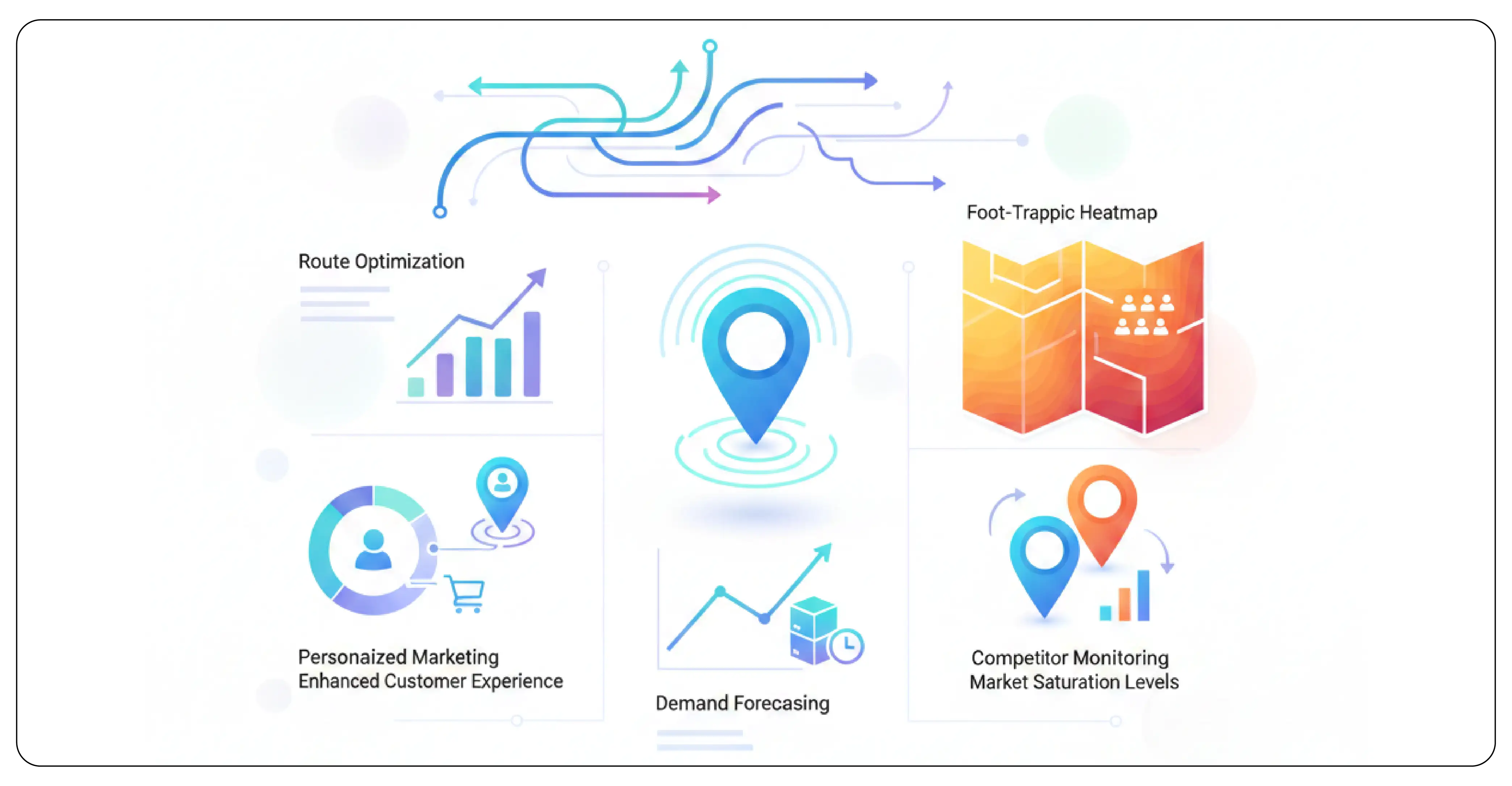
The applications of Google Maps location intelligence extend beyond identifying new
store locations. Businesses can:
- Optimize delivery routes and logistics for efficiency
- Personalize marketing campaigns based on local trends and foot traffic
- Monitor competitor expansions and local market saturation
- Understand macro and micro-market dynamics for strategic growth planning
By integrating Scrape demand modeling using Google maps data, companies can also
forecast demand fluctuations, enabling proactive inventory management and staff scheduling.
Location intelligence also strengthens customer experience. By analyzing hyperlocal
data, businesses can tailor offerings to suit local tastes, introduce relevant promotions, and
create services that resonate with specific communities.
Unlock powerful market insights and drive smarter growth—harness
our data scraping services to stay ahead of the competition today!
Future of Location-Driven Business Strategy
As consumer behavior evolves and urban landscapes change, Google Maps data scraping
will become increasingly vital for business decision-making. Companies that fail to adopt
location intelligence risk missing growth opportunities, losing market share, and
underperforming in competitive environments.
Investing in Google Location Data intelligence for business not only supports
expansion but also enables ongoing optimization of existing locations. Continuous monitoring of
foot traffic, consumer trends, and competitor activity ensures that businesses remain agile and
responsive to market changes.
How iWeb Data Scraping Can Help You?
- Gain Actionable Market Insights: Our services provide
real-time, structured data from Google Maps, restaurant platforms, and local markets,
helping you identify high-demand areas, track competitor activity, and uncover untapped
growth opportunities.
- Optimize Business Expansion: By analyzing foot traffic,
consumer behavior, and hyperlocal trends, you can make data-driven decisions on store
placement, delivery coverage, and regional marketing strategies to maximize ROI.
- Track Consumer Preferences: Extracted data reveals customer
behavior, popular products, and engagement patterns, enabling you to tailor offerings,
promotions, and services to meet evolving consumer demands efficiently.
- Enhance Operational Efficiency: Automated data collection
reduces manual research, ensures accuracy, and streamlines workflows. This allows your team
to focus on strategy, planning, and business development instead of time-consuming data
gathering.
- Support Predictive Analytics: With historical and real-time
datasets, you can leverage AI and machine learning models to forecast demand, optimize
inventory, and anticipate market shifts before competitors respond.
Conclusion
Harnessing location intelligence from Google Maps empowers businesses to expand
smarter, optimize operations, and drive growth. By leveraging Mobile App Data Scraping Services,
organizations gain a clear picture of both physical and digital consumer behavior.
Using Scrape data for Machine
Learning and AI, predictive models and analytics can guide strategic decisions with
higher confidence. Scrape Store (POI) Location Data to ensure comprehensive insight into market
dynamics, consumer trends, and competitor activity, allowing businesses to make informed,
data-driven expansion decisions.
With these tools, businesses can not only identify opportunities but also optimize
performance across existing locations, drive customer satisfaction, and remain competitive in an
increasingly data-driven marketplace.
Experience top-notch web scraping service
and mobile app scraping solutions with iWeb Data
Scraping. Our skilled team excels in extracting various data sets, including retail store locations and beyond. Connect with us
today to learn how our customized services can address your unique project needs, delivering the
highest efficiency and dependability for all your data requirements.