What Makes H-E-B Grocery Data Scraping Valuable for Retail Analytics?
Introduction
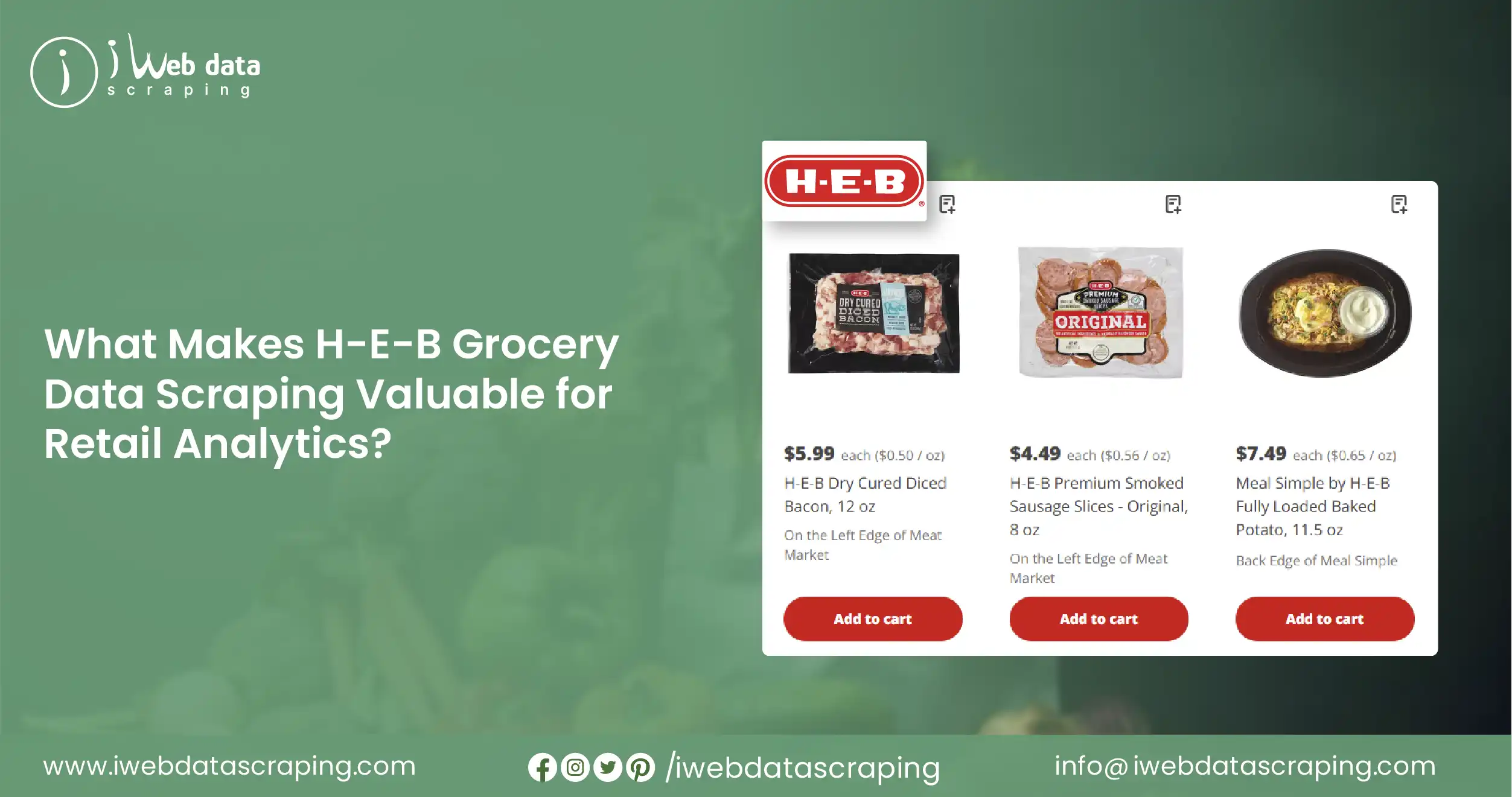
The grocery retail landscape in the United States is evolving rapidly as supermarkets increasingly rely on data-driven strategies to optimize pricing, inventory, customer engagement, and supply chain performance. Among regional grocery leaders, H-E-B has emerged as one of the most influential supermarket chains, known for its strong market presence, dynamic pricing structures, localized inventory management, and highly personalized shopping experience. Businesses, analytics firms, FMCG brands, and eCommerce intelligence providers are now investing heavily in H-E-B Grocery Data Scraping to understand changing market behavior and gain competitive retail insights.
Modern retailers require access to live product information, stock availability, discount tracking, delivery patterns, and customer preference data to remain competitive. Through H-E-B Grocery Delivery Scraping, organizations can monitor thousands of grocery listings across categories such as dairy, produce, packaged foods, frozen products, beverages, household essentials, and personal care items.
Companies also use advanced solutions to Scrape H-E-B product pricing data API workflows for capturing structured pricing information at scale. This enables brands and retailers to monitor real-time pricing fluctuations, identify regional promotional strategies, and evaluate competitor positioning more efficiently.
Why Grocery Data Intelligence Matters in Modern Retail?
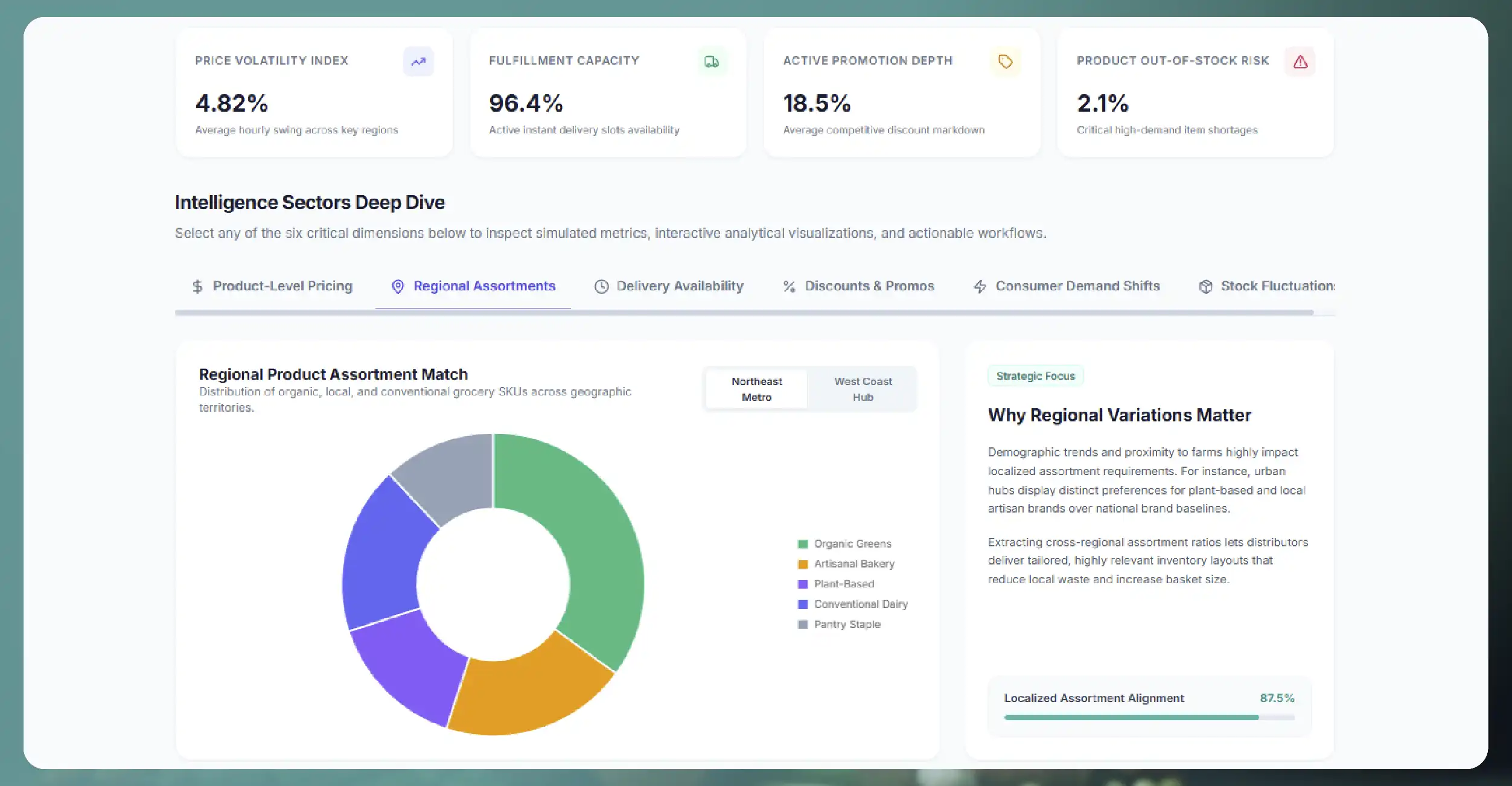
Retail grocery ecosystems generate massive volumes of dynamic data every hour. Product prices change frequently based on location, seasonality, supply chain conditions, and consumer demand. Availability also varies significantly depending on local inventory and fulfillment capacity.
As a result, businesses increasingly rely on automated grocery data extraction systems to improve visibility into retail operations. Grocery intelligence helps organizations analyze:
- Product-level pricing behavior
- Regional assortment variations
- Delivery availability patterns
- Discount and promotional campaigns
- Consumer demand shifts
- Inventory stock fluctuations
This data becomes essential for FMCG companies, pricing analysts, retail consultants, marketplace aggregators, and supply chain planners looking to improve strategic decision-making.
Understanding the Scope of H-E-B Grocery Data Scraping
H-E-B operates across multiple Texas markets with highly localized pricing and inventory structures. The supermarket chain continuously updates product listings, seasonal offers, and fulfillment options. Capturing these frequent changes manually is nearly impossible at scale.
Automated grocery scraping systems help organizations gather structured datasets that include:
- Product titles and descriptions
- SKU information
- Category hierarchy
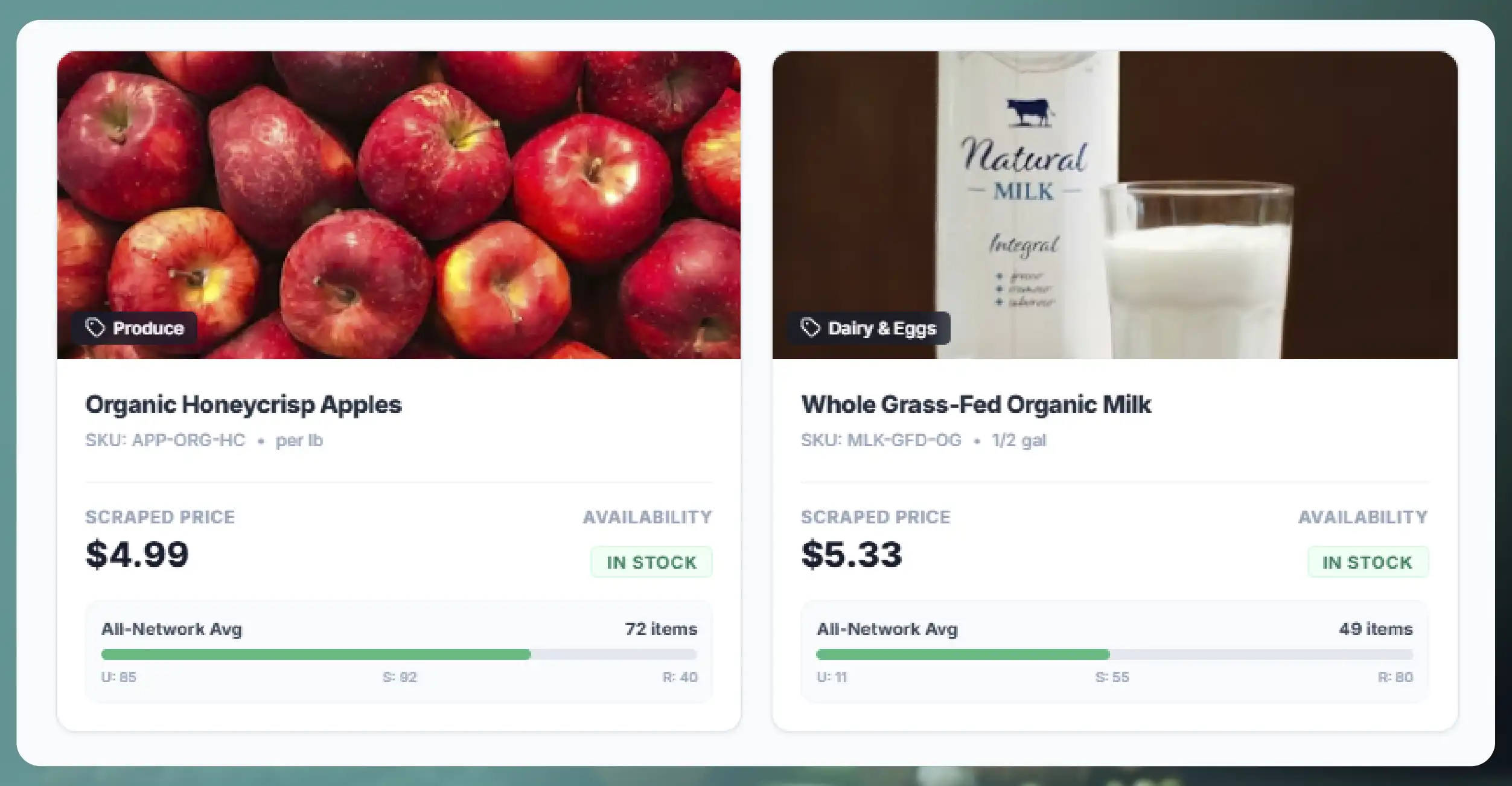
- Product pricing
- Discount offers
- Delivery status
- Inventory availability
- Brand information
- Product ratings and reviews
- Image URLs and package details
Businesses can use this intelligence to build retail dashboards, monitor competitor activity, analyze market penetration, and optimize assortment strategies.
One of the major advantages of automated grocery intelligence is the ability to Extract grocery price trends from H-E-B across multiple store locations. This helps analysts identify regional pricing differences, category inflation patterns, and promotional cycles.
The Role of Real-Time Grocery Monitoring
Real-time monitoring has become a critical requirement in modern grocery analytics. Prices and inventory change rapidly, especially during holidays, weather disruptions, or high-demand shopping periods.
Retail intelligence platforms use continuous monitoring frameworks to capture changes in near real time. These systems allow businesses to observe:
- Hourly price changes
- Flash discounts
- Product stockouts
- Delivery slot updates
- Seasonal inventory spikes
Through advanced pipelines focused on Scraping city-wise grocery availability data, organizations can compare how grocery inventory differs between urban, suburban, and regional store networks.
This location-level intelligence helps retailers optimize distribution planning and improve localized marketing strategies.
How Grocery Brands Use H-E-B Data?
Consumer packaged goods companies depend heavily on retail visibility to evaluate product performance. Without accurate shelf-level data, brands struggle to measure competitiveness.
By using grocery intelligence solutions, brands can track their products alongside competing items within H-E-B’s digital ecosystem. This helps organizations evaluate:
- Pricing Competitiveness: Brands can identify whether products are priced higher or lower than competitors across different cities and categories.
- Assortment Visibility: Companies can understand which SKUs appear in search results, featured categories, and promotional placements.
- Promotion Monitoring: Manufacturers can analyze discounts, coupons, and bundled offers to measure campaign effectiveness.
- Regional Product Penetration: Businesses can compare inventory availability across locations and identify underserved regions.
- Consumer Demand Signals: Changes in stock frequency and product visibility often indicate rising or declining demand patterns.
These insights become even more valuable when integrated with Real-time grocery data extraction From H-E-B systems capable of monitoring continuous product updates.
Grocery Delivery Intelligence and Consumer Behavior
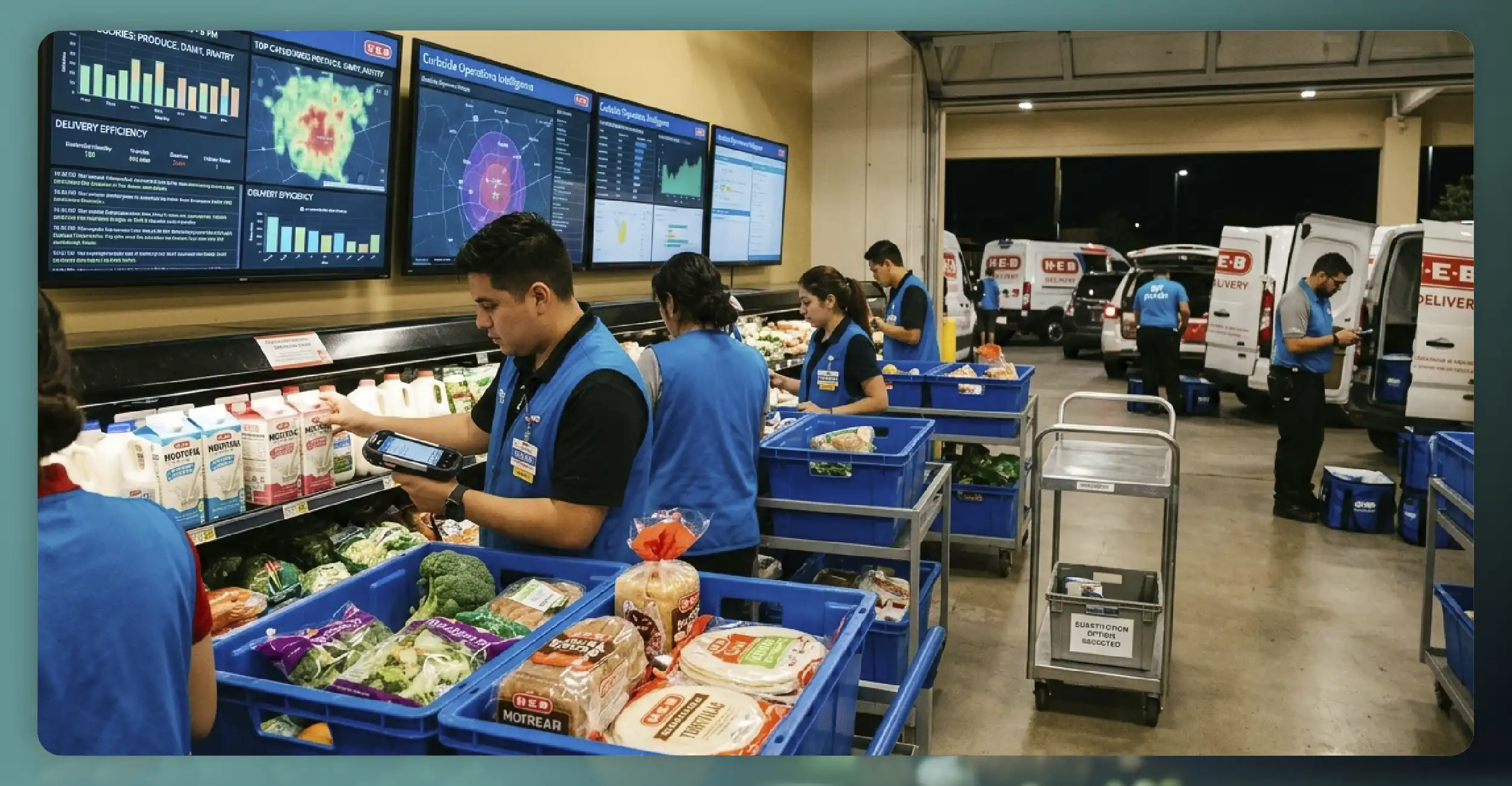
Online grocery delivery has fundamentally changed shopping behavior. Consumers now compare prices, delivery fees, stock availability, and fulfillment speed before purchasing products.
H-E-B’s grocery delivery ecosystem generates enormous amounts of operational data that can reveal valuable market insights. Delivery intelligence helps organizations understand:
- Peak demand timings
- Fast-moving grocery categories
- Delivery radius trends
- Substitution frequency
- Product availability during rush periods
- Regional purchasing behavior
This data is highly valuable for logistics firms, grocery delivery platforms, and retail analytics providers aiming to optimize delivery efficiency and customer satisfaction.
The growing demand for H-e-b Grocery and Supermarket Data Extraction Services reflects how businesses now prioritize automation to collect large-scale retail intelligence efficiently.
Building Structured Grocery Datasets for Analytics
Structured datasets are essential for predictive analytics, machine learning, pricing intelligence, and demand forecasting. Raw grocery information becomes significantly more valuable when organized into standardized formats.
A high-quality Grocery Dataset from H-e-b may include thousands of structured records updated multiple times daily. These datasets can be integrated into:
- Business intelligence dashboards
- Dynamic pricing engines
- Retail forecasting systems
- Consumer trend analysis platforms
- Inventory optimization tools
- Market comparison applications
Organizations also combine multiple retailer sources to create unified Grocery and Supermarket Store Datasets that provide broader market visibility across competing grocery chains.
These datasets help analysts understand nationwide retail trends while identifying store-specific opportunities.
Challenges in Grocery Data Extraction
Although grocery scraping provides substantial business value, it also involves several technical and operational challenges. Retail websites continuously evolve their structures, requiring adaptive scraping frameworks.
Some common challenges include:
- Dynamic Website Architecture: Modern grocery platforms frequently change page layouts, APIs, and JavaScript rendering systems.
- Location-Based Pricing: Prices often vary based on ZIP codes and delivery locations, making extraction more complex.
- Inventory Volatility: Products may appear in stock at one moment and unavailable shortly afterward.
- Anti-Bot Protection Systems: Retail platforms implement rate limiting, CAPTCHA systems, and bot-detection technologies.
- Data Normalization Issues: Product names, package sizes, and category structures may differ significantly across locations.
To overcome these challenges, businesses use advanced automation frameworks combined with proxy rotation, intelligent parsers, and scalable cloud-based infrastructure.
Applications of Grocery Data Scraping Across Industries
The impact of grocery data extraction extends far beyond retail stores. Multiple industries now rely on grocery intelligence for strategic planning and operational optimization.
- Retail Analytics Firms: Analytics providers use grocery data to build pricing dashboards and market intelligence platforms.
- FMCG Manufacturers: Brands monitor shelf visibility, promotional performance, and competitor pricing trends.
- Supply Chain Companies: Logistics organizations analyze regional inventory movement and fulfillment efficiency.
- Investment and Market Research Firms: Analysts evaluate consumer demand patterns and grocery inflation indicators.
- eCommerce Platforms: Online marketplaces compare assortment gaps and benchmark pricing strategies.
The scalability of automated extraction systems makes them highly effective for enterprises requiring continuous data collection from large grocery networks.
Get real-time H-E-B grocery data scraping solutions for smarter pricing, inventory, and retail intelligence.
Importance of Scalable Grocery Intelligence Infrastructure
Enterprise grocery intelligence requires more than simple scraping scripts. Modern businesses need scalable systems capable of processing millions of product records daily.
These systems generally include:
- Automated crawlers
- API extraction engines
- Cloud-based storage systems
- Real-time monitoring pipelines
- Data cleansing frameworks
- Analytics dashboards
- Scheduling and orchestration tools
Scalable infrastructure ensures uninterrupted data collection while maintaining accuracy, speed, and consistency across multiple grocery categories and store locations.
Businesses leveraging enterprise-grade grocery intelligence gain a significant advantage in forecasting demand, managing pricing strategies, and responding quickly to market changes.
Future of Grocery Data Intelligence
The future of grocery analytics will increasingly depend on artificial intelligence, predictive modeling, and real-time retail monitoring. As consumer behavior becomes more dynamic, businesses will require deeper visibility into pricing movements, inventory changes, and regional demand fluctuations.
Emerging technologies such as AI-powered analytics, computer vision, automated categorization, and predictive pricing models will continue reshaping grocery intelligence systems.
Retailers and brands that adopt advanced grocery data extraction strategies early will be better positioned to optimize operations, improve customer engagement, and enhance market competitiveness.
How iWeb Data Scraping Can Help You?
1. Real-Time Grocery Price Monitoring
Our data scraping solutions help businesses track real-time grocery pricing changes across H-E-B stores, enabling better competitor benchmarking, dynamic pricing analysis, and smarter retail decision-making.
2. City-Wise Inventory Intelligence
We collect location-based grocery availability data to help retailers and brands understand regional inventory trends, stock fluctuations, and product demand variations across multiple markets.
3. Automated Product Data Extraction
Our advanced scraping systems extract structured product information including SKUs, categories, descriptions, discounts, ratings, and delivery availability for large-scale retail intelligence operations.
4. Custom Grocery Dataset Development
We build customized grocery datasets tailored for analytics platforms, pricing engines, demand forecasting systems, and business intelligence dashboards to support strategic growth initiatives.
5. Scalable API-Driven Data Solutions
Our automated API-enabled scraping infrastructure ensures fast, scalable, and accurate grocery data collection with continuous updates for enterprise-grade retail monitoring and analytics.
Conclusion
Grocery retail intelligence has become a vital component of modern business strategy. From pricing optimization and inventory tracking to delivery monitoring and demand forecasting, structured grocery datasets enable organizations to make faster and more informed decisions.
Advanced Grocery & Supermarket Data Extraction Services empower retailers, FMCG companies, and analytics firms to capture accurate, scalable, and real-time grocery intelligence across large retail ecosystems.
Organizations leveraging professional Web Scraping Services can efficiently monitor dynamic grocery environments, improve competitive benchmarking, and build robust retail analytics solutions.
As the grocery industry becomes increasingly data-centric, scalable Web Scraping API Services will continue driving innovation in retail intelligence, consumer analytics, and market forecasting.
Experience top-notch web scraping service and mobile app scraping solutions with iWeb Data Scraping. Our skilled team excels in extracting various data sets, including retail store locations and beyond. Connect with us today to learn how our customized services can address your unique project needs, delivering the highest efficiency and dependability for all your data requirements.