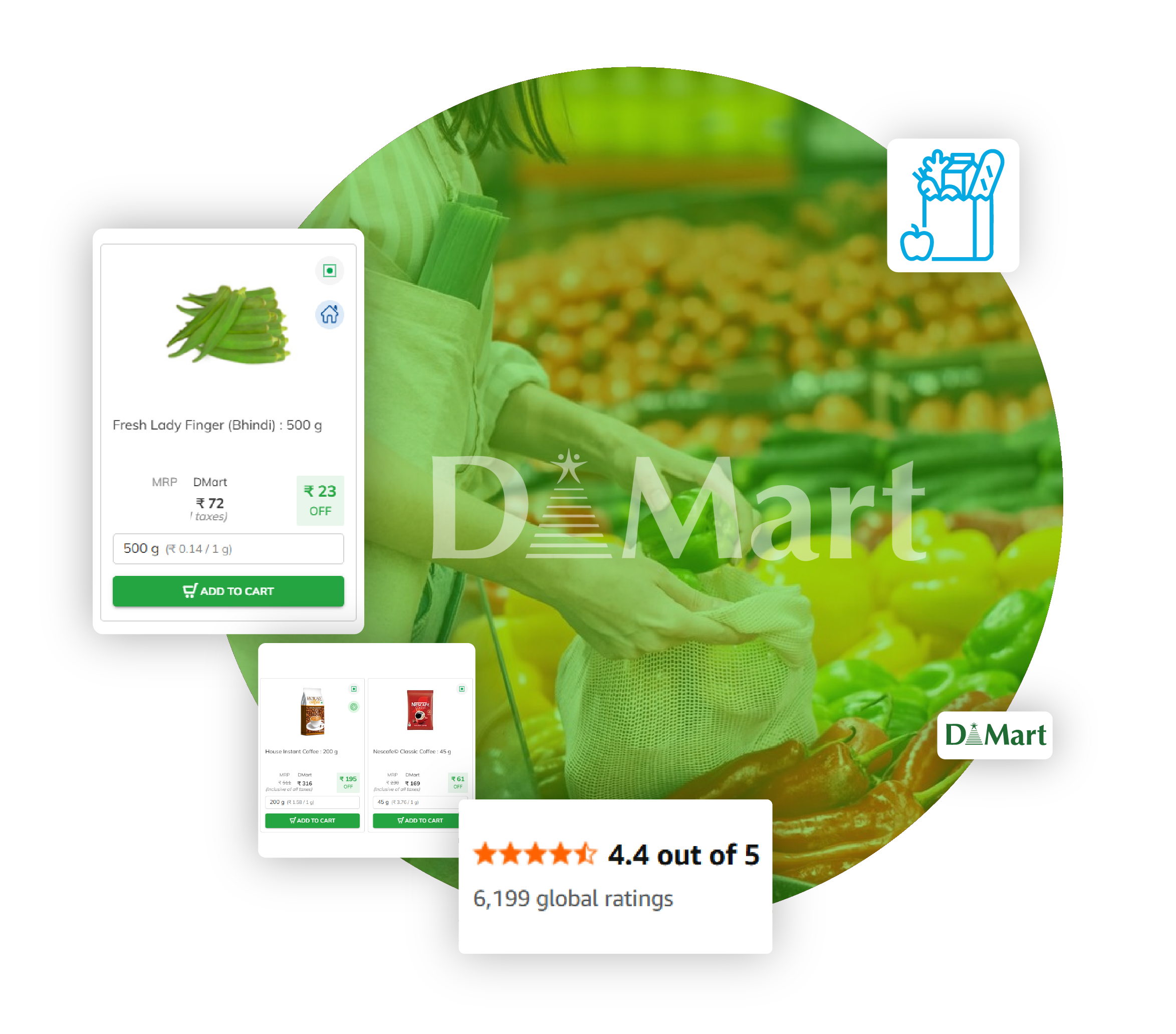
Driving Pricing Decisions Through Indian Grocery Price Index Using DMart Data

This case study demonstrates how our team successfully developed an Indian Grocery Price Index Using DMart Data to monitor real-time price movements across essential grocery categories in India. The objective was to provide a reliable benchmark for tracking inflation, regional price variations, and category-level trends using structured retail data.

Our solution focused on scraping grocery DMart prices data across multiple locations, ensuring consistency in SKUs, pack sizes, and availability. This approach enabled accurate normalization and comparison of prices across cities and time periods.

By applying advanced data modeling techniques, we delivered actionable insights through Scrape DMart grocery price Analytics, helping stakeholders identify price volatility, seasonal fluctuations, and demand-driven changes.

Additionally, the project emphasized Extract DMart Pricing Intelligence in India by transforming raw price points into indexed indicators suitable for dashboards and reports. The final outcome empowered retailers, analysts, and FMCG brands with clear visibility into pricing dynamics, supporting smarter procurement, pricing strategies, and inflation monitoring across India’s evolving grocery market.

Indian Grocery Price Index Using DMart Data for Pricing Decisions

The Client

A Well-known Market Player in the Grocery Industry

iWeb Data Scraping Offerings: Leverage our data crawling services for Web Scraping DMart Supermarket Price Index in India.

Client's-Challenge

Client’s Challenges

The client struggled to build a reliable DMart Supermarket Price Index India due to inconsistent pricing visibility across regions. Manual tracking methods failed to capture frequent price updates, promotional fluctuations, and regional assortment differences, resulting in delayed and inaccurate insights.

Another major challenge was standardizing data for an Indian grocery price index using DMart data, as product pack sizes, naming conventions, and availability varied widely across cities. This made month-on-month comparisons difficult and reduced confidence in trend analysis.

Creating a dependable DMart category-wise grocery price index was also complex, as categories experienced uneven price volatility and frequent stock-outs. Without structured categorization, inflation signals were often distorted or missed entirely.

Finally, the absence of a centralized Grocery Dataset from DMart Ready India limited scalability. The client lacked clean, historical datasets necessary for dashboards, forecasting models, and long-term grocery inflation monitoring.

Our Solutions – Grocery Data Scraping

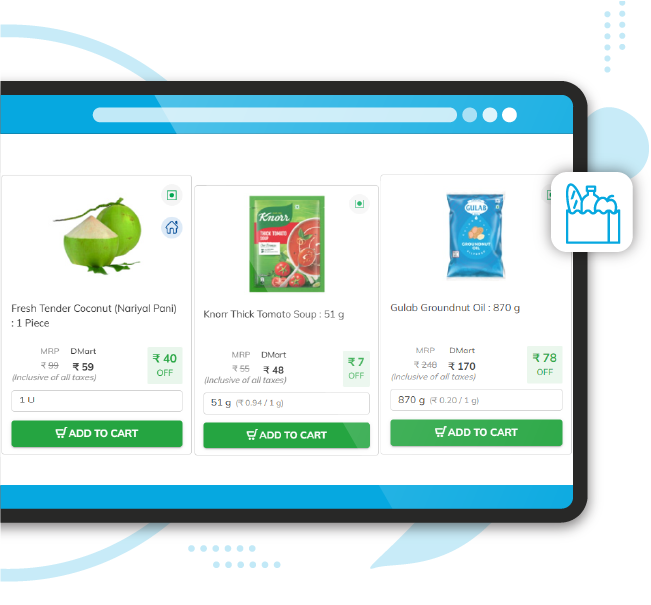
To address the client’s challenges, we implemented Dmart Grocery and Supermarket Data Extraction Services that automated price collection across locations, categories, and SKUs. This eliminated manual tracking errors and ensured consistent, high-frequency updates for accurate analysis.

Our team designed structured pipelines supported by Grocery Pricing Data Intelligence Services, enabling normalization of pack sizes, category mapping, and regional price alignment. This helped convert raw price points into comparable and actionable insights.

We also deployed scalable Grocery Data Scraping API Services to deliver clean, validated datasets directly into the client’s dashboards and analytics tools. Real-time alerts, historical storage, and quality checks ensured reliability, while the flexible architecture supported future expansion and advanced grocery inflation modeling.

Our-Solutions-Q-commerce-Data-Scraping

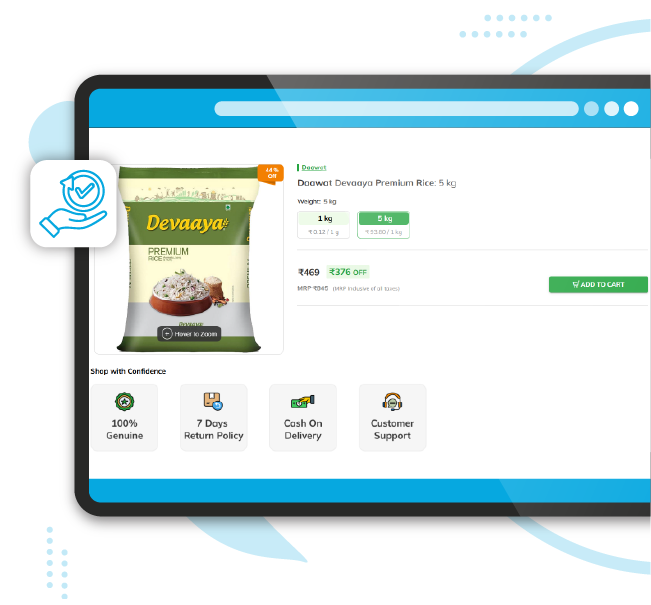
Sample Extracted Grocery Pricing Data (DMart)

City Category Product Name Pack Size Price (₹) Date Availability
Mumbai Staples Basmati Rice Premium 5 kg 645 2026-01-10 In Stock
Pune Packaged Foods Sunflower Cooking Oil 1 L 148 2026-01-10 In Stock
Bengaluru Dairy Full Cream Milk 1 L 64 2026-01-10 In Stock
Hyderabad Household Detergent Powder 2 kg 285 2026-01-10 Low Stock
Ahmedabad Snacks Salted Potato Chips 200 g 52 2026-01-10 In Stock
Chennai Beverages Instant Coffee Jar 100 g 175 2026-01-10 In Stock
Web-Scraping-Advantages

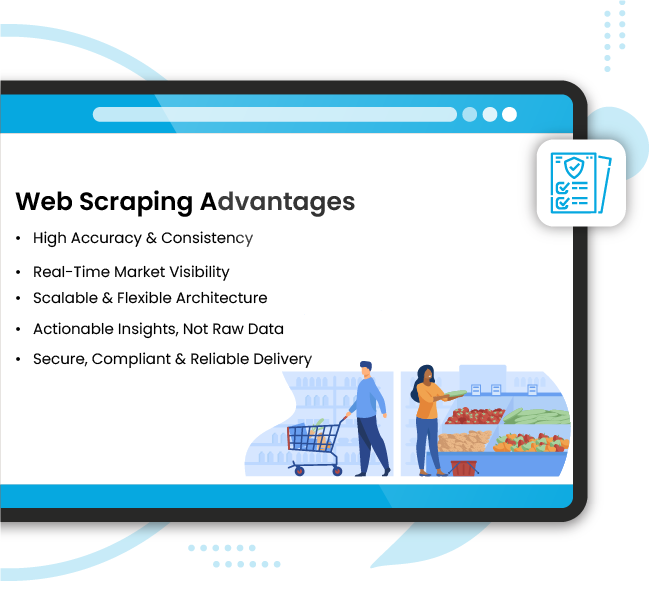
Web Scraping Advantages

  • High Accuracy & Consistency: Our automated workflows eliminate manual errors by capturing structured, validated data at scale. Built-in checks ensure consistent product matching, price normalization, and reliable historical records, enabling confident analysis and long-term trend tracking across regions and categories.
  • Real-Time Market Visibility: We provide frequent updates that reflect actual market movements, including price changes, promotions, and availability shifts. This near real-time visibility allows businesses to respond faster to inflation signals, competitive changes, and supply-demand fluctuations.
  • Scalable & Flexible Architecture: Our solutions are designed to grow with your needs, supporting additional locations, categories, and data points without performance loss. Flexible configurations ensure seamless integration with dashboards, analytics tools, and internal decision-making systems.
  • Actionable Insights, Not Raw Data: We transform collected information into structured, analysis-ready formats. Clean datasets, historical continuity, and contextual enrichment help teams move beyond numbers and uncover meaningful patterns that directly support strategic decisions.
  • Secure, Compliant & Reliable Delivery: Data pipelines follow strict quality, security, and compliance standards. Reliable delivery schedules, error monitoring, and controlled access ensure dependable operations while protecting business intelligence and maintaining long-term trust.

Final Outcome

The final outcome of the project delivered a reliable, scalable, and insight-driven pricing intelligence framework for the client. Automated data pipelines replaced manual tracking, enabling faster updates and consistent historical records across regions. Analysts gained clear visibility into price movements, category inflation, and availability patterns, supporting timely strategic decisions. Dashboards became more accurate, responsive, and easier to interpret for both technical and business teams. The structured datasets improved forecasting accuracy and strengthened internal reporting confidence. With access to Grocery and Supermarket Store Datasets, the client established a long-term foundation for monitoring market dynamics, identifying anomalies, and responding proactively to pricing shifts. Overall, the solution enhanced operational efficiency, reduced analysis turnaround time, and empowered leadership with dependable insights for sustainable growth.

Final-outcome

Client’s Testimonial

"Working with this team transformed how we monitor grocery pricing across regions. Their structured approach delivered accurate, timely data that significantly improved our visibility into market movements. What impressed us most was the consistency and reliability of the datasets, which allowed our analysts to focus on insights rather than data cleaning. The dashboards became more responsive, trend analysis improved, and internal reporting cycles shortened dramatically. Their technical expertise, proactive communication, and ability to scale with our growing requirements made the collaboration seamless. This partnership has strengthened our decision-making process and provided a solid foundation for long-term pricing and inflation analysis across multiple categories."

— Head of Pricing Analytics

FAQ's

How frequently is the DMart grocery pricing data updated?

Our system collects and updates prices daily, ensuring near real-time insights across cities, categories, and SKUs for accurate trend analysis.

Can the solution handle multiple DMart locations simultaneously?

Yes, the framework is designed to scale across multiple regions, maintaining data consistency while tracking price and availability variations effectively.

What formats are available for the extracted data?

Data can be delivered in CSV, Excel, or API-ready formats, making it compatible with dashboards, analytics tools, and internal reporting systems.

How is data accuracy ensured across promotions and discounts?

Advanced validation and normalization processes detect anomalies, promotional spikes, and stock changes to maintain reliable pricing intelligence.

Can historical price trends be analyzed using this service?

Yes, the collected datasets are stored and structured for longitudinal analysis, enabling month-on-month and year-on-year insights into grocery pricing patterns.

Let’s Talk About Product

What's Next?

We start by signing a Non-Disclosure Agreement (NDA) to protect your ideas.

Our team will analyze your needs to understand what you want.

You'll get a clear and detailed project outline showing how we'll work together.

We'll take care of the project, allowing you to focus on growing your business.