Instacart Store-Level Data Extraction for Smarter Pricing and Inventory Decisions
Introduction
In today’s competitive grocery and retail sector, access to precise and timely data is no longer a luxury—it’s a necessity. Retailers, brands, and analytics firms increasingly rely on advanced data extraction techniques to understand consumer behavior, track pricing trends, and optimize product placement strategies. Among the most impactful approaches in this space is Instacart store-level data extraction, which enables businesses to gain detailed insights across multiple stores, ZIP codes, and product categories.
By leveraging Grocery Data Scraping API Services, companies can automate the collection of complex data from Instacart, reducing manual effort while ensuring accuracy. These APIs are designed to handle vast amounts of data in real time, allowing organizations to capture not only product listings but also pricing, promotions, inventory availability, and competitor strategies. For businesses that aim to remain competitive in the hyperlocal grocery ecosystem, having access to structured and comprehensive datasets is invaluable.
At the heart of this data-driven transformation is the ability to create and analyze Grocery and Supermarket Store Datasets. These datasets provide detailed insights into store-level performance, product assortment, and category-wise sales trends. For example, a grocery brand looking to launch a new product can use these datasets to identify which stores in specific ZIP codes have the highest demand for similar products, the prevalent price points, and ongoing promotions by competitors. This level of granularity allows businesses to make informed, data-backed decisions that improve profitability and market share.
Why Store-Level Data Matters in Grocery Retail?
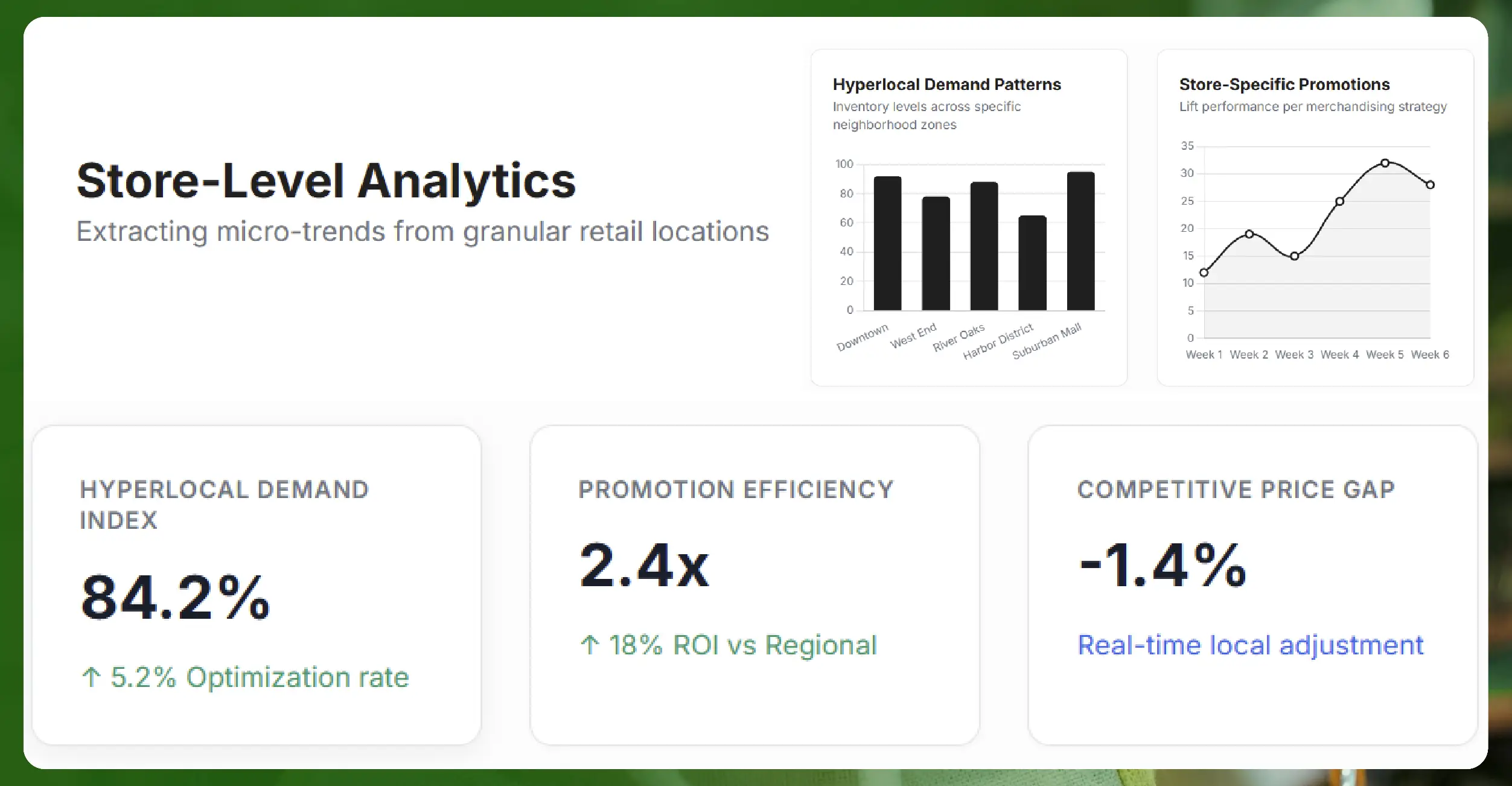
Retail analytics has evolved beyond aggregated sales data. While national or regional trends provide a macro perspective, store-level insights reveal micro-level consumer behavior patterns. Instacart store-level data extraction provides a unique vantage point into these micro-trends, enabling businesses to:
- Understand Hyperlocal Demand Patterns – Consumer preferences often vary by neighborhood or city. By analyzing store-level data, retailers can optimize inventory for each location, reducing stockouts or overstocking issues.
- Optimize Product Placement and Promotions – Detailed insights into product performance allow brands to craft store-specific promotions and merchandising strategies.
- Monitor Competitor Activity – Understanding competitor pricing, discounts, and product assortment at the store level allows businesses to adjust strategies in real time, ensuring they stay competitive.
How Instacart Data Extraction Works?
The process of extracting data from Instacart involves several technical and strategic steps. Businesses leverage APIs and web scraping tools to collect data efficiently, ensuring it remains structured and actionable. Here’s an overview of how hyperlocal grocery data scraping works:
- Identifying Target Stores and Categories – Businesses start by selecting the stores, ZIP codes, and product categories relevant to their strategy. For instance, a brand may focus on organic products in urban ZIP codes with high demand.
- Automated Data Collection – Using scraping scripts or API integrations, businesses collect product-level data, including pricing, availability, promotions, ratings, and descriptions.
- Data Cleaning and Structuring – Raw scraped data often contains duplicates or inconsistencies. Cleaning and organizing the data into structured datasets ensures it is ready for analysis.
- Analysis and Insights Generation – Businesses can use these datasets to uncover patterns, predict trends, track seasonal demand, and optimize pricing and promotions across specific stores or ZIP codes.
One of the key advantages of Instacart data extraction is its ability to provide real-time visibility into local market dynamics. By leveraging ZIP code level product data extraction, companies can understand not only what is selling but where it is selling best. This insight is critical for hyperlocal marketing, inventory allocation, and dynamic pricing strategies.
Use Cases of Store-Level Data Extraction
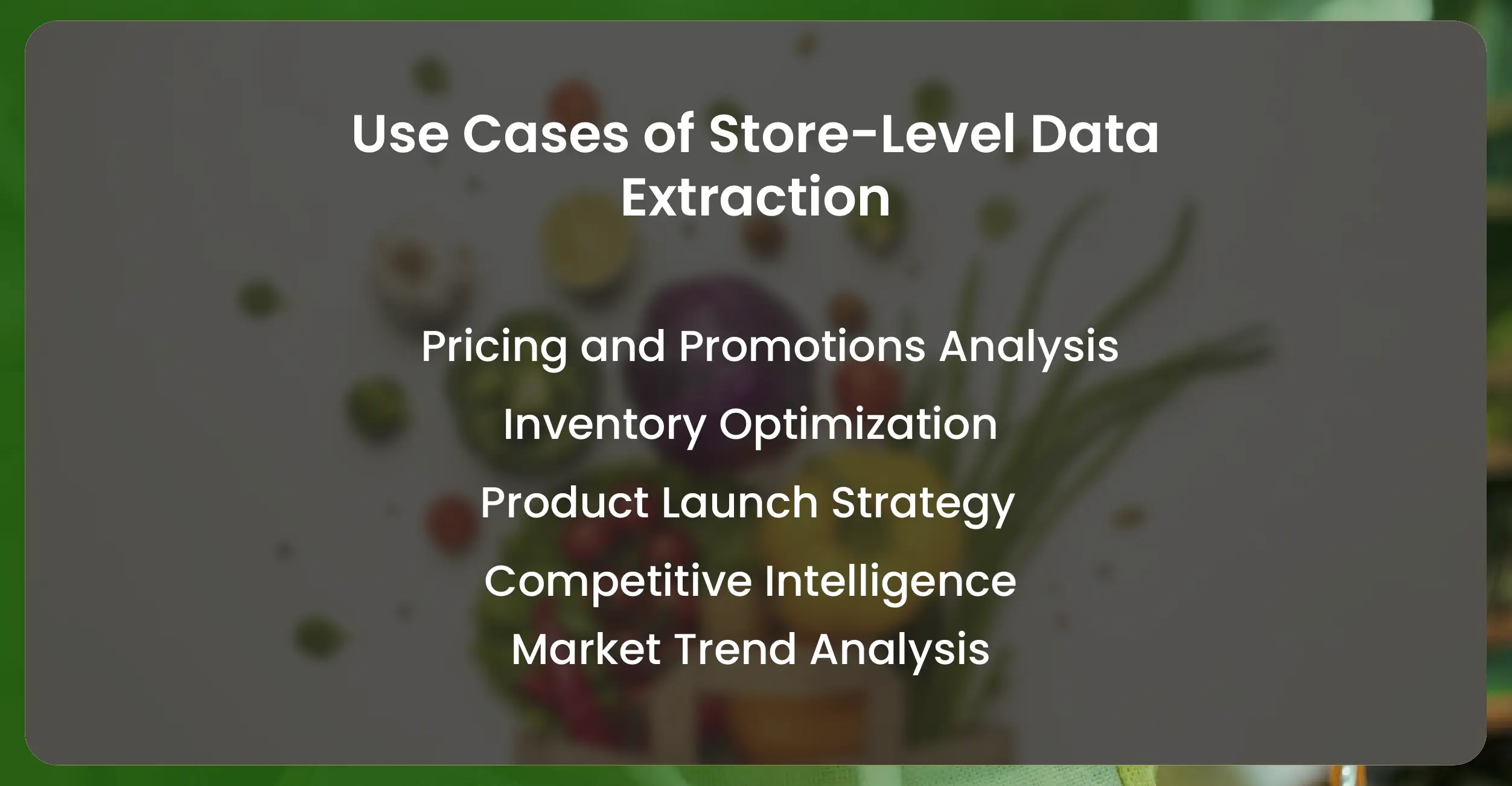
Instacart store-level data extraction has a broad range of applications across retail and e-commerce. Some of the most impactful use cases include:
1. Pricing and Promotions Analysis
Retailers can monitor competitor pricing across multiple stores and adjust their own prices dynamically. For instance, if a competitor offers a discount on a popular cereal in a specific ZIP code, businesses can respond with strategic pricing or bundle offers to capture market share.
2. Inventory Optimization
By tracking inventory levels across stores in real time, businesses can reduce overstocking and stockouts. Hyperlocal insights ensure that high-demand products are always available, increasing customer satisfaction and loyalty.
3. Product Launch Strategy
When launching a new product, understanding which stores and neighborhoods show higher demand for similar products allows for targeted product distribution. Businesses can optimize launch locations based on detailed Grocery and Supermarket Store Datasets.
4. Competitive Intelligence
With store-level data, businesses can track competitors’ assortment strategies, promotional campaigns, and price changes. This intelligence allows companies to adjust their marketing, product positioning, and pricing strategies accordingly.
5. Market Trend Analysis
Analyzing historical and current store-level data helps brands forecast future demand trends, plan promotions, and make data-driven merchandising decisions. By understanding consumer preferences across ZIP codes, businesses can predict which products are likely to perform best in upcoming months.
Technology Behind Instacart Data Extraction
The tools and techniques used for hyperlocal grocery data scraping are critical to success. Businesses employ a combination of APIs, web crawlers, and data analytics platforms to collect, clean, and interpret the data. Advanced solutions often include:
- Dynamic Web Scrapers: These are designed to adapt to changes in website structure and product listings, ensuring consistent data collection.
- API-Based Integration: APIs allow for direct access to structured data, enabling faster, more reliable collection without the risk of being blocked.
- Data Warehousing Solutions: After extraction, datasets are stored in structured formats, enabling seamless analysis and reporting.
- Machine Learning Models: Predictive analytics can be applied to extracted datasets to forecast demand, optimize pricing, and improve inventory planning.
The combination of these technologies ensures that ZIP code level product data extraction is accurate, scalable, and actionable.
Challenges in Store-Level Grocery Data Extraction
While the benefits are significant, extracting data from platforms like Instacart comes with its own set of challenges:
- Dynamic Pricing and Promotions – Prices and deals often change multiple times per day, requiring real-time updates to ensure accuracy.
- Website Structure Variability – Instacart frequently updates its website layout, requiring adaptive scraping tools.
- Data Volume Management – Collecting store-level data across hundreds of stores generates massive datasets, necessitating efficient storage and processing solutions.
- Compliance and Legal Considerations – Businesses must ensure that their data collection practices comply with relevant terms of service and data privacy regulations.
Overcoming these challenges requires advanced Grocery Data Scraping API Services and skilled data engineering teams.
The Future of Hyperlocal Grocery Insights
As grocery shopping continues to shift online, store-level data extraction will play an even more critical role in retail strategy. Hyperlocal insights will empower businesses to:
- Anticipate consumer behavior at a neighborhood level.
- Launch targeted promotions and product campaigns.
- Reduce inventory waste and improve operational efficiency.
- Gain competitive intelligence in an increasingly crowded market.
Retailers who invest in Instacart store-level data extraction and hyperlocal grocery data scraping will be better positioned to understand and serve their customers, optimize operations, and drive profitability.
Conclusion
In conclusion, Instacart store-level data extraction is transforming how retailers, brands, and analytics firms approach the grocery market. By leveraging structured datasets and automated data collection, businesses can monitor competitor activity, track pricing trends, and optimize product assortment at a granular level. Integrating these insights with business strategies ensures smarter decision-making, higher customer satisfaction, and stronger market positioning.
Advanced solutions such as Grocery Pricing Data Intelligence Services provide businesses with the tools needed to stay ahead of the competition. Instacart product data scraping enables organizations to gain precise insights into product performance across multiple stores. Real-time local inventory tracking allows retailers to optimize stock levels and respond immediately to consumer demand. By embracing hyperlocal insights and ZIP code-specific product intelligence, organizations can unlock a wealth of opportunities in the rapidly evolving grocery retail landscape.
Experience top-notch web scraping service and mobile app scraping solutions with iWeb Data Scraping. Our skilled team excels in extracting various data sets, including retail store locations and beyond. Connect with us today to learn how our customized services can address your unique project needs, delivering the highest efficiency and dependability for all your data requirements.