How Does KFC Restaurant Menu Data Scraping Help Track Customer Preferences?

Introduction

In today’s fast-paced food delivery market, gaining access to accurate and structured data is vital for businesses, analysts, and marketers. The KFC Restaurant Menu Data Scraping has emerged as a pivotal tool to collect valuable insights regarding menu offerings, pricing trends, customer preferences, and restaurant presence across cities. With the growing competition in the quick-service restaurant (QSR) sector, companies are leveraging data scraping techniques to make informed strategic decisions.

Additionally, KFC competitor benchmarking data allows businesses to monitor and compare menu items across multiple regions, helping in pricing optimization, promotional campaigns, and understanding consumer demands. Combining this KFC food delivery price discrepancy analysis provides a holistic view of both quantitative and qualitative metrics, ensuring a comprehensive approach to business intelligence.

Understanding KFC Data Scraping

Data scraping involves extracting structured information from websites, APIs, or applications. In the context of KFC, this can include menu prices, restaurant locations, nutritional information, ingredients, and customer reviews. By employing advanced scraping techniques, businesses can transform raw data into actionable insights.

KFC item-level pricing insights focuses specifically on collecting data such as menu items, prices, promotions, combo deals, and seasonal offerings. This helps businesses, delivery platforms, and market researchers track product availability and pricing trends in real-time.

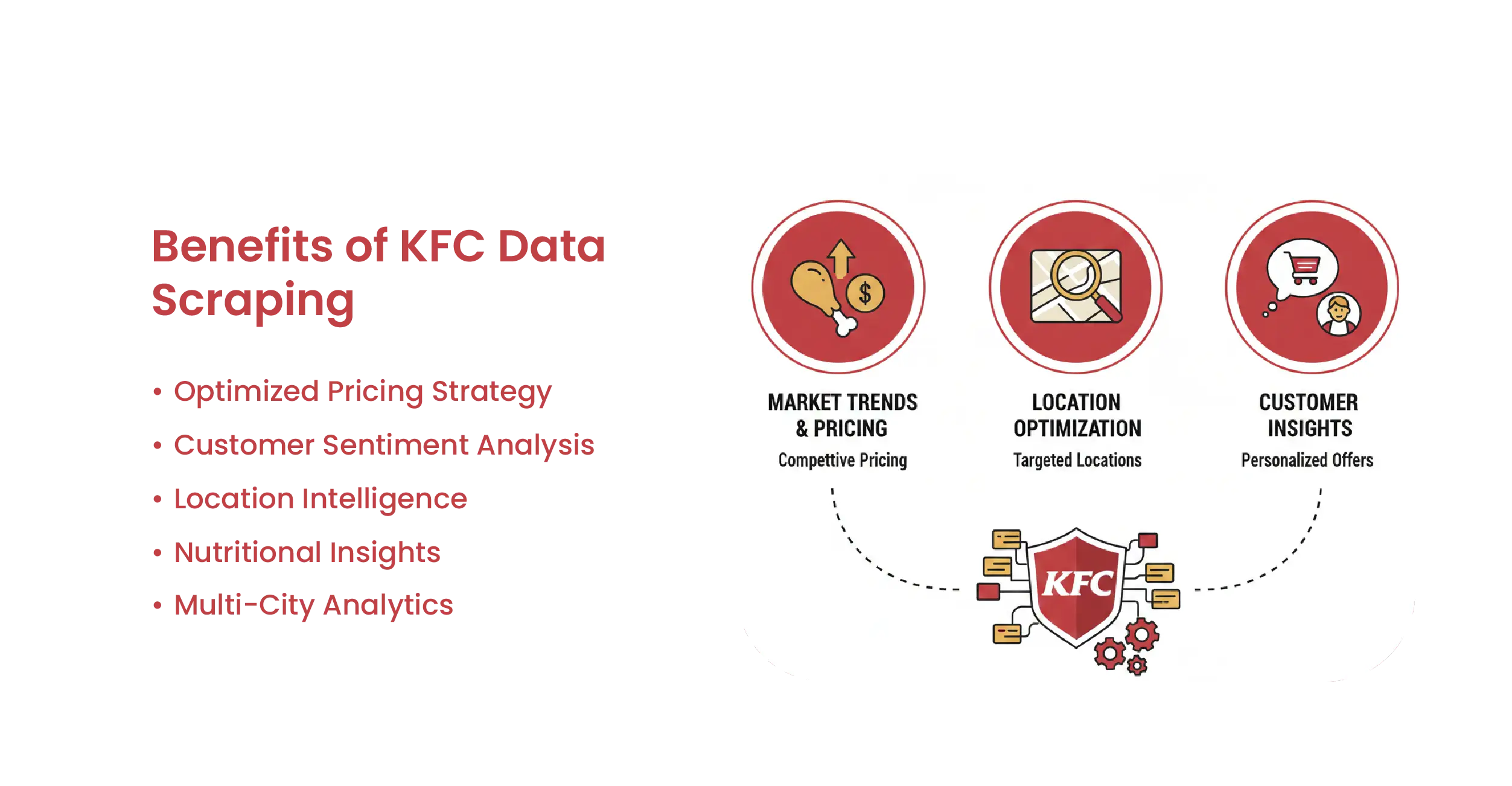
Benefits of KFC Data Scraping

  • Optimized Pricing Strategy: With KFC store locations dataset, companies can analyze the cost structure and nutritional information of menu items. This allows restaurant chains, delivery aggregators, and competitors to design competitive pricing strategies while also offering healthier choices for customers.
  • Customer Sentiment Analysis: By leveraging KFC review sentiment analysis, brands can understand customer preferences, identify common complaints, and measure satisfaction levels. Sentiment data derived from customer reviews helps in improving menu offerings, service quality, and marketing strategies.
  • Location Intelligence: Scrape KFC review sentiment analysis to map store density, understand customer reviews, market penetration, and identify high-demand regions. This intelligence is crucial for strategic planning, such as deciding on new store openings or delivery expansion areas.
  • Nutritional Insights: Extract KFC calories, ingredients, nutritional data to allow health-conscious businesses, nutrition apps, and diet planners to integrate reliable information into their platforms. It ensures that consumers have access to accurate nutritional content while helping restaurants align with dietary trends.
  • Multi-City Analytics: It offers a comparative view of pricing, menu diversity, and store availability across different urban regions. This helps food delivery apps, market analysts, and corporate strategists identify regional preferences and pricing variations.

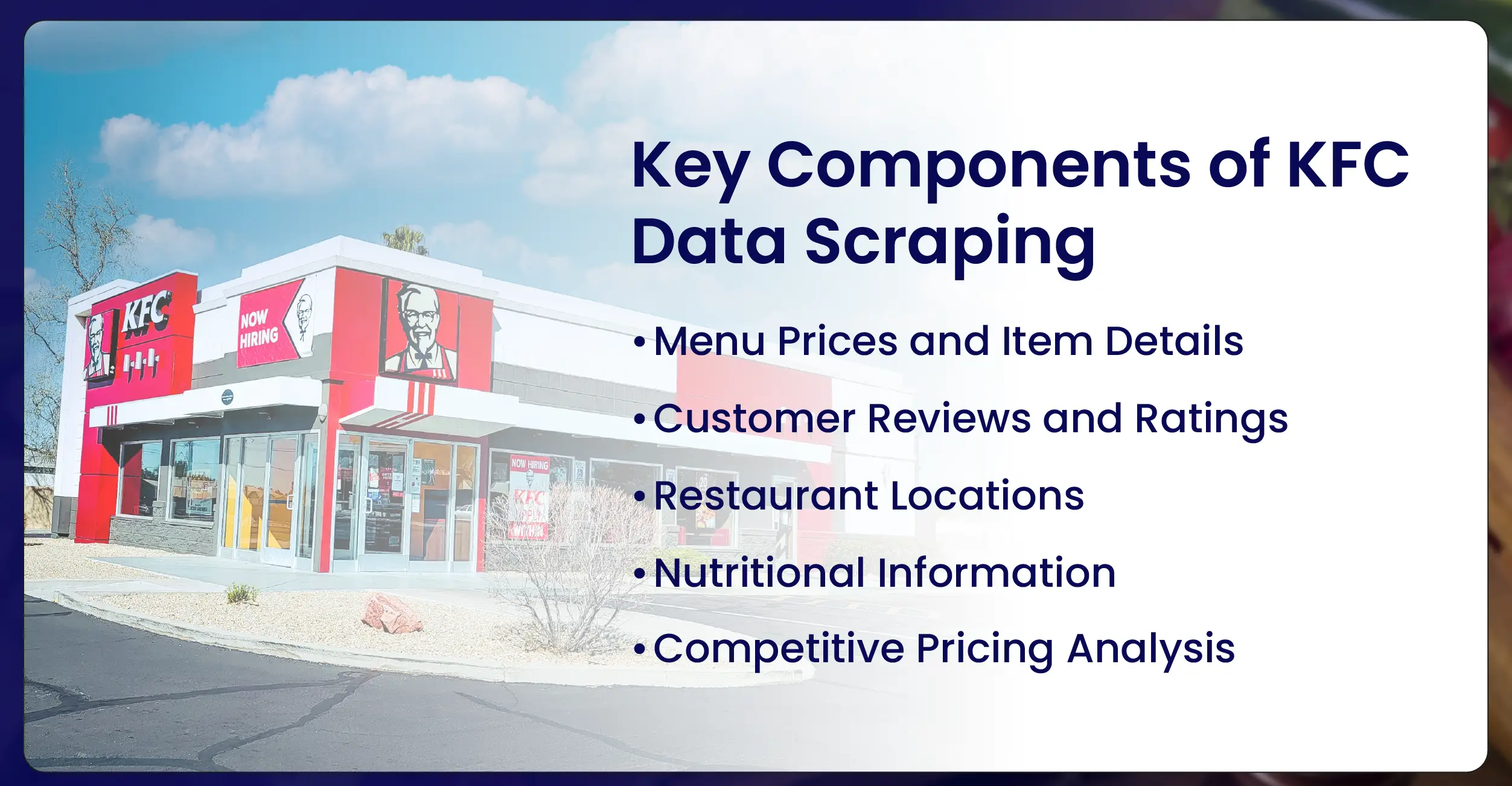
Key Components of KFC Data Scraping

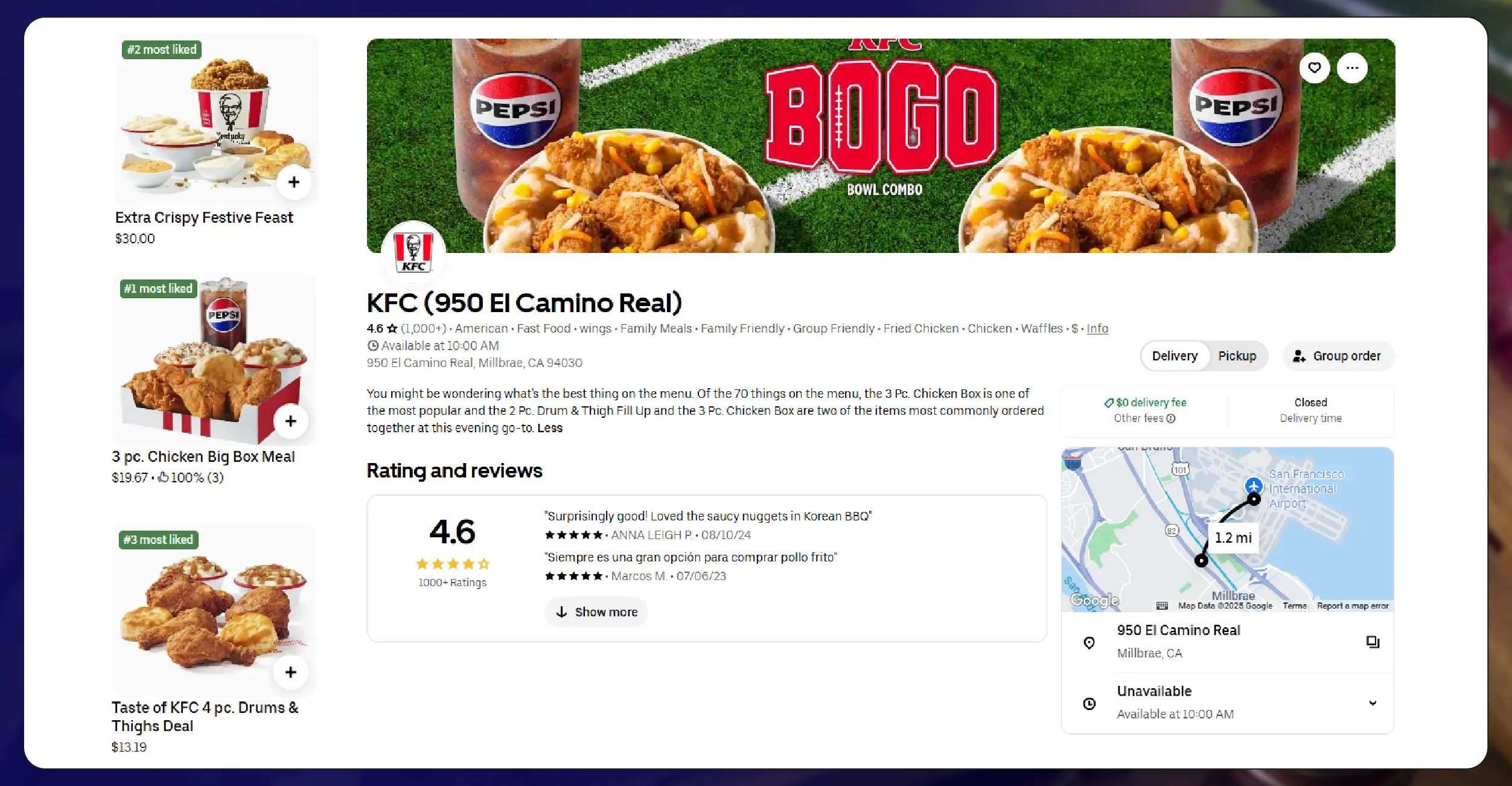
  • Menu Prices and Item Details: Collecting detailed information on menu items, combo meals, beverages, and seasonal promotions ensures that businesses can analyze pricing patterns, compare them with competitors, and provide customers with dynamic offers.
  • Customer Reviews and Ratings: KFC customer reviews scraping helps understand customer satisfaction and sentiment. It captures ratings, textual reviews, and feedback trends, which can be used to enhance service quality and marketing campaigns.
  • Restaurant Locations: Web Scraping KFC Restaurant Data like store addresses, operational hours, and geolocation data forms the basis. This dataset is critical for delivery optimization, route planning, and identifying market coverage gaps.
  • Nutritional Information: Collecting information on ingredients, calorie counts, and nutritional breakdown allows diet-specific applications and analytics platforms to provide accurate recommendations to consumers.
  • Competitive Pricing Analysis: Food Delivery Data Extraction Services allow businesses to track how menu prices vary across cities and adapt strategies to maintain competitiveness. It also aids in benchmarking against other QSR brands.

Techniques Used in KFC Data Scraping

  • Web Scraping: It involves crawling KFC’s official website or affiliated platforms to extract structured information automatically. Modern scraping tools and frameworks allow precise extraction while handling dynamic pages and pop-ups.
  • API Integration: Utilizing delivery platforms’ APIs enables access to menu, pricing, and location data efficiently. The Food Delivery Data Extraction Services facilitate automated, large-scale data collection with minimal manual intervention.
  • Data Cleaning and Standardization: Raw scraped data is often unstructured. Cleaning and normalizing this data ensures uniformity in format, accuracy, and usability across analytics platforms.
  • Visualization and Analysis: Post-scraping, businesses can use dashboards and visualization tools to present insights. This allows stakeholders to make strategic decisions quickly and confidently.

Unlock powerful insights today—get started with our data scraping services and stay ahead of the competition!

Applications of KFC Data Scraping

  • Market Research: Businesses can understand trends, consumer behavior, and market demand by analyzing KFC’s menu and pricing data across regions.
  • Delivery Platforms Optimization: Delivery apps benefit from real-time menu and pricing updates, ensuring accurate listings and enhanced customer experience.
  • Health and Nutrition Platforms: Nutrition-focused apps can integrate KFC ingredients & calorie data scraping to provide users with detailed dietary information for informed meal choices.
  • Franchise Planning: Companies can analyze multi-city data to decide on new store openings or modify offerings based on regional consumer preferences.
  • Competitive Benchmarking: By monitoring pricing and promotions, competitors can adjust their strategies to remain competitive in the QSR market.

Challenges in KFC Data Scraping

  • Dynamic Website Changes: Websites frequently update layouts and menu structures, requiring scraping scripts to adapt continuously.
  • Anti-Scraping Measures: Many platforms deploy security measures such as CAPTCHAs and IP restrictions, making data extraction complex.
  • Data Accuracy and Completeness: Ensuring extracted data is complete and error-free requires robust validation mechanisms and data cleaning processes.
  • Compliance with Legal Guidelines: Data scraping must adhere to regulations and terms of service of websites and APIs to avoid legal complications.

How iWeb Data Scraping Can Help You?

  • Gain Actionable Insights: Our services collect structured data from multiple sources, allowing you to understand market trends, customer preferences, and competitor strategies for informed business decisions.
  • Optimize Pricing and Offerings: By tracking prices, promotions, and product details in real-time, you can adjust your pricing strategies and offerings to stay competitive and maximize revenue.
  • Enhance Customer Experience: Extracting customer feedback and reviews helps you identify pain points, improve service quality, and deliver products that better meet customer expectations.
  • Plan Strategic Expansion: Location and presence data enables you to identify high-demand areas, optimize delivery routes, and make smart decisions about new store openings or service expansions.
  • Save Time and Resources: Automating data collection eliminates manual research, reduces errors, and ensures you have accurate, up-to-date information, allowing your team to focus on core business operations.

Conclusion

In conclusion, KFC Datasets obtained through advanced scraping techniques provide actionable insights for businesses, delivery platforms, nutrition apps, and market analysts. Leveraging Food Data Scraping API Service ensures efficient and scalable data extraction while maintaining accuracy. These insights from KFC Food Delivery Scraping API are crucial for strategic planning, market research, and operational optimization. By investing in KFC data scraping, organizations can stay ahead in a competitive market, delivering both consumer satisfaction and business growth.

Experience top-notch web scraping service and mobile app scraping solutions with iWeb Data Scraping. Our skilled team excels in extracting various data sets, including retail store locations and beyond. Connect with us today to learn how our customized services can address your unique project needs, delivering the highest efficiency and dependability for all your data requirements.

Let’s Discuss Your Project

FAQ's

What is the purpose of extracting restaurant menu and location data?

Extracting menu and location data helps businesses, analysts, and researchers understand product offerings, pricing trends, and geographic presence. It allows for better decision-making regarding marketing, sales strategies, and expansion planning.

How can collecting customer reviews improve business strategies?

Analyzing customer reviews provides insights into preferences, satisfaction levels, and common complaints. This information helps businesses improve service quality, enhance products, and develop targeted promotions that align with customer expectations.

What types of information can be obtained from restaurant data collection?

Data collection can include menu items, prices, promotional offers, nutritional information, store addresses, operational hours, and customer feedback. This comprehensive view allows businesses to make informed operational and strategic decisions.

How is location information useful for businesses?

Knowing the geographic distribution of outlets helps in market analysis, identifying high-demand areas, planning delivery routes, and making decisions about where to open new locations to maximize reach and profitability.

Are there any challenges in collecting restaurant data?

Challenges include dealing with changing website layouts, incomplete or inconsistent data, technical limitations, and ensuring compliance with legal and privacy regulations. Proper tools and validation methods are essential to overcome these challenges.