How does Luxury Home Decor Pricing Intelligence Improve Competitive Analysis?
Introduction
The luxury home decor industry has rapidly evolved into a data-driven ecosystem where pricing strategy, brand positioning, and product assortment are continuously optimized using real-time intelligence. Modern retailers and analysts increasingly rely on Luxury Home Decor Pricing Intelligence to understand shifting consumer expectations, competitive pricing patterns, and premium product demand across global markets.
In this context, Scraping RH, Williams-Sonoma & CB2 for Pricing Insights becomes a powerful approach for extracting structured, high-value datasets from leading luxury home furnishing brands. These platforms represent different yet overlapping segments of premium lifestyle retail, making them ideal for comparative analysis. One of the most critical data points in this ecosystem is RH product price data scraping, which helps decode how Restoration Hardware positions its ultra-luxury collections across categories like furniture, lighting, and decor.
By combining structured extraction techniques with competitive benchmarking, businesses can transform raw listings into actionable insights that support pricing optimization, assortment planning, and market forecasting.
Understanding the Luxury Home Decor Data Ecosystem
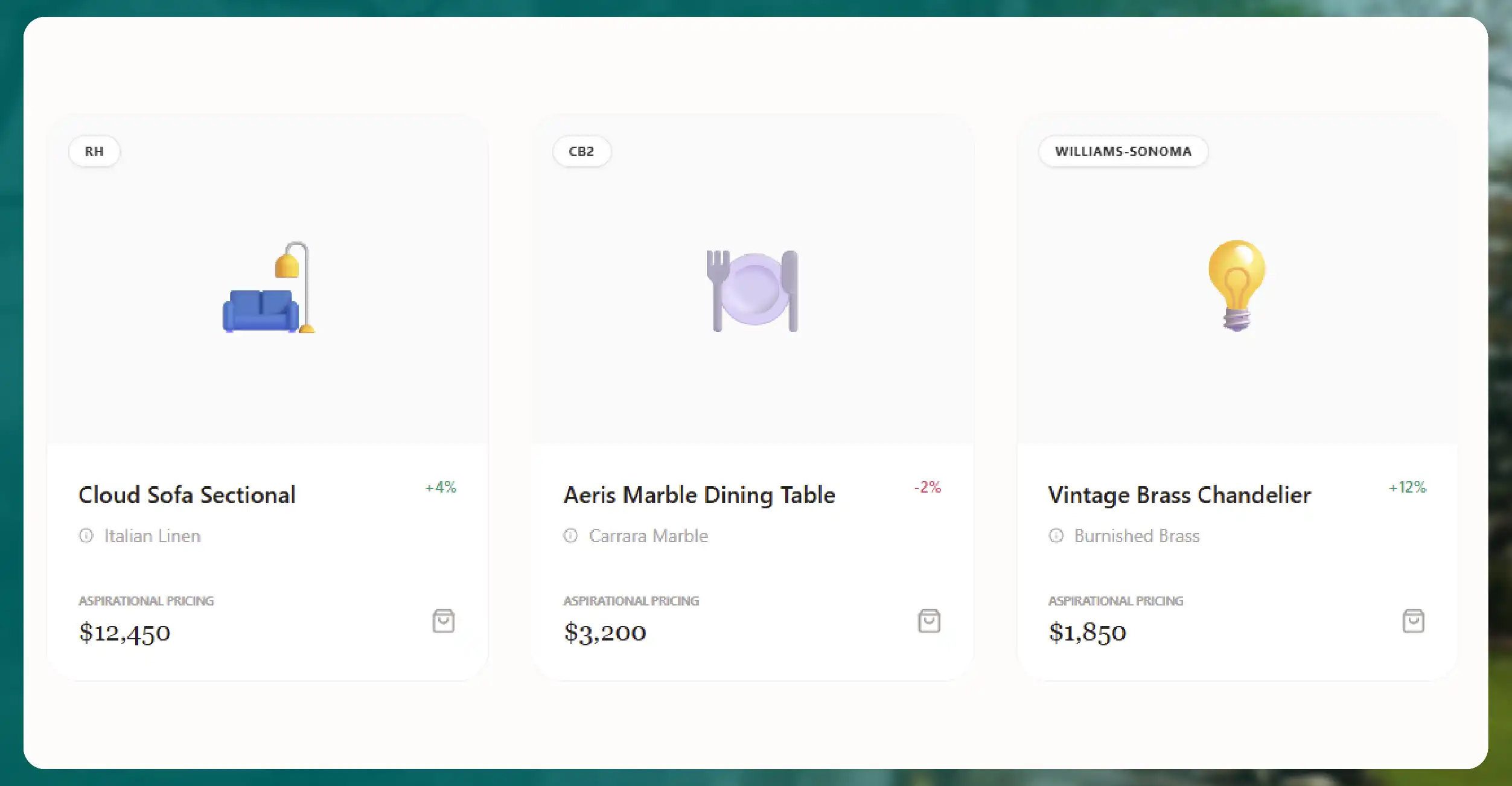
Luxury home decor is not just about aesthetics; it is deeply tied to brand perception, exclusivity, and emotional buying behavior. Unlike mass-market furniture retailers, luxury brands such as RH, Williams-Sonoma, and CB2 rely heavily on curated collections and aspirational pricing models.
These brands frequently update product catalogs, seasonal collections, and promotional pricing. This makes manual tracking inefficient and error-prone. Instead, automated data pipelines help extract structured information such as product names, categories, materials, pricing tiers, discounts, and availability.
With such data, analysts can identify patterns like premium pricing clusters, discount cycles, and category-level price elasticity. This becomes especially important in high-value categories like sofas, dining sets, lighting fixtures, and designer accessories.
Competitive Pricing Intelligence Across Premium Brands
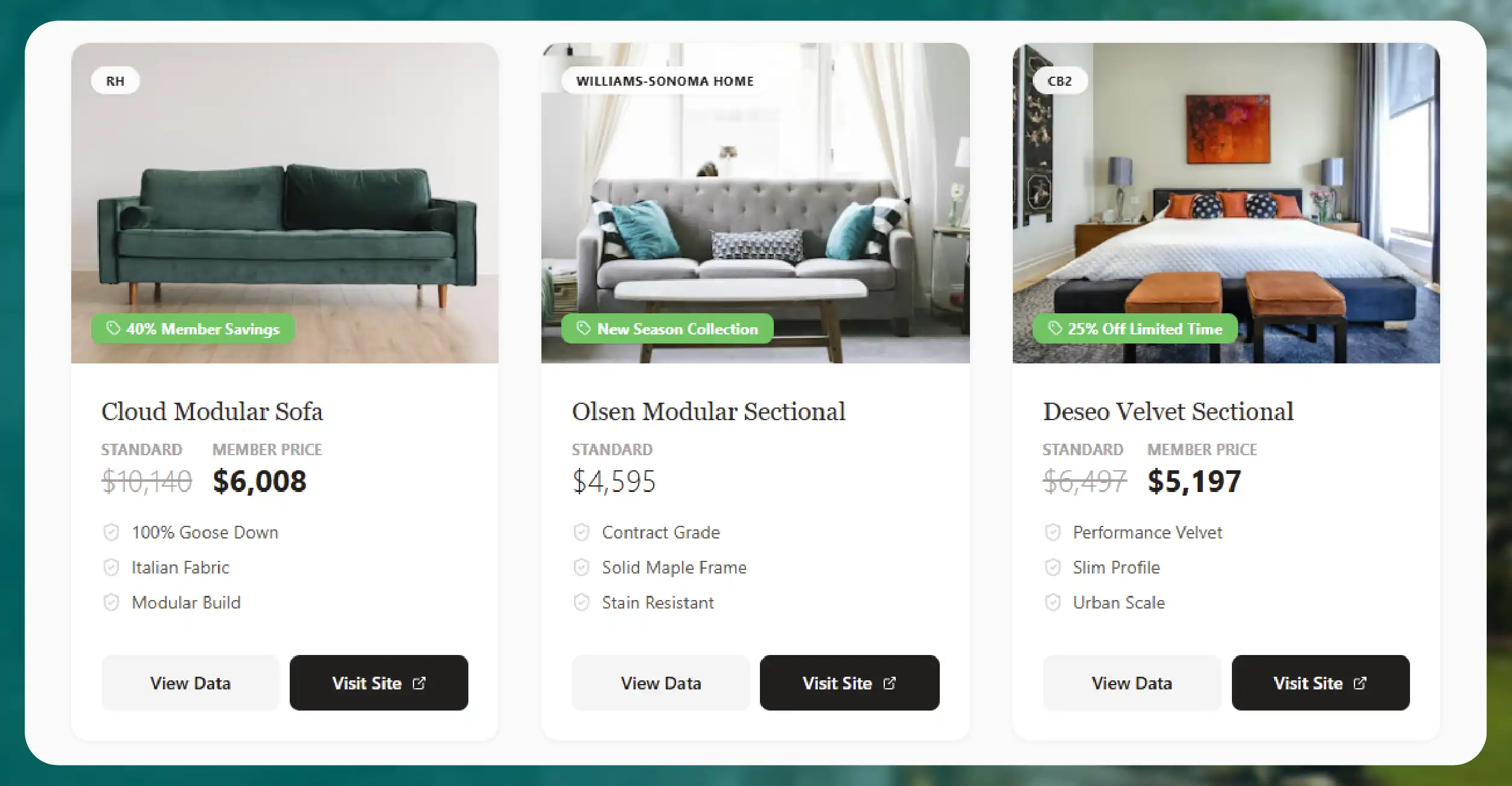
In the luxury segment, pricing is not only a reflection of cost but also of brand storytelling. Each retailer positions itself differently:
- RH focuses on ultra-premium, architectural furniture designs.
- Williams-Sonoma Home blends luxury with lifestyle and functionality.
- CB2 targets modern, urban luxury with relatively accessible pricing.
To understand these differences, Williams-Sonoma pricing data extraction plays a crucial role in identifying how the brand balances premium positioning with seasonal promotions and bundled offerings.
By analyzing structured pricing datasets, businesses can uncover how frequently discounts are applied, how price points vary across similar categories, and how product bundles are structured to increase average order value.
The Role of CB2 in Modern Design Intelligence
CB2, as a contemporary design-focused brand, represents a younger and more experimental segment of luxury home decor. Its product strategy relies heavily on modern aesthetics, minimalist design, and trend-driven collections.
CB2 home decor data scraping enables analysts to monitor fast-changing inventory cycles, limited-edition product drops, and design trends that appeal to urban millennials and Gen Z consumers. Unlike traditional luxury brands, CB2 often experiments with bold pricing strategies and rapid product turnover, making it a valuable source for trend forecasting.
By continuously tracking CB2’s catalog changes, businesses can identify emerging design patterns before they become mainstream in higher-end luxury brands.
Cross-Brand Price Benchmarking in Luxury Furniture
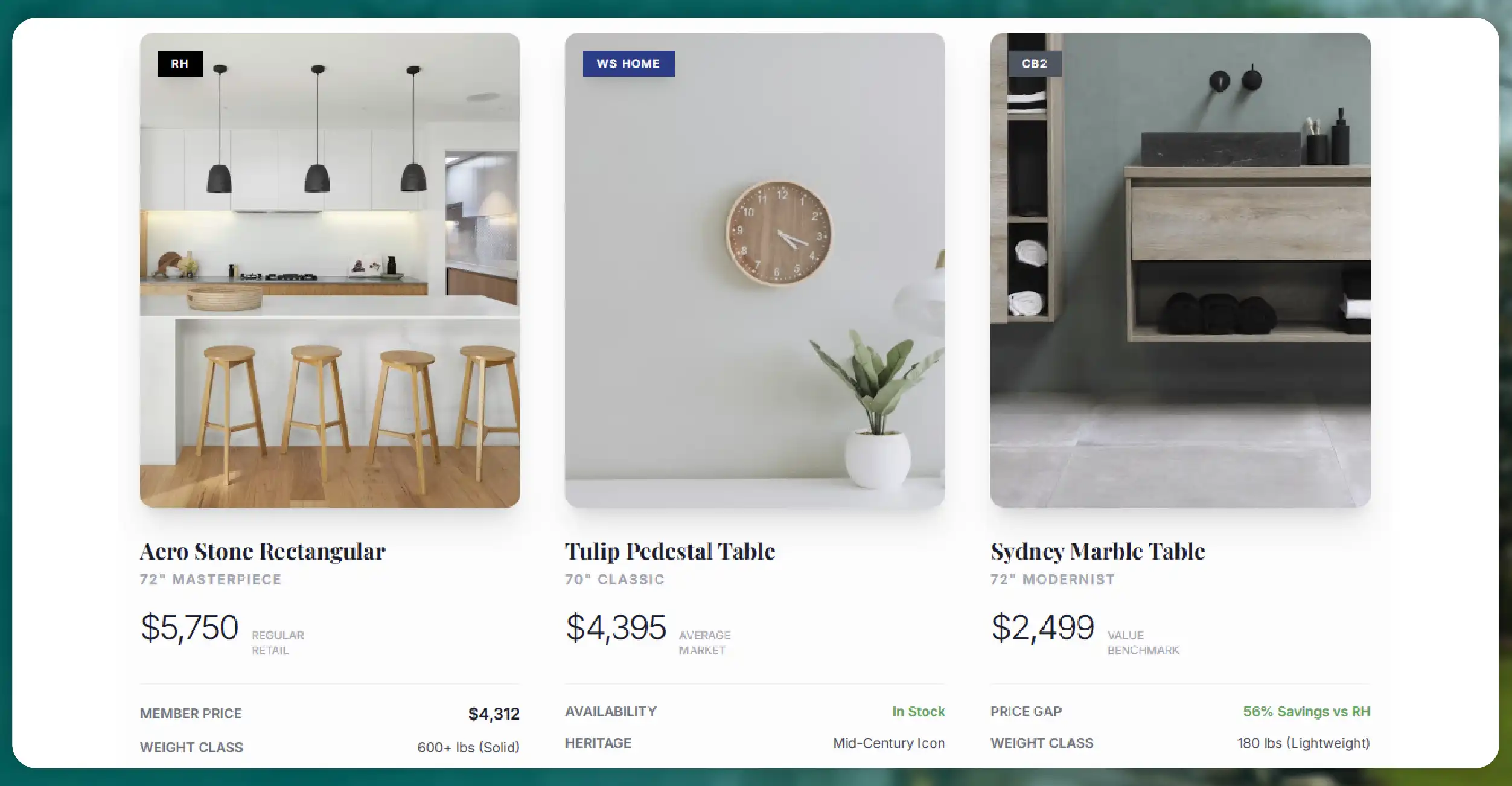
One of the most powerful applications of data intelligence in this domain is comparative pricing analysis. Brands like RH, Williams-Sonoma, and CB2 often sell similar product types—such as dining tables, sectionals, or chandeliers—but at vastly different price points.
This makes luxury furniture price comparison across brands a critical strategy for retailers, analysts, and even investors. By mapping similar SKUs across brands, organizations can determine pricing gaps, premium markups, and value positioning strategies.
For example, a marble dining table may be priced significantly higher at RH compared to CB2, even if material specifications are similar. These differences reflect branding, perceived exclusivity, and customer targeting strategies rather than just production costs.
Extracting Actionable Home Decor Pricing Data
To make informed business decisions, raw product data must be converted into structured intelligence. This includes attributes such as:
- Product category and subcategory
- Material composition
- Dimensions and specifications
- Pricing history and discount patterns
- Stock availability and delivery timelines
The need to extract premium home decor pricing data becomes essential for building dashboards that allow retailers to monitor competitor pricing in real time. This data can support dynamic pricing strategies, inventory planning, and promotional campaigns.
When combined with visualization tools, such datasets reveal hidden correlations between pricing trends and customer demand cycles.
Scraping Premium Product Listings at Scale

Luxury home decor platforms frequently host thousands of SKUs across multiple categories, making scalability a key requirement for any data extraction system. Automated pipelines help systematically capture structured product information across categories such as seating, tables, storage, lighting, and decor accessories.
The strategy to scrape premium furniture product listings and prices Data enables organizations to build comprehensive datasets that reflect the full product ecosystem of luxury retailers. This allows businesses to track not only pricing but also product lifecycle stages, from launch to clearance.
Such datasets are especially useful for e-commerce intelligence platforms, retail analytics dashboards, and competitive benchmarking tools.
Enhancing Insights with Ratings and Reviews
Beyond pricing, customer sentiment plays a crucial role in luxury retail success. High-end buyers often rely on peer reviews and ratings to validate their purchase decisions.
Ecommerce Product Ratings and Review Dataset provides a deeper layer of intelligence by capturing customer feedback on quality, durability, design satisfaction, and delivery experience.
When combined with pricing data, this helps businesses understand value perception—whether customers feel a product is overpriced, fairly priced, or a premium worth paying for. This dual-layer analysis significantly improves product positioning strategies.
Unlock powerful luxury market insights today with advanced data scraping solutions to stay ahead of every pricing move.
Strategic Importance of Data-Driven Luxury Retail
Luxury home decor brands are increasingly competing not just on design but on data intelligence. Companies that leverage structured datasets gain advantages in:
- Real-time pricing optimization
- Competitor benchmarking
- Trend forecasting
- Inventory management
- Customer sentiment analysis
By integrating multiple data sources, businesses can build a 360-degree view of the luxury furniture market, enabling faster and more informed decision-making.
Future of Automation in Home Decor Intelligence
As digital transformation accelerates in retail, automation is becoming the backbone of competitive strategy. Advanced systems can continuously monitor product changes, price fluctuations, and customer feedback across multiple luxury platforms.
In this evolving landscape, eCommerce Data Scraping Services play a foundational role in enabling scalable and compliant data acquisition strategies for businesses looking to stay ahead of competitors.
These services allow organizations to focus on analysis rather than manual data collection, significantly improving operational efficiency.
Similarly, Web Scraping API Services provide structured access to real-time data pipelines, enabling seamless integration with analytics dashboards, machine learning models, and pricing engines.
Web Scraping Services ensure that businesses can extract, process, and normalize large volumes of product data efficiently, supporting everything from market research to dynamic pricing optimization.
How iWeb Data Scraping Services Can Help You?
1. Real-time Pricing Intelligence
Extract live competitor prices enabling faster pricing decisions across luxury home decor and furniture markets continuously updated.
2. Competitive Benchmarking Insights
Compare RH, Williams-Sonoma and CB2 product pricing structures to identify gaps and optimize luxury positioning strategies effectively.
3. Product Catalog Intelligence
Track new product listings, updates and removals across luxury home decor platforms for accurate market visibility insights.
4. Customer Sentiment Analysis
Analyze ratings and reviews data to understand customer satisfaction, product quality perception and buying behavior trends effectively.
5. Scalable Data Extraction
Automate large scale scraping of luxury furniture websites ensuring structured, clean and reliable datasets for analytics use.
Conclusion
Luxury home decor is no longer driven solely by design intuition—it is increasingly powered by data intelligence. By analyzing pricing structures, product listings, and customer sentiment across RH, Williams-Sonoma, and CB2, businesses can uncover actionable insights that drive competitive advantage.
From pricing optimization to trend forecasting, structured data extraction is transforming how the luxury furniture industry operates. As competition intensifies, companies that invest in intelligent data systems will be better positioned to understand market behavior, anticipate demand, and deliver highly personalized luxury experiences.
Experience top-notch web scraping service and mobile app scraping solutions with iWeb Data Scraping. Our skilled team excels in extracting various data sets, including retail store locations and beyond. Connect with us today to learn how our customized services can address your unique project needs, delivering the highest efficiency and dependability for all your data requirements.