
A recent case study examined how Menu Price Benchmarking at Scale enables large restaurant aggregators to compare pricing intelligence across thousands of menus in real time.
Data from multiple platforms was processed to establish Price Benchmarking Across Fast Food, Casual Dining & Cloud Kitchens patterns across geographies and demand tiers.
Findings helped teams Track Category-Level Pricing Across Restaurant Menus to identify category-wise pricing gaps and optimize menu positioning strategies effectively.
Overall, the case demonstrated how unified pricing intelligence supports restaurant operators in understanding competitive pressure, improving margin control, and responding faster to market shifts across delivery ecosystems.
It also highlighted how scalable analytics help brands standardize pricing decisions and maintain consistency across fast changing food service segments globally.
This structured approach enables better decision making for chains, cloud kitchens, and aggregators, ensuring pricing competitiveness, improved category planning, and stronger market intelligence adoption across evolving restaurant ecosystems worldwide for sustained growth and operational efficiency in competitive food markets at scale insights.
A Well-known Market Player in the Retail Industry
iWeb Data Scraping Offerings: Leverage our data crawling services to Scrape Menu price data.
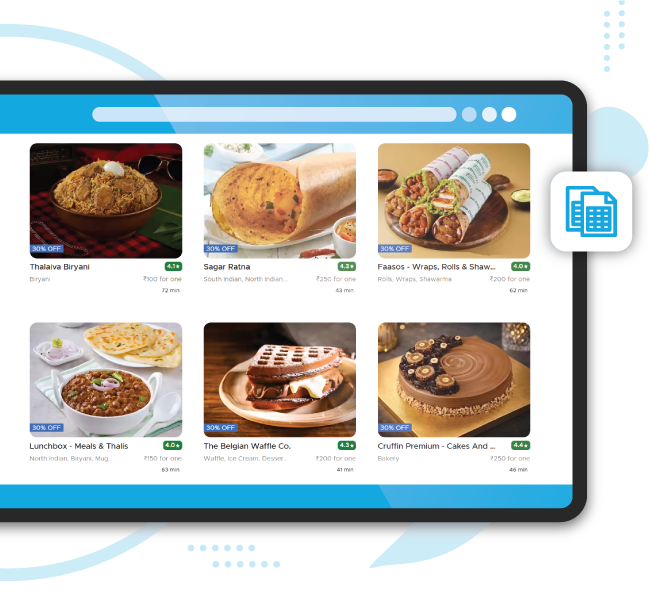
The client faced major challenges in building a unified pricing intelligence system due to inconsistent menu structures and rapidly changing prices across platforms, making it difficult to Scrape category-level food pricing data accurately at scale for normalization and comparative analysis across multiple restaurant formats.
Another major challenge was lack of standardized comparison across fast food, casual dining, and cloud kitchens, which made it hard to derive consistent insights and establish Restaurant Category-Level Price Benchmarking Across Dining Segments for accurate competitive evaluation and decision-making.
Additionally, data fragmentation and incomplete listings from delivery platforms created gaps in visibility, making it difficult to ensure complete coverage and consistency. The client also struggled with integrating dynamic restaurant updates and menu variations across regions, especially when attempting to Extract menu listings from fast food and cloud kitchens at scale for real-time monitoring, reporting, and actionable pricing intelligence across competitive food service ecosystems across global markets.
To resolve fragmented restaurant intelligence challenges, we implemented scalable systems designed for continuous data extraction, normalization, and API-based delivery across multiple food platforms using Food Delivery Data Scraping Services that enabled automated collection of live menus, pricing updates, and category structures from fast food chains, casual dining brands, and cloud kitchens at scale.
We structured and unified all collected outputs into standardized datasets using Food Delivery App Menu Datasets which helped convert inconsistent scraped inputs into clean, analytics-ready formats for benchmarking, pricing comparison, and category-level insights across regions and restaurant types.
To ensure seamless access and automation, we deployed Web Scraping API Services that enabled real-time delivery of processed restaurant intelligence into dashboards and enterprise systems for continuous monitoring and decision-making.
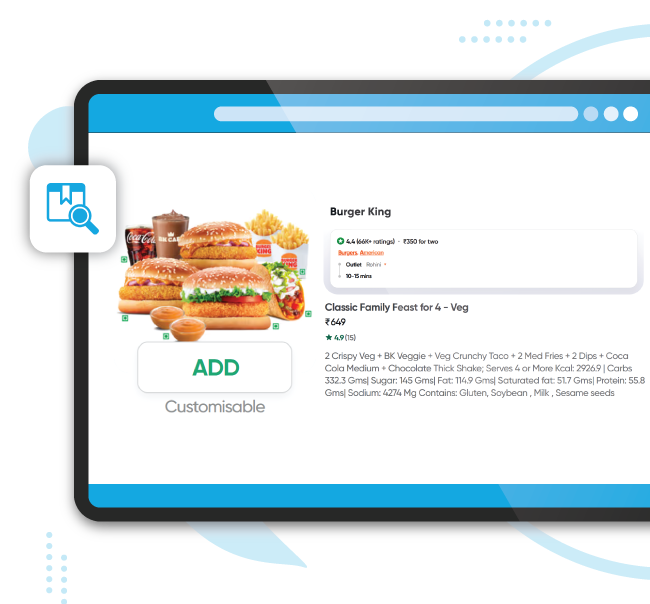
| Platform | Scraped Data (Real Values) | Category | Price (INR) | Restaurant Type | Update Status |
|---|---|---|---|---|---|
| Swiggy | Burger, Fries, Coke Combo | Fast Food | 249 | QSR Chain | Live |
| Zomato | Butter Chicken, Naan Plate | Casual Dining | 399 | Restaurant | Updated |
| Cloud Kitchen | Veg Rice Bowl, Paneer Wrap | Healthy Meals | 179 | Cloud Kitchen | Live |
| Instamart Food | Margherita Pizza, Garlic Bread | Fast Food | 299 | Delivery Kitchen | Real-time |
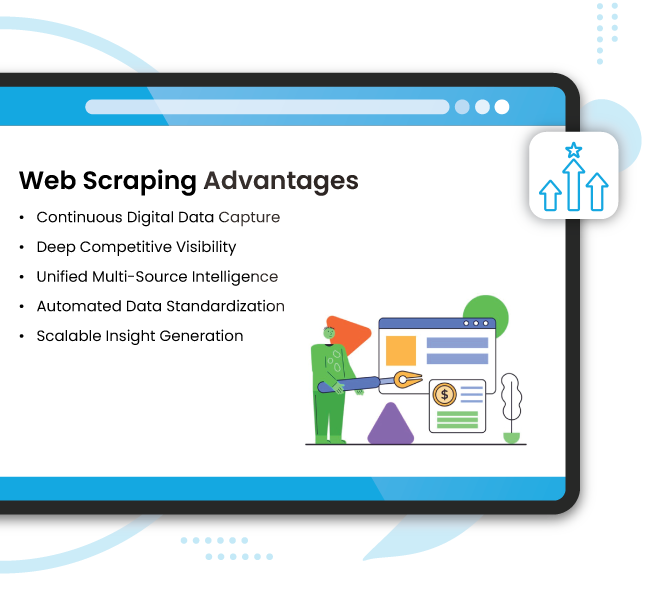
The final outcome of the project was a fully integrated and scalable restaurant intelligence system that delivered real-time visibility into pricing, menus, and category-level trends across fast food, casual dining, and cloud kitchen platforms. The client was able to eliminate manual tracking processes and achieve high accuracy in competitive benchmarking through automated data pipelines. Decision-making speed improved significantly as structured datasets enabled faster insights generation and clearer market comparisons. Operational efficiency increased due to unified data models and seamless API integration with internal analytics tools. Overall, the solution strengthened pricing strategy, improved competitive positioning, and enabled continuous monitoring of market dynamics using Web Scraping Services for sustained data-driven growth and better strategic planning across all restaurant segments.
“Working with this data intelligence team completely transformed how we understand pricing and menu strategies across food delivery platforms. Their structured scraping approach gave us real-time visibility into competitor pricing, category shifts, and cloud kitchen trends that were previously impossible to track at scale. The insights helped us optimize our pricing models and improve decision-making speed across regions. Data accuracy and consistency were outstanding, and integration with our internal systems was seamless.”
— Head of Business Intelligence
Our solutions cover end-to-end extraction of restaurant menus, pricing, categories, and competitor data from food delivery platforms, cloud kitchens, and aggregator apps. This ensures businesses get structured, real-time, and scalable datasets for analytics and decision-making.
Yes, we provide fully customizable data extraction based on geography, restaurant type, cuisine, category, and pricing structure. Clients can define filters to receive only the most relevant and actionable datasets for their specific business use case.
Data can be updated in real time, hourly, or daily depending on client requirements. Our automated pipelines ensure continuous monitoring of menu changes, price updates, and new restaurant listings across multiple platforms.
Yes, our API-driven architecture allows seamless integration with dashboards, analytics tools, and internal systems. This ensures smooth data flow and real-time access without manual intervention or processing delays.
Food delivery platforms, restaurant aggregators, cloud kitchens, FMCG analytics teams, and market research companies benefit the most. These services help improve pricing strategy, competitive analysis, and category-level market intelligence.
We start by signing a Non-Disclosure Agreement (NDA) to protect your ideas.
Our team will analyze your needs to understand what you want.
You'll get a clear and detailed project outline showing how we'll work together.
We'll take care of the project, allowing you to focus on growing your business.