How Does METRO vs Jumbotail Real-Time Price Tracking Optimize Procurement and Pricing Decisions?
Introduction
In the fast-evolving B2B e-commerce ecosystem, METRO vs Jumbotail real-time price tracking has become essential for businesses looking to stay competitive in the wholesale grocery and FMCG sectors. By monitoring pricing fluctuations across multiple platforms, distributors and retailers can make informed procurement decisions, optimize margins, and improve product assortment strategies.
For companies operating at scale, METRO vs Jumbotail B2B price intelligence provides a clear competitive advantage. It enables businesses to understand how competitors are pricing similar products, track seasonal promotions, and anticipate market shifts, ensuring that their pricing strategies remain aligned with industry trends.
Implementing automated price monitoring of METRO vs Jumbotail allows businesses to collect large volumes of pricing data efficiently, without manual intervention. Automation ensures that insights are not only timely but also consistent, providing an accurate foundation for decision-making and reporting.
Why Real-Time Tracking Matters?
Wholesale and FMCG markets are highly dynamic, with prices changing frequently based on demand, supply chain fluctuations, and promotional activity. METRO vs Jumbotail stock availability data Scraping plays a crucial role in identifying not only pricing patterns but also inventory trends. Businesses can understand which products are in short supply, which are overstocked, and adjust their procurement strategies accordingly.
With the right insights, buyers can achieve FMCG distributor pricing intelligence of METRO vs Jumbotail, allowing them to negotiate better rates, identify profitable products, and forecast market behavior. This intelligence is particularly valuable for distributors who supply multiple retailers across different regions.
Leveraging Automated Dashboards
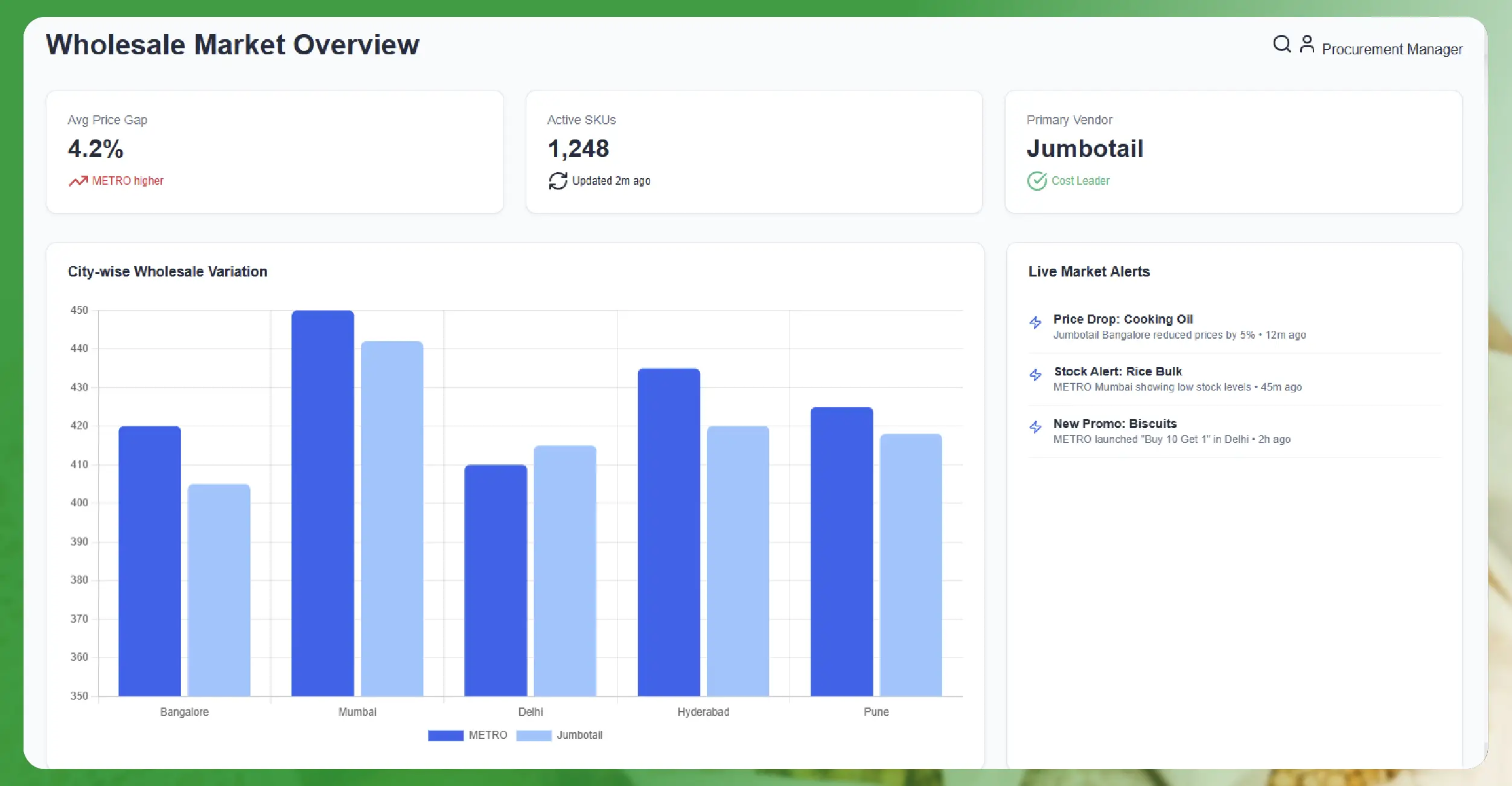
CA robust automated competitor monitoring dashboards solution consolidates data from multiple suppliers and presents it in an intuitive, visual format. By integrating automated alerts, businesses can respond instantly to price changes, promotional offers, or stock shortages, minimizing missed opportunities and improving operational efficiency.
One key benefit of modern tools is the ability to Scrape city-wise wholesale price variation of METRO vs Jumbotail. Regional price disparities often exist due to transportation costs, local demand, and vendor-specific pricing strategies. Understanding these variations enables businesses to optimize supply chains, enhance regional pricing models, and make strategic procurement decisions.
Structured Data Collection
To effectively track competitors, Metro Grocery and Supermarket Data Extraction ensures that all relevant product, pricing, and stock information is collected in a structured and reliable format. This data forms the foundation for advanced analytics, forecasting, and AI-driven recommendation engines, providing actionable insights for sales and procurement teams.
Integrating Grocery & Supermarket Data Extraction Services allows B2B businesses to move beyond manual price tracking. These services automatically gather data across categories, SKUs, and geographic locations, saving time and reducing errors while enabling more accurate strategic planning.
Key Advantages of Price Intelligence
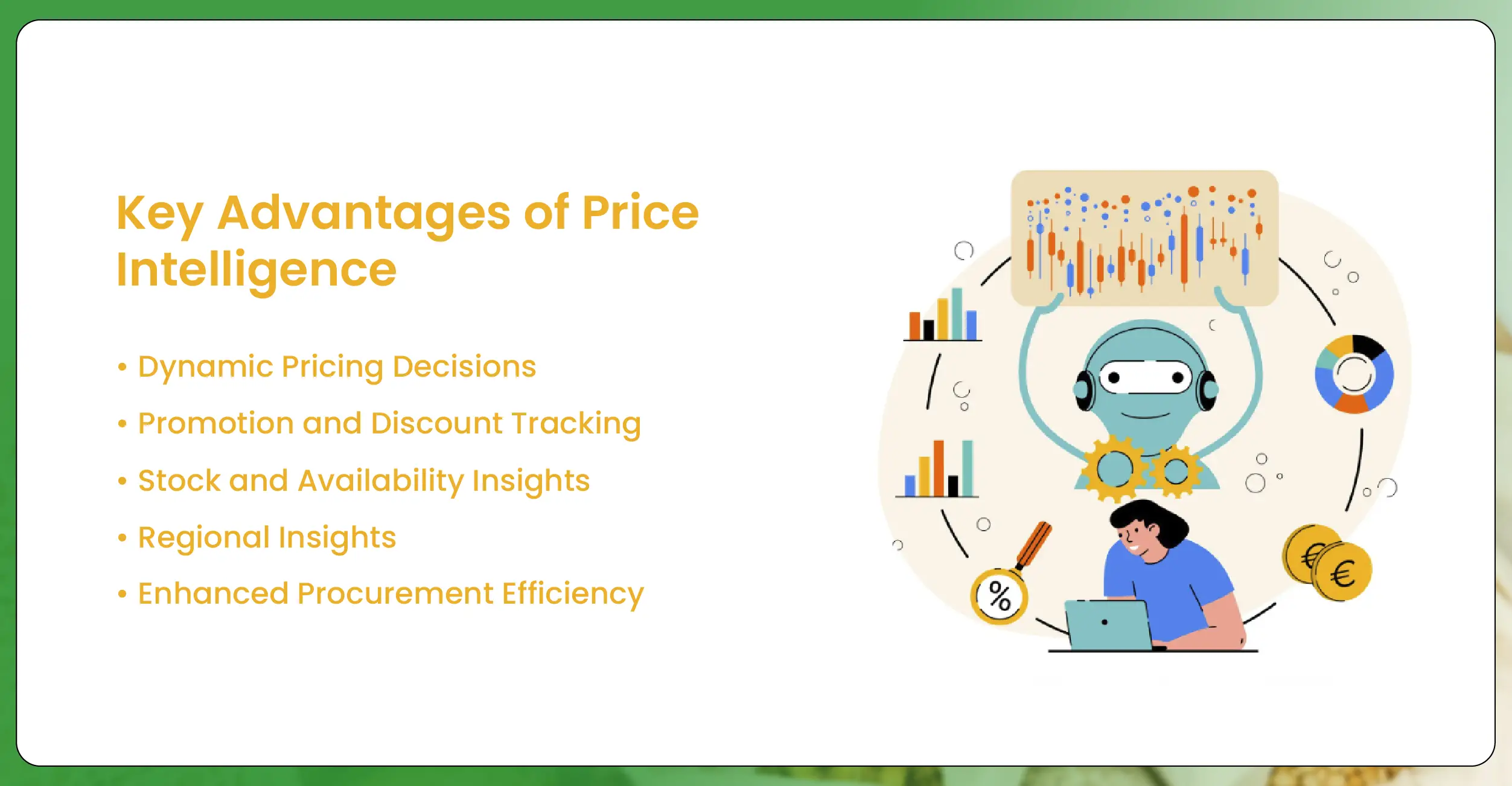
- Dynamic Pricing Decisions: By continuously monitoring competitors, businesses can adjust prices in near real-time to maintain competitiveness.
- Promotion and Discount Tracking: Automated data collection helps identify when competitors run special offers or bulk discounts, enabling timely counter-strategies.
- Stock and Availability Insights: Understanding which products are low in inventory or out of stock ensures better supply chain planning and reduces lost sales opportunities.
- Regional Insights: City-wise analysis ensures pricing strategies reflect local market conditions, boosting sales and reducing operational inefficiencies.
- Enhanced Procurement Efficiency: With comprehensive data, procurement teams can negotiate better deals, optimize order quantities, and reduce wastage by aligning purchases with market conditions.
Unlock Actionable Insights Today – Boost Your Competitiveness with Our Advanced Data Scraping Solutions!
Methodologies for Effective Tracking
Implementing price tracking involves multiple methodologies:
- Web Scraping: Structured extraction of product, price, and stock information directly from websites.
- API Integration: Leveraging APIs where available for structured and real-time data feeds.
- Data Cleaning & Normalization: Ensuring consistent formats for analysis across thousands of SKUs and categories.
- Visualization & Reporting: Creating dashboards and reports for easy interpretation and actionable insights.
Advanced analytics can also include predictive modeling to anticipate competitor price movements, allowing B2B businesses to proactively adjust their strategies rather than reacting after changes occur.
Overcoming Challenges
While real-time tracking is powerful, businesses must consider:
- Data Accuracy: Automated systems must handle site structure changes and prevent errors in data collection.
- Legal Compliance: Scraping practices must adhere to website terms of use and data privacy regulations.
- Scalability: Handling thousands of SKUs across multiple categories and cities requires robust infrastructure.
- Integration: Collected data should integrate seamlessly with existing procurement, sales, and analytics systems for maximum impact.
The Future of Price Monitoring
The future of B2B pricing lies in real-time, AI-driven insights. Automated monitoring combined with predictive analytics will allow distributors to anticipate competitor moves, optimize inventory allocation, and maintain dynamic pricing strategies.
Enhanced dashboards will go beyond static reports, offering interactive insights into category performance, competitor campaigns, and city-wise price fluctuations. By continuously refining these tools, businesses can achieve sustained competitive advantage in the wholesale grocery sector.
How iWeb Data Scraping Can Help You?
- Real-Time Market Insights: Our data scraping services provide continuous, real-time monitoring of competitor prices, product availability, and promotional trends, enabling businesses to make informed procurement and pricing decisions, anticipate market shifts, and maintain a competitive edge in rapidly evolving wholesale and e-commerce markets.
- Enhanced Customer Personalization: By collecting detailed consumer behavior and product interaction data, our services allow businesses to create personalized recommendations, optimize product assortments, and improve engagement, ensuring customers receive relevant suggestions that drive higher conversions, loyalty, and repeat purchases.
- Automated Competitor Monitoring: We automate competitor tracking across multiple platforms, consolidating data into intuitive dashboards. This allows instant identification of pricing changes, new product launches, and promotions, helping businesses respond proactively, streamline decision-making, and reduce the time and effort involved in manual monitoring.
- Regional and City-Wise Analysis: Our scraping solutions capture regional price variations, stock availability, and market trends, enabling businesses to optimize supply chains, adapt pricing strategies to local conditions, and make data-driven decisions that improve profitability and operational efficiency across multiple locations.
- Actionable Analytics and Reporting: Collected data is structured, cleaned, and presented through interactive dashboards and reports, providing actionable insights. Businesses can forecast demand, track trending products, and implement strategic initiatives with confidence, leveraging data-driven intelligence to outperform competitors consistently.
Conclusion
In today’s competitive B2B e-commerce landscape, leveraging Grocery and Supermarket Store Datasets empowers businesses to make informed pricing and procurement decisions.
Timely access to accurate, structured, and actionable competitor data ensures that companies can track real-time price changes, monitor stock levels, and respond proactively to market shifts.
A robust Grocery Data Scraping API Services solution allows businesses to maintain profitability, streamline operations, and sustain competitiveness.
With a comprehensive Grocery website scraper, companies can consolidate data, monitor trends, and make strategic decisions that enhance efficiency and drive long-term growth.
Experience top-notch web scraping service and mobile app scraping solutions with iWeb Data Scraping. Our skilled team excels in extracting various data sets, including retail store locations and beyond. Connect with us today to learn how our customized services can address your unique project needs, delivering the highest efficiency and dependability for all your data requirements.