How Can You Monitor Competitor Stock Across Regional Warehouses - US, EU & Asia Effectively?
Introduction
In today’s globally connected commerce environment, inventory visibility is no longer limited to a single market. Brands compete simultaneously across North America, Europe, and Asia, where stock availability, replenishment speed, and regional demand patterns directly influence sales performance. To remain competitive, businesses must Monitor Competitor Stock Across Regional Warehouses - US, EU & Asia to understand how rivals allocate inventory and respond to shifting demand.
Modern supply chains require Global Competitor Inventory Monitoring to identify stock imbalances, fulfillment gaps, and regional supply constraints before they affect pricing and customer acquisition strategies.
With Multi-Region Stock Tracking from Warehouses (US, EU, Asia), companies gain cross-border visibility into competitor operations, enabling them to optimize inventory planning, regional promotions, and distribution strategies with precision.
This blog explains how monitoring competitor stock across global warehouses works, why it matters, and how businesses can leverage structured intelligence for strategic growth.
Why Regional Warehouse Monitoring Matters?
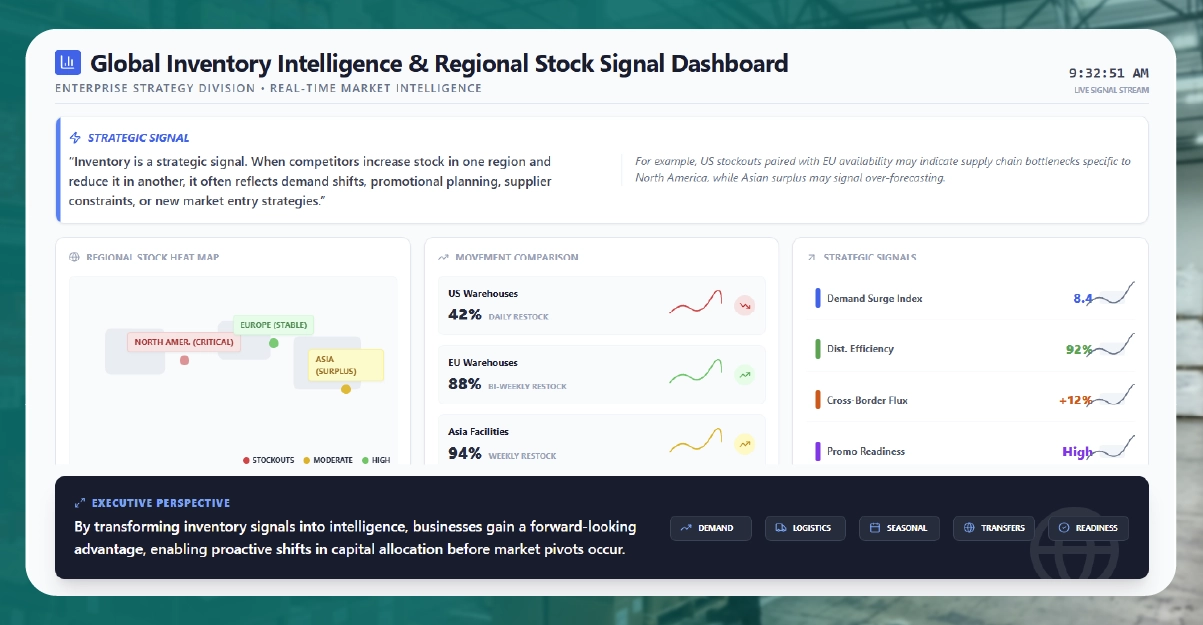
Inventory is a strategic signal. When competitors increase stock in one region and reduce it in another, it often reflects demand shifts, promotional planning, supplier constraints, or new market entry strategies. Tracking these signals helps businesses anticipate competitor moves instead of reacting to them.
For example, if a competitor’s US warehouses show consistent stockouts in high-demand SKUs while EU facilities maintain strong availability, it may indicate supply chain bottlenecks specific to North America. Conversely, surplus inventory in Asia may signal slower demand or over-forecasting.
Regional stock data provides clarity on:
- Demand surges by geography
- Distribution efficiency
- Restocking frequency
- Cross-border supply transfers
- Seasonal and promotional readiness
By transforming inventory signals into intelligence, businesses gain a forward-looking advantage.
Understanding International Warehouse Stock Intelligence
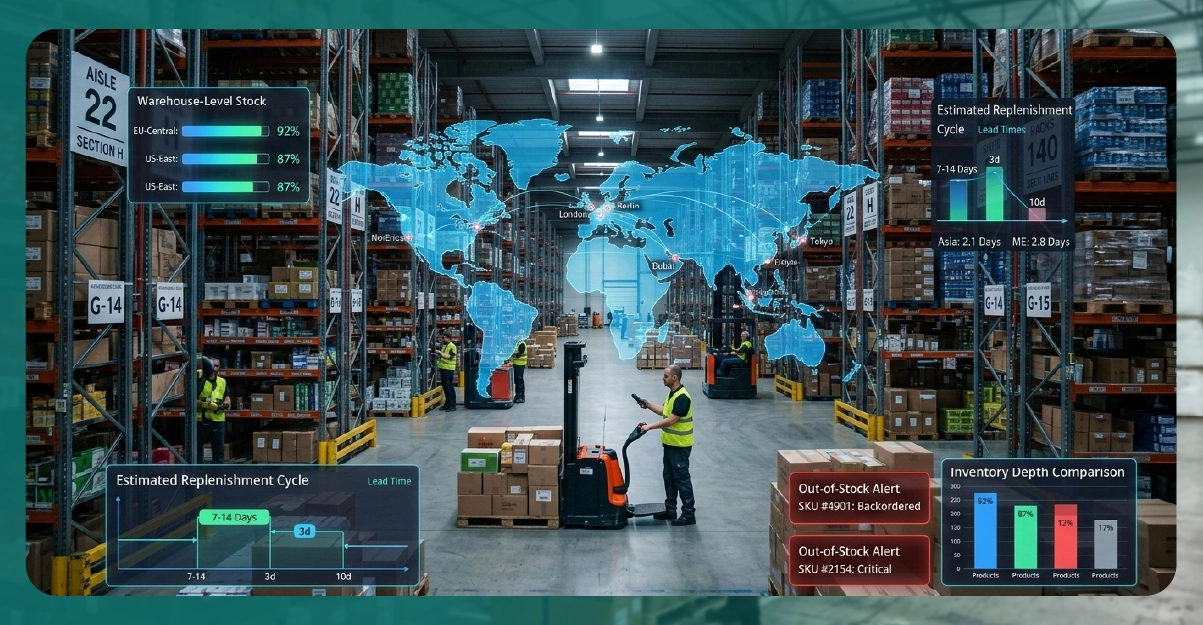
International Warehouse Stock Intelligence refers to structured tracking of competitor inventory levels across multiple geographic distribution centers. Rather than observing only product listings, this method captures:
- Warehouse-level stock availability
- Estimated replenishment cycles
- Regional fulfillment speed
- Backorder and out-of-stock patterns
- Inventory depth variations
This intelligence helps organizations align production, procurement, and logistics planning with real-time competitor positioning.
US Warehouse Competitor Stock Monitoring
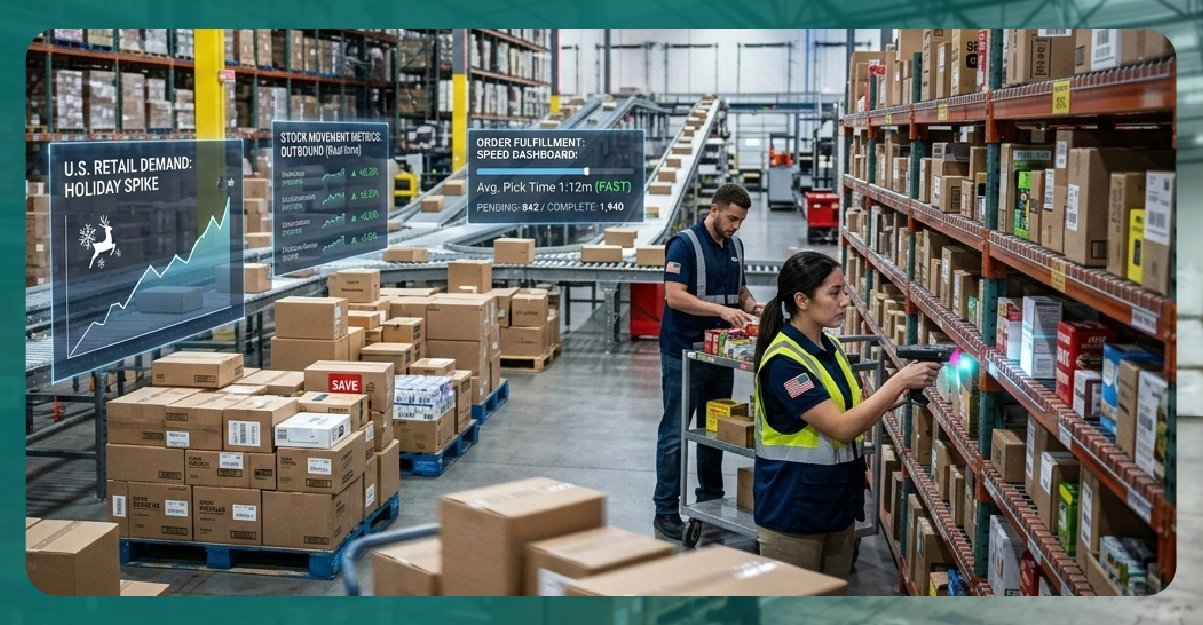
The United States remains one of the most dynamic eCommerce and retail markets globally. Rapid demand fluctuations, seasonal trends, and promotional campaigns significantly influence warehouse stock movement.
US Warehouse Competitor Stock Monitoring helps brands evaluate:
- Inventory readiness during peak seasons
- Stock replenishment after major sales events
- Regional warehouse performance (East Coast vs West Coast)
- Distribution lead times
US warehouses often serve as primary fulfillment hubs for domestic and international shipping. Monitoring competitor stock levels here provides insight into how aggressively rivals are targeting the North American market.
For example, consistent high inventory levels before Q4 may indicate aggressive holiday planning, while frequent stockouts may reflect strong product traction or poor supply forecasting.
EU Regional Warehouses Stock Tracking
Europe presents unique inventory challenges due to cross-border regulations, VAT complexities, and localized demand patterns. Companies often maintain separate warehouse networks across Germany, France, the Netherlands, and other major markets.
EU Regional Warehouses Stock Tracking allows businesses to analyze:
- Inventory distribution across European hubs
- Localized product assortment strategies
- Compliance-driven stock placement
- Cross-country fulfillment efficiency
Unlike centralized US models, EU warehouses often reflect decentralized demand patterns. A product may be widely available in Germany but limited in Spain, revealing market penetration differences.
Understanding these nuances enables companies to tailor expansion strategies, optimize pricing per region, and identify underserved markets.
Asia Warehouse Stock Data Monitoring
Asia’s supply chains are fast-moving and highly diversified. From manufacturing hubs in China to distribution centers in Singapore, India, and Japan, stock allocation strategies vary significantly.
Asia Warehouse Stock Data Monitoring helps companies observe:
- Export-oriented inventory positioning
- Local market expansion strategies
- Manufacturing-to-distribution transitions
- Regional demand spikes during cultural festivals
Asian warehouses often serve dual roles—supporting domestic markets and international exports. Monitoring competitor inventory across these facilities reveals how brands balance global and local demand.
For example, increased warehouse stock in Southeast Asia may signal expansion into emerging markets, while reduced stock in East Asia could indicate shifting production pipelines.
Role of Technology in Competitor Stock Monitoring
Accurate global monitoring requires automated systems capable of collecting structured data across regions and platforms. This is where Web Scraping Services become essential.
Advanced scraping frameworks capture:
- Real-time stock availability
- Warehouse-level distribution insights
- SKU-level inventory changes
- Replenishment timing patterns
Data is normalized and standardized across currencies, time zones, and regional formats. Once structured, analytics tools identify trends such as stock volatility, demand surges, and supply inconsistencies.
Automation ensures continuous visibility without manual tracking, enabling businesses to respond quickly to competitor moves.
Strategic Benefits of Multi-Region Inventory Monitoring
Global inventory visibility supports several strategic functions:
Demand Forecasting Enhancement
Competitor stock trends help predict market demand shifts. If multiple rivals increase inventory in a region, demand expectations are likely rising.
Pricing Optimization
Inventory scarcity often correlates with price increases. Monitoring low stock levels allows businesses to adjust pricing strategically.
Supply Chain Resilience
Understanding competitor stock patterns highlights supply vulnerabilities and helps companies diversify sourcing before shortages arise.
Market Entry Evaluation
Warehouse expansion in a new region may signal competitor entry. Early detection enables proactive strategy adjustments.
How Businesses Implement Global Stock Intelligence?
Effective inventory monitoring begins with clear objectives. Companies must define which competitors, SKUs, and regions matter most. Once identified, automated systems collect stock signals from:
- eCommerce platforms
- Marketplace warehouses
- Regional distribution networks
- Brand-owned fulfillment centers
Data is then analyzed through dashboards that highlight:
- Stock availability trends
- Regional performance comparisons
- Restocking cycles
- Inventory depth variations
This intelligence integrates with sales, marketing, and supply chain planning teams to ensure coordinated decision-making.
Gain real-time global inventory intelligence today and stay ahead of competitors across every regional warehouse.
Key Considerations for Accurate Monitoring
While tracking competitor stock is powerful, businesses must account for several operational factors:
- Regional warehouse identifiers may vary
- Inventory indicators differ across platforms
- Backorder statuses can mask true availability
- Currency and localization differences require normalization
Reliable monitoring systems ensure data accuracy, compliance, and scalability across global markets.
From Stock Signals to Competitive Strategy
Inventory data is more than operational insight—it is strategic intelligence. When competitors consistently stock high quantities in a region, they signal growth intent. When stock levels fluctuate rapidly, it may indicate aggressive promotions or unstable supply chains.
Global monitoring transforms raw inventory numbers into actionable insights by answering key questions:
- Where are competitors focusing growth?
- Which regions show supply instability?
- How fast are rivals replenishing high-demand SKUs?
- Are certain markets underserved?
These insights empower businesses to refine logistics, improve allocation, and reduce revenue risk.
Two Core Operational Applications
1. Regional Competitive Benchmarking
Under this application, companies compare their inventory performance directly against competitors across regions.
- Identify stock gaps versus competitors
- Compare replenishment frequency
- Evaluate regional SKU depth
- Assess fulfillment efficiency
This approach strengthens internal inventory strategy and ensures parity or advantage across global markets.
2. Dynamic Supply Chain Monitoring
This application focuses on real-time competitor stock changes to detect rapid shifts.
- Monitor sudden stock drops
- Track emergency restocking
- Detect warehouse expansions
- Observe cross-region inventory transfers
Such monitoring allows businesses to act proactively rather than reactively.
Integrating Inventory Monitoring with Broader Intelligence
Global stock tracking becomes more powerful when combined with pricing, promotional, and MAP compliance monitoring. Together, these data streams provide a complete competitive landscape view.
In the conclusion phase of implementation, businesses often integrate Web Scraping API Services to ensure scalable, automated, and real-time data feeds across global warehouse networks.
They further enhance analysis using Competitive Benchmarking Services to compare stock positioning against industry peers and identify performance gaps across regions.
To protect brand value, companies also incorporate MAP Monitoring Services to ensure pricing integrity when inventory scarcity or surplus influences market pricing behavior.
How iWeb Data Scraping Can Help You?
1. Real-Time Inventory Visibility
Our data scraping services continuously track competitor stock levels across US, EU, and Asia warehouses, delivering accurate, up-to-date inventory insights for faster decision-making.
2. Multi-Region Data Standardization
We collect and normalize warehouse data across currencies, time zones, and regional formats, ensuring consistent reporting and comparable stock intelligence globally.
3. Competitor Replenishment Tracking
Our systems monitor restocking frequency, stockouts, and sudden inventory shifts, helping you anticipate competitor demand surges and supply chain movements.
4. Actionable Analytics Dashboards
We transform raw stock data into structured dashboards and reports, highlighting regional trends, SKU-level performance, and warehouse allocation strategies.
5. Scalable API Integration
Our automated scraping infrastructure integrates seamlessly with your internal tools, enabling scalable, secure, and real-time competitive inventory monitoring.
Conclusion
Monitoring competitor inventory across US, EU, and Asia warehouses is no longer optional—it is essential for global competitiveness. Inventory allocation reflects strategic intent, market confidence, and operational efficiency. By leveraging automated tracking systems and structured intelligence, businesses gain real-time visibility into competitor movements across regions.
When executed effectively, global stock monitoring enhances demand forecasting, strengthens supply chain resilience, and improves pricing strategy. Organizations that invest in international warehouse intelligence position themselves ahead of regional disruptions and market shifts.
In a global economy driven by speed and precision, real-time inventory visibility across continents transforms uncertainty into strategic clarity.
Experience top-notch web scraping service and mobile app scraping solutions with iWeb Data Scraping. Our skilled team excels in extracting various data sets, including retail store locations and beyond. Connect with us today to learn how our customized services can address your unique project needs, delivering the highest efficiency and dependability for all your data requirements.