How Does OTT Streaming Weekly Pricing Data Scraping Help Track Real-Time Platform Price Changes?
Introduction
The global OTT (Over-The-Top) streaming ecosystem is evolving rapidly, with platforms frequently adjusting subscription fees, rental prices, regional availability, and content catalogs. For media analysts, digital marketers, content aggregators, and competitive intelligence teams, staying updated with these changes is no longer optional—it’s a strategic necessity.
OTT streaming Weekly pricing data scraping has emerged as a powerful approach to systematically monitor price fluctuations, promotional discounts, rental fees, and subscription tiers across leading platforms like Amazon Prime Video, YouTube Movies, Apple TV, Google TV, and regional OTT providers.
OTT content data scraping plays a crucial role in understanding not only pricing but also how content libraries evolve weekly—new releases, removals, exclusive titles, and premium add-ons that influence consumer subscription decisions.
Scrape OTT weekly data feed to allow businesses to build automated pipelines that capture real-time updates, ensuring pricing intelligence remains accurate, comparable, and actionable across regions and platforms.
Why Weekly OTT Pricing Monitoring Matters?
OTT platforms operate in a highly competitive environment where even small pricing changes can significantly impact user acquisition and churn. Weekly tracking provides a granular view of how platforms experiment with price points, bundles, and promotional offers.
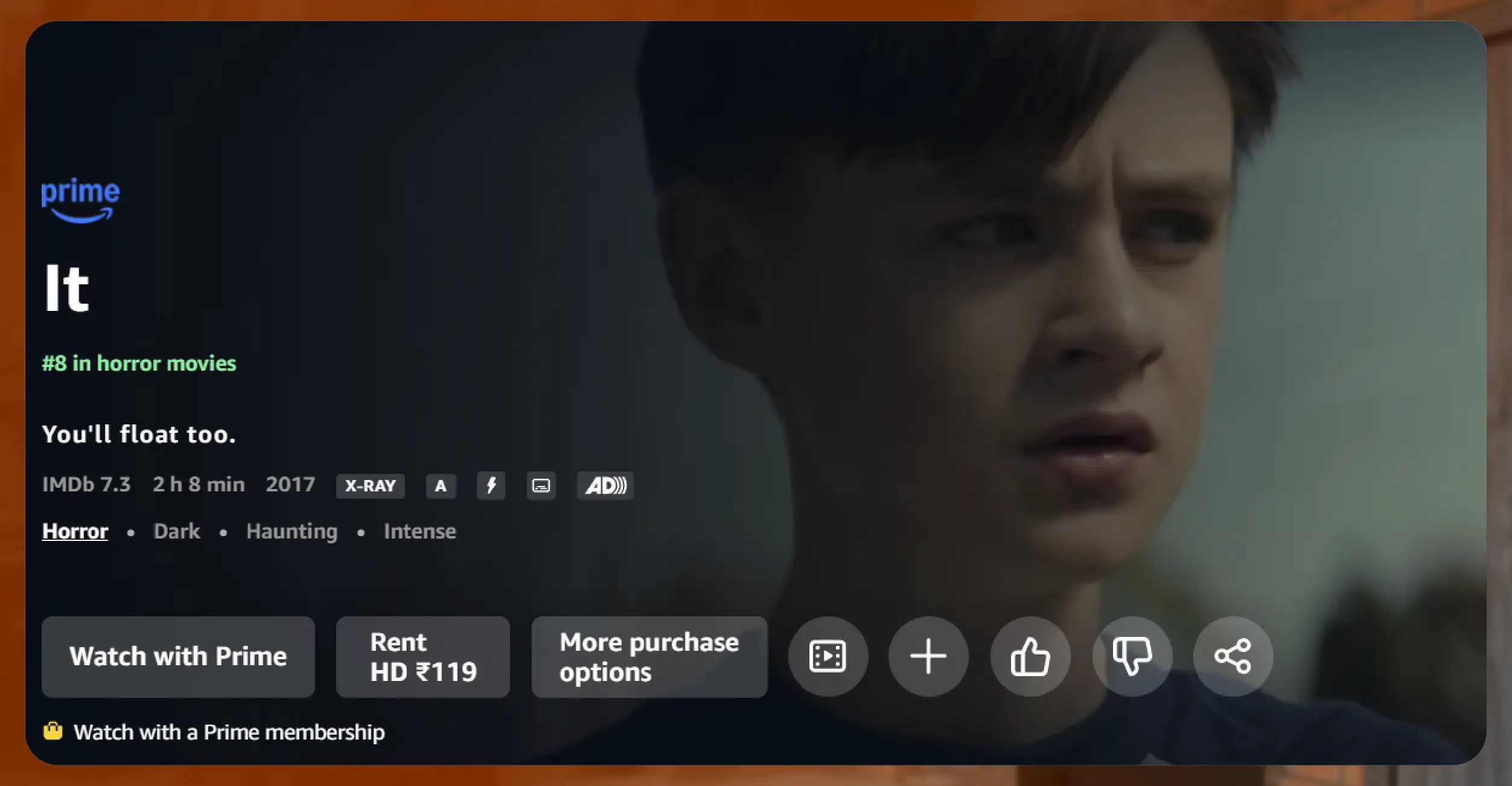
For example, Amazon Prime Video may introduce limited-time rental discounts on newly released movies, while Apple TV could adjust episodic pricing for original series. YouTube Movies often tests dynamic pricing models based on demand, location, and device usage.
By adopting structured pricing intelligence workflows, stakeholders can react quickly to market changes rather than relying on delayed or incomplete public information.
Key Data Points Captured from OTT Platforms
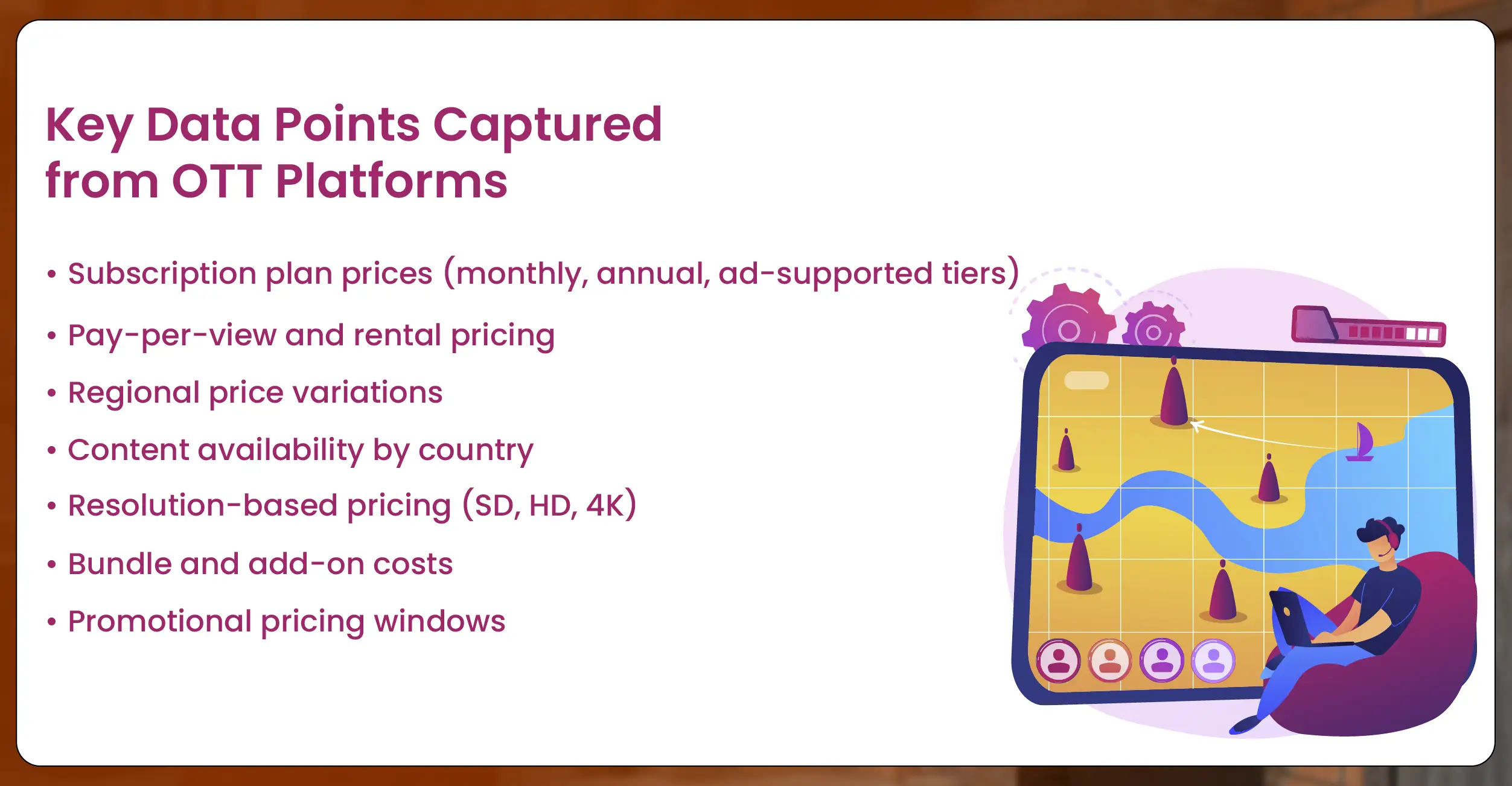
A comprehensive OTT pricing scraping strategy typically captures:
- Subscription plan prices (monthly, annual, ad-supported tiers)
- Pay-per-view and rental pricing
- Regional price variations
- Content availability by country
- Resolution-based pricing (SD, HD, 4K)
- Bundle and add-on costs
- Promotional pricing windows
When combined, these data points enable deeper insights into platform positioning, pricing elasticity, and content monetization strategies.
Turning Raw Data into Actionable Insights
Raw scraped data alone holds limited value unless transformed into meaningful intelligence. This is where advanced analytics come into play.
Extract streaming platform analytics to identify pricing trends over time, detect sudden hikes or drops, and correlate pricing changes with content launches or regional campaigns.
For instance, a spike in rental pricing for blockbuster movies during holiday weekends can be mapped against consumer demand patterns. Similarly, price reductions may signal efforts to counter rising competition or subscriber churn.
Competitive Benchmarking Across OTT Platforms
With dozens of OTT platforms competing globally, comparative intelligence is critical.
OTT market intelligence allows organizations to benchmark pricing strategies across platforms such as Amazon Prime vs Apple TV, or YouTube Movies vs Google TV. This comparison helps content distributors, studios, and advertisers evaluate where their titles are priced most competitively.
It also assists telecom companies and smart TV manufacturers in designing bundled OTT offerings that align with consumer affordability and perceived value.
Role of APIs in Scalable OTT Price Tracking

As the volume of streaming data grows, scalability becomes essential. Manual tracking or basic scraping methods often fail to handle frequent updates and large datasets.
A digital media price scraping API enables automated, structured, and scalable data extraction with consistent accuracy. APIs reduce dependency on brittle scripts and provide standardized data formats suitable for dashboards, BI tools, and machine learning models.
Such APIs are particularly useful for enterprises managing multi-country OTT intelligence programs.
Automating Weekly Catalog and Pricing Updates
OTT platforms update their catalogs frequently—sometimes daily—but weekly aggregation offers an optimal balance between freshness and stability.
A weekly OTT pricing & catalog update feed Scraper ensures that newly added titles, removed content, and pricing adjustments are captured in a predictable cadence. This approach supports long-term trend analysis without overwhelming systems with excessive data noise.
It also allows businesses to maintain historical pricing records, which are invaluable for forecasting and strategy planning.
Unlock smarter OTT pricing decisions—connect with us today to access reliable weekly streaming data and actionable market intelligence.
Platform-Wise Title Price Comparison
One of the most valuable applications of OTT pricing data is direct title-level comparison.
OTT platform-wise title pricing comparison helps identify scenarios where the same movie or TV show is priced differently across platforms. These insights are crucial for studios negotiating licensing deals, as well as for aggregators deciding optimal distribution channels.
For consumers, such intelligence powers price comparison tools that guide cost-effective viewing choices.
Ensuring Accuracy in Weekly Data Collection
OTT platforms frequently modify page structures, APIs, and access controls. Reliable data extraction therefore requires adaptive scraping architectures.
Web Scraping OTT weekly pricing updates involves intelligent handling of dynamic content, regional redirects, currency normalization, and content access restrictions. Advanced systems also validate data consistency across multiple sources to reduce anomalies.
Accuracy and continuity are key differentiators between basic scraping efforts and enterprise-grade data solutions.
Tracking Subscription Pricing Over Time
Beyond individual titles, subscription pricing trends reveal broader strategic shifts.
OTT streaming subscription price tracking enables analysis of how platforms respond to market saturation, regulatory pressures, or economic conditions. For example, the rise of ad-supported tiers reflects attempts to balance affordability with revenue growth.
Historical subscription data helps predict future pricing moves and assess long-term sustainability of OTT business models.
Use Cases Across Industries
Weekly OTT pricing intelligence benefits multiple stakeholders:
- Media companies: Optimize content licensing and release strategies
- Advertisers: Align ad spend with platform growth trends
- Telecom providers: Design competitive OTT bundles
- Investors: Evaluate platform monetization efficiency
- Data companies: Build OTT analytics dashboards and insights products
Each use case relies on accurate, timely, and structured pricing data.
How iWeb Data Scraping Can Help You?
- Real-Time Pricing Visibility: We continuously monitor OTT platforms to capture weekly updates on subscription fees, rentals, and pay-per-view prices, ensuring you never miss critical pricing changes.
- Accurate Competitive Benchmarking: Our services enable platform-wise and title-level comparisons, helping you evaluate how your pricing and content positioning stack up against competitors.
- Scalable & Automated Data Collection: Using robust automation and APIs, we deliver structured, high-volume data without manual effort, supporting dashboards, analytics tools, and enterprise workflows.
- Actionable Market Insights: We transform raw scraped data into usable intelligence, revealing pricing trends, promotional patterns, and regional strategies across OTT platforms.
- Custom Data Delivery & Compliance: You receive clean, normalized datasets in your preferred format, collected responsibly and aligned with your business objectives and data governance needs.
Conclusion
As OTT platforms continue to redefine digital entertainment, pricing transparency and agility will remain critical success factors. Weekly pricing data scraping provides the foundation for informed decision-making in a market defined by constant change.
By leveraging structured OTT Platform Datasets, organizations gain access to historical and real-time intelligence that supports forecasting, benchmarking, and strategic planning.
Advanced OTT Data Scraping API Services ensure scalable, compliant, and reliable access to pricing and catalog data across global platforms.
Ultimately, OTT Streaming Media Data Extraction Services empower businesses to move beyond observation—transforming raw pricing updates into competitive advantage in the ever-evolving streaming economy.
Experience top-notch web scraping service and mobile app scraping solutions with iWeb Data Scraping. Our skilled team excels in extracting various data sets, including retail store locations and beyond. Connect with us today to learn how our customized services can address your unique project needs, delivering the highest efficiency and dependability for all your data requirements.