How Does a Price Benchmarking Model Across Walmart, Target, Costco & Amazon Improve Retail
Strategy?
Introduction
In today's hyper-competitive retail ecosystem, pricing is no longer static—it is
dynamic, data-driven, and constantly evolving. Businesses that fail to monitor competitor
pricing risk losing market share, while those that leverage intelligent benchmarking gain a
decisive edge. A robust Price Benchmarking Model Across Walmart, Target, Costco & Amazon helps
retailers, brands, and analysts stay ahead by continuously evaluating price positioning across
major marketplaces.
To build such a model, companies must Scrape price comparison data across Walmart,
Target, Costco & Amazon and unify it into a structured dataset for meaningful insights. This
approach enables the development of a Retail Price Comparison Model Across Major Marketplaces,
allowing decision-makers to optimize pricing strategies, identify gaps, and respond to market
changes in real time.
Understanding Price Benchmarking in Modern Retail
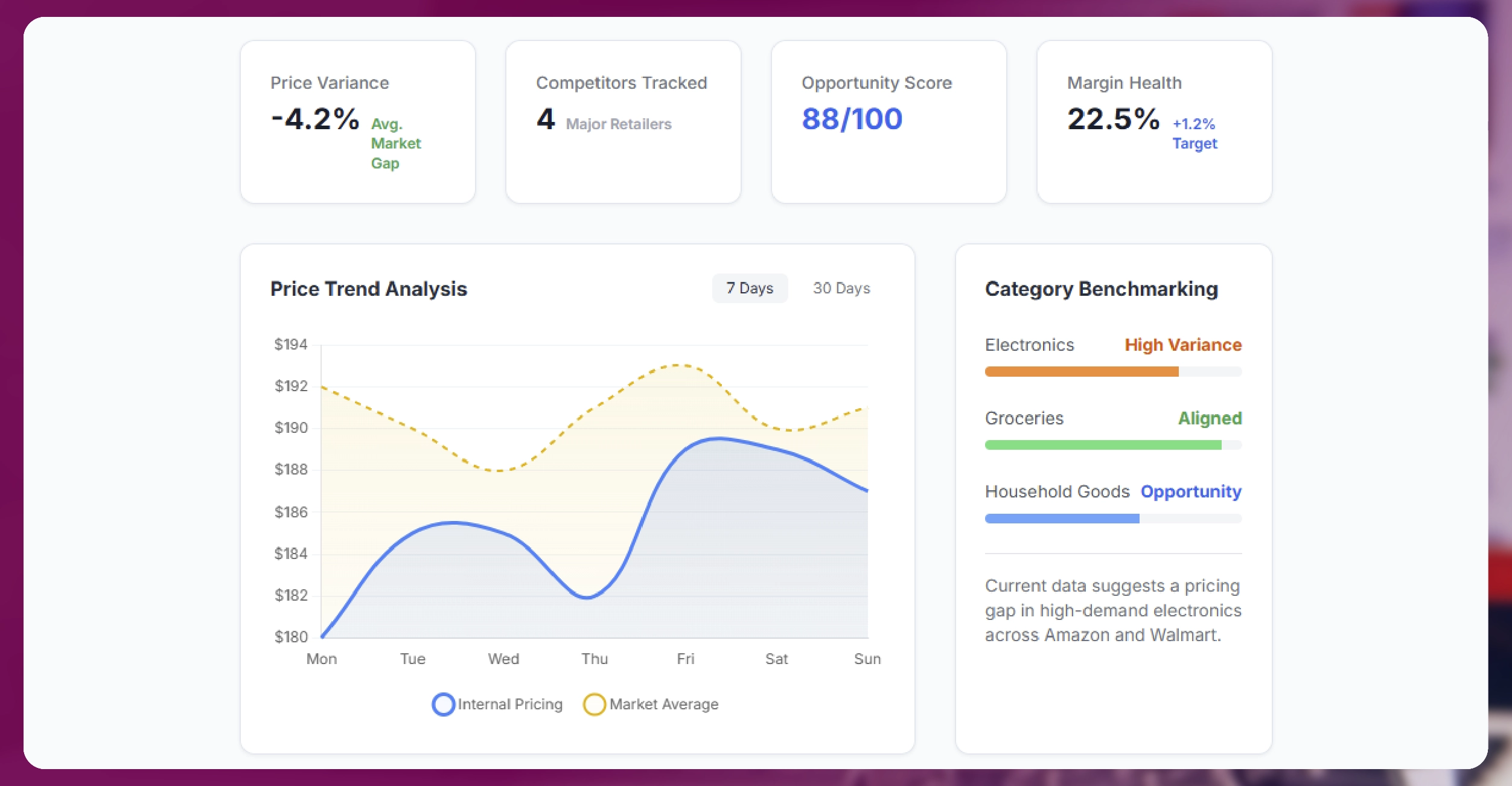
Price benchmarking is the process of comparing product prices across competitors to
determine optimal pricing strategies. In marketplaces like Walmart, Target, Costco, and Amazon,
pricing fluctuates based on demand, inventory, promotions, and competitor actions.
A well-structured benchmarking model allows businesses to:
- Identify pricing gaps and opportunities
- Monitor competitor discounts and promotions
- Align pricing with market expectations
- Improve profit margins without sacrificing competitiveness
Retailers increasingly rely on data intelligence to analyze pricing trends across
Walmart Amazon Target and Costco, ensuring they remain competitive across categories such as
electronics, groceries, apparel, and household goods.
Why Cross-Marketplace Benchmarking Matters?
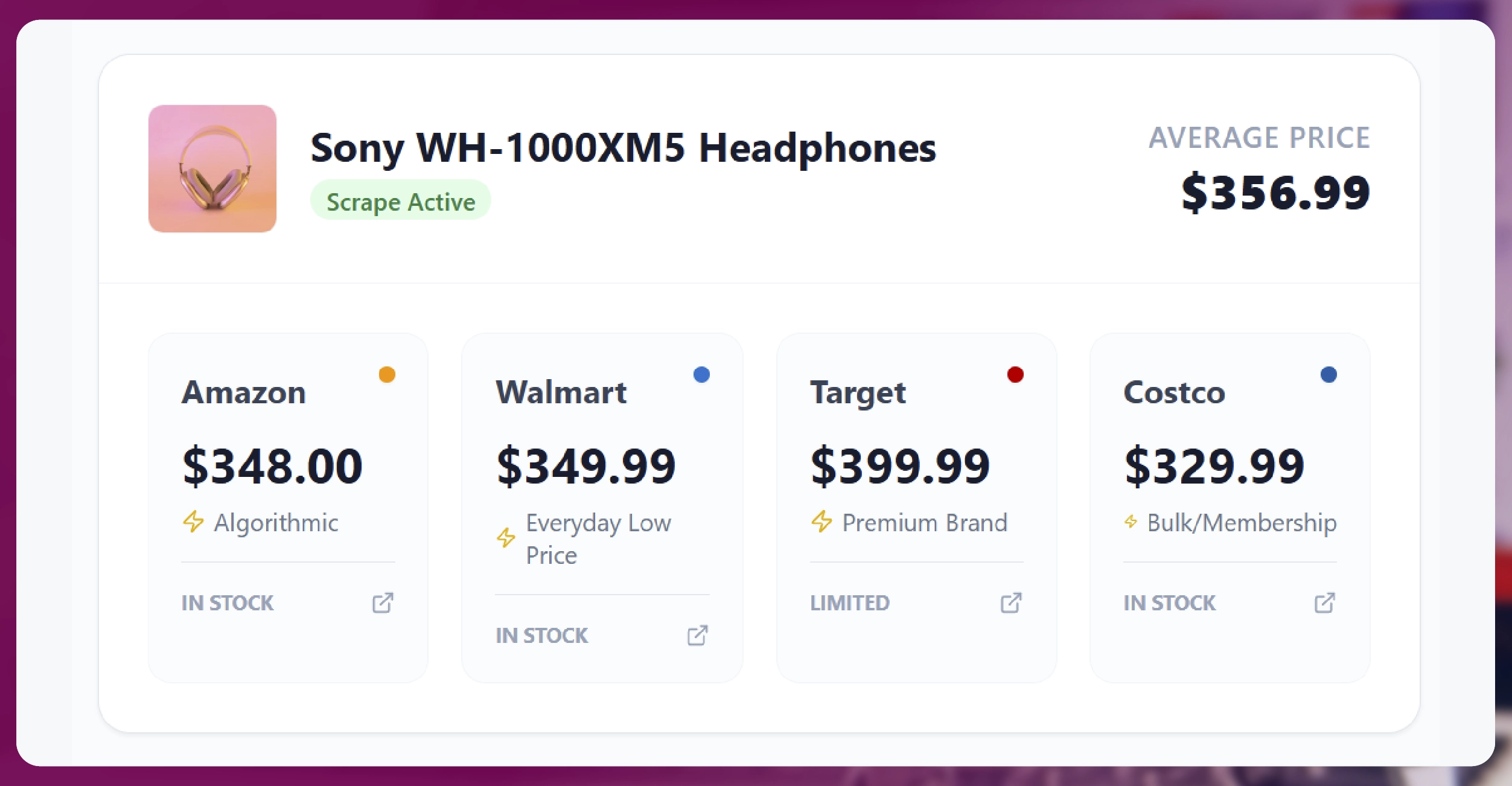
Each marketplace operates with unique pricing dynamics:
- Walmart focuses on everyday low pricing strategies
- Target blends competitive pricing with brand positioning
- Costco emphasizes bulk pricing and membership value
- Amazon uses algorithmic pricing and frequent updates
A comparative approach like Walmart vs Target vs Costco vs Amazon Pricing Data
Scraping enables businesses to understand how these platforms differ and where they can position
themselves effectively.
Key Components of a Price Benchmarking Model
1. Data Collection Layer
The foundation of any benchmarking model is accurate and comprehensive data.
Businesses rely on Walmart, Target, Costco & Amazon data extraction for benchmarking to gather:
- Product titles and SKUs
- Prices (MRP, discounted price, final price)
- Availability and stock status
- Seller details
- Ratings and reviews
Specialized solutions like Target data extraction services help gather structured
data from Target, ensuring consistency across datasets.
2. Multi-Platform Data Integration
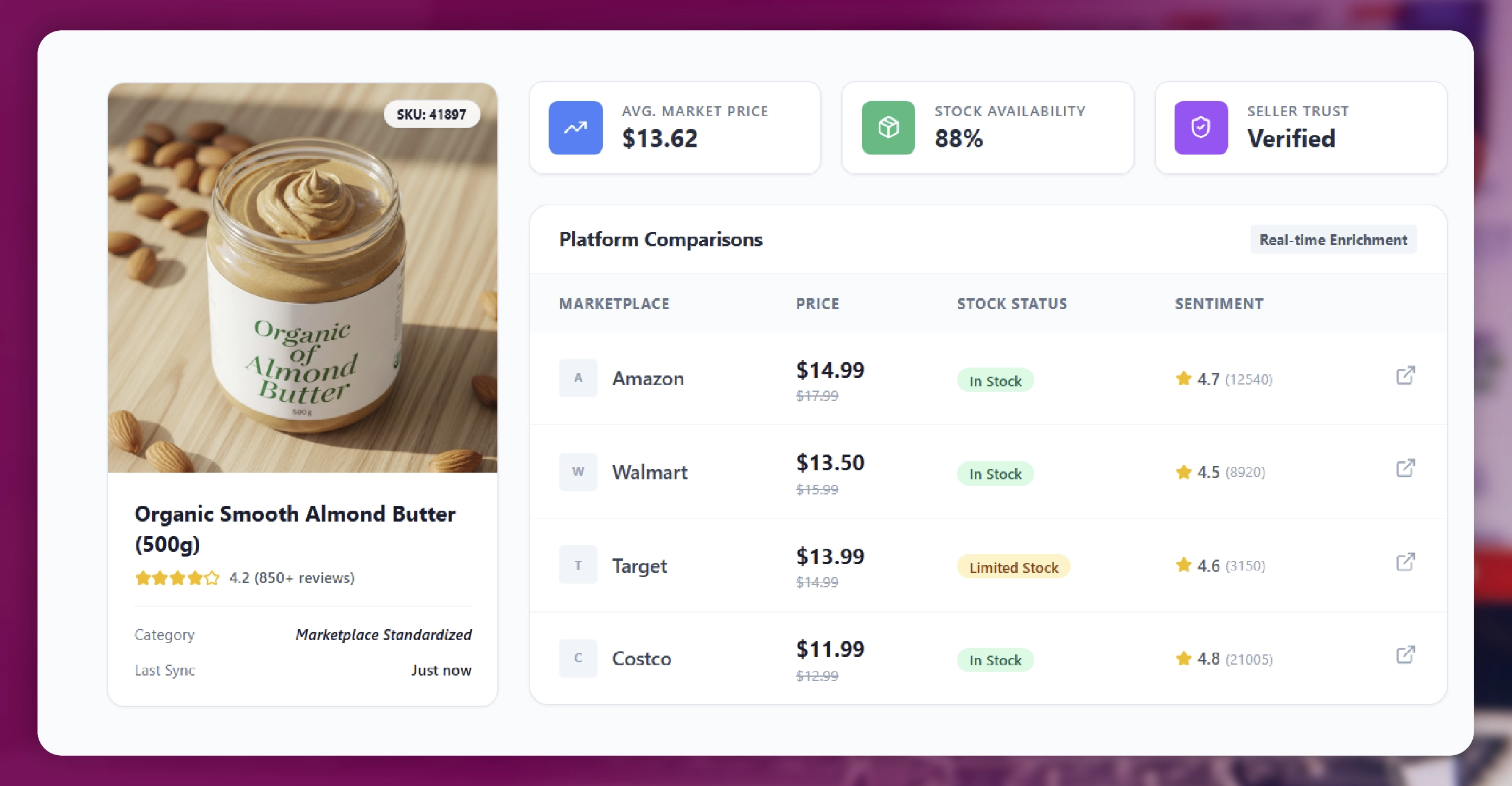
After data collection, normalization is essential. Products must be matched across
platforms despite differences in naming conventions, packaging, or SKUs.
For example:
- A product listed as "Organic Almond Butter 500g" on Amazon may appear slightly differently
on Walmart
- The model must map these variations accurately
Using Walmart data extraction services, businesses can standardize Walmart data and
align it with other marketplaces for consistent benchmarking.
3. Data Enrichment and Contextualization
Raw data alone is not sufficient. It must be enriched with additional context such
as:
- Historical pricing trends
- Promotional flags (e.g., discounts, deals)
- Customer sentiment analysis
Datasets like Amazon Product Datasets
provide
deeper insights into pricing patterns
and customer preferences.
Similarly, leveraging Amazon data
extraction Services ensures real-time
updates,
which are critical for dynamic pricing strategies.
4. Customer Behavior Insights
Pricing decisions are not only about competitors—they are also influenced by
customer perception. Integrating an Ecommerce Product Ratings
and Review Dataset helps
businesses understand:
- How pricing affects customer satisfaction
- Whether higher prices are justified by better reviews
- The relationship between ratings and conversion rates
This layer transforms benchmarking from a purely numerical comparison into a
strategic decision-making tool.
5. Analytical Engine
The core of the benchmarking model is the analytics layer. It processes collected
data to generate insights such as:
- Price variance across platforms
- Competitive price positioning
- Elasticity of demand
- Optimal pricing recommendations
Advanced analytics help businesses:
- Identify underpriced or overpriced products
- Predict competitor pricing moves
- Optimize promotional strategies
Building a Scalable Benchmarking Framework
Step 1: Define Objectives
Before implementing a benchmarking model, businesses must define clear goals:
- Are they aiming to maximize profit margins?
- Do they want to capture market share?
- Are they focusing on specific product categories?
Step 2: Identify Key Competitors
While Walmart, Target, Costco, and Amazon are major players, the relevance of each
platform may vary depending on the product category.
For instance:
- Electronics may be dominated by Amazon
- Bulk groceries may be more competitive on Costco
Step 3: Automate Data Collection
Manual tracking is inefficient and prone to errors. Automated scraping tools ensure:
- Real-time data updates
- High accuracy
- Scalability across thousands of SKUs
Step 4: Normalize and Match Products
Product matching algorithms are crucial for accurate comparisons. These algorithms:
- Identify identical or similar products
- Handle variations in naming
- Ensure consistency across datasets
Step 5: Generate Insights and Reports
The final step is transforming raw data into actionable insights. Dashboards and
reports should highlight:
- Pricing gaps
- Competitive positioning
- Recommended price adjustments
Start leveraging real-time pricing intelligence today—partner
with us to transform your competitive strategy with powerful data scraping
solutions.
Challenges in Price Benchmarking
1. Data Inconsistency
Different platforms structure data differently, making normalization complex.
2. Dynamic Pricing
Frequent price changes, especially on Amazon, require real-time monitoring.
3. Product Matching Complexity
Variations in SKUs and descriptions can lead to mismatches.
4. Legal and Ethical Considerations
Data collection must comply with platform policies and regulations.
Benefits of an Advanced Benchmarking Model
Implementing a comprehensive benchmarking model offers several advantages:
- Improved Pricing Accuracy: Align prices with market trends
- Enhanced Competitiveness: Stay ahead of competitors
- Better Decision-Making: Use data-driven insights
- Increased Profitability: Optimize margins while remaining competitive
Real-World Use Cases
1. Retailers
Retailers use benchmarking to adjust prices dynamically and remain competitive
across platforms.
2. Brands
Brands monitor how their products are priced across marketplaces to maintain
consistency.
3. Market Analysts
Analysts use benchmarking data to identify trends and forecast market movements.
Future of Price Benchmarking
The future of price benchmarking lies in:
- AI-driven predictive analytics
- Real-time pricing automation
- Integration with inventory and demand forecasting systems
As competition intensifies, businesses that invest in advanced benchmarking models
will gain a significant advantage.
How iWeb Data Scraping Can Help You?
1. Real-Time Price Monitoring Across Marketplaces
Our data scraping services continuously track product prices across Walmart, Target,
Costco, and Amazon, helping you respond instantly to market changes and competitor pricing
strategies.
2. Accurate Product Matching & Benchmarking
We ensure precise product mapping across platforms, enabling reliable comparisons
and eliminating inconsistencies caused by different naming conventions or SKUs.
3. Scalable Data Collection for Large Catalogs
Our solutions handle thousands of SKUs efficiently, delivering structured,
high-volume datasets that support enterprise-level price benchmarking and analytics.
4. Actionable Insights & Competitive Intelligence
We transform raw data into meaningful insights, highlighting pricing gaps, trends,
and opportunities to optimize your pricing and maximize profitability.
5. Custom APIs & Automated Data Delivery
With flexible APIs and automated pipelines, we provide seamless data integration
into your systems, dashboards, or analytics tools for faster decision-making.
Conclusion
A well-designed price benchmarking model is no longer optional—it is essential for
survival in the competitive retail landscape. By leveraging advanced data collection,
integration, and analytics, businesses can make smarter pricing decisions and stay ahead of the
competition.
To unlock the full potential of pricing intelligence, organizations must adopt
eCommerce Data Scraping Services enabled
solutions that ensure continuous data flow and
accuracy. Integrating scalable Web Scraping API Services
allows
businesses to automate data
collection efficiently, while robust Web Scraping
Services
ensure high-quality, reliable
datasets for actionable insights.
Experience top-notch web scraping service
and mobile app scraping solutions with iWeb Data
Scraping. Our skilled team excels in extracting various data sets, including retail store locations and beyond. Connect with us
today to learn how our customized services can address your unique project needs, delivering the
highest efficiency and dependability for all your data requirements.