How Does Private Label vs National Brand Pricing Analysis in Quick Commerce Impact Profit Margins?
Introduction
Quick commerce has transformed FMCG retail into a real-time battlefield where pricing decisions change by the hour rather than by the week. In this highly competitive ecosystem, understanding how private label products compare with established FMCG or national brands is no longer optional—it is a core business necessity.
At the center of this transformation is Private Label vs National Brand Pricing Analysis in Quick Commerce, which helps retailers, platforms, and analysts decode how pricing strategies evolve across Blinkit, Zepto, Instamart, and similar platforms.
Modern systems powered by AI Private Label vs National Brand data Extraction on Quick Commerce are enabling businesses to track SKU-level pricing movements, promotions, and discounts in real time. This shift has made pricing intelligence more automated and data-driven than ever before.
The growing need for Private Label vs National Brand price Analysis is driven by increasing competition between platform-owned brands and legacy FMCG companies that are fighting to maintain shelf dominance in digital storefronts.
Changing Structure of Pricing in Instant Delivery Platforms
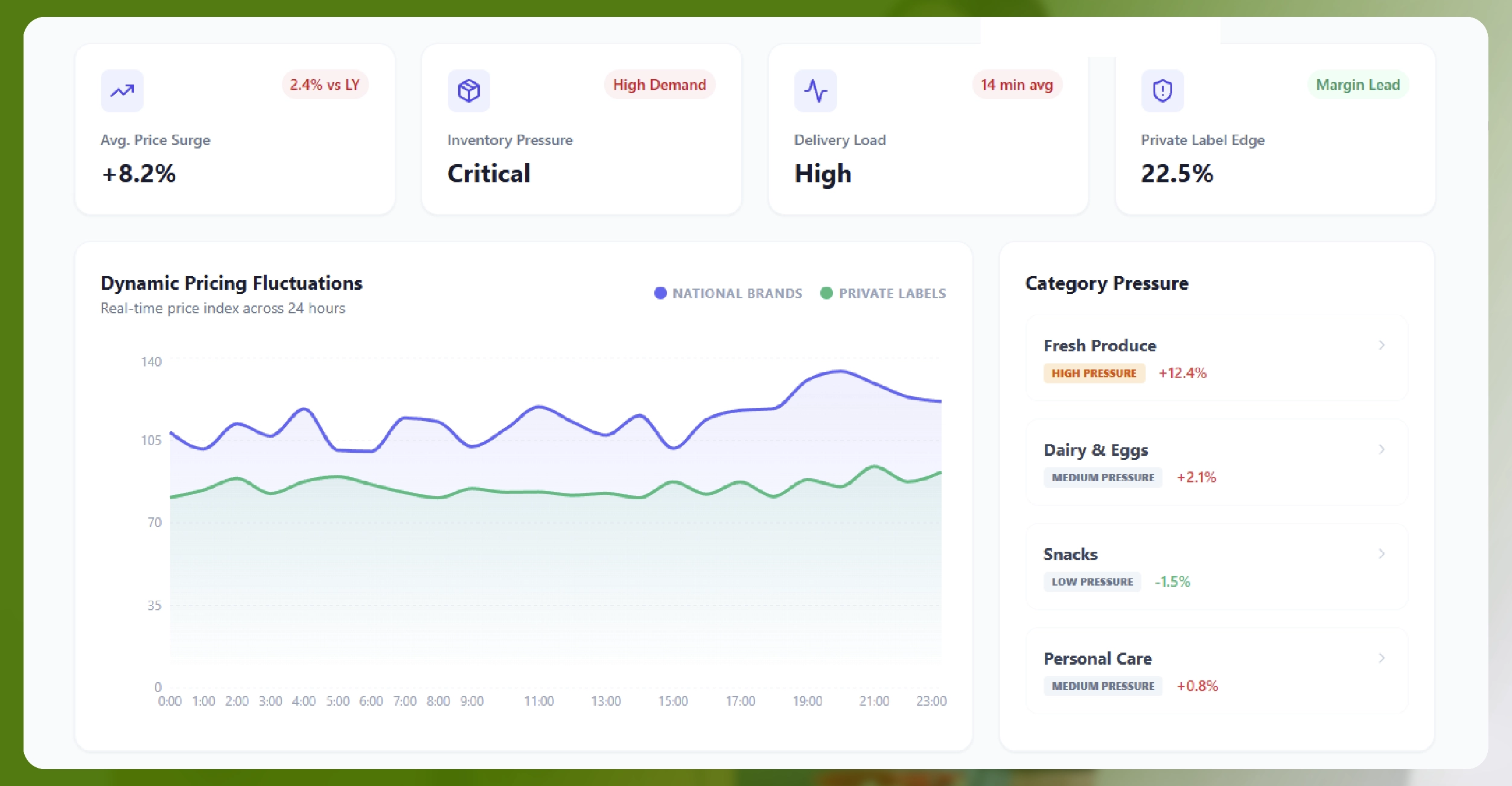
Unlike traditional retail, quick commerce platforms operate in a highly dynamic pricing environment. Prices are influenced by demand spikes, delivery speed expectations, inventory pressure, and competitor pricing changes happening simultaneously.
This creates constant fluctuations that make manual tracking nearly impossible. As a result, data-driven monitoring systems have become essential for understanding real-time pricing behavior across categories.
Private labels, owned directly by platforms, often have more flexibility in pricing, while national brands depend on established supply chains and fixed margin structures. This difference creates continuous pricing tension between the two segments.
Growing Dominance of Platform-Owned Products
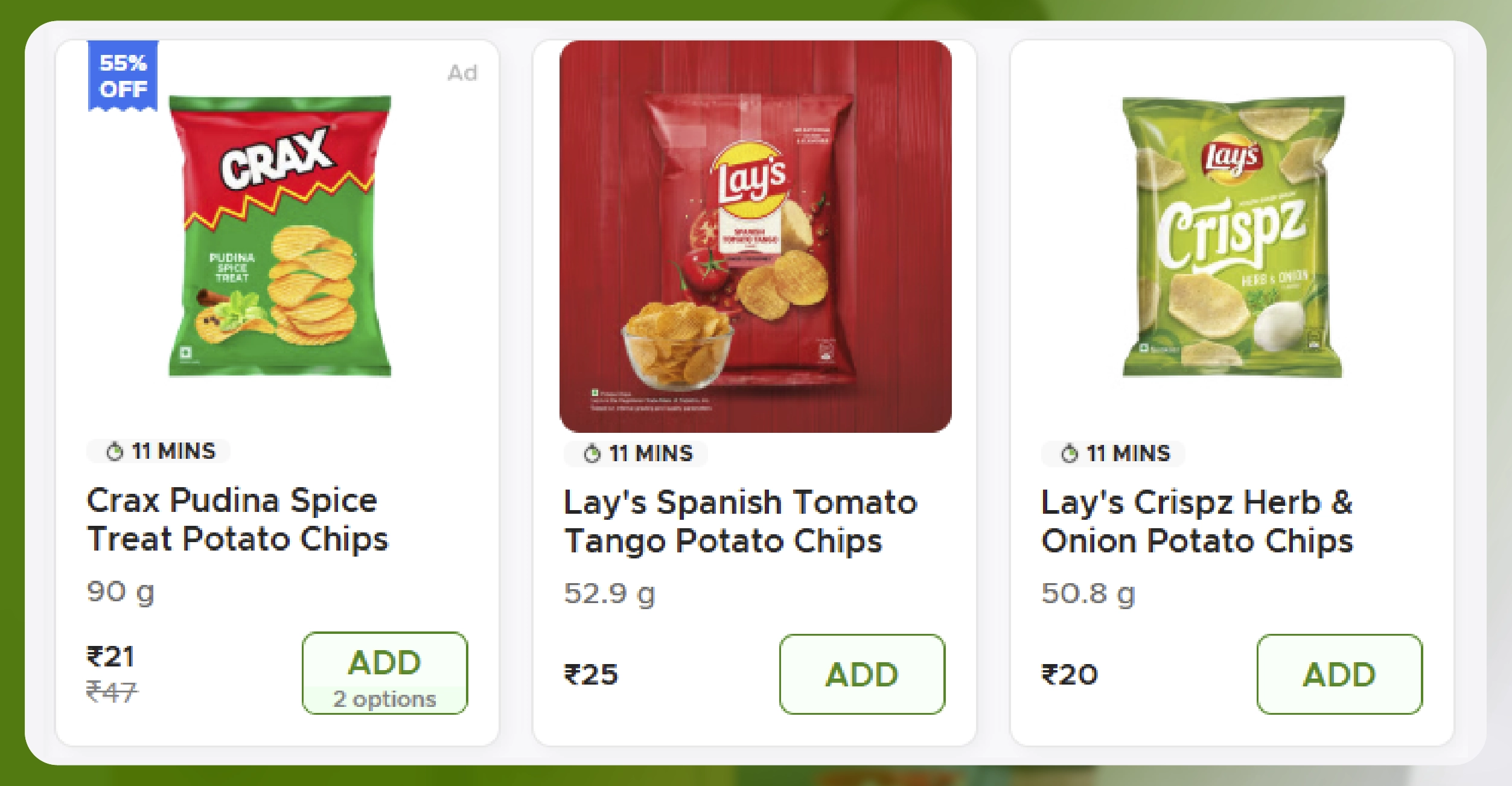
Platform-owned products are gaining strong traction because they offer higher margins and better control over pricing strategies. Quick commerce companies are aggressively expanding their private label portfolios across essential FMCG categories such as staples, snacks, beverages, and personal care.
At the same time, continuous Price monitoring of National Brand products is becoming critical because FMCG giants are responding with aggressive discounting strategies to defend their market share.
This ongoing competition is reshaping consumer perception of value, where price often matters more than brand loyalty in quick commerce environments.
Importance of Structured Data Collection
To understand pricing behavior at scale, businesses rely heavily on structured datasets extracted from multiple platforms. These datasets allow companies to analyze SKU-level pricing trends across categories and geographies.
Techniques like private label pricing data scraping are essential because private label pricing often changes frequently based on platform strategy and demand conditions.
Similarly, companies focus to Extract National Brand pricing data to benchmark FMCG pricing structures and identify where brands are losing or gaining competitive advantage.
Together, these datasets help businesses build a clear picture of pricing competition across the ecosystem.
Competitive Benchmarking Between Product Categories
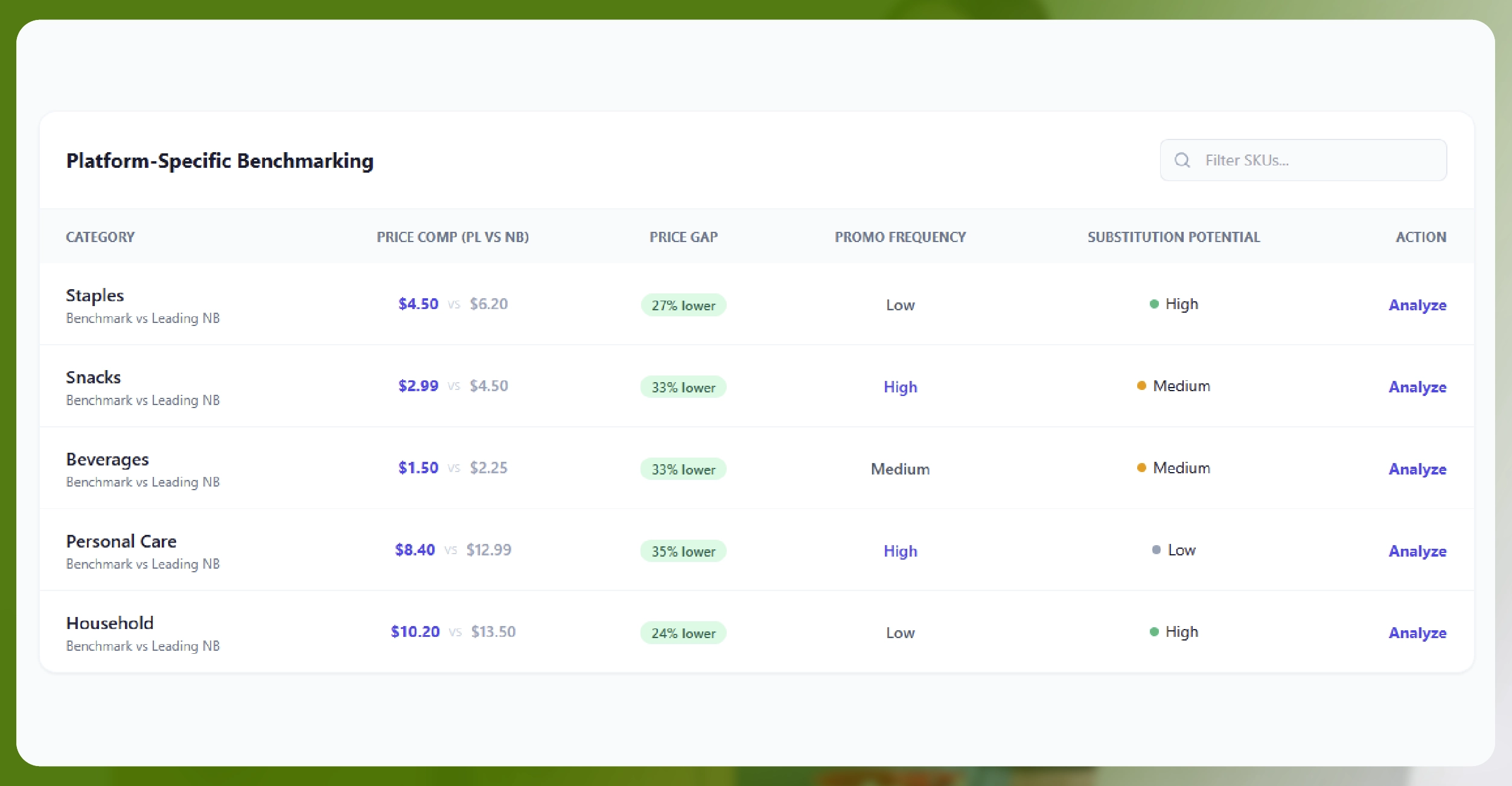
A structured comparison between private labels and national brands helps uncover deep insights into pricing strategies and market positioning.
The private label vs national brand price comparison approach typically evaluates:
- Unit pricing differences across similar SKUs
- Discount depth and promotional frequency
- Category-wise substitution patterns
- Platform-specific pricing variations
- Seasonal pricing fluctuations
These comparisons reveal whether private labels truly offer cost advantages or if they are strategically priced to optimize platform margins.
Unlock real-time pricing intelligence today—leverage our data scraping expertise to outpace competitors and maximize your quick commerce profits.
Real-Time Extraction and Market Visibility
Quick commerce platforms generate massive amounts of product-level data every second. To analyze this effectively, businesses rely on automated extraction systems that continuously collect and process information.
Web Scraping Quick Commerce Data of Private Label plays a key role in tracking product availability, pricing updates, and promotional strategies across multiple platforms simultaneously.
These systems generate structured outputs commonly referred to as:
Quick Commerce Datasets include valuable attributes like:
- Product and brand classification
- Historical pricing trends
- Discount and offer tracking
- Stock availability patterns
- Cross-platform price variations
These insights are essential for building pricing dashboards and predictive analytics models.
Business Use Cases of Pricing Intelligence
Companies across FMCG, retail, and analytics sectors use quick commerce data in several strategic ways:
- Dynamic pricing optimization
Brands adjust pricing based on competitor movements and demand signals, ensuring competitiveness in real time.
- Assortment refinement
Companies identify underperforming SKUs and replace them with more profitable or in-demand alternatives.
- Market expansion planning
New entrants use pricing benchmarks to position their products effectively in crowded categories.
- Promotional strategy design
Data helps determine optimal discount timing and intensity for maximum conversion.
Structural Differences Between Product Types
Private labels are generally designed for controlled pricing, higher margins, and flexible discount strategies. Their pricing is often influenced by internal platform goals rather than external market pressure.
National brands, however, rely on long-standing brand equity, standardized pricing models, and extensive distribution networks. Their pricing strategies are typically more rigid but supported by strong consumer trust.
This fundamental difference makes continuous monitoring essential for understanding competitive movement in quick commerce environments.
Role of Automation and Advanced Analytics
Modern pricing intelligence systems increasingly rely on AI and machine learning to interpret large-scale datasets. These systems can detect:
- Sudden price drops across FMCG categories
- Expansion patterns of private label SKUs
- Consumer switching behavior between brands
- Cross-platform pricing arbitrage opportunities
By continuously analyzing structured data streams, businesses can move from reactive pricing decisions to predictive pricing strategies.
Strategic Impact on FMCG Competition
In quick commerce, pricing is no longer a static business decision—it is a continuously evolving competitive strategy. Companies that fail to monitor pricing dynamics risk losing visibility and market share.
Private label expansion is particularly disruptive because it directly challenges established FMCG brands in high-frequency purchase categories such as groceries and daily essentials.
At the same time, national brands that do not actively monitor competitor pricing may miss critical signals that impact long-term positioning and profitability.
Future Direction of Pricing Intelligence Systems
The future of pricing intelligence will be defined by automation, real-time analytics, and predictive modeling. As quick commerce continues to scale, pricing decisions will become increasingly algorithm-driven.
We will see more intelligent systems capable of automatically adjusting prices based on competitor behavior, inventory levels, and consumer demand signals in real time.
This evolution will significantly reduce the gap between market movement and business response, making data extraction a foundational component of retail strategy.
How iWeb Data Scraping Can Help You?
Real-Time Pricing Intelligence
Our data scraping services deliver real-time tracking of private label and national brand prices across quick commerce platforms, enabling faster, smarter, and highly competitive pricing decisions.
Competitive Benchmarking
We help you compare private label and national brand pricing across categories, platforms, and regions, uncovering insights to refine pricing strategies and improve overall market positioning effectively.
Accurate Data Extraction
Our advanced scraping solutions extract structured, high-quality product data including prices, discounts, and availability, ensuring reliable datasets for analytics, reporting, and strategic decision-making across quick commerce.
Automated Data Pipelines
We build automated pipelines that continuously collect, process, and update pricing data, reducing manual effort while ensuring consistent access to fresh and actionable quick commerce insights.
Scalable Business Insights
Our services transform raw quick commerce data into scalable insights, helping businesses optimize pricing, improve margins, identify trends, and stay ahead in highly competitive FMCG markets.
Conclusion
The competition between private labels and national brands in quick commerce is reshaping FMCG pricing dynamics at an unprecedented pace. Businesses that invest in structured data systems gain a clear advantage in understanding market behavior and responding effectively.
Quick Commerce & FMCG Data Extraction Services are becoming essential for organizations that want to build scalable and intelligent pricing frameworks capable of real-time decision-making.
Web Scraping API Services enable seamless integration of live pricing data into analytics systems, improving automation and accuracy across workflows.
Web Scraping Services are better positioned to transform raw market data into actionable insights that drive competitiveness, efficiency, and long-term growth in the evolving quick commerce ecosystem.
Experience top-notch web scraping service and mobile app scraping solutions with iWeb Data Scraping. Our skilled team excels in extracting various data sets, including retail store locations and beyond. Connect with us today to learn how our customized services can address your unique project needs, delivering the highest efficiency and dependability for all your data requirements.