
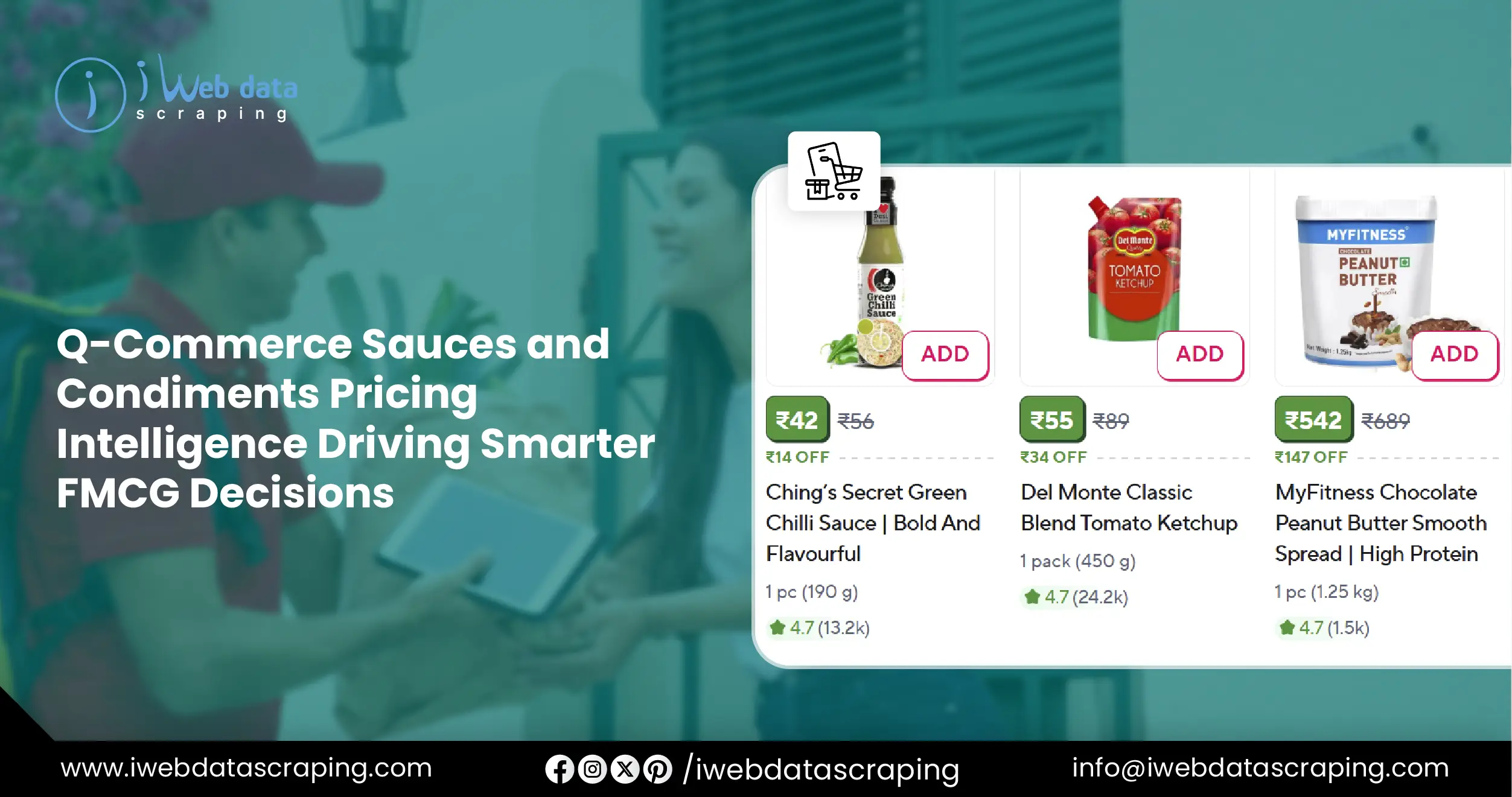
The rapid rise of quick commerce (q-commerce) platforms such as Blinkit, Zepto, Instamart, Getir, and Gorillas has transformed how consumers purchase everyday grocery items, including sauces and condiments. These products—ketchup, mayonnaise, chili sauces, soy sauces, and specialty dips—are impulse-driven, frequently replenished, and highly sensitive to price fluctuations, promotions, and availability. As delivery windows shrink to 10–30 minutes, pricing strategies must be precise, data-driven, and responsive to real-time demand shifts.
Q-commerce sauces and condiments pricing intelligence plays a critical role in helping brands and retailers understand competitive pricing dynamics, promotional intensity, SKU availability, and regional demand patterns. With consumers comparing prices across multiple apps before checkout, even minor price differences can influence conversion rates and brand loyalty.
To achieve this level of insight, companies increasingly rely on q-commerce pricing trends data Scraping, which captures live prices, discounts, stock status, and pack variations across platforms and cities. At scale, this intelligence enables granular analysis of how condiments are priced, promoted, and positioned throughout the day and across demand cycles.
Similarly, the ability to Scrape Q-commerce sauces and condiments price Data empowers FMCG manufacturers and private labels to move beyond manual checks toward automated, continuous monitoring. This report explores how pricing intelligence in q-commerce works, supported by data tables, observations, and strategic insights.
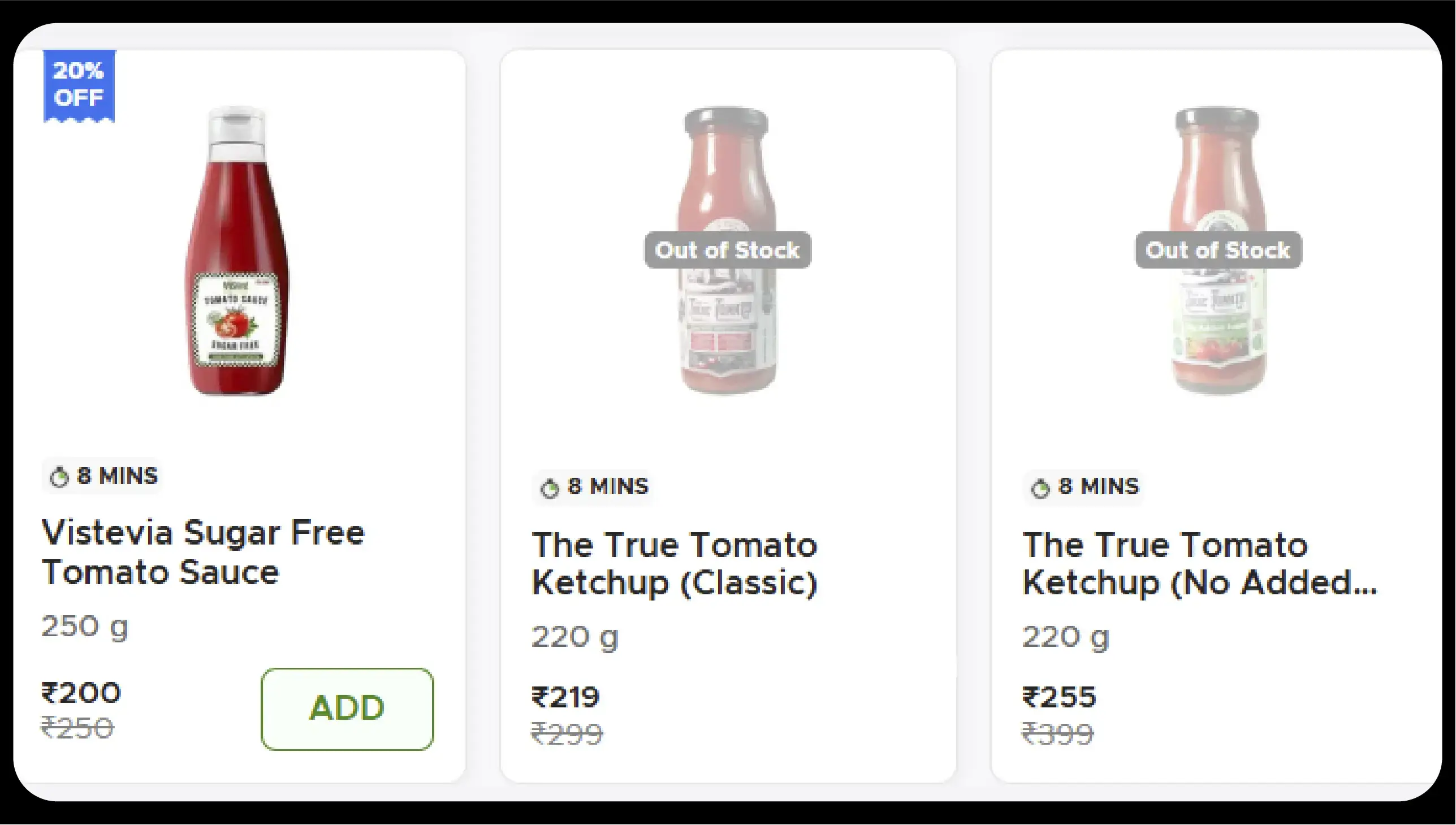
Sauces and condiments represent a high-velocity FMCG category in quick commerce due to:
Unlike traditional e-commerce, q-commerce pricing fluctuates more frequently due to micro-fulfillment constraints, city-specific inventory, and time-based surge pricing. Platforms dynamically adjust prices during peak hours, weekends, festivals, and weather-driven demand spikes.
The practice of Condiment price tracking from Quick Delivery Platforms helps stakeholders understand how prices shift within the same day, often varying between morning, afternoon, and late-night delivery slots.
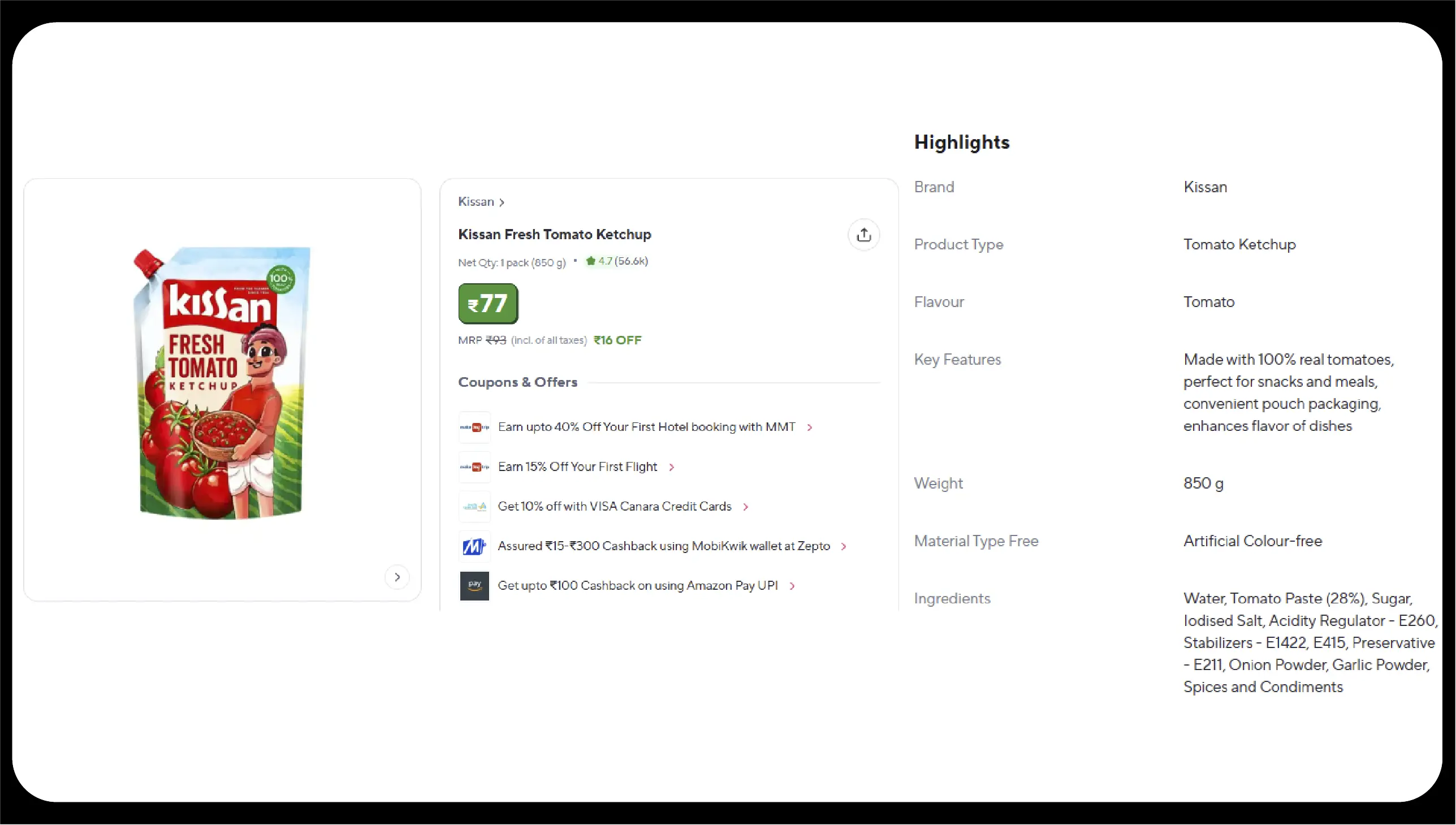
Pricing intelligence relies on structured data collection across multiple dimensions:
Extract sauces stock availability Data to complement price tracking, as out-of-stock scenarios often trigger price hikes or substitute product promotion. Availability data is as important as price itself, especially for fast-moving condiment SKUs.
The grocery inventory monitoring enables companies to detect:
Table 1: Average Prices of Popular Condiments Across Q-Commerce Platforms (INR)
| Product Name | Brand | Pack Size | Blinkit (₹) | Zepto (₹) | Instamart (₹) |
|---|---|---|---|---|---|
| Tomato Ketchup | Heinz | 500g | 135 | 138 | 140 |
| Tomato Ketchup | Kissan | 500g | 125 | 128 | 130 |
| Mayonnaise | Veeba | 250g | 95 | 99 | 98 |
| Soy Sauce | Ching’s | 200ml | 65 | 67 | 69 |
| Chili Sauce | Del Monte | 200g | 85 | 88 | 90 |
Observations from Table 1
Demand for sauces and condiments differs significantly by geography, cuisine preferences, and urban consumption habits. Tier-1 cities show higher penetration of international sauces, while Tier-2 cities favor mass-market ketchup and chili sauces.
city-wise condiment availability monitoring provides insights into which SKUs are consistently available versus intermittently stocked, helping brands optimize distribution strategies.
Table 2: City-Wise Availability Score (Percentage of Time In-Stock)
| City | Ketchup | Mayonnaise | Soy Sauce | Chili Sauce |
|---|---|---|---|---|
| Mumbai | 96% | 92% | 88% | 90% |
| Delhi NCR | 94% | 90% | 85% | 88% |
| Bengaluru | 97% | 95% | 91% | 93% |
| Hyderabad | 92% | 88% | 83% | 86% |
| Pune | 90% | 85% | 80% | 84% |
Insights from Table 2
Q-commerce platforms aggressively push private labels to improve margins. These products are typically priced 10–25% lower than branded alternatives while offering comparable pack sizes.
Private label vs branded sauces pricing analysis reveals:
Table 3: Branded vs Private Label Sauce Pricing Comparison (INR)
| Category | Brand Type | Avg Price | Avg Discount |
|---|---|---|---|
| Tomato Ketchup | Branded | 130 | 8% |
| Tomato Ketchup | Private Label | 105 | 3% |
| Mayonnaise | Branded | 98 | 10% |
| Mayonnaise | Private Label | 78 | 5% |
| Chili Sauce | Branded | 88 | 7% |
| Chili Sauce | Private Label | 70 | 4% |
Key Takeaways
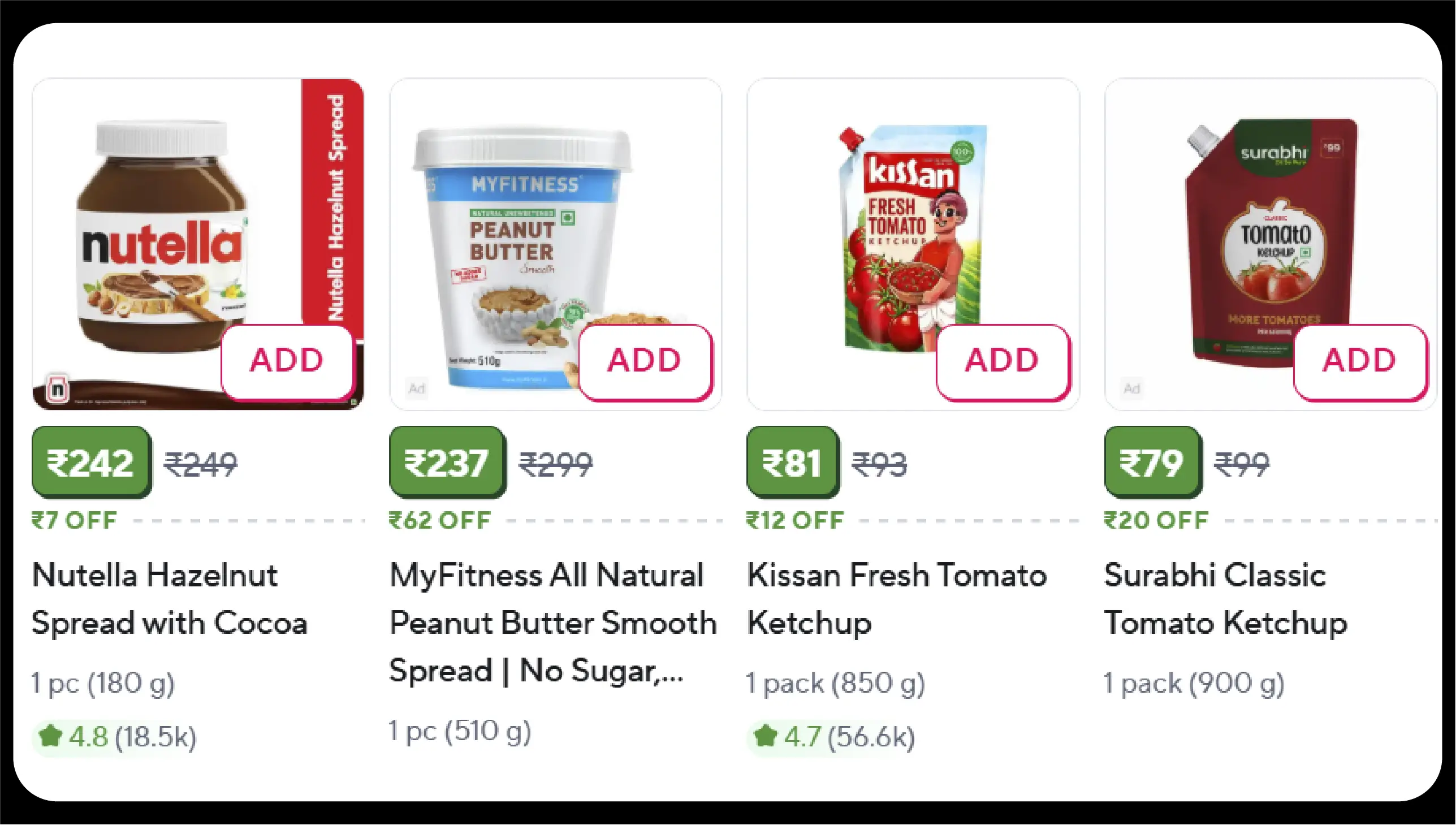
Festive & peak-hour demand analysis highlights how prices surge during weekends, festivals, and dinner hours (6 PM–10 PM). During Diwali, Christmas, and New Year periods:
Real-time pricing intelligence helps brands plan:
Pricing intelligence enables:
Quick Commerce Datasets consolidate pricing, availability, discount, and SKU metadata into structured formats for analytics teams. These datasets support dashboards, alerts, and AI-driven pricing recommendations.
Quick Commerce & FMCG Data Extraction Services allow brands to automate monitoring at scale, eliminating manual tracking errors and delays.
The q-commerce ecosystem demands speed, accuracy, and adaptability in pricing decisions—especially for fast-moving categories like sauces and condiments. With real-time insights into pricing, availability, and demand fluctuations, brands and platforms can respond proactively rather than reactively.
Advanced Q-Commerce Data Scraping API Services empower businesses to capture live pricing signals across cities, platforms, and time windows. This enables accurate branded condiment price comparison supports margin optimization, and enhances promotional effectiveness.
Ultimately, data-driven pricing intelligence forms the backbone of modern FMCG strategy. When integrated with forecasting and demand analytics, it delivers comprehensive FMCG pricing intelligence helping brands win the quick commerce race with precision, speed, and confidence.
Experience top-notch web scraping service and mobile app scraping solutions with iWeb Data Scraping. Our skilled team excels in extracting various data sets, including retail store locations and beyond. Connect with us today to learn how our customized services can address your unique project needs, delivering the highest efficiency and dependability for all your data requirements.
We start by signing a Non-Disclosure Agreement (NDA) to protect your ideas.
Our team will analyze your needs to understand what you want.
You'll get a clear and detailed project outline showing how we'll work together.
We'll take care of the project, allowing you to focus on growing your business.