Uncovering News & Updates with Food Data Scrape
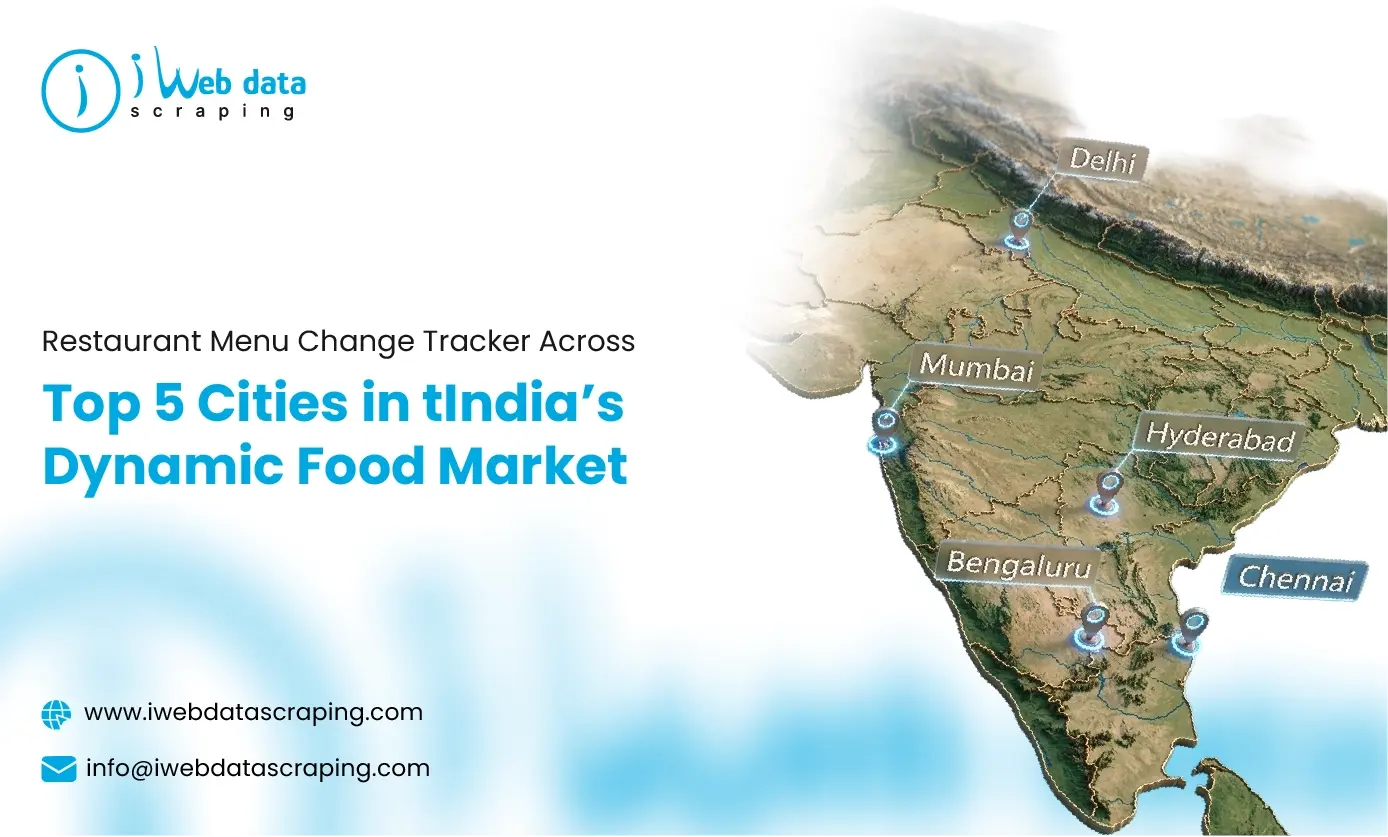
Restaurant Menu Change Tracker Across Top 5 Cities in India’s Dynamic Food Market
Restaurant Menu Change Tracker Across Top 5 Cities tracking menu innovations, price fluctuations, and competitive food trends across urban markets.
The restaurant industry across India’s top metro cities is becoming increasingly data-driven, with menu changes reflecting real-time demand shifts, pricing strategies, and competitive positioning. Tracking these variations across Mumbai, Delhi, Bengaluru, Hyderabad, and Chennai provides a powerful lens into consumer behavior and operational strategy.
Menu Volatility Trends Across Top Cities
Restaurant Menu Change Tracker Across Top 5 Cities shows that menu volatility has increased by nearly 32% between 2024 and 2026. On average, restaurants in Tier-1 cities now update 10–18% of their menus every month. Bengaluru leads with the highest change frequency, where cloud kitchens and QSR brands experiment aggressively with limited-time offerings (LTOs). Mumbai follows closely, driven by premium dining and fusion cuisine trends.
Data indicates that:
- 52% of restaurants update prices at least once every 60 days
- 38% introduce seasonal or promotional dishes quarterly
- 27% remove underperforming items within 90 days
Item-Level Insights from Scraped Menu Data
Using Web scraping restaurant menus and item data, granular insights can be derived at the item level. Across the top 5 cities, nearly 120,000+ menu items were analyzed in 2025–2026, revealing:
| Fast Food |
35% |
22% |
+8–12% |
| Beverages |
28% |
18% |
+6–10% |
| Main Course |
20% |
25% |
+10–15% |
| Desserts |
17% |
12% |
+5–8% |
Fast food and beverages dominate new additions due to high demand elasticity and ease of innovation, while main course items see higher removal rates due to operational complexity and cost pressures.
City-Wise Performance Benchmarking
To Restaurant menu data scraping Across Top 5 Cities, comparative benchmarking highlights how each city responds differently to market conditions:
| Mumbai |
22,000+ |
3,500+ |
15% |
| Delhi |
20,000+ |
3,000+ |
12% |
| Bengaluru |
18,500+ |
3,800+ |
18% |
| Hyderabad |
14,000+ |
2,200+ |
10% |
| Chennai |
13,500+ |
1,900+ |
9% |
Bengaluru and Mumbai show the highest experimentation rates, while Chennai and Hyderabad focus more on stable menus and cost control.
Competitive Intelligence & Pricing Signals
- Combo meals increased by 31% across all cities
- Vegan/healthy items grew by 28% year-over-year
- Discount-driven menu items (bundled pricing) rose by 35%
Additionally, price tracking reveals that inflation-driven adjustments are most frequent in protein-based dishes, with chicken and paneer items seeing 12–18% price hikes in the past year.
Role of iWeb Data Scraping in Menu Intelligence
iWeb Data Scraping plays a crucial role in enabling these insights by delivering continuous, real-time data extraction across multiple food delivery platforms. It helps businesses monitor menu changes at scale, track competitor pricing, and detect emerging food trends instantly. By leveraging iWeb Data Scraping, restaurants and aggregators can identify high-performing items, reduce menu inefficiencies, and optimize pricing strategies based on live market signals rather than static assumptions.
Strategic Takeaways from Menu Change Analytics
Menu tracking data clearly shows a shift toward agile operations. Restaurants are increasingly adopting a “test-and-iterate” model, where new items are launched quickly and retained only if performance metrics meet benchmarks (orders, ratings, repeat purchases).
High-performing brands are those that:
- Maintain 20–25% dynamic menu flexibility
- Introduce at least 2–3 new items monthly
- Continuously monitor competitor pricing and positioning
In conclusion, menu change tracking across top cities is no longer just an analytical exercise—it is a strategic necessity. Data-driven insights, powered by solutions like iWeb Data Scraping, enable restaurants to optimize offerings, align with consumer demand, and stay competitive in a rapidly evolving food delivery landscape.