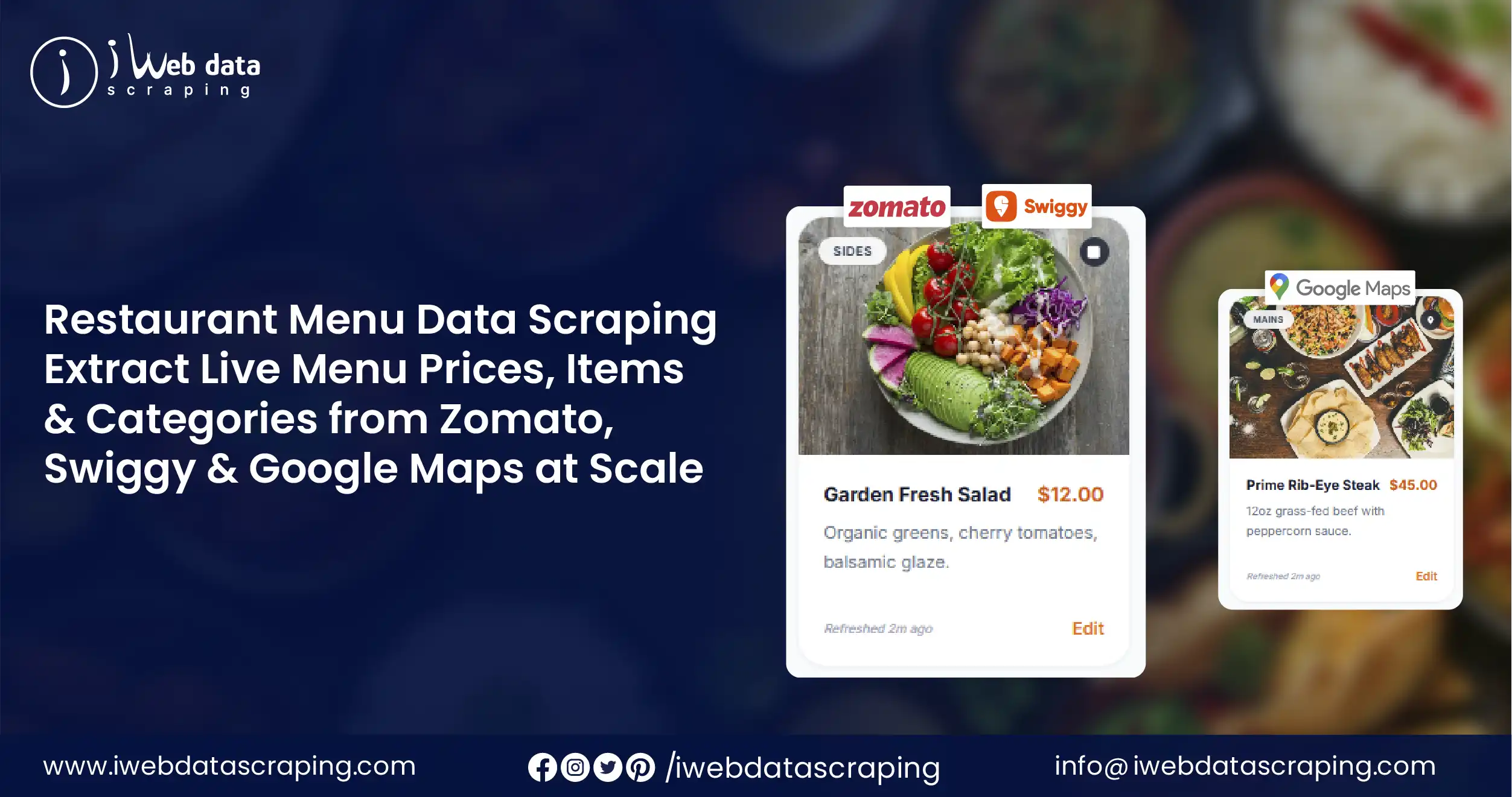
Restaurant Menu Data Scraping – Extract Live Menu Prices, Items & Categories from Zomato, Swiggy & Google Maps at Scale
Introduction
In today’s hyper-competitive food delivery ecosystem, restaurants, aggregators, and analytics companies rely heavily on Restaurant Menu Data Scraping to stay updated with rapidly changing menu offerings and pricing strategies. Platforms like Zomato, Swiggy, and Google Maps constantly update menus, discounts, and availability, making manual tracking impossible at scale.
Businesses increasingly need to Extract Live Restaurant Menu Prices, Items & Categories Data to understand customer demand patterns, optimize pricing strategies, and monitor competitor behavior across multiple cities and regions.
With rising competition in food delivery ecosystems, brands now focus to Scrape real-time restaurant menu updates to ensure they never miss changes in pricing, availability, or new dish introductions.
Why Restaurant Menu Data Scraping is Essential for Modern Food Businesses?
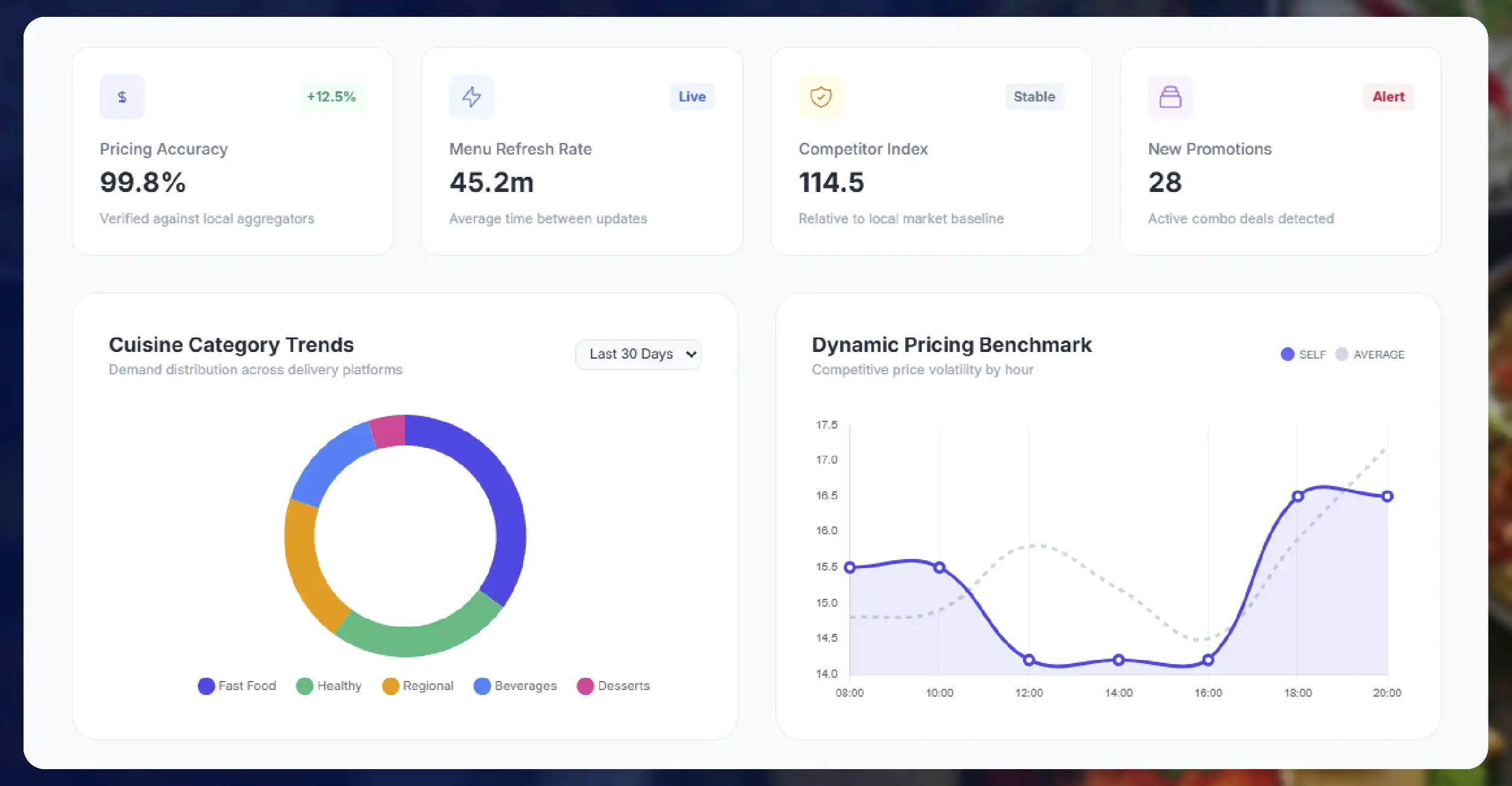
The food delivery industry changes dynamically every hour, with restaurants updating menus, adding offers, and modifying pricing frequently. Data-driven insights help businesses react faster and stay competitive.
- Real-time menu tracking enables restaurants to adjust pricing strategies based on competitor offerings across delivery platforms instantly.
- Food aggregators use scraped data to analyze category trends like fast food, healthy meals, beverages, and regional cuisine popularity.
- Delivery platforms rely on structured menu data to improve recommendation algorithms and customer personalization systems.
- Businesses can identify high-demand dishes across cities by analyzing aggregated menu and pricing datasets.
- Competitive intelligence helps restaurant chains benchmark pricing against nearby competitors in the same delivery radius.
- Dynamic menu tracking helps identify promotional trends such as combo meals, discounts, and limited-time offers.
- Aggregated menu insights support expansion strategies by identifying profitable cuisine categories in specific geographic areas.
- Data-driven menu optimization helps restaurants eliminate underperforming items and focus on high-margin dishes.
- Food analytics companies use structured datasets to forecast seasonal demand spikes and customer ordering behavior.
- Real-time tracking reduces the risk of outdated listings and ensures customers always see accurate menu information.
Core Applications of Menu Data Scraping Across Platforms
Modern food delivery ecosystems depend on structured data collection from multiple platforms simultaneously. This helps businesses create unified intelligence systems for decision-making.
- Businesses Scrape competitor restaurant pricing data to understand how rival restaurants structure their menus and price items across categories.
- Platforms use Restaurant menu data Extraction From food delivery apps Zomato, Swiggy & Google Maps to centralize insights across multiple ecosystems.
- Analysts track pricing variations across regions to identify premium vs budget-friendly restaurant clusters.
- Delivery apps use structured menu datasets to improve search ranking and recommendation accuracy for users.
- Businesses detect menu inconsistencies across platforms to ensure brand consistency for franchise restaurants.
- Aggregated data helps identify trending cuisines like street food, continental meals, and health-focused menus.
- Restaurants use menu intelligence to optimize portion sizes, pricing tiers, and combo offers.
- Competitive benchmarking allows food chains to adjust pricing in real time during peak demand hours.
- Market researchers analyze customer preferences by tracking frequency of dish availability across platforms.
- Delivery platforms integrate structured menu data into AI-driven personalization engines.
Unlock smarter decisions today with our advanced data scraping services and gain a powerful competitive edge in your industry.
Large-Scale Data Extraction for Food Delivery Ecosystems
At scale, Zomato, Swiggy & Google Maps Menu Data Scraping enables businesses to analyze millions of menu items, pricing records, and restaurant categories across cities.
- Systems powered by Zomato Menu Data Scraping collect structured datasets including dishes, pricing, categories, and availability status.
- Enterprises use Swiggy Food Delivery App Datasets to understand hyperlocal food demand trends and customer ordering behavior.
- Businesses rely on Swiggy Food Data Extraction Services to track competitor pricing fluctuations in real time.
- Food analytics companies use Zomato Food Data Extraction Services to build predictive models for restaurant performance.
- Delivery aggregators use structured datasets to improve algorithmic ranking of restaurants based on pricing and popularity.
- Large-scale scraping enables comparison of food pricing trends across metro and tier-2 cities.
- Data pipelines help normalize inconsistent menu structures across different restaurant listings.
- Real-time extraction systems detect sudden changes in menu availability or pricing errors.
- Businesses can map customer demand density by analyzing order trends across multiple platforms.
- Advanced systems help identify ghost kitchens and cloud kitchen pricing strategies in competitive markets.
Business Benefits of Food Delivery Data Intelligence
Food delivery intelligence is transforming how restaurants and aggregators operate in highly competitive markets.
- Companies leverage Food Delivery Data Scraping Services to automate competitive analysis and reduce manual tracking efforts.
- Businesses identify profitable menu segments by analyzing aggregated pricing and order frequency data.
- Restaurants improve customer retention by optimizing menus based on data-driven insights.
- Aggregators enhance platform efficiency by analyzing restaurant performance metrics across categories.
- Data intelligence helps detect pricing anomalies and inconsistencies across delivery platforms.
- Businesses can track promotional effectiveness by analyzing discount-based ordering patterns.
- Market expansion decisions become more accurate using region-wise menu demand analytics.
- Food brands improve supply chain planning by predicting ingredient demand based on menu trends.
- Competitive intelligence supports better negotiation strategies between restaurants and delivery platforms.
- Structured data helps improve customer satisfaction through better menu accuracy and availability tracking.
Role of Google Maps in Restaurant Intelligence
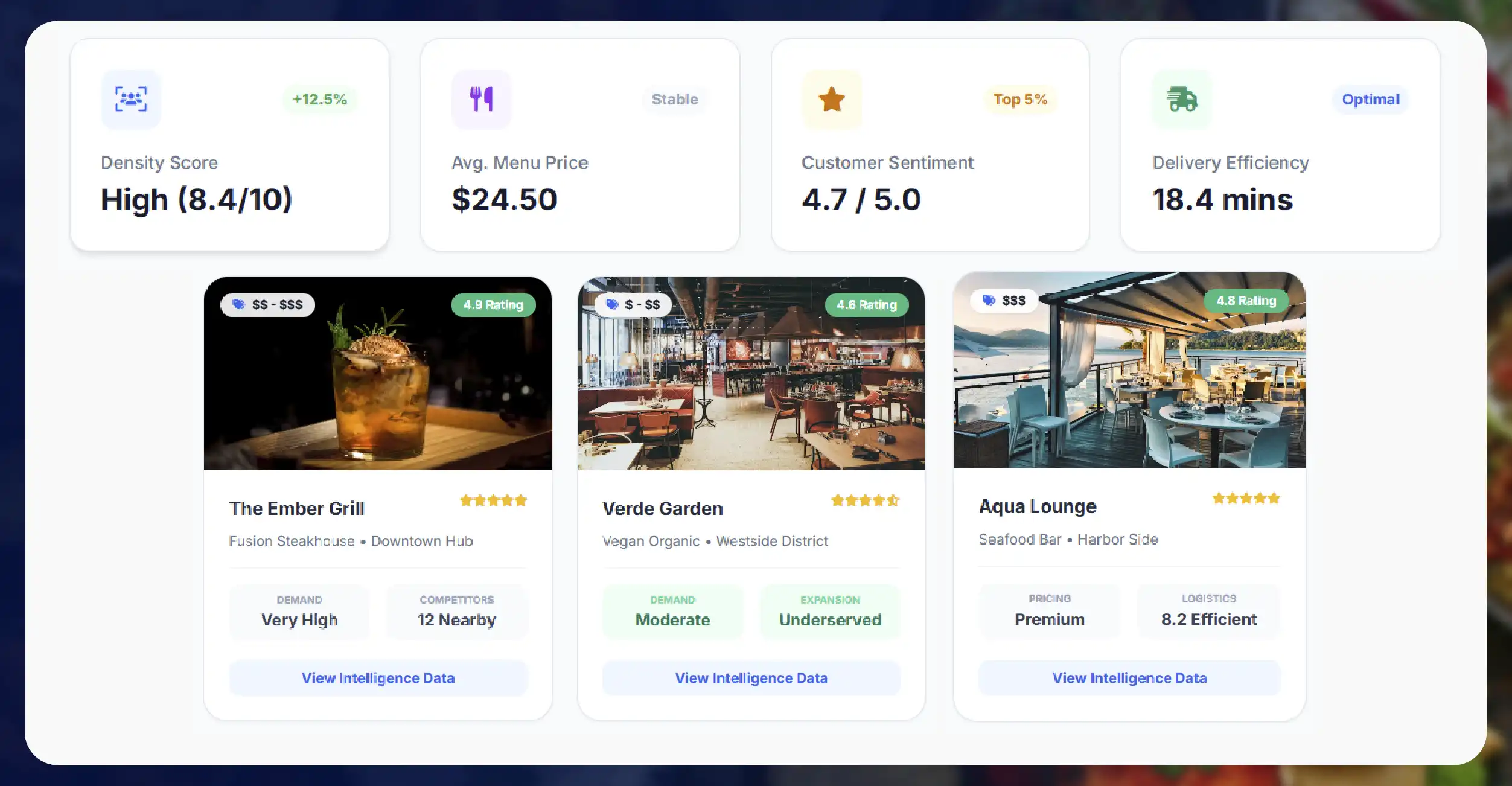
Google Maps has become a powerful source of restaurant and location-based food intelligence.
- Businesses use Google Maps data to identify restaurant density and competition in specific geographic regions.
- Menu insights from Google Maps help understand offline-to-online restaurant transitions.
- Location-based analytics support hyperlocal marketing strategies for food delivery platforms.
- Businesses track restaurant ratings alongside menu pricing to evaluate customer satisfaction levels.
- Geographic data helps identify underserved areas for restaurant expansion.
- Structured scraping helps align delivery coverage with customer demand clusters.
- Restaurants optimize visibility by analyzing competitor presence on map-based listings.
- Delivery platforms use mapping intelligence to improve logistics and delivery time estimation.
- Aggregated location data helps identify food deserts and emerging food hubs.
- Businesses use map-based insights for franchise expansion planning.
Importance of Scalable Food Data Infrastructure
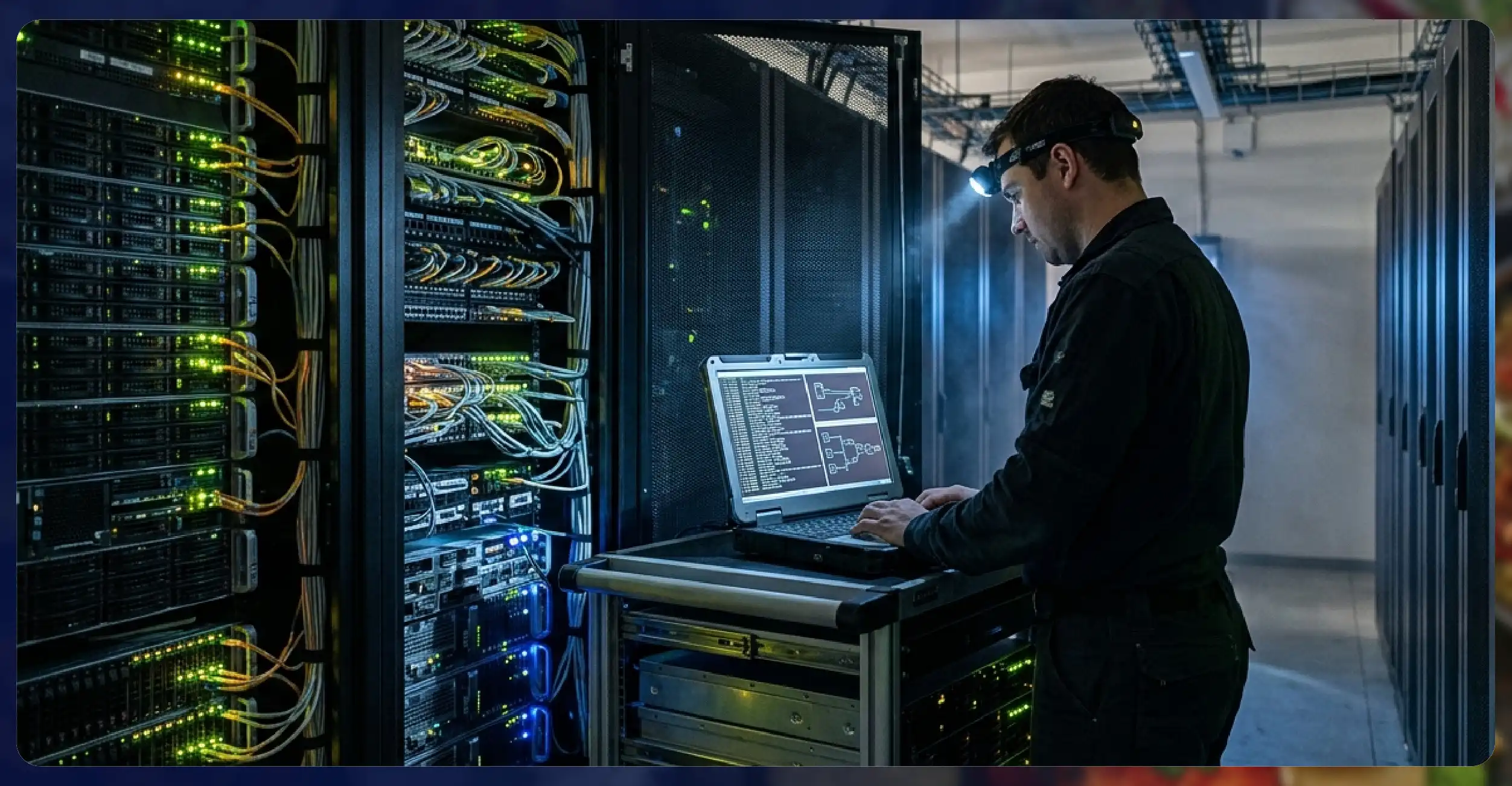
At scale, food data scraping requires robust systems capable of handling real-time updates and massive datasets.
- Enterprises rely on structured pipelines to process continuous menu updates across thousands of restaurants.
- Automated systems ensure data accuracy despite frequent changes in pricing and availability.
- Scalable architectures help maintain consistency across multi-platform food datasets.
- Businesses can integrate scraped data into BI dashboards for real-time reporting.
- Cloud-based systems support high-volume extraction during peak traffic periods like festivals or sales.
- Data normalization ensures uniform structure across different food delivery platforms.
- APIs enable seamless integration with analytics tools and pricing engines.
- Automated monitoring reduces latency in detecting competitor pricing changes.
- Advanced systems support predictive analytics for demand forecasting.
- Scalable scraping ensures global coverage across multiple cities and countries.
How iWeb Data Scraping Can Help You?
Live Competitor Monitoring
Our data scraping services continuously monitor competitor activity, helping businesses stay updated with pricing, offers, and strategic market changes instantly.
Structured Data for Analysis
We convert unstructured web data into clean, organized datasets, making it easier for teams to analyze and generate insights efficiently.
High-Speed Data Extraction
Our systems deliver fast and accurate data extraction from multiple sources, ensuring businesses receive timely intelligence for critical decision-making processes.
Multi-Platform Coverage
We collect data across various platforms simultaneously, giving businesses a unified view of market trends, competitors, and customer behavior patterns.
Business Growth Optimization
Our insights help companies refine strategies, improve pricing models, and identify new opportunities to accelerate growth and increase revenue.
Conclusion
Restaurant menu intelligence has become a core part of modern food delivery ecosystems. Businesses need accurate, real-time insights into pricing, categories, and menu updates to remain competitive in a fast-changing industry. By leveraging structured data extraction from major platforms, companies can make smarter pricing decisions, improve customer experience, and identify market opportunities faster than ever.
Modern enterprises increasingly depend on Food Delivery App Menu Datasets to power analytics, forecasting, and competitive intelligence systems.
At the same time, scalable technologies like Web Scraping API Services enable seamless data collection across thousands of restaurants in real time.
Advanced systems also use Web Scraping Services to ensure accurate, scalable, and continuous restaurant data extraction from multiple platforms.
Experience top-notch web scraping service and mobile app scraping solutions with iWeb Data Scraping. Our skilled team excels in extracting various data sets, including retail store locations and beyond. Connect with us today to learn how our customized services can address your unique project needs, delivering the highest efficiency and dependability for all your data requirements.