Scrape Apple Online Store vs Samsung Shop Data for D2C Competitive Benchmarking 2026

Scrape Apple Online Store vs Samsung Shop Data for D2C Competitive Benchmarking 2026

Introduction

The global consumer electronics industry is increasingly driven by data-led pricing intelligence and direct-to-consumer (D2C) optimization strategies, where structured extraction from official brand stores provides a competitive advantage in decision-making, forecasting, and benchmarking.

The strategy to Scrape Apple Online Store vs Samsung Shop Data has emerged as a key analytical workflow for enterprises, researchers, and pricing strategists aiming to decode SKU-level pricing behavior, regional variations, and promotional cycles across premium electronics ecosystems.

Modern enterprises also rely on comparative frameworks such as Apple vs Samsung vs Google store USA pricing optimization to understand how flagship brands position identical or similar devices differently across geographies like the USA, UK, and Germany.

At a broader level, this ecosystem intelligence forms the backbone of D2C electronics ecommerce competitive intelligence, enabling companies to track pricing behavior, promotional cycles, and product lifecycle changes in near real time.

Industry Context and Strategic Relevance

The D2C electronics market is uniquely structured because brands like Apple, Samsung, and Google control their own pricing ecosystems. Unlike traditional retail, these ecosystems do not rely heavily on intermediaries, which makes digital storefronts the primary source of pricing truth.

Apple maintains a highly controlled pricing structure with minimal fluctuations, ensuring premium brand positioning globally. Samsung operates a hybrid model with frequent discounts, bundles, and region-specific pricing strategies. Google uses a relatively balanced model focused on competitive positioning and ecosystem integration.

This makes comparative data extraction essential for electronics brand D2C ecommerce benchmarking, where performance is evaluated through pricing consistency, discount frequency, and regional adaptability.

Data Collection Methodology and Scraping Framework

img

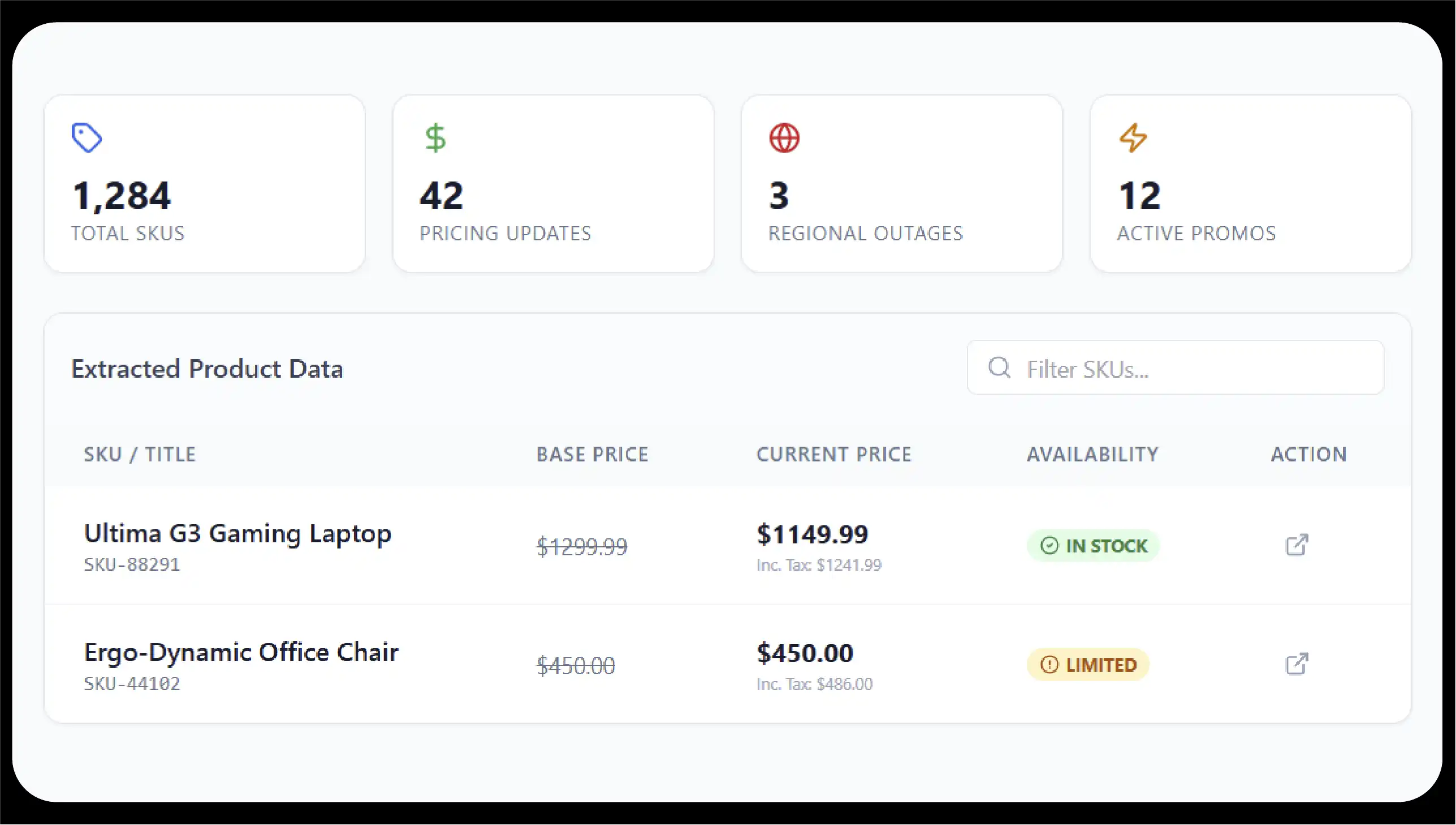
To analyze Apple, Samsung, and Google stores effectively, structured scraping pipelines are deployed across multiple layers:

Data Extraction Layer

  • Product pages (SKU, title, model variations)
  • Pricing fields (base price, discounted price, tax-inclusive pricing)
  • Availability status by region
  • Promotional banners and offers

Normalization Layer

Data is standardized across regions (USD, GBP, EUR) to ensure comparability. Currency conversion and VAT normalization are applied.

Storage Layer

Structured datasets are stored in time-series databases to track pricing changes over time.

A key use case involves Apple Online Store pricing intelligence across regions, where price consistency is measured across product launches and updates in multiple markets.

Comparative Pricing Architecture

Apple, Samsung, and Google follow fundamentally different pricing architectures that can be decoded through structured datasets.

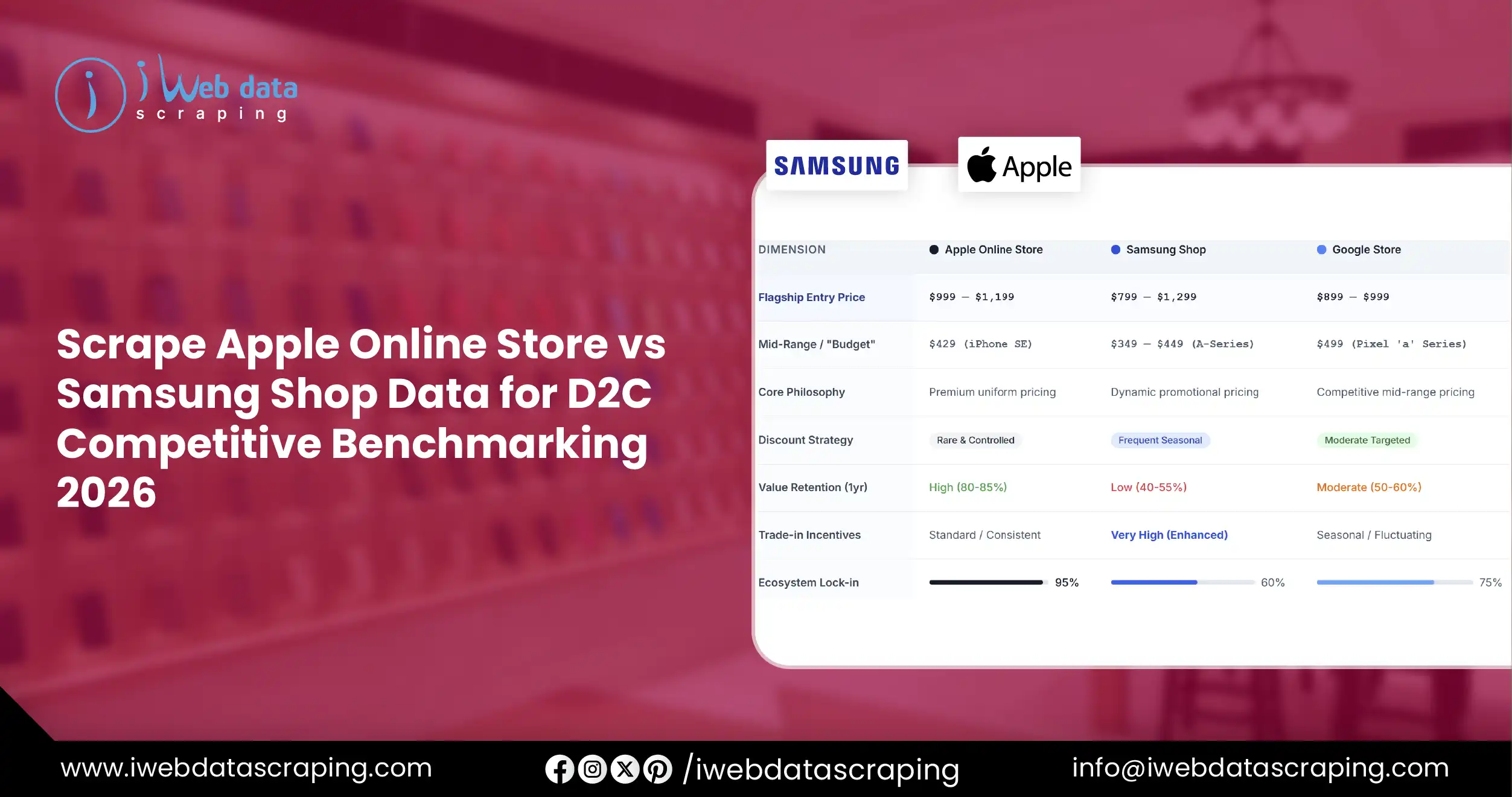
Apple emphasizes uniform global pricing with slight regional adjustments. Samsung uses aggressive promotional pricing with dynamic adjustments based on demand cycles. Google maintains moderate pricing flexibility tied to Pixel ecosystem positioning.

This comparative structure is especially visible when analyzing method to Scrape Samsung Shop D2C ecommerce strategy USA,UK & Germany, which reveals significant differences in discount frequency and bundle-based pricing strategies across Europe and North America.

Table 1: Deep Pricing Strategy & Ecosystem Comparison

Dimension Apple Online Store Samsung Shop Google Store
Core Pricing Philosophy Premium uniform pricing Dynamic promotional pricing Competitive mid-range pricing
Discount Strategy Rare and controlled Frequent seasonal offers Moderate targeted discounts
Regional Pricing Variation Low (5–10%) High (10–25%) Moderate (8–15%)
Product Launch Strategy Global synchronized pricing Region-based staggered pricing Selective market launches
Ecosystem Lock-in Strong (iOS ecosystem) Medium (Android ecosystem) Medium-strong (Google ecosystem)
SKU Diversity Controlled and limited High SKU variety Moderate SKU range
Retail Dependency Minimal Moderate Moderate

Regional Pricing Intelligence Analysis

Pricing variation across regions is one of the most critical insights derived from D2C scraping. Apple maintains a tightly controlled global pricing matrix, while Samsung adapts aggressively to local market conditions.

For instance, Germany often reflects higher base pricing due to VAT, while the UK sees frequent promotional adjustments. The USA remains the most stable benchmark market.

The dataset derived from Google Store pricing intelligence electronics ecommerce shows that Google maintains relatively consistent pricing but adjusts selectively for competitive pressure in North America.

This cross-regional comparison is essential for understanding Apple Online Store vs Samsung Shop vs Google Store USA,UK & Germany dynamics in real-world markets.

Table 2: Regional Device Pricing Intelligence (Normalized Index)

Device Category Apple Index (USA/UK/DE) Samsung Index (USA/UK/DE) Google Index (USA/UK/DE)
Flagship Smartphones 100–110 85–100 (discount-driven) 90–95
Tablets 100–115 80–95 85–90
Smartwatches 100 75–95 N/A
Laptops 100–120 N/A 90–95
Earbuds 100 70–90 85–90
Price Volatility Low High Medium
Promotion Frequency Low High Medium

SKU Lifecycle and Promotional Behavior

One of the most valuable outputs of structured scraping is the ability to track SKU lifecycle pricing. Apple typically maintains stable pricing across product cycles, with minimal discounting even after new launches.

Samsung, however, aggressively discounts older SKUs to clear inventory, often bundling products such as smartphones with smartwatches or earbuds.

Google follows a hybrid model, offering moderate discounts during seasonal events while maintaining relatively stable pricing outside promotional periods.

These patterns are crucial for D2C Electronics data scraping of Apple vs Samsung, as they allow analysts to predict pricing decay curves and promotional windows.

Strategic Applications of Pricing Intelligence

Structured datasets derived from D2C stores enable multiple strategic use cases:

  • Competitive pricing optimization for retail platforms
  • Market entry strategy planning for new geographies
  • Promotional timing optimization for maximum conversion
  • Product lifecycle revenue forecasting
  • SKU assortment optimization across regions
  • Cross-border pricing arbitrage analysis

Analytical Insights and Observations

Apple’s pricing consistency strengthens its premium brand perception but limits flexibility in price-sensitive markets. Samsung’s aggressive promotional strategy improves penetration but introduces volatility in revenue forecasting. Google balances both approaches but lacks scale in SKU diversity compared to its competitors.

The combined dataset reveals that pricing strategies are not just financial decisions but also ecosystem-driven branding tools. Each company uses pricing differently to reinforce its market identity.

Challenges in Data Extraction and Normalization

Despite its value, scraping Apple, Samsung, and Google stores presents several challenges:

  • Frequent website structure changes
  • Anti-bot mechanisms and rate limiting
  • Regional content localization differences
  • Currency and tax inconsistencies
  • Dynamic JavaScript-based rendering

To overcome these issues, scalable scraping infrastructure and adaptive parsing models are required.

Conclusion

The comparative analysis of Apple, Samsung, and Google D2C ecosystems demonstrates that pricing intelligence is a core strategic lever in the global electronics industry. Apple emphasizes stability and premium positioning, Samsung prioritizes flexibility and promotional intensity, while Google focuses on competitive equilibrium within its ecosystem.

As digital storefronts become the primary channel for consumer interaction, structured data extraction will continue to define competitive advantage in this sector.

Advanced Web Scraping Electronics Product Data enables enterprises to unlock deep insights into pricing behavior, SKU lifecycle trends, and regional strategy variations. Scalable systems powered by Web Scraping API Services allow real-time ingestion of structured ecommerce data across global markets.

Ultimately, enterprises leveraging Web Scraping Services gain a significant advantage in forecasting, benchmarking, and optimizing pricing strategies across highly competitive D2C ecosystems.

Experience top-notch web scraping service and mobile app scraping solutions with iWeb Data Scraping. Our skilled team excels in extracting various data sets, including retail store locations and beyond. Connect with us today to learn how our customized services can address your unique project needs, delivering the highest efficiency and dependability for all your data requirements.

Let’s Talk About Product

What's Next?

We start by signing a Non-Disclosure Agreement (NDA) to protect your ideas.

Our team will analyze your needs to understand what you want.

You'll get a clear and detailed project outline showing how we'll work together.

We'll take care of the project, allowing you to focus on growing your business.