How Can You Scrape LinkedIn Data for Job Analytics to Improve Recruitment Efficiency?
Introduction
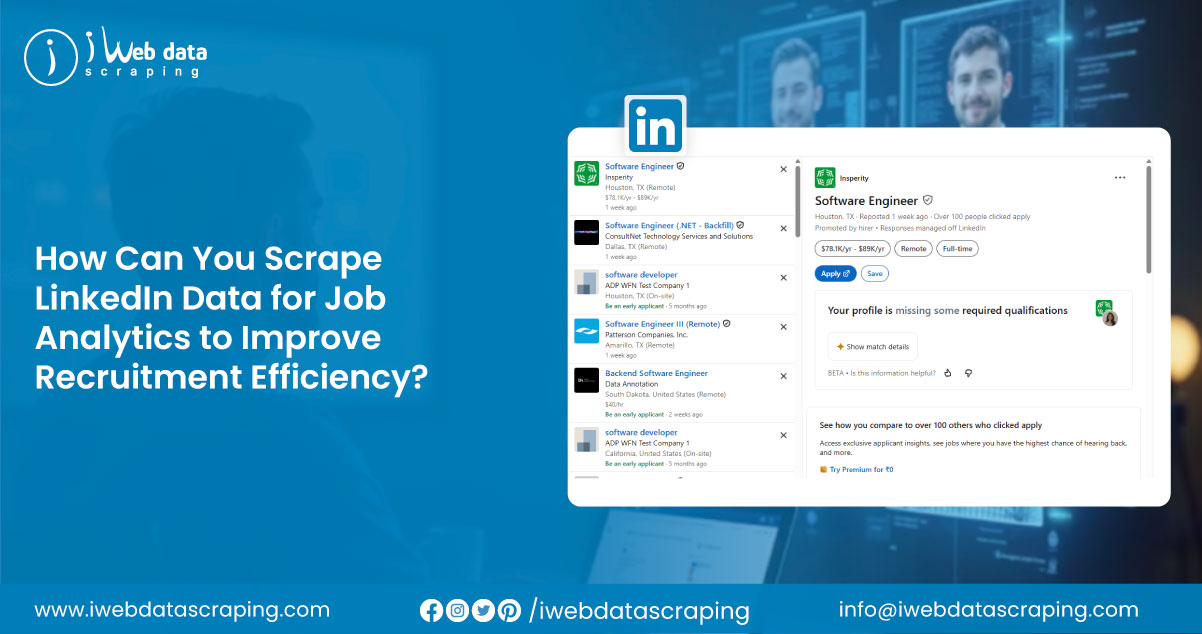
In today’s competitive recruitment landscape, businesses must make data-driven decisions to hire the right talent efficiently. Leveraging insights from professional networks like LinkedIn can significantly enhance recruitment strategies. By using tools to Scrape LinkedIn data for Job analytics, organizations can gain a comprehensive understanding of the job market, candidate behavior, and industry trends. Similarly, Scrape HR data analytics to analyze hiring patterns, optimize recruitment processes, and identify talent gaps. Additionally, Web Scraping talent acquisition insights provides actionable intelligence that goes beyond traditional methods, enabling businesses to make informed recruitment decisions.
LinkedIn, being the largest professional networking platform, offers a rich dataset encompassing job postings, company profiles, candidate skills, and professional experience. By extracting and analyzing this data, organizations can identify talent trends, understand in-demand skills, benchmark salaries, and streamline their hiring processes.
Key Data Available Through LinkedIn Scraping
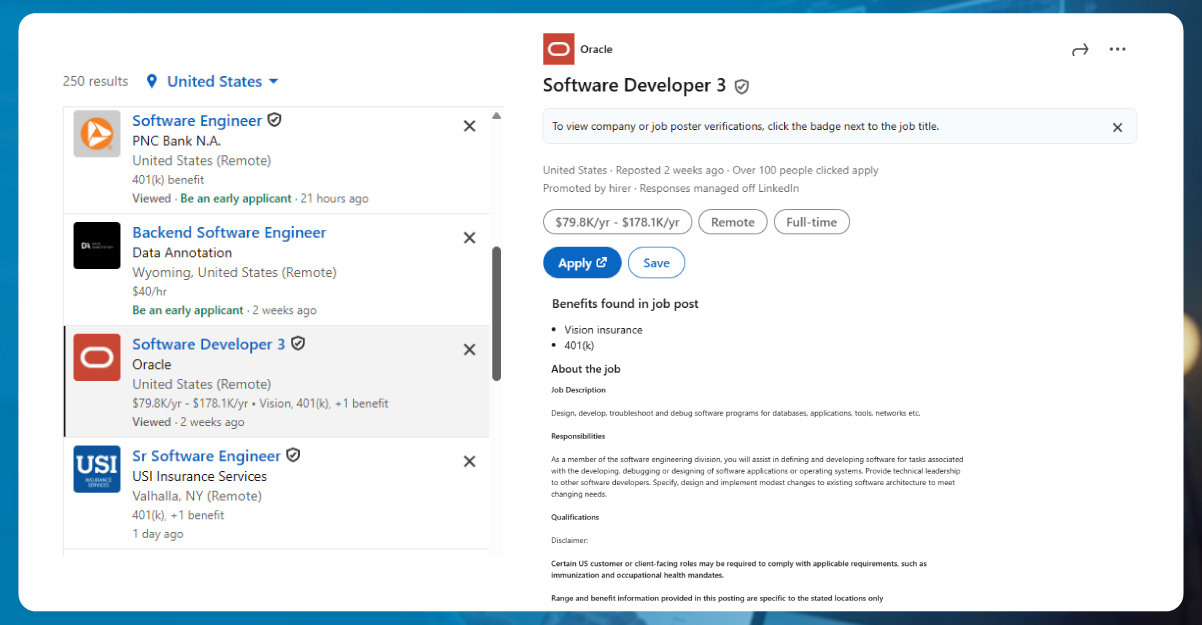
When you Extract LinkedIn job market data, you gain access to multiple layers of information valuable for recruitment analytics. Some of the primary datasets include:
- Job Postings Data – Includes job title, location, industry, seniority level, skills required, job type (full-time, part-time, contract), company size, and posting date.
- Company Profiles – Company size, industry, growth rate, location, employee count, and hiring trends.
- Candidate Profiles – Work experience, educational background, skill sets, certifications, endorsements, and career progression.
- Job Market Trends – In-demand roles, skills, job market saturation, salary ranges, and geographic distribution of opportunities.
- Engagement Metrics – Number of applicants per job, profile views, post interactions, and industry engagement trends.
These datasets can be effectively visualized to identify recruitment trends. For instance, plotting the number of job postings against skill requirements over time can reveal which skills are gaining prominence in specific industries. Similarly, geographic distribution of candidates can help in identifying hiring hotspots.
How Candidate Sourcing Analytics Data Collection Enhances Recruitment?
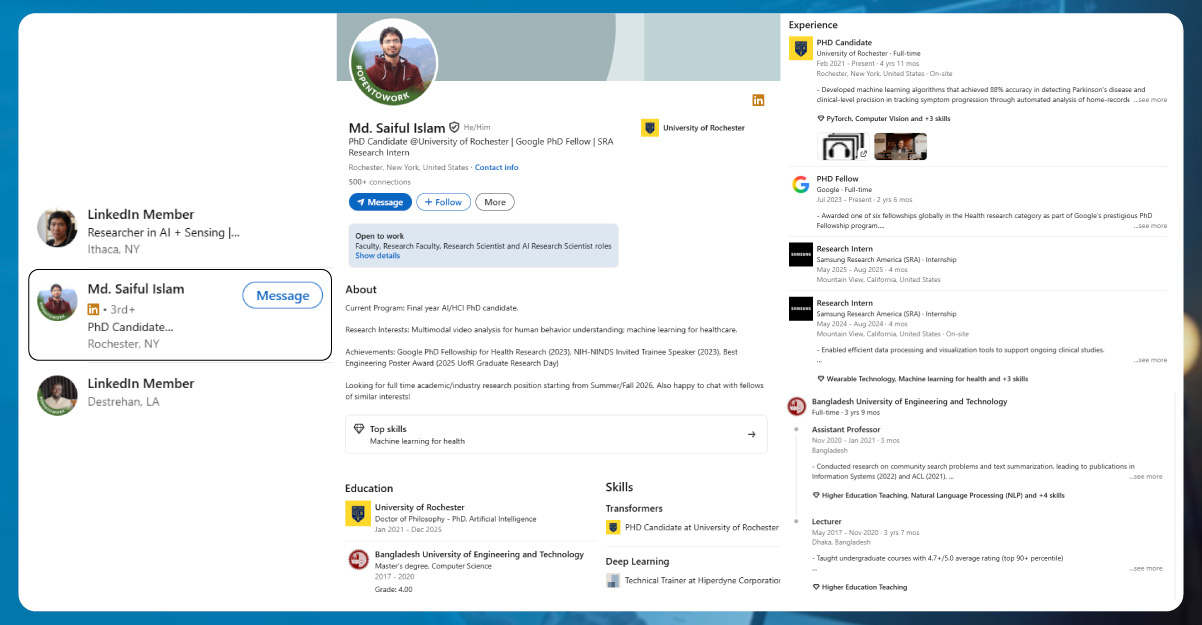
Candidate sourcing analytics data Collection is a critical part of modern recruitment strategy. By collecting candidate insights from LinkedIn, recruiters can:
- Identify top talent – By analyzing profiles with specific skills or experience, recruiters can pinpoint high-potential candidates.
- Understand skill gaps – Analytics reveal which skills are scarce in the market, guiding internal training or targeted hiring.
- Optimize sourcing channels – Understanding where candidates are most active allows recruiters to allocate resources more efficiently.
- Reduce hiring time – Access to structured candidate data enables faster screening and shortlisting.
- Benchmark competitors – Companies can analyze competitor hiring trends to stay ahead in talent acquisition.
For example, using candidate experience data, recruiters can create graphs showing the average experience required for a role in a specific industry. This helps adjust job requirements and attract qualified candidates faster.
The Role of AI Recruitment Analytics Extractor
The integration of AI in recruitment analytics has revolutionized the hiring process. An AI recruitment analytics Extractor can process large volumes of LinkedIn data to provide predictive insights, such as:
- Predicting candidate suitability based on skills, experience, and career progression.
- Forecasting hiring trends for different roles or industries.
- Recommending ideal job descriptions to attract the right talent.
- Identifying candidates likely to switch jobs in the near future.
Graphs generated from AI analytics can highlight trends like skill demand growth, average time-to-hire per industry, or correlation between candidate experience and compensation. Such insights empower HR teams to make strategic, evidence-based decisions.
Automating LinkedIn Job Scraping
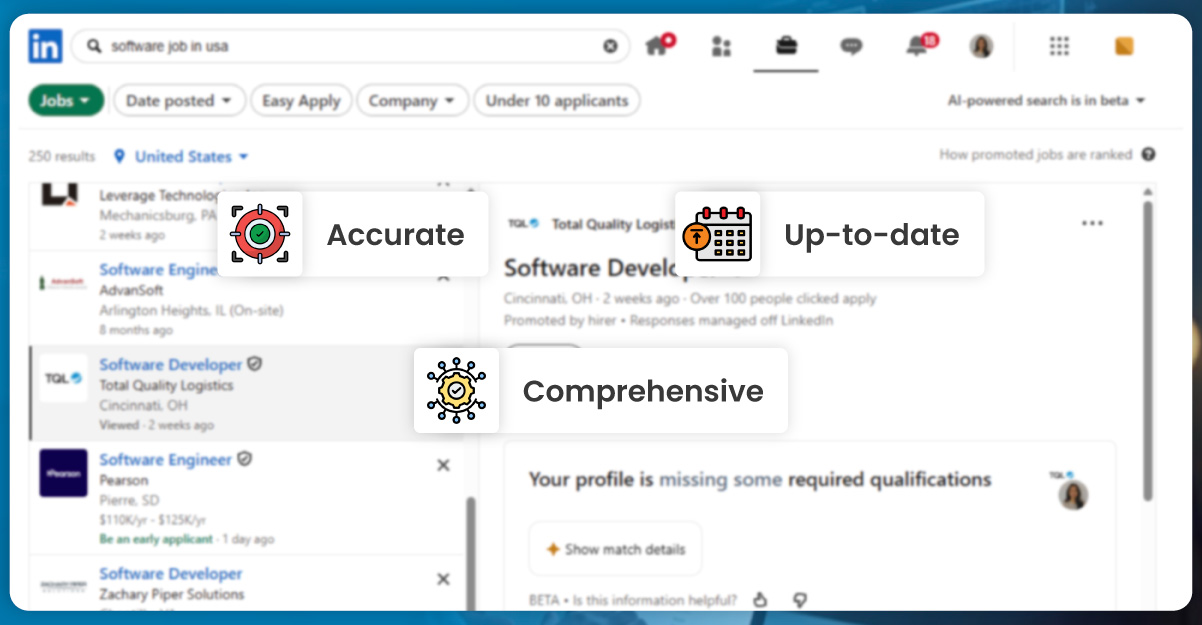
Manual data collection is time-consuming and prone to errors. Using a LinkedIn job scraping automation tool simplifies this process, enabling real-time extraction of job listings, candidate profiles, and industry trends. Automation ensures that data is:
- Accurate – Minimizes human errors in data entry.
- Up-to-date – Continuously captures newly posted jobs or updated profiles.
- Comprehensive – Collects large datasets that are impractical to gather manually.
This automation allows recruiters to maintain dashboards and visual reports that track job market fluctuations, skill demands, and hiring velocity, ultimately optimizing recruitment campaigns.
Recruitment Analytics Data Extraction Service
Businesses often rely on specialized Recruitment analytics data extraction service providers to harness LinkedIn insights. These services offer:
- Customizable data extraction based on roles, skills, industries, or locations.
- Cleaned and structured datasets ready for analysis.
- Visual dashboards for trend analysis.
- Integration with internal HR software for seamless workflow.
Using extracted datasets, companies can generate graphs such as:
- Job openings by location – Helps identify hiring hotspots.
- Skill demand trends over time – Guides training and recruitment priorities.
- Average salary distribution – Aids in competitive compensation benchmarking.
- Industry-wise hiring trends – Highlights sectors with growing talent demand.
Unlock smarter hiring today by leveraging our LinkedIn data scraping services for actionable recruitment insights!
Extract LinkedIn Job Listings and Job Market Trends Data

Extract LinkedIn job listings and job market trends data to monitor hiring trends across industries and locations. By plotting job postings over time, HR teams can anticipate peak hiring periods and adjust recruitment strategies accordingly. Skill trend analysis can be visualized to identify emerging technologies or competencies in demand, helping organizations stay competitive in talent acquisition.
For example, a line graph comparing the number of AI-related job postings versus cloud computing roles over six months can reveal shifting market preferences, guiding strategic hiring decisions. Similarly, a heat map of job postings by city helps allocate recruitment resources efficiently.
Effective Visualization for Recruitment Strategy
Data visualization is a cornerstone of recruitment analytics. Graphs, charts, and dashboards derived from LinkedIn data can provide actionable insights:
- Bar charts – Show skill demand by role or location.
- Line graphs – Track job postings trends over time.
- Pie charts – Visualize industry-wise hiring proportions.
- Heat maps – Highlight geographic talent availability.
- Scatter plots – Compare candidate experience versus salary expectations.
Below is a sample dataset extracted from LinkedIn that recruiters can use to plot various graphs for recruitment analysis:
| Data Scientist |
New York, NY |
3-5 years |
Python, SQL, Machine Learning |
Full-Time |
95 |
2025-11-22 |
95,000-120,000 |
| Frontend Developer |
San Francisco |
2-4 years |
JavaScript, React, HTML/CSS |
Full-Time |
80 |
2025-11-21 |
85,000-105,000 |
| Digital Marketing Lead |
Chicago, IL |
5-7 years |
SEO, Google Ads, Analytics |
Full-Time |
55 |
2025-11-20 |
80,000-100,000 |
| UX/UI Designer |
Austin, TX |
2-4 years |
Figma, Adobe XD, Prototyping |
Contract |
35 |
2025-11-23 |
60,000-75,000 |
| Product Owner |
Boston, MA |
4-6 years |
Agile, Roadmapping, Jira |
Full-Time |
70 |
2025-11-19 |
90,000-115,000 |
| Business Analyst |
Seattle, WA |
3-5 years |
SQL, Excel, Tableau |
Full-Time |
100 |
2025-11-22 |
75,000-95,000 |
| AI/ML Engineer |
New York, NY |
4-7 years |
Python, TensorFlow, NLP |
Full-Time |
60 |
2025-11-21 |
120,000-150,000 |
| HR Coordinator |
Los Angeles |
2-4 years |
Recruitment, HRIS, Onboarding |
Full-Time |
50 |
2025-11-23 |
55,000-70 |
How iWeb Data Scraping Can Help You?
- Comprehensive Job Analytics – Access detailed job listings, candidate profiles, and skill trends to understand the market thoroughly.
- Optimized Recruitment Strategy – Use extracted data to identify talent gaps, prioritize roles, and streamline hiring processes.
- Enhanced Talent Sourcing – Quickly find qualified candidates by analyzing professional profiles and career histories across industries.
- Actionable Insights for HR – Turn raw data into visual reports and dashboards for better decision-making and strategic planning.
- Time and Cost Efficiency – Automate data collection to save resources, reduce manual effort, and accelerate the recruitment cycle.
Conclusion
In conclusion, leveraging LinkedIn data through modern scraping tools transforms recruitment from a reactive process into a strategic, data-driven operation. By choosing services that scrape linkedIn profiles and posts, businesses can gain comprehensive talent insights and optimize sourcing. These insights also help predict hiring trends effectively. Integrating Job Recruitment Data Scraping Services into your recruitment strategy ensures a competitive edge in acquiring top talent. Additionally, Scraping Linkedin Job Listings Data reduces hiring time and improves overall HR efficiency. Investing in LinkedIn data scraping for recruitment analytics is no longer optional—it’s a strategic necessity for businesses aiming to thrive in today’s competitive job market.
Experience top-notch web scraping service and mobile app scraping solutions with iWeb Data Scraping. Our skilled team excels in extracting various data sets, including retail store locations and beyond. Connect with us today to learn how our customized services can address your unique project needs, delivering the highest efficiency and dependability for all your data requirements.