
38.2K+
TOTAL DATA POINTS PROCESSED
Scrape Meituan Food Delivery Data to extract real-time restaurant menus, pricing insights, and availability analytics efficiently.
This case study is based on a real-world client scenario where a growing food-tech intelligence team actively leverages data extraction from Meituan ecosystem through method to Extract Meituan Menu & Pricing Data to improve decision-making across pricing, demand forecasting, and restaurant performance optimization.
It is designed for:
The client’s core challenge was simple: Meituan ecosystem data is available at scale, but not in an actionable form. Their goal was to convert raw, fast-changing restaurant and delivery signals into structured, decision-ready intelligence.
This case study highlights how our team successfully delivered a scalable pipeline for Scrape Meituan Food Delivery Data across multiple cities and restaurant categories. The system enabled Real time Scrape restaurant price trends from Meituan to monitor dynamic pricing changes and competitive market shifts in real environments. We implemented dashboards powered by Meituan restaurant availability analytics to track supply levels, peak demand, and operational efficiency across regions. Data ingestion pipelines were built using resilient crawlers, proxy rotation, and structured parsers ensuring high accuracy, reduced latency, and continuous synchronization of restaurant menus, pricing updates, and availability signals from the Meituan ecosystem. The extracted dataset helped analyze pricing volatility, restaurant density, and demand fluctuations, enabling better forecasting models and strategic decisions for food delivery optimization in highly competitive urban markets across major global cities. We transformed raw food delivery signals into actionable intelligence, improving operational efficiency, pricing strategy refinement, and competitive positioning for enterprises leveraging Meituan ecosystem data at scale with real time analytics support framework.
The client encountered multiple challenges while working with large-scale food delivery ecosystems and attempting to build reliable, real-time insights from highly dynamic restaurant platforms. One of the primary difficulties was frequent fluctuations in restaurant menus, pricing, and availability, which made consistent data tracking complex and required continuous updates to maintain accuracy.
Another major issue was handling large volumes of data requests across multiple regions, which often caused latency spikes and affected system performance during peak traffic periods. Structuring unorganized and inconsistent data from different sources into a unified format also proved challenging, requiring advanced normalization techniques and robust validation layers.
In addition, integrating analytics across diverse restaurant listings required careful mapping of identifiers and categories to ensure consistency in reporting and decision-making.
The deployment of Meituan Restaurant Price Monitoring helped address volatility in pricing signals and improved competitive benchmarking accuracy.
Further enhancements through Meituan Restaurant Demand Analytics enabled better forecasting of peak ordering patterns and customer behavior trends.
Finally, scalable pipelines built using Meituan Food Delivery Scraping API Services ensured continuous, automated, and reliable data extraction for enterprise-grade analytics and insights generation.
By adopting method to Scrape Meituan Food Delivery Data, the client removed manual reporting dependency and built a scalable, automated system for continuous food delivery intelligence, enabling faster insights, improved accuracy, and more efficient decision-making.
| Dimension | Manual Meituan Tracking | Client Data Scraping System |
|---|---|---|
| Data collection | Manual restaurant checks and exports | Automated continuous scraping across cities |
| Update speed | Delayed daily or weekly updates | Near real-time ingestion of menu and pricing changes |
| Menu mapping | Inconsistent categorization across restaurants | Standardized menu-item normalization across regions |
| Pricing visibility | Static snapshots prone to lag | Live tracking of dynamic price fluctuations |
| Availability tracking | Manual stock/availability checks | Automated real-time availability monitoring |
| Scalability | Limited to selected cities or outlets | Scales across thousands of restaurants and multiple regions |
The brand in focus is a fast-growing food-tech intelligence player operating within a large-scale restaurant delivery ecosystem, specializing in aggregating and analyzing restaurant-level data across multiple cities, categories, and high-demand urban markets. As its operational footprint expanded, the complexity of tracking live restaurant menus, pricing fluctuations, and availability patterns increased significantly. To manage this scale, the brand shifted toward structured food delivery intelligence built on continuous data extraction from platform ecosystems.
Operating in a highly dynamic and competitive environment, the brand faces constant challenges from rapid price changes, frequent menu updates, and shifting demand-supply patterns across restaurants. To maintain operational control, it relies on real-time visibility into restaurant performance, demand signals, and regional market behavior. This transition has enabled the team to move away from static reporting and toward a more responsive, data-driven decision-making framework that supports faster, more accurate insights across its food delivery operations.
Our team delivered a robust end-to-end solution using Food Menu Data Extraction Services to help enterprises efficiently collect, structure, and analyze large-scale restaurant and menu data from dynamic food delivery platforms. The system ensured high accuracy, real-time synchronization, and consistent formatting of pricing, availability, and menu updates across multiple regions.
We standardized and enriched datasets through Food Delivery App Menu Datasets, enabling clients to access clean restaurant-level intelligence for better forecasting, competitive benchmarking, and operational decision-making. We further optimized pipelines using Web Scraping API Services, ensuring scalable data extraction, automated updates, and reliable delivery of structured insights for analytics dashboards, helping businesses track pricing trends, menu changes, and demand fluctuations in real time with high operational efficiency.
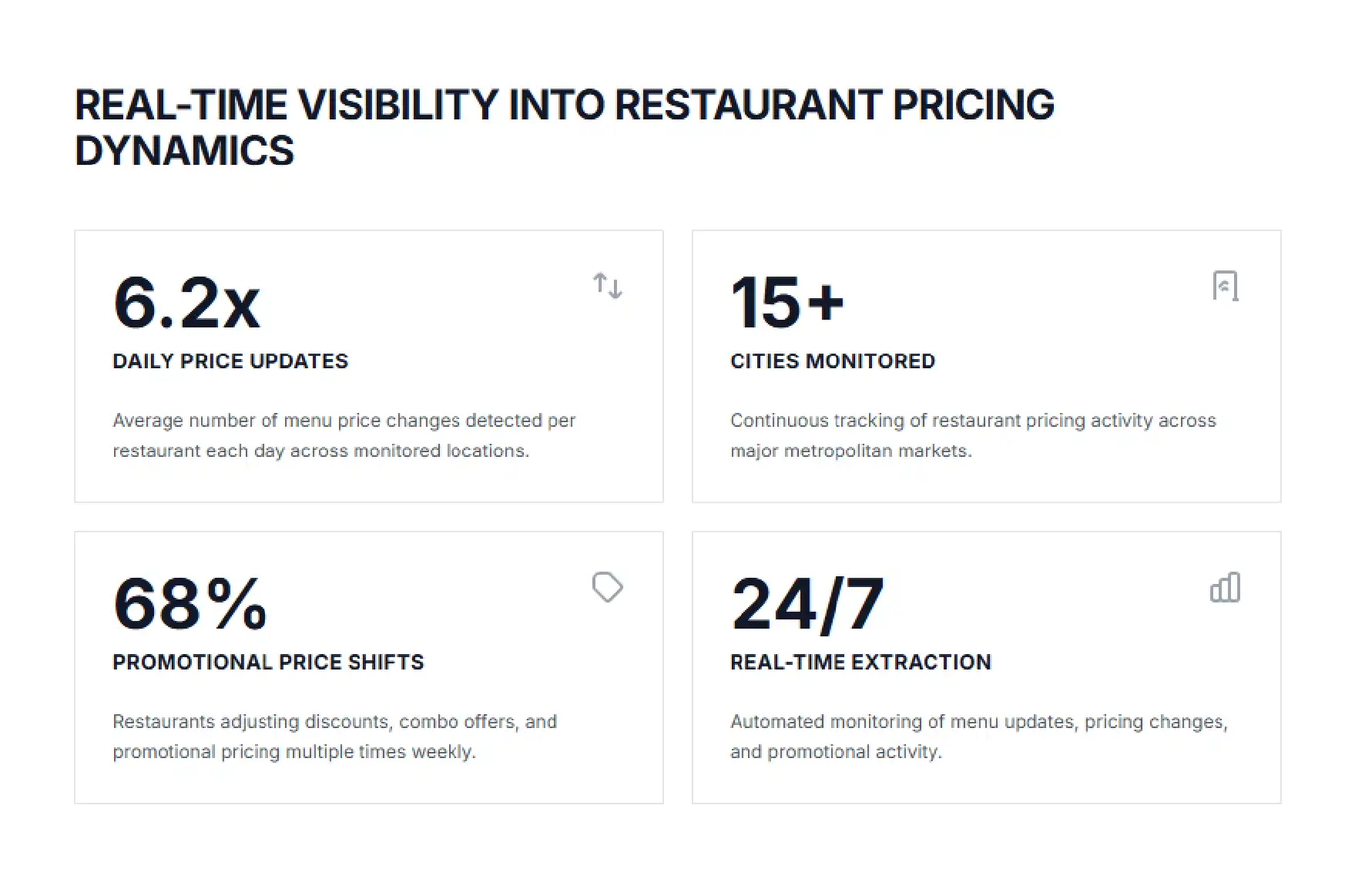
The implementation of continuous data extraction from Meituan enabled the client to gain real-time visibility into restaurant pricing behavior across multiple cities. Instead of relying on static snapshots, the system captured frequent price changes, promotional adjustments, and menu updates as they occurred. This allowed the business to understand how pricing varied by region, category, and demand intensity. As a result, pricing strategies became more responsive, reducing lag between market changes and internal decision-making.
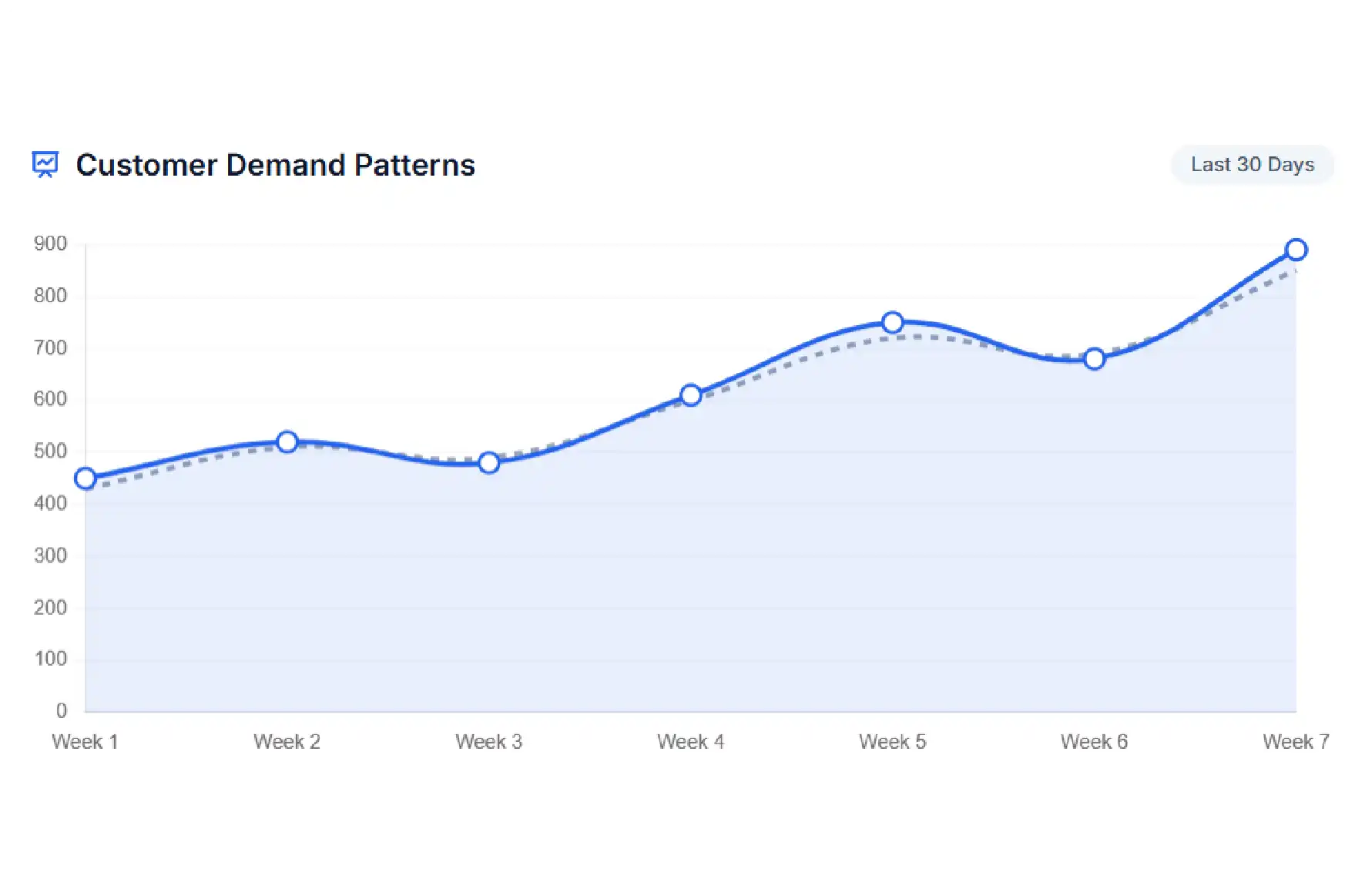
Continuous monitoring of restaurant-level activity revealed strong behavioral patterns in customer demand, including peak ordering windows, category-specific surges, and seasonal fluctuations. By analyzing these signals, the client was able to build more accurate demand forecasting models that accounted for real-time market shifts. This reduced forecasting errors and improved resource planning across high-demand cities, particularly during weekends, festivals, and promotional campaigns.
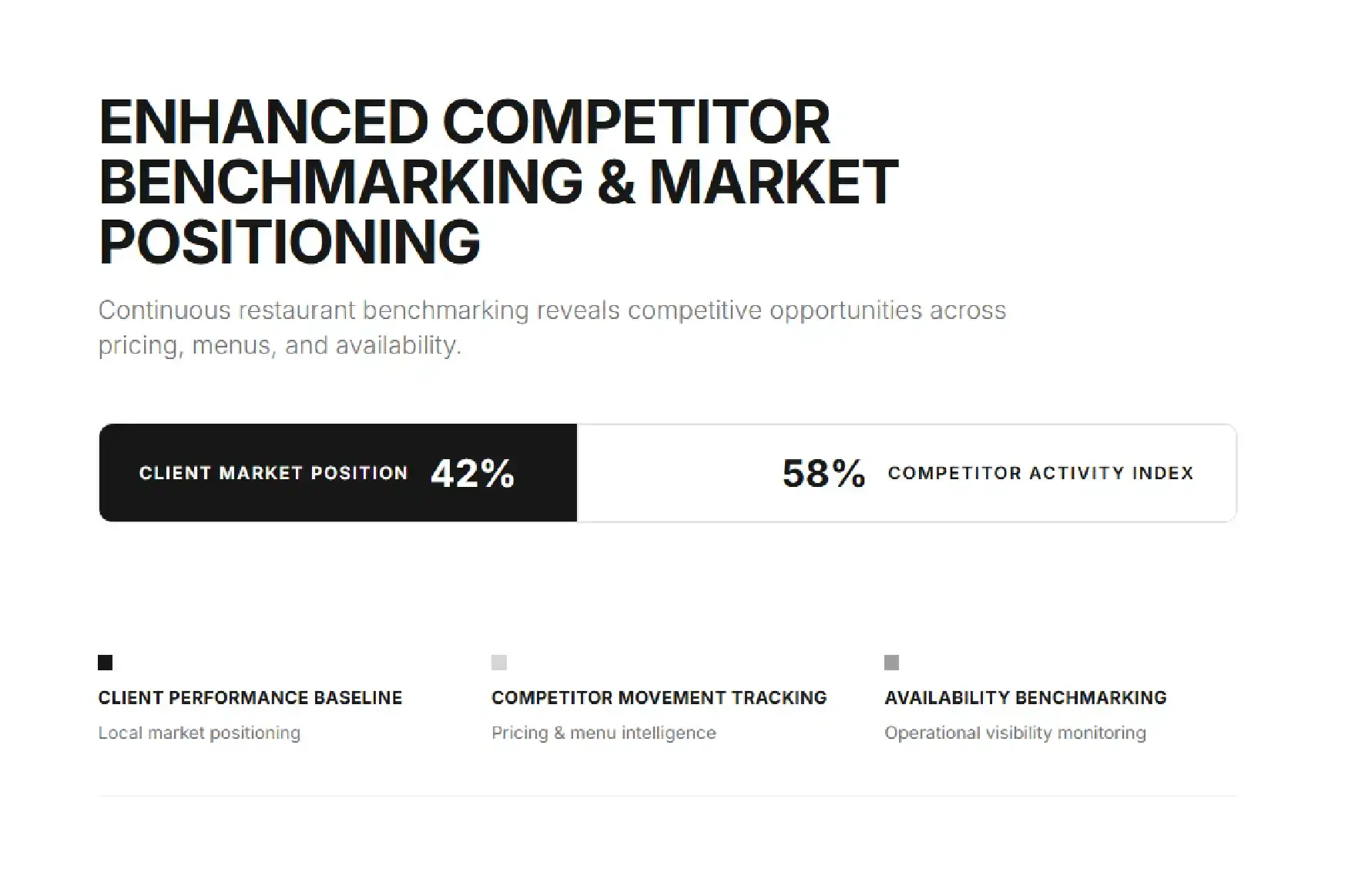
The structured data pipeline made it possible to track competitor restaurants at scale, including pricing movements, menu updates, and availability changes. This enabled continuous benchmarking against competing listings within the same locality and category. The client could quickly identify underpriced or overperforming competitors and adjust their own positioning accordingly. This led to stronger competitive alignment and improved visibility in highly saturated food delivery markets.
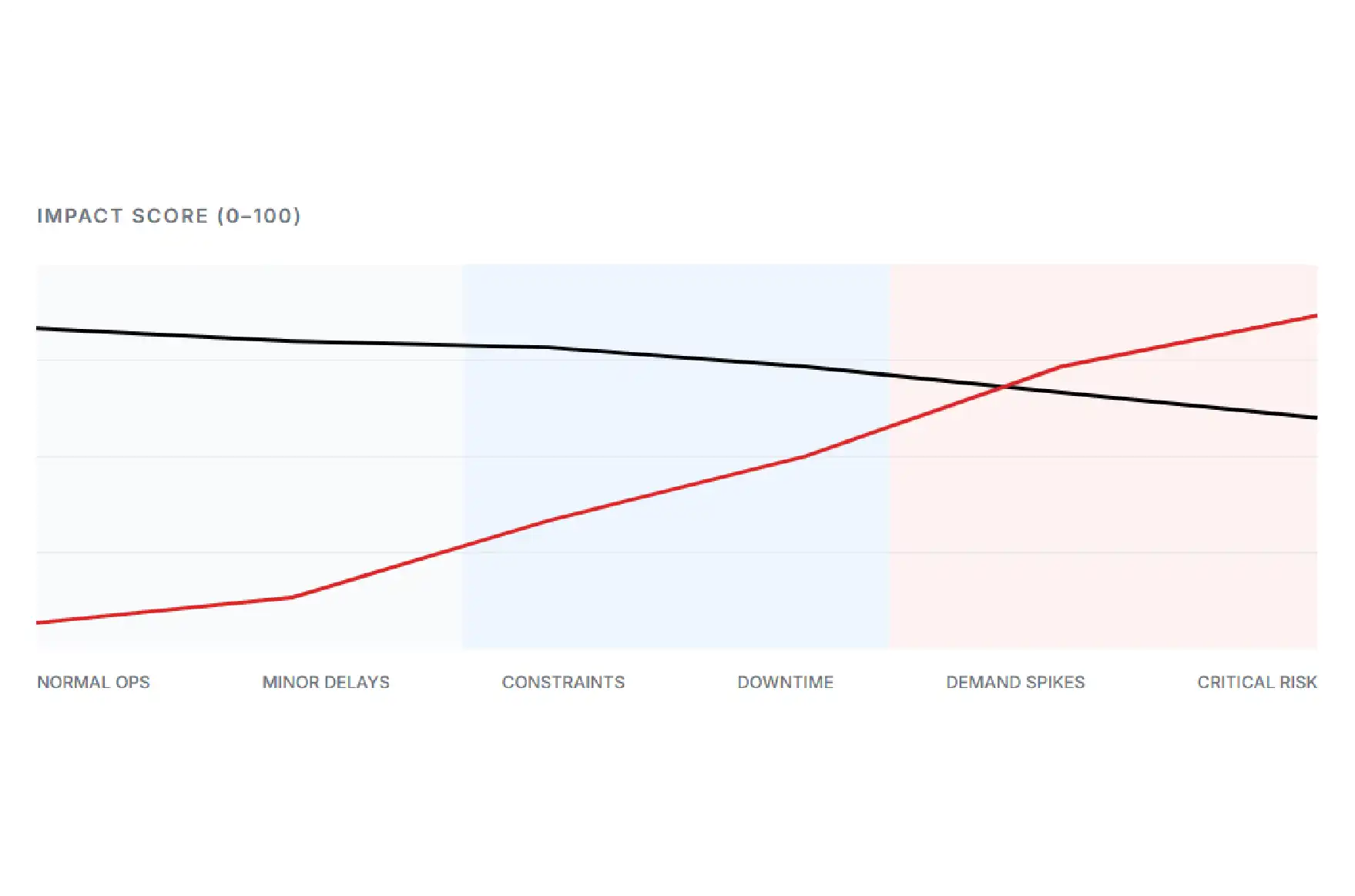
The system introduced early detection of market disruptions such as sudden supply shortages, restaurant downtime, and abrupt demand spikes. These signals allowed the client to anticipate operational risks before they impacted performance metrics. With earlier awareness, the business could take corrective actions such as redistributing supply focus or adjusting promotional strategies. This significantly improved operational stability and reduced volatility across key urban markets.
The table shows structured restaurant-level data across multiple Indian cities, including item names, categories, prices, availability status, and last updated timestamps. It highlights how menu and pricing information varies in real time across locations, enabling tracking of demand, stock levels, and regional food trends for better market analysis and decision-making.
| Restaurant Name | Item | Category | Price | Availability | City | Last Updated |
|---|---|---|---|---|---|---|
| Spice Garden | Butter Chicken | Main Course | 320 | In Stock | Delhi | 2026-05-31 18:20 |
| Urban Tandoor | Paneer Roll | Snacks | 180 | In Stock | Mumbai | 2026-05-31 18:22 |
| Seoul Bites | Kimchi Rice Bowl | Korean | 450 | Limited | Bangalore | 2026-05-31 18:25 |
| Ocean Delights | Grilled Fish | Seafood | 520 | Out of Stock | Chennai | 2026-05-31 18:27 |
| Green Leaf Cafe | Quinoa Salad | Vegan | 250 | In Stock | Pune | 2026-05-31 18:30 |
After implementing structured food delivery data intelligence from Meituan ecosystem, the client achieved measurable operational improvements across pricing strategy, demand forecasting, and restaurant performance monitoring, driven by continuous visibility into real-time marketplace behavior.
Our solution delivered significant improvements across key business dimensions by enabling real-time visibility into marketplace behavior and competitive dynamics. It helped organizations gain improved market visibility by offering structured insights into pricing trends, availability patterns, and demand fluctuations, allowing faster and more informed decision-making across regions. With continuously updated datasets, businesses were able to accelerate decision-making processes, reducing reliance on manual reporting and responding more quickly to market shifts, promotional opportunities, and operational challenges.
The system also enhanced data accuracy by automating collection and validation processes, ensuring clean, consistent, and reliable datasets that strengthened forecasting and strategic planning. Built on a scalable data infrastructure, the solution efficiently handled large volumes of information across multiple cities and categories while maintaining performance and stability. Overall, it provided a strong competitive intelligence advantage by enabling continuous tracking of competitor behavior, pricing strategies, and product updates, ultimately supporting better positioning, improved customer targeting, and long-term business growth.
“We partnered with the team to improve our food delivery analytics and were highly impressed with the results. Their structured approach to data extraction and real-time processing significantly enhanced our ability to track pricing, availability, and customer demand across multiple regions. The insights we received were accurate, timely, and easy to integrate into our internal systems. This helped us optimize our pricing strategy and improve operational efficiency. The team demonstrated strong technical expertise, clear communication, and consistent delivery throughout the project.”
— Head of Data Analytics
The final outcome of the project demonstrated a significant transformation in how the client leveraged real-time food delivery data for strategic decision-making. By implementing advanced automation and structured pipelines, the client was able to achieve continuous access to accurate restaurant menus, pricing updates, and availability insights across multiple regions. This resulted in improved forecasting accuracy, faster response to market fluctuations, and stronger competitive positioning. Operational efficiency increased as manual data collection processes were fully eliminated, reducing errors and saving time. The integrated dashboards provided clear visibility into key performance indicators, enabling smarter business planning. Overall, the deployment of Web Scraping Services enabled the client to convert complex, unstructured data into actionable intelligence, supporting scalable growth, better customer targeting, and enhanced revenue opportunities in a highly competitive food delivery ecosystem.
Stop guessing based on outdated dashboards. Share your market focus, and we’ll convert live platform signals into structured insights that help you optimize pricing, track competition, and make faster, data-backed decisions with clarity and control.
Start a projectWe can extract structured data such as restaurant details, menu items, pricing, availability status, ratings, and customer demand trends to support analytics and business intelligence use cases.
Data can be updated in real time or at scheduled intervals depending on business needs. This ensures clients always receive fresh and accurate insights for decision-making.
Yes, the system is designed to process high-volume data efficiently across multiple regions and platforms while maintaining speed, accuracy, and consistent performance without downtime.
Absolutely. All collected data is cleaned, normalized, and formatted into structured datasets, making it ready for direct use in dashboards, analytics tools, and reporting systems.
It enables better pricing strategies, competitor tracking, demand forecasting, and operational efficiency, helping businesses make faster, data-driven decisions and stay competitive in dynamic markets.
We start by signing a Non-Disclosure Agreement (NDA) to protect your ideas.
Our team will analyze your needs to understand what you want.
You'll get a clear and detailed project outline showing how we'll work together.
We'll take care of the project, allowing you to focus on growing your business.