
52.4M+
TOTAL GROCERY PRICE RECORDS PROCESSED
Scrape No Frills grocery prices data to monitor market trends, compare competitors, optimize pricing, and improve decisions.
This case study is based on a real-world enterprise scenario where a retail intelligence and pricing analytics organization leveraged advanced data extraction technologies to monitor grocery pricing movements, promotional activities, and inventory fluctuations across the No Frills supermarket ecosystem. Through automated systems designed to Scrape No Frills grocery prices Data, the organization transformed large-scale retail information into actionable competitive intelligence.
It is designed for:
The client’s primary challenge was straightforward: grocery pricing and promotional data changed frequently across stores and regions, making manual monitoring ineffective. Their objective was to create a centralized intelligence framework capable of continuously collecting pricing signals, promotional activities, and product availability information for faster and more accurate business decisions.
A recent retail intelligence initiative demonstrated how large-scale grocery monitoring systems can deliver actionable insights from dynamic supermarket pricing environments. Organizations implemented advanced collection pipelines supported by Real-time No Frills price monitoring capabilities to capture ongoing product-level price changes across multiple locations.
Analysts utilized No Frills supermarket price tracking methodologies to evaluate pricing consistency, regional variations, and category-level performance metrics. Data engineering teams processed millions of pricing records daily while maintaining structured datasets for reporting and forecasting purposes.
The project also enabled comprehensive No Frills product pricing intelligence by identifying pricing trends, promotional opportunities, and competitor positioning across grocery categories. Machine learning models analyzed historical pricing behavior, helping stakeholders forecast pricing shifts and optimize merchandising strategies.
Interactive dashboards transformed raw retail data into clear business insights, enabling category managers, retailers, and suppliers to make informed decisions quickly. The initiative ultimately demonstrated how automated grocery intelligence systems can transform fragmented retail information into scalable, decision-ready market intelligence.
The client faced growing difficulties in monitoring rapidly changing grocery prices, promotions, and inventory availability across numerous No Frills locations. Traditional manual tracking methods could not keep pace with frequent pricing updates, resulting in delayed market visibility and slower strategic decision-making.
One major challenge involved managing No Frills promotion and discount tracking, as promotional campaigns varied significantly by location, duration, and product category.
The organization also lacked access to a centralized No Frills Price Tracking API, limiting its ability to automate data collection and integrate pricing intelligence into existing analytics systems.
Another obstacle was the absence of scalable No Frills Grocery and Supermarket Data Extraction Services, making it difficult to gather structured data consistently from thousands of products across multiple store locations.
Price inconsistencies across regions further complicated competitive analysis, while inventory fluctuations created challenges for understanding actual product availability.
Manual monitoring workflows required substantial labor, introduced human error, and reduced reporting efficiency. To remain competitive, the client needed an automated intelligence framework capable of continuously collecting, validating, and structuring grocery market data at scale.
By implementing an automated No Frills grocery intelligence framework, the client replaced fragmented manual monitoring with a scalable data collection ecosystem capable of continuously tracking pricing movements, product availability, and promotional activities.
| Dimension | Manual Grocery Tracking | Client Data Scraping System |
|---|---|---|
| Data Collection | Manual store visits and website reviews | Automated multi-location data collection |
| Pricing Updates | Periodic checks | Continuous monitoring |
| Data Structuring | Spreadsheets and manual records | Structured retail datasets |
| Promotion Tracking | Manual identification | Automated promotion detection |
| Inventory Visibility | Limited product sampling | Comprehensive product monitoring |
| Market Coverage | Small store sample sizes | Large-scale regional coverage |
The brand in focus is a leading retail intelligence organization specializing in grocery pricing analytics, competitive benchmarking, and market intelligence solutions. The company supports retailers, suppliers, manufacturers, and e-commerce businesses seeking deeper visibility into supermarket pricing behavior and consumer purchasing trends.
As grocery competition intensified, the organization experienced challenges managing increasing volumes of pricing information generated across hundreds of locations and thousands of products. Frequent price updates, changing promotional campaigns, and inventory variability created significant data complexity.
To overcome these challenges, the organization implemented a scalable pricing intelligence framework powered by automated grocery data extraction technologies.
Operating in a highly competitive retail environment, the business depends on continuous visibility into pricing movements, discount strategies, category performance, and inventory conditions. This transition enabled the organization to move from reactive reporting toward proactive market intelligence generation, significantly improving pricing visibility and strategic responsiveness.
We delivered an end-to-end retail analytics solution that transformed raw supermarket information into structured business intelligence through automated collection pipelines, advanced validation frameworks, and cloud-based processing infrastructure.
The platform continuously gathered product pricing, promotional offers, category information, and stock availability data from multiple No Frills locations. Data cleansing procedures removed inconsistencies and duplicate records while enriching datasets with location, category, and pricing metadata.
The solution incorporated Grocery and Supermarket Store Datasets to provide comprehensive visibility into product-level performance, regional pricing patterns, and promotional effectiveness.
The platform also supported cross-store benchmarking, category-level trend analysis, and automated alert generation whenever significant pricing changes occurred. Advanced analytical models identified pricing anomalies, forecasted market movements, and highlighted opportunities for competitive advantage.
The final solution delivered scalable grocery intelligence, improved reporting accuracy, and significantly reduced manual monitoring requirements.
The implementation of automated data extraction enabled continuous monitoring of pricing changes across multiple No Frills locations. Instead of relying on periodic manual reviews, the system identified pricing updates immediately as they occurred.
This enhanced visibility allowed stakeholders to react faster to market changes, competitor movements, and emerging pricing opportunities. As a result, pricing strategies became more responsive and aligned with real-time market conditions.
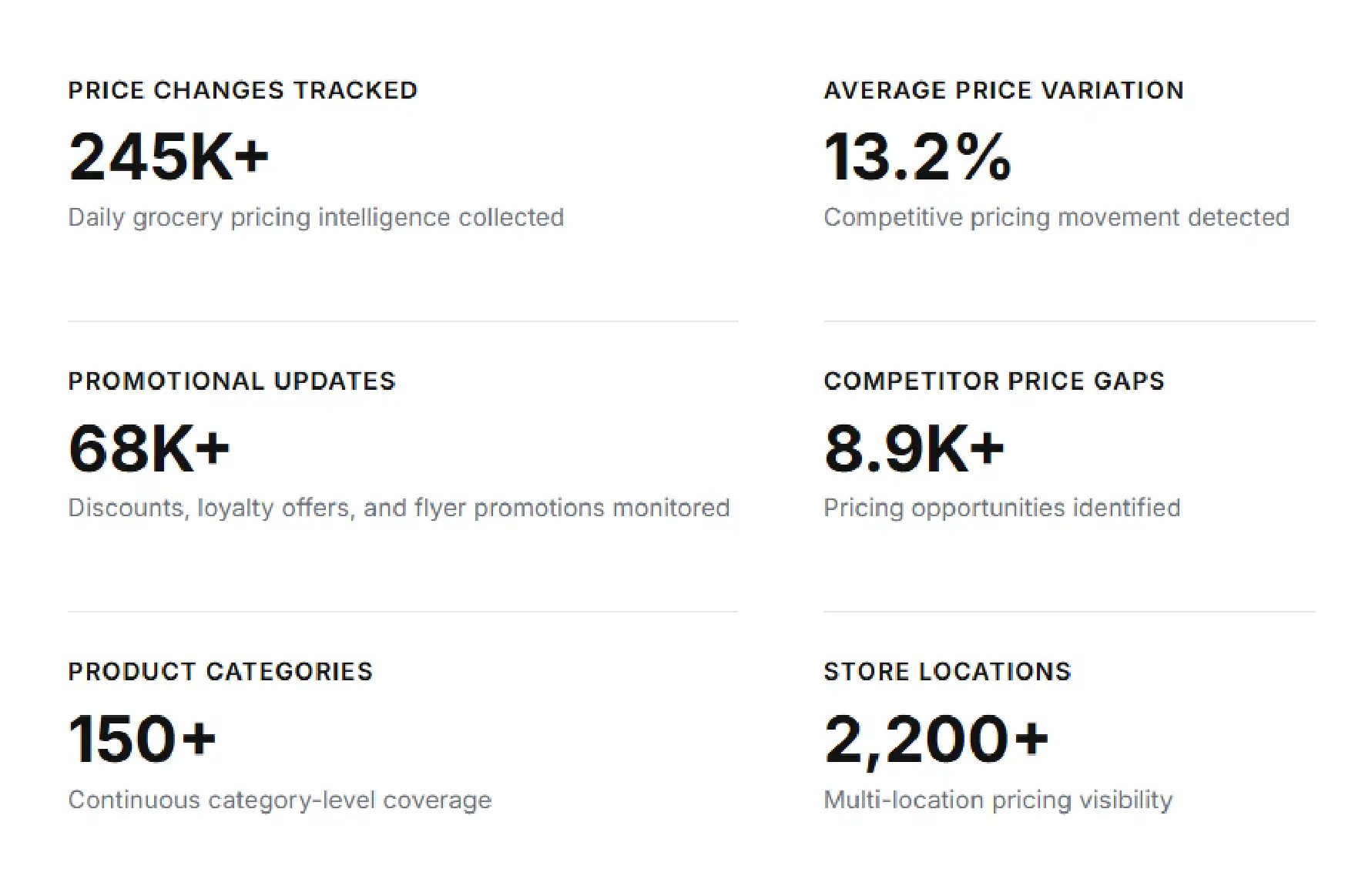
The intelligence framework enabled rapid identification of new promotions, discounts, and limited-time offers. By continuously monitoring product listings and pricing behavior, the system detected promotional launches before traditional reporting methods could identify them.
This capability helped retailers and suppliers improve campaign planning, competitive benchmarking, and promotional effectiveness measurement.
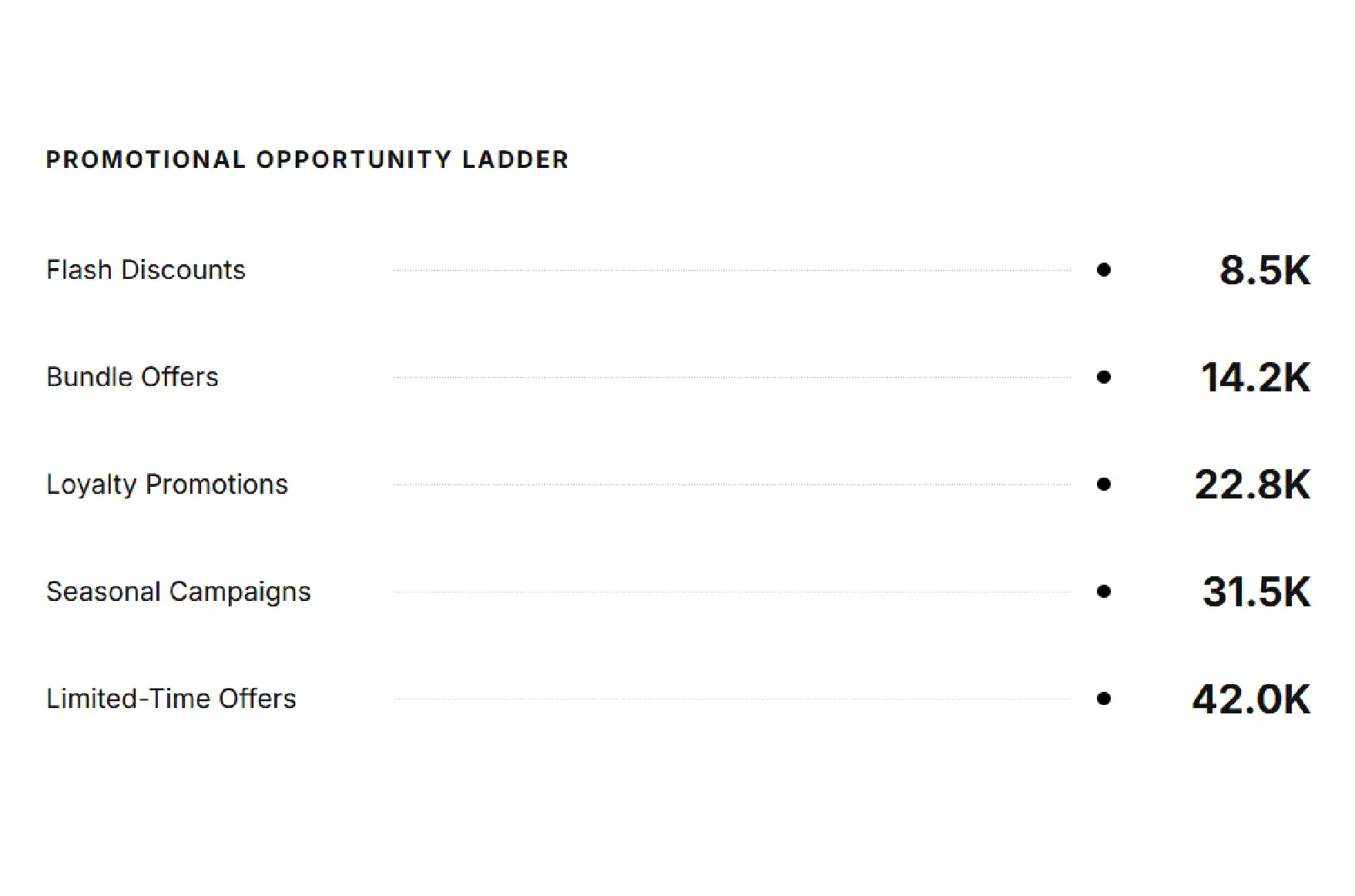
By converting unstructured retail information into structured datasets, the platform enabled consistent analysis of product pricing trends, category performance, and promotional impact.
| Metric | Insight Captured | Business Impact |
|---|---|---|
| Product Price | Current and historical pricing | Competitive benchmarking |
| Promotion Status | Active discounts and offers | Campaign effectiveness measurement |
| Category Trends | Category-level price movements | Strategic planning support |
| Inventory Status | Product availability signals | Supply chain visibility |
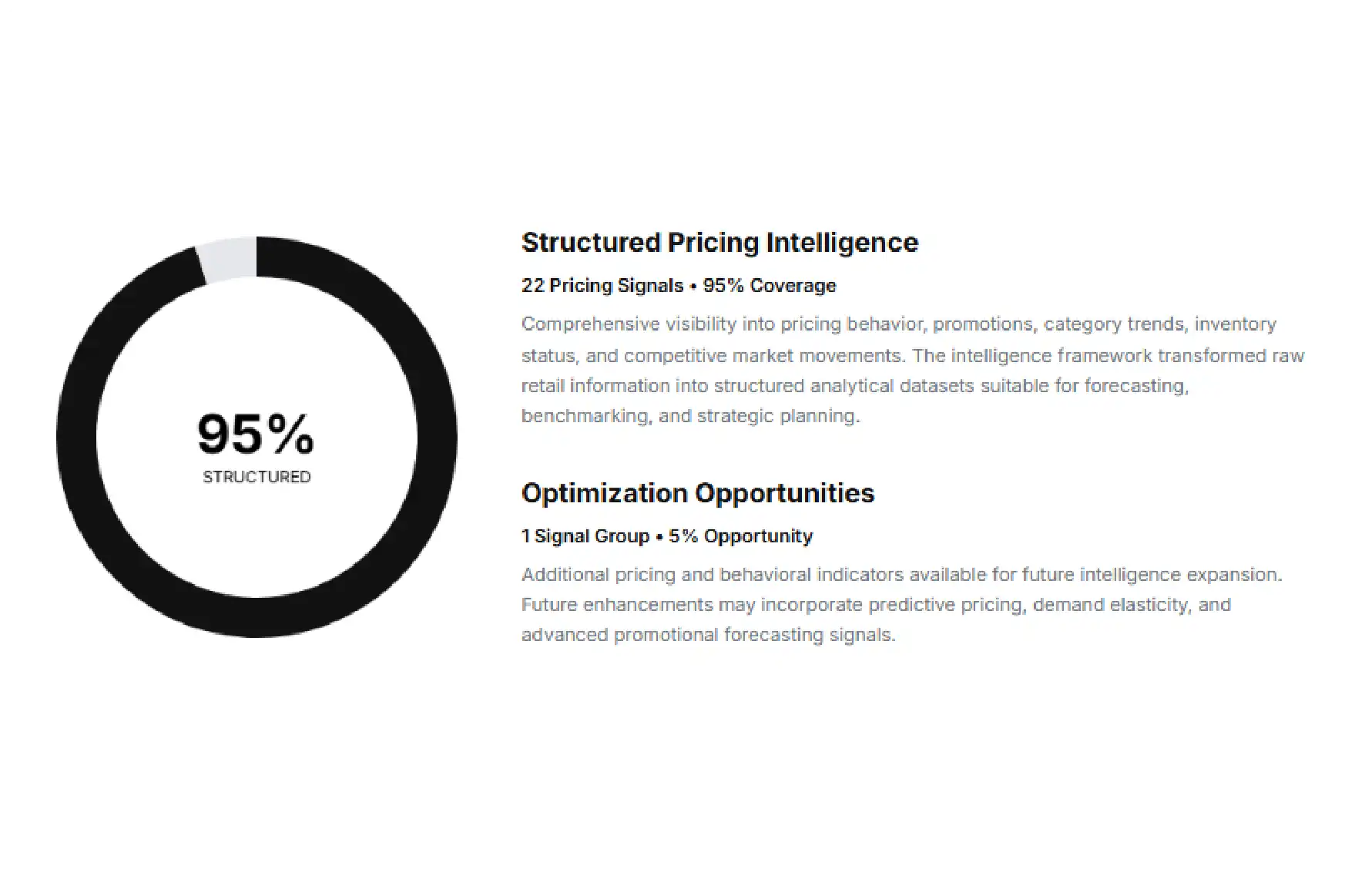
The automated platform enabled simultaneous monitoring across hundreds of No Frills store locations. Unlike manual approaches that provided limited visibility, the system delivered consistent data collection, validation, and reporting across the entire retail ecosystem.
This scalability significantly improved competitive awareness, market responsiveness, and operational efficiency.
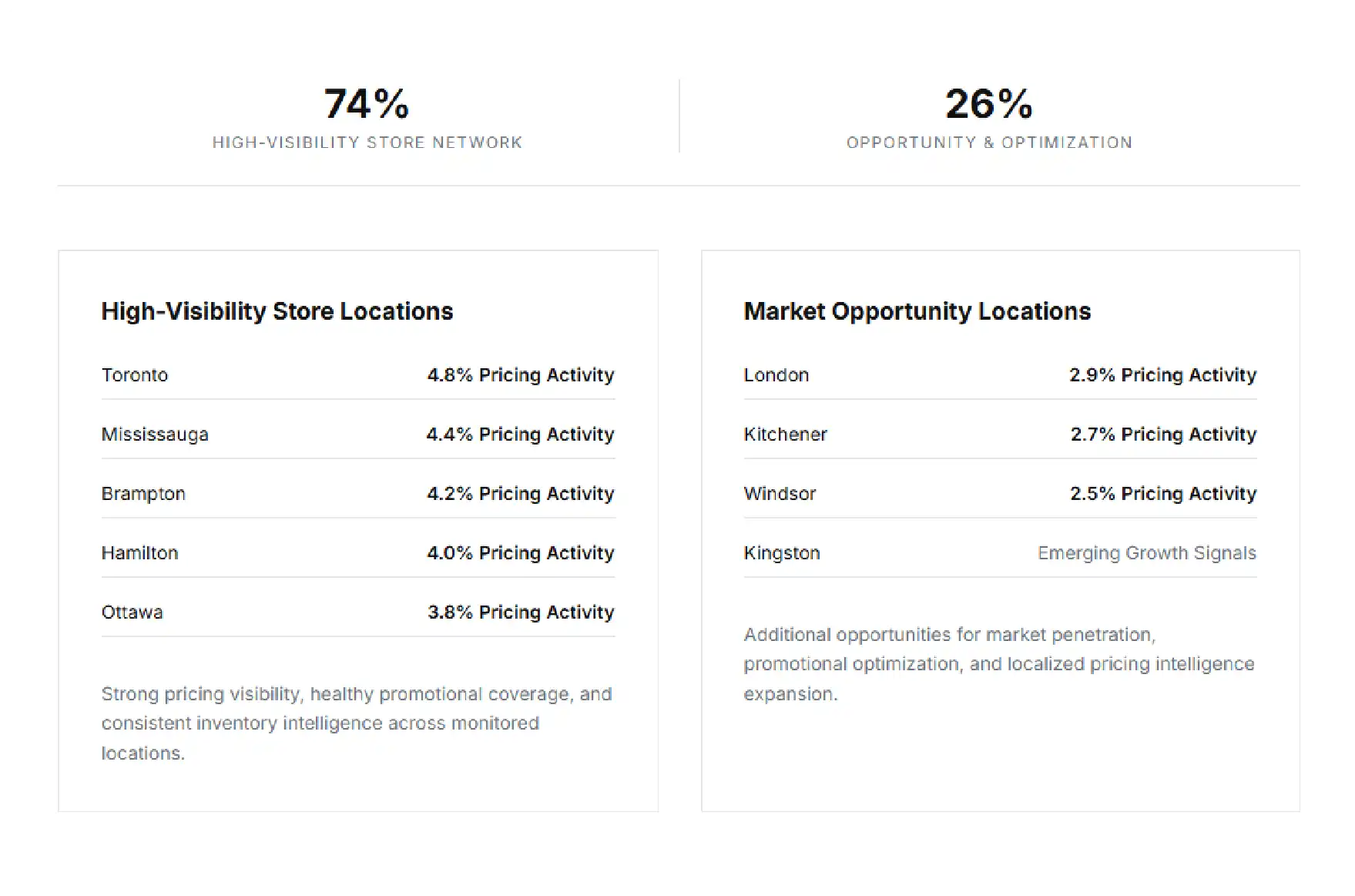
The dataset snapshot highlights pricing and promotional activity across selected grocery products. It demonstrates how product categories experience different pricing movements and promotional patterns.
| Product Name | Category | Price | Promotion Status | Store Location | Inventory Status |
|---|---|---|---|---|---|
| Milk 2L | Dairy | $4.49 | Active | Toronto | In Stock |
| Bread Loaf | Bakery | $2.99 | None | Ottawa | In Stock |
| Eggs 12 Pack | Dairy | $4.79 | Active | Mississauga | Low Stock |
| Apples 3lb | Produce | $5.49 | None | Hamilton | In Stock |
Following implementation of the No Frills pricing intelligence platform, the client achieved substantial improvements in market visibility, pricing responsiveness, and operational efficiency.
Our solutions provide comprehensive retail intelligence capabilities designed to help organizations monitor dynamic grocery markets efficiently. We consolidate information from multiple sources into structured datasets, eliminating fragmentation and improving analytical consistency.
The platform supports continuous market monitoring, enabling businesses to identify pricing shifts, promotional activities, and product availability changes as they occur. Automated cleansing procedures improve data quality while reducing operational overhead.
Our scalable architecture ensures consistent performance even when processing millions of retail records across hundreds of locations. By transforming raw market information into actionable intelligence, organizations gain the visibility required for faster and more confident decision-making.
We are extremely satisfied with the retail intelligence solution delivered by the team. The platform significantly improved our ability to monitor grocery pricing, promotional activities, and inventory conditions across multiple markets. The automation capabilities reduced manual effort while providing faster and more reliable insights. The reporting environment has strengthened our pricing strategy and improved competitive visibility. We now operate with greater confidence, enhanced efficiency, and a much stronger understanding of evolving retail market dynamics.
— Director of Retail Intelligence
The final outcome of the project was a fully automated grocery intelligence ecosystem capable of transforming large-scale supermarket information into actionable business insights. The client gained real-time visibility into pricing movements, promotional activities, inventory fluctuations, and category-level performance.
Implementation of Web Scraping API Services enabled continuous and accurate collection of retail data across multiple No Frills locations while maintaining high processing efficiency and reliability.
The deployment of Grocery & Supermarket Data Extraction Services provided structured datasets that supported advanced analytics, competitive benchmarking, forecasting models, and strategic planning initiatives.
Additionally, scalable Web Scraping Services ensured the infrastructure could process growing data volumes while maintaining performance stability and reporting consistency.
Overall, the project delivered measurable improvements in operational efficiency, market intelligence capabilities, competitive awareness, and long-term data-driven decision-making.
Want smarter grocery pricing insights? Leverage accurate No Frills price data to track competitors, identify market trends, optimize promotions, and make faster business decisions that drive growth and profitability.
Start a projectOur systems can collect pricing information, promotions, inventory status, category data, product details, and availability signals from supermarket ecosystems.
The platform supports continuous monitoring and can capture updates throughout the day, ensuring timely visibility into market changes.
Yes. The architecture is designed for large-scale monitoring across hundreds or thousands of store locations.
Advanced validation, cleansing, normalization, and deduplication processes ensure accuracy and consistency across all collected datasets.
Retailers, suppliers, manufacturers, category managers, pricing teams, and market intelligence organizations can all benefit from structured grocery market data and analytics.
We start by signing a Non-Disclosure Agreement (NDA) to protect your ideas.
Our team will analyze your needs to understand what you want.
You'll get a clear and detailed project outline showing how we'll work together.
We'll take care of the project, allowing you to focus on growing your business.