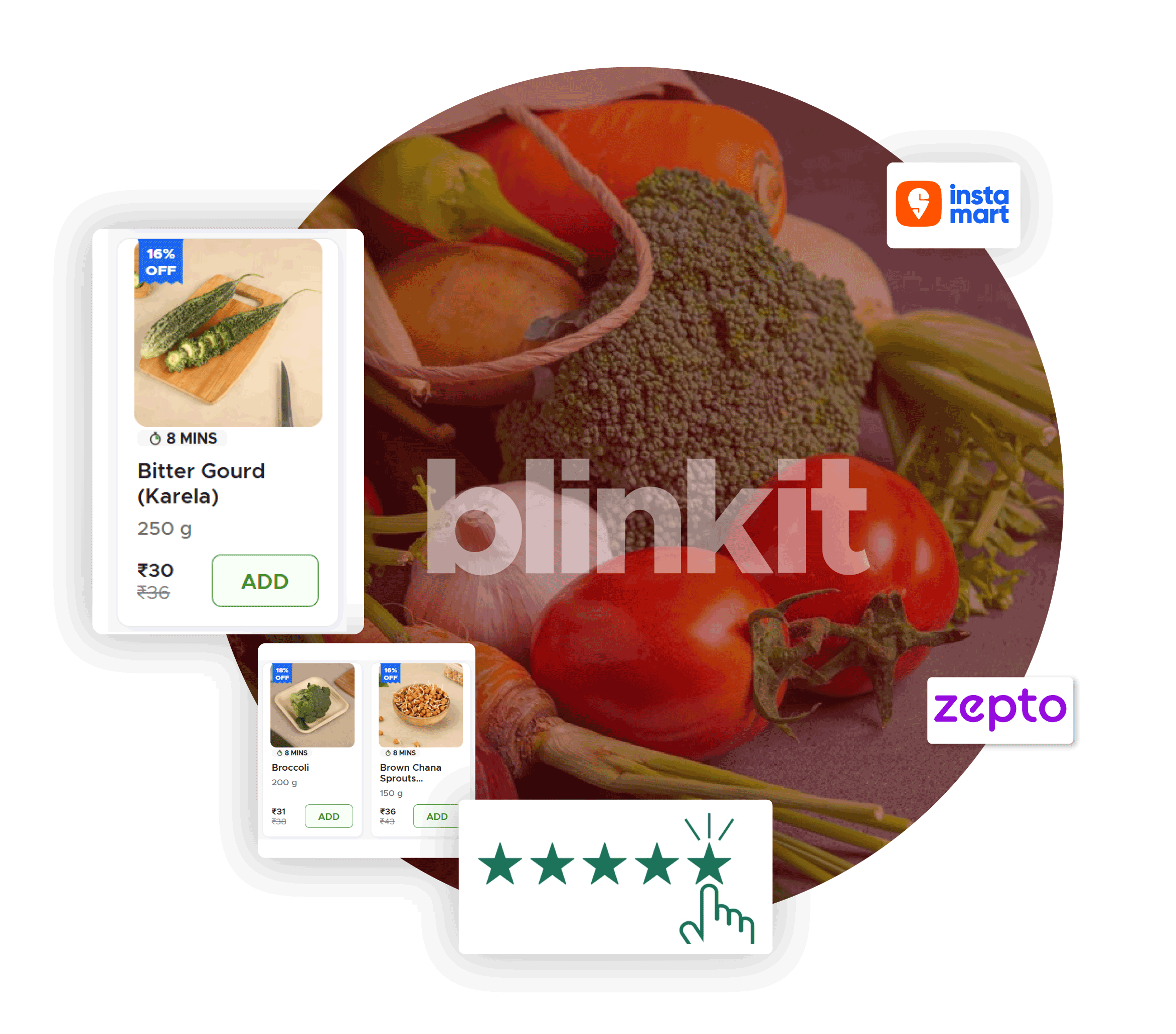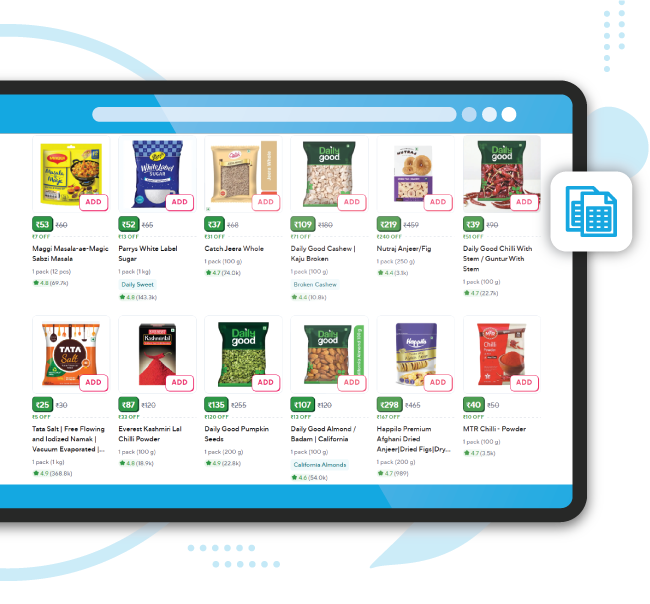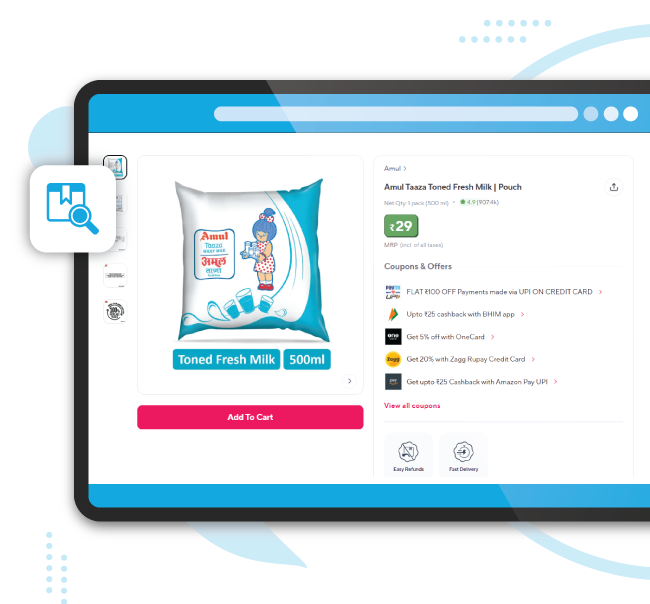
This case study explains how our data intelligence team developed a scalable system to Scrape Similar SKU Price Data from Blinkit, Zepto & Instamart for competitive pricing analysis. The project focused on identifying identical or closely matching products across platforms by standardizing attributes such as brand names, pack sizes, and product variants. This enabled accurate cross-platform comparisons and helped businesses track how similar items were priced across different quick-commerce apps in real time.
To ensure reliable extraction and consistent updates, our engineers integrated automated pipelines using the Blinkit product data API. This allowed us to capture product titles, pricing, discounts, availability status, and delivery charges from multiple locations. The collected information was cleaned and structured to support price benchmarking and market intelligence dashboards.
We further enriched insights using a structured Zepto grocery dataset, enabling detailed comparisons of price fluctuations, promotional campaigns, and regional variations. Finally, the consolidated Instamart product dataset helped clients identify pricing gaps, optimize their own product strategies, and monitor fast-moving quick-commerce competition effectively.
A Well-known Market Player in the quick commerce Industry
iWeb Data Scraping Offerings: Leverage our data crawling services scrape grocery data.
The client, a fast-growing retail analytics company, struggled with tracking rapid price fluctuations across multiple quick-commerce platforms. Manual tracking methods were inefficient and failed to provide consistent grocery price monitoring across thousands of SKUs. Frequent product updates, flash discounts, and regional pricing differences made it difficult to maintain accurate and timely data for strategic decision-making.
Another major challenge was conducting reliable Blinkit Zepto Instamart price comparison because product names, pack sizes, and listing formats varied across platforms. Without standardized product mapping, identifying similar SKUs and comparing prices accurately became a complex and time-consuming process for the client’s analytics team.
The client also required deeper grocery competitive price intelligence to understand discount patterns, stock availability, and location-based pricing strategies. However, collecting such granular insights manually was nearly impossible at scale.
Additionally, the client lacked a robust system to scrape Blinkit grocery product prices, which limited their ability to monitor real-time market trends and respond quickly to competitor pricing strategies.
To address the client’s challenges, our team developed a scalable data extraction and analytics framework designed specifically for quick-commerce platforms. The first step involved building automated crawlers to extract Zepto product catalog and pricing data, capturing detailed information such as product names, pack sizes, prices, discounts, stock status, and delivery charges across multiple locations.
We also implemented advanced scraping pipelines to scrape Instamart grocery product availability, enabling the client to monitor stock fluctuations and identify which products were frequently out of stock or promoted through limited-time discounts. This helped the client understand supply trends and competitor inventory strategies in real time.
In addition, our team created a centralized data processing system that standardized product attributes across platforms and converted raw information into actionable dashboards. These dashboards powered instant delivery app product analytics, allowing the client to analyze SKU-level pricing patterns, track competitor promotions, and evaluate regional demand trends.
With automated updates and structured datasets, the client gained reliable market intelligence and improved their ability to make faster pricing and merchandising decisions.
| Product Name | Pack Size | Blinkit Price (₹) | Zepto Price (₹) | Instamart Price (₹) | Lowest Price Platform | Discount Trend |
|---|---|---|---|---|---|---|
| Amul Taaza Milk | 1 L | 66 | 65 | 67 | Zepto | 3–5% |
| Aashirvaad Whole Wheat Atta | 5 kg | 252 | 249 | 255 | Zepto | 6–8% |
| Tata Salt | 1 kg | 29 | 28 | 30 | Zepto | 2–4% |
| Maggi 2-Minute Noodles | Pack of 12 | 168 | 165 | 170 | Zepto | 5–7% |
| Fortune Sunflower Oil | 1 L | 145 | 142 | 147 | Zepto | 4–6% |
| Britannia Good Day Biscuits | 200 g | 38 | 37 | 39 | Zepto | 2–3% |
| Coca-Cola Soft Drink | 750 ml | 40 | 39 | 41 | Zepto | 2–4% |
Insight:
This type of Similar-SKU comparison helps retailers and brands quickly identify pricing gaps, detect discount strategies, and monitor platform-level competition in the fast-growing quick-commerce grocery market.
The final outcome of the project delivered a comprehensive and automated pricing intelligence system for the client. By implementing quick commerce product data scraping, our team enabled continuous monitoring of product prices, discounts, and stock availability across leading instant delivery platforms. This provided the client with reliable visibility into daily pricing movements and promotional strategies.
The system integrated a structured quick commerce grocery data API India, allowing the client to access standardized datasets for thousands of grocery SKUs across multiple cities. With automated updates and advanced SKU matching, the client could easily compare similar products, detect pricing gaps, and track regional variations.
As a result, the analytics team significantly reduced manual data collection efforts while improving decision-making speed. The solution strengthened competitive benchmarking, optimized pricing strategies, and created a scalable data foundation for ongoing market intelligence and quick-commerce trend monitoring.
"Working with this data scraping team has significantly improved how we track and analyze quick-commerce pricing trends. Their automated data pipelines delivered accurate, structured datasets across multiple platforms, enabling our team to compare similar SKUs and monitor daily price fluctuations with ease. The insights helped us identify competitive pricing gaps, understand promotion strategies, and optimize our own pricing decisions. What impressed us most was the reliability, scalability, and consistency of the data delivered. Their support team was proactive and responsive throughout the project. This partnership has become a crucial part of our market intelligence strategy and competitive monitoring process."
— Head of Retail Analytics
Similar SKU price comparison involves identifying identical or closely matching grocery products across multiple platforms and analyzing their price differences, discounts, and availability. This helps businesses understand competitor pricing strategies and maintain competitive product pricing.
Monitoring prices across different platforms helps brands and retailers track market trends, identify promotional strategies, and understand regional pricing differences. It enables faster decision-making and supports better pricing and inventory strategies.
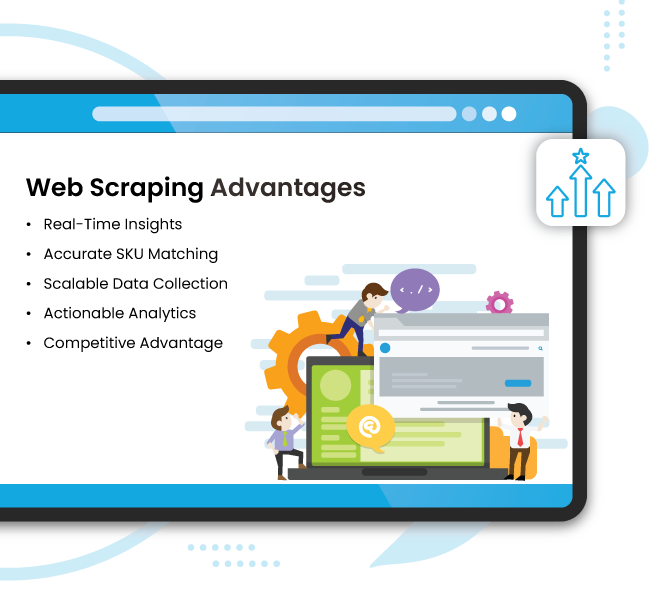
Data scraping automates the collection of product information such as prices, discounts, pack sizes, and availability. This ensures large-scale, real-time data collection that businesses can use for competitive analysis and pricing optimization.
Businesses can extract product names, brand details, pack sizes, prices, discounts, ratings, stock status, delivery times, and promotional tags to support deeper market and pricing analysis.
Automated scraping systems can be scheduled to collect data multiple times a day or in near real time, ensuring businesses always have the latest pricing and availability insights.
We start by signing a Non-Disclosure Agreement (NDA) to protect your ideas.
Our team will analyze your needs to understand what you want.
You'll get a clear and detailed project outline showing how we'll work together.
We'll take care of the project, allowing you to focus on growing your business.