What Benefits Can You Gain When You Scrape Uber Eats Restaurant Listings Data in USA?
Introduction
The food delivery industry in the United States has evolved into a highly competitive, data-driven ecosystem where platforms like Uber Eats play a central role. Businesses, analysts, and aggregators are increasingly relying on structured data to understand pricing trends, customer preferences, and restaurant performance. One of the most effective ways to gain these insights is to Scrape Uber Eats restaurant listings data in USA, enabling organizations to access comprehensive, real-time information.
At the same time, the growing adoption of Uber Eats USA restaurant data scraping techniques allows companies to collect granular data across cities, cuisines, and restaurant categories. This data becomes even more valuable when structured into a Uber Eats USA restaurant pricing dataset, helping stakeholders track price fluctuations, discounts, and promotional strategies across the market.
Understanding Uber Eats Restaurant Listings Data
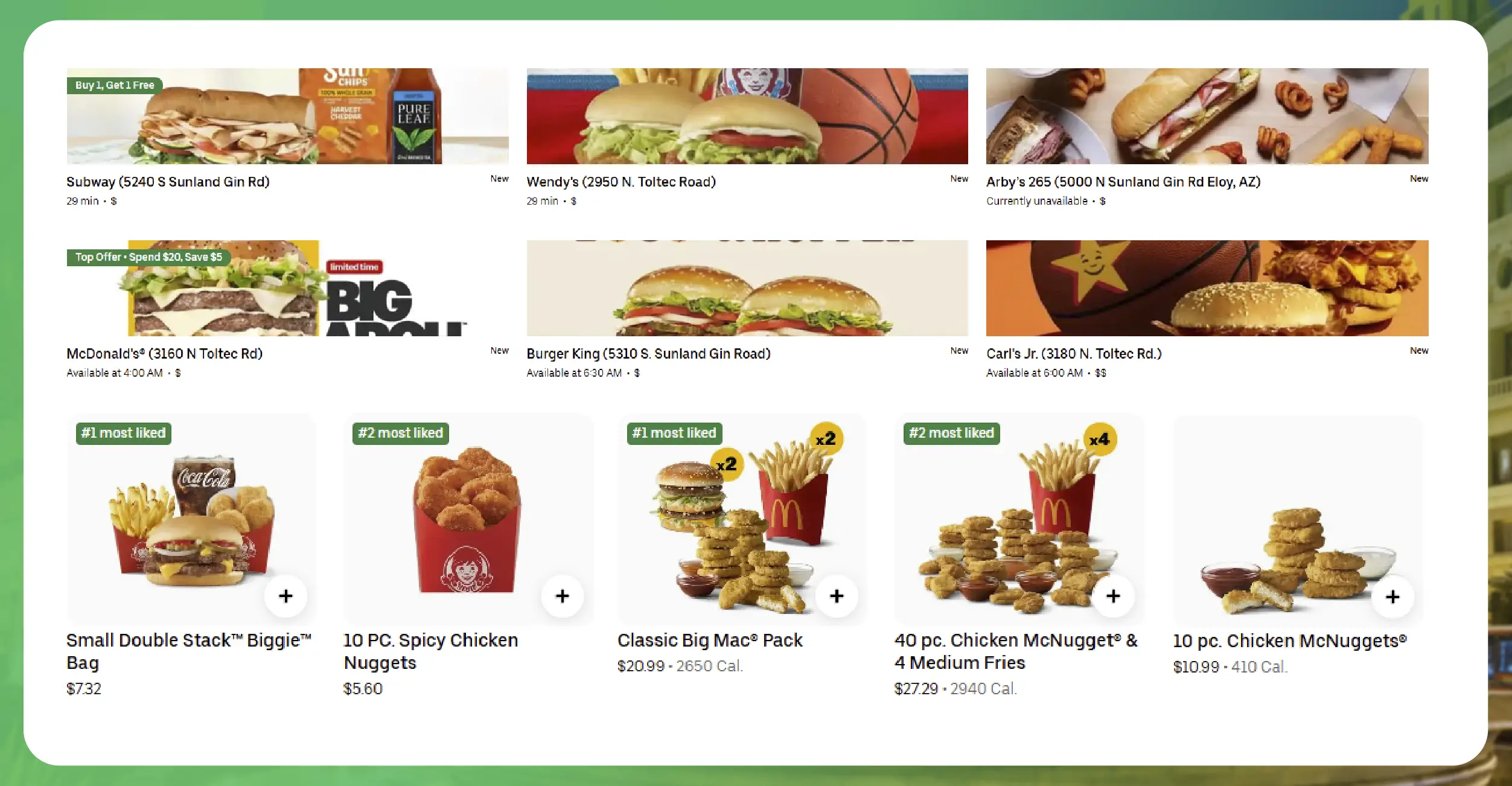
Uber Eats hosts a vast repository of restaurant-related information, ranging from basic listings to detailed menu-level data. Extracting this data helps businesses gain a deeper understanding of the competitive landscape.
By implementing Uber Eats USA restaurant menu data scraping, organizations can collect menu items, descriptions, add-ons, and pricing details. This process provides visibility into how restaurants position their offerings and adapt to changing customer demands.
Moreover, the ability to Extract restaurant data from Uber Eats USA enables businesses to gather location-specific insights, such as delivery zones, estimated delivery times, and operational hours, which are crucial for logistics and expansion planning.
Importance of Uber Eats Data for Businesses
Competitive Intelligence
Access to structured datasets provides powerful Uber Eats restaurant listing data intelligence, allowing businesses to benchmark their offerings against competitors. This includes analyzing cuisine trends, pricing strategies, and customer ratings.
Market Trend Analysis
With the help of USA Uber Eats food delivery market data scraping, companies can identify emerging food trends, popular cuisines, and high-demand locations. This insight is essential for restaurants looking to expand or diversify their menus.
Pricing Optimization
Restaurants frequently adjust their pricing based on demand and competition. By leveraging Uber Eats Food Data Extraction Services, businesses can monitor real-time price changes and optimize their own pricing strategies to remain competitive.
Key Data Fields Extracted from Uber Eats
When performing Uber Eats data scraping, the following data points are typically extracted:
- Restaurant names and locations
- Cuisine types and categories
- Menu items and descriptions
- Pricing and discounts
- Delivery fees and time estimates
- Customer ratings and reviews
- Availability and service hours
These datasets are often compiled into structured formats such as UberEats Food Delivery App Datasets, making them easy to analyze and integrate into business intelligence tools.
How Uber Eats Data Scraping Works?
Data Collection Strategy
The process begins with identifying the required data fields, such as restaurant listings, menu items, or pricing details. Businesses often rely on automated systems to streamline this process.
Automated Extraction Tools
Advanced scraping tools and APIs are used to extract data efficiently. These tools handle dynamic content and location-based filtering, ensuring accurate and scalable data collection.
Data Processing and Structuring
Once extracted, the data is cleaned and organized into structured formats. This step ensures that datasets such as Restaurant Menu Datasets are accurate, consistent, and ready for analysis.
Data Integration and Analysis
The final step involves integrating the data into analytics platforms. Businesses use these insights to drive decision-making, optimize operations, and enhance customer experiences.
Unlock powerful food delivery insights today—connect with us to turn data into your competitive advantage!
Applications of Uber Eats Data Scraping
Restaurant Benchmarking
Using structured Restaurant Data Extraction Services, businesses can compare their offerings with competitors and identify areas for improvement.
Dynamic Pricing Strategies
Real-time insights from Food Delivery Data Scraping Services enable restaurants to adjust their pricing based on market trends and competitor behavior.
Expansion Planning
Data-driven insights help businesses identify high-demand regions and plan their expansion strategies accordingly.
Customer Insights
Analyzing ratings and reviews helps businesses understand customer preferences and improve their services.
Marketing Optimization
Targeted marketing campaigns can be developed using insights derived from Uber Eats data, improving customer engagement and retention.
Benefits of Uber Eats Data Scraping
Scalability
Data scraping solutions can handle large volumes of data across multiple cities and regions in the USA.
Accuracy
Automated systems reduce human error and ensure high data accuracy.
Real-Time Insights
Businesses can access up-to-date information on pricing, availability, and promotions.
Customization
Data extraction processes can be tailored to meet specific business requirements.
Challenges in Uber Eats Data Scraping
Dynamic Platform Structure
Uber Eats frequently updates its interface, making it necessary to adapt scraping techniques regularly.
Location-Based Data Variability
Restaurant listings vary by location, requiring advanced geolocation handling.
Large Data Volumes
Processing and storing large datasets requires robust infrastructure.
Compliance Considerations
Businesses must ensure that their data extraction practices adhere to legal and ethical standards.
Best Practices for Effective Data Scraping
- Use reliable and scalable scraping tools
- Regularly update scraping scripts to match platform changes
- Validate and clean data for accuracy
- Focus on relevant data points to avoid overload
- Ensure compliance with applicable regulations
Future of Food Delivery Data Intelligence
The future of food delivery data scraping lies in advanced analytics and AI-driven insights. Predictive models will enable businesses to forecast demand, optimize pricing, and enhance customer experiences.
Integration with dashboards and real-time analytics tools will further increase the value of scraped data, making it a critical asset for decision-making.
How iWeb Data Scraping Can Help You?
1. End-to-End Restaurant Data Collection
We gather detailed information on restaurant listings, including names, locations, cuisines, delivery zones, and availability. This helps you build a reliable and structured dataset for analysis and strategic planning.
2. Real-Time Menu and Pricing Insights
Our services capture up-to-date menu items, prices, offers, and discounts. This enables you to track pricing changes, understand competitor strategies, and adjust your own pricing effectively.
3. Competitive and Market Intelligence
We provide deep insights into market trends, popular cuisines, and customer preferences. This allows you to benchmark your performance against competitors and identify growth opportunities.
4. Scalable and Custom Data Solutions
Whether you need data from a single city or across multiple regions, our solutions are designed to scale based on your requirements. We also customize the data extraction process to match your specific business needs.
5. Clean, Structured, and Ready-to-Use Data
We deliver well-organized datasets that are easy to integrate into your analytics tools. This ensures faster decision-making, better reporting, and improved operational efficiency.
Conclusion
In today’s competitive food delivery landscape, data is a powerful asset that drives growth and innovation. Scraping Uber Eats restaurant listings data in the USA allows businesses to gain deep insights into pricing, menus, and customer behavior.
By leveraging structured datasets such as Food Delivery App Menu Datasets, organizations can access detailed menu-level insights and improve their offerings. Additionally, Price Monitoring Services help track real-time pricing changes, enabling businesses to stay competitive. Furthermore, Pricing & Promotions Services empower companies to optimize their discount strategies and maximize profitability.
Ultimately, the strategic use of Uber Eats data scraping transforms raw information into actionable intelligence, helping businesses make informed decisions and achieve long-term success.
Experience top-notch web scraping service and mobile app scraping solutions with iWeb Data Scraping. Our skilled team excels in extracting various data sets, including retail store locations and beyond. Connect with us today to learn how our customized services can address your unique project needs, delivering the highest efficiency and dependability for all your data requirements.