How Does UAE Restaurant Menu Data Extraction Support Halal, Vegan & Specialty Food Insights?
Introduction
The UAE restaurant ecosystem is complex, fast-moving, and highly competitive. Restaurants operate simultaneously across dine-in, takeaway, cloud kitchens, and multiple food delivery platforms, each with distinct pricing logic, menu structures, and dietary labels. To manage this complexity effectively, UAE Restaurant Menu Data Extraction – Halal, Vegan & Specialty enables businesses to convert fragmented digital menus into structured, decision-ready intelligence that supports pricing accuracy, dietary compliance, and long-term growth strategies.
Because menus are updated frequently due to seasonal items, ingredient availability, promotional campaigns, or platform-specific commissions, manual monitoring quickly becomes unreliable. This is why real-time UAE restaurant menu data extraction is critical—it allows businesses to capture live changes as they happen. In parallel, Halal menu price data scraping UAE ensures that Halal-certified offerings remain accurately priced and consistently represented, reinforcing trust in a market where religious compliance strongly influences consumer choice.
What “Menu Data Extraction” Actually Covers?
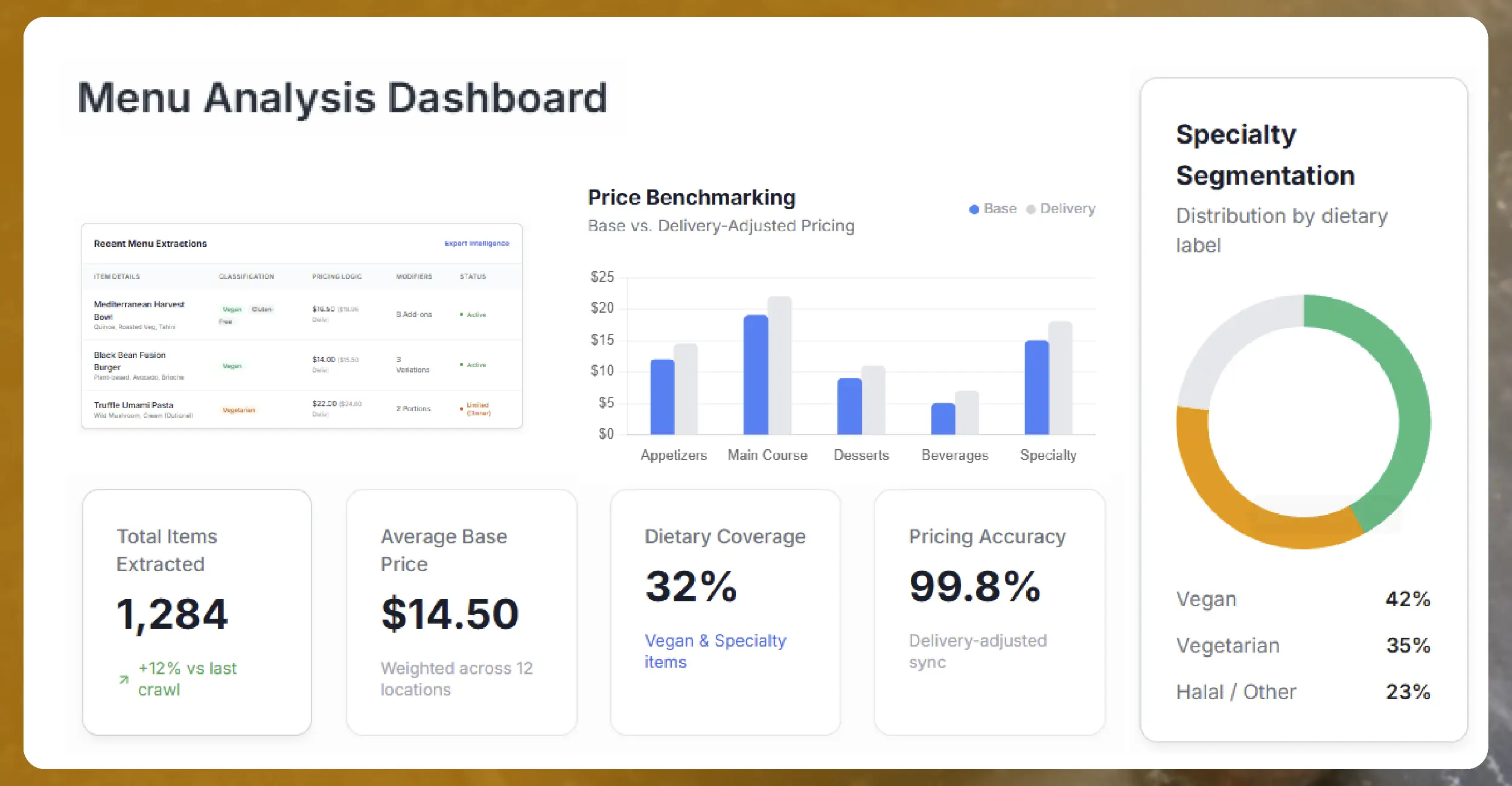
Menu extraction is not a basic scraping task; it is a layered analytical process that transforms unstructured online listings into usable business intelligence. Each data point extracted contributes to understanding consumer behavior, operational efficiency, and competitive positioning.
Core data elements include:
- Item names and detailed descriptions, including variations and modifiers
- Base prices, discounted prices, and delivery-adjusted pricing
- Dietary labels such as Halal, Vegan, vegetarian, or allergen-free
- Add-ons, customizations, bundles, and portion sizing
- Availability by time of day, location, and delivery radius
To analyze emerging dietary segments more effectively, many businesses rely on a Vegan and specialty food menu data extractor, which isolates non-mainstream offerings. This allows brands to evaluate whether vegan or specialty items are driving incremental demand, improving margins, or simply increasing menu complexity without measurable returns.
Why the UAE Requires Category-Level Pricing Intelligence?
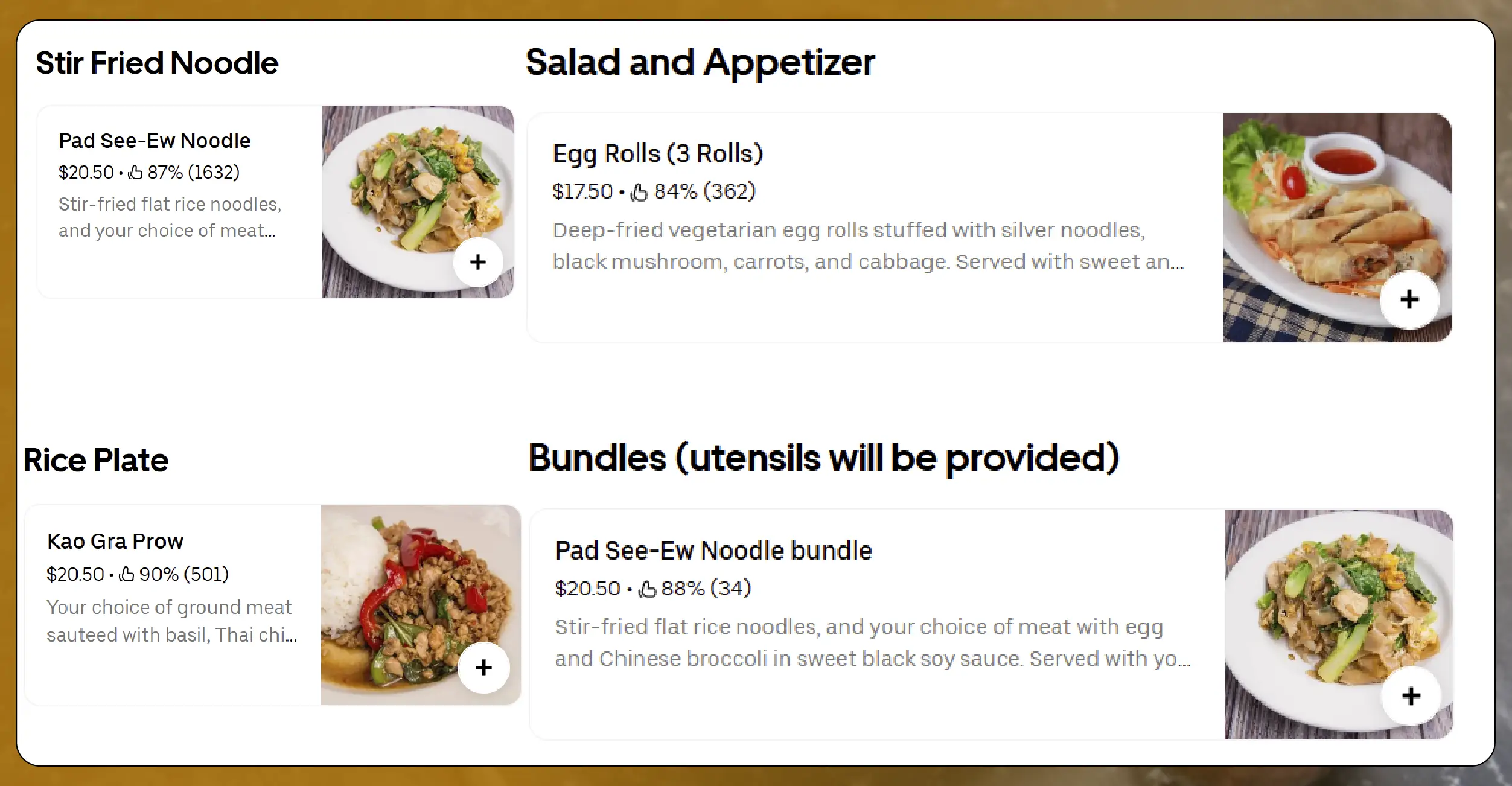
Pricing in the UAE restaurant market is highly fragmented. The same cuisine can follow entirely different pricing strategies depending on whether it targets office workers, families, tourists, or premium diners. Platform commissions, peak-hour demand, and neighborhood demographics further complicate pricing decisions.
Instead of relying on average price comparisons, UAE restaurant category-wise pricing data tracking enables businesses to understand how each menu section performs independently. This analysis reveals:
- Which categories generate the highest revenue versus profit
- Where pricing gaps exist compared to competitors
- How delivery pricing inflates or compresses margins
- Which categories are most sensitive to discounts or offers
This level of insight allows restaurants to optimize pricing at a granular level, protecting profitability while remaining competitive.
Urban Demand Isn’t Uniform — Here’s Why It Matters
Dining behavior in the UAE varies sharply between business districts, residential communities, and tourist hubs. Lunch demand in commercial zones prioritizes speed and affordability, while residential areas favor value meals and family portions. Tourist-heavy locations show higher tolerance for premium pricing and specialty cuisines.
When organizations Extract urban dining demand data UAE, they gain location-specific clarity that supports:
- Menu localization by neighborhood
- Cuisine-to-location matching
- Accurate pricing by area
- Smarter cloud kitchen deployment
Without this insight, businesses risk applying generalized strategies that underperform at the local level.
Food Delivery Platforms = Real Consumer Behavior
Food delivery platforms provide the most accurate picture of actual purchasing behavior. Unlike surveys or reviews, delivery data reflects real transactions—what customers choose, how often, and at what price point.
Through UAE restaurant food delivery patterns data scrape, businesses can study:
- High-frequency items and repeat orders
- Time-based ordering behavior
- Delivery-only pricing strategies
- Bundle and upsell effectiveness
These insights help restaurants refine delivery menus independently from dine-in menus, improving conversion rates and average order values without increasing operational complexity.
Solving Menu Inconsistency Across Platforms
Menu inconsistency is one of the most common yet overlooked operational risks. Differences in pricing, missing items, or incorrect dietary tags across platforms can confuse customers and damage brand credibility.
With UAE menu data scraping services, businesses can continuously audit digital menus to:
- Detect price mismatches across aggregators
- Identify missing or outdated items
- Verify dietary labeling accuracy
- Maintain consistent brand presentation
This reduces customer complaints, prevents revenue leakage, and strengthens trust across digital touchpoints.
Turn live UAE restaurant menu data into actionable intelligence—optimize pricing, ensure compliance, and stay ahead of market demand today.
Halal & Vegan Compliance Needs Automation
In the UAE, inaccurate dietary labeling can quickly escalate from a customer issue to a reputational or regulatory concern. Given the pace of menu changes, manual checks are neither scalable nor reliable.
By implementing Web scraping UAE Halal & Vegan menus, businesses can automatically monitor:
- Halal certification references
- Ingredient disclosures
- Dietary icons and tags
- Platform-level inconsistencies
This ensures transparency, protects brand reputation, and aligns digital listings with consumer expectations and regulatory standards.
Specialty Menus Reveal Where the Market Is Heading
Specialty menus often signal future trends before they reach mass adoption. Fusion concepts, health-driven dishes, and premium experiences usually emerge first within niche menus.
Using Specialty menu datasets extraction UAE, businesses can analyze:
- Innovation frequency within niche cuisines
- Price tolerance for premium items
- Ingredient experimentation patterns
- Seasonal and rotational menu behavior
These insights help brands innovate strategically, avoiding trend saturation while capturing early demand.
APIs Turn Raw Data into Live Intelligence

Static reports quickly lose relevance in a market where menus change daily. Businesses increasingly require continuous, system-ready data access.
With Food Data Scraping API Services:, menu intelligence can be:
- Integrated into analytics dashboards
- Connected to pricing and demand tools
- Used for automated alerts and monitoring
- Applied to forecasting and planning models
This transforms menu data from a passive asset into an active decision-making engine.
Who Uses This Data (In Practice)?
Menu intelligence delivers value across the ecosystem:
- Restaurant chains standardizing pricing and menus
- Cloud kitchens identifying unmet demand
- Food delivery platforms optimizing categories
- Investors assessing performance and scalability
- Suppliers forecasting ingredient demand
Each stakeholder benefits from faster insights and reduced uncertainty.
How iWeb Data Scraping Can Help You?
- Access real-time market visibility by continuously capturing menu updates, pricing changes, and availability across UAE restaurants and food delivery platforms.
- Improve pricing and profitability through category-wise and competitor pricing analysis that helps you identify gaps, trends, and margin opportunities.
- Ensure dietary compliance and accuracy by monitoring Halal, vegan, and specialty menu labels across platforms, reducing reputational and regulatory risks.
- Understand consumer demand patterns using structured delivery and location-based menu data to optimize offerings, promotions, and expansion strategies.
- Scale insights effortlessly by integrating structured menu data into dashboards, analytics tools, and internal systems for faster, data-driven decision-making.
Conclusion
In the UAE’s competitive restaurant environment, success depends on speed, accuracy, and informed execution. Menu data extraction provides the foundation for all three.
By implementing a UAE Restaurant Food Delivery Scraping API, businesses gain real-time visibility into pricing behavior, menu availability, and platform dynamics. Access to structured Food Delivery App Menu Datasets UAE enables deeper understanding of consumer demand across cuisines, locations, and ordering channels.
Ultimately, Food Delivery Data Extraction Services UAE empower restaurants, aggregators, and food-tech companies to move beyond assumptions, reduce operational risk, and build data-driven strategies that sustain long-term growth.
Experience top-notch web scraping service and mobile app scraping solutions with iWeb Data Scraping. Our skilled team excels in extracting various data sets, including retail store locations and beyond. Connect with us today to learn how our customized services can address your unique project needs, delivering the highest efficiency and dependability for all your data requirements.