How Can the Uber Eats Grocery Data Scraping API Transform Your Grocery Business?
Introduction
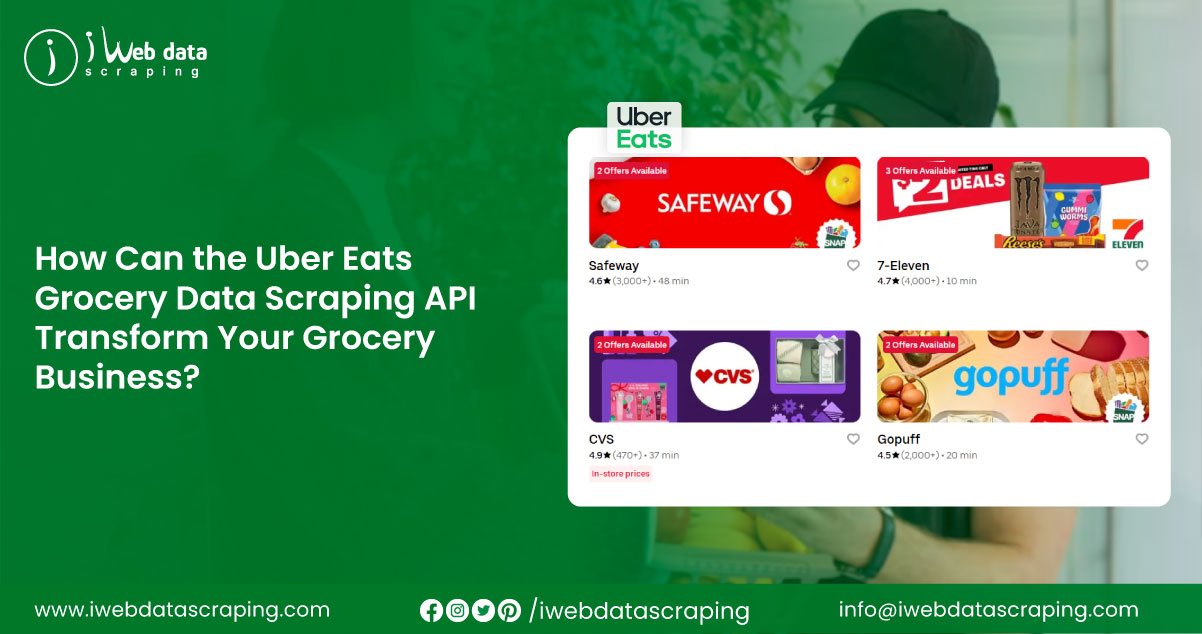
In today’s fast-paced digital retail ecosystem, staying ahead of competitors and understanding consumer behavior is crucial for grocery and supermarket businesses. The Uber Eats Grocery Data Scraping API has emerged as a powerful tool for companies to gain a competitive edge. By leveraging this advanced technology, businesses can collect accurate, real-time data about grocery products, pricing, discounts, and promotions on the Uber Eats platform. Additionally, the integration of Uber Eats grocery data Extraction enables organizations to monitor trends, consumer preferences, and market dynamics efficiently.
The rapid expansion of online grocery delivery has made platforms like Uber Eats invaluable sources of market intelligence. For instance, understanding price fluctuations, seasonal discounts, and promotional offers can significantly impact inventory planning and pricing strategies. With Uber Eats grocery price scraping, businesses can access granular insights into product pricing, enabling more informed decision-making in hyper-competitive grocery markets.
Why Businesses Need Uber Eats Grocery Data Scraping API?
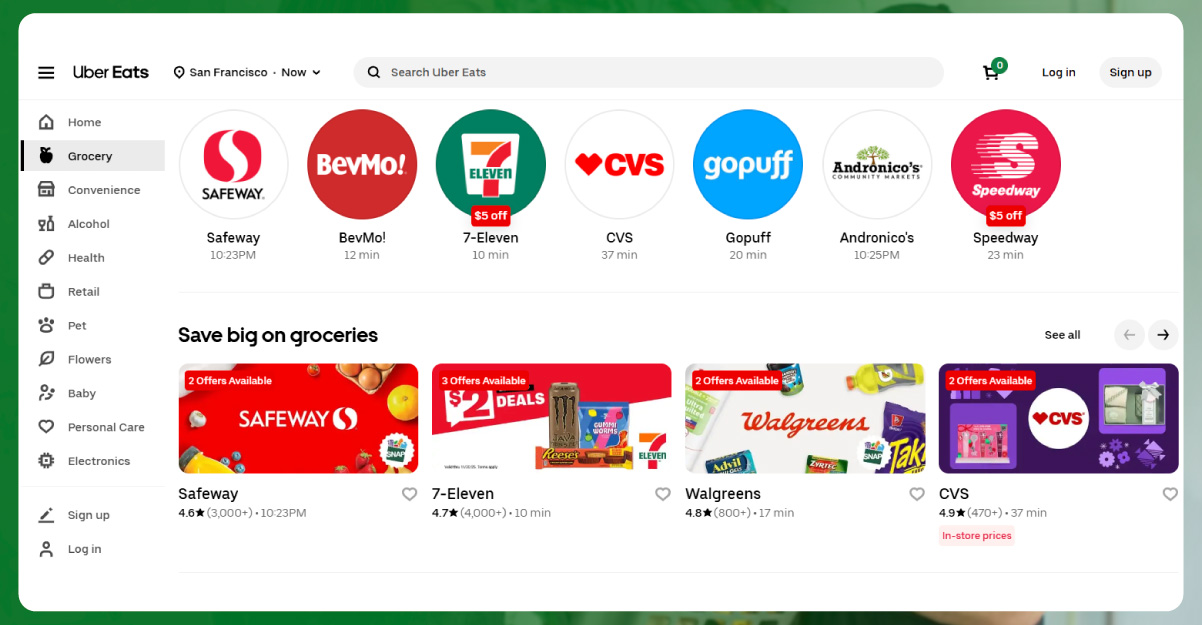
The grocery and supermarket industry is highly dynamic, with pricing, availability, and promotions constantly changing. Traditional methods of collecting market data are often slow and prone to errors. Here, the Scrape Uber Eats product pricing data approach offers several advantages:
- Real-Time Data Collection: Businesses can obtain real-time pricing and discount information directly from Uber Eats, ensuring that decisions are based on the most current market trends.
- Comprehensive Product Coverage: From fresh produce to packaged goods, Uber Eats discounts data scraping captures a complete picture of all available products on the platform.
- Competitor Benchmarking: By tracking competitor pricing and promotional strategies, companies can optimize their own pricing models and marketing campaigns effectively.
Key Features of Uber Eats Grocery Data Scraping
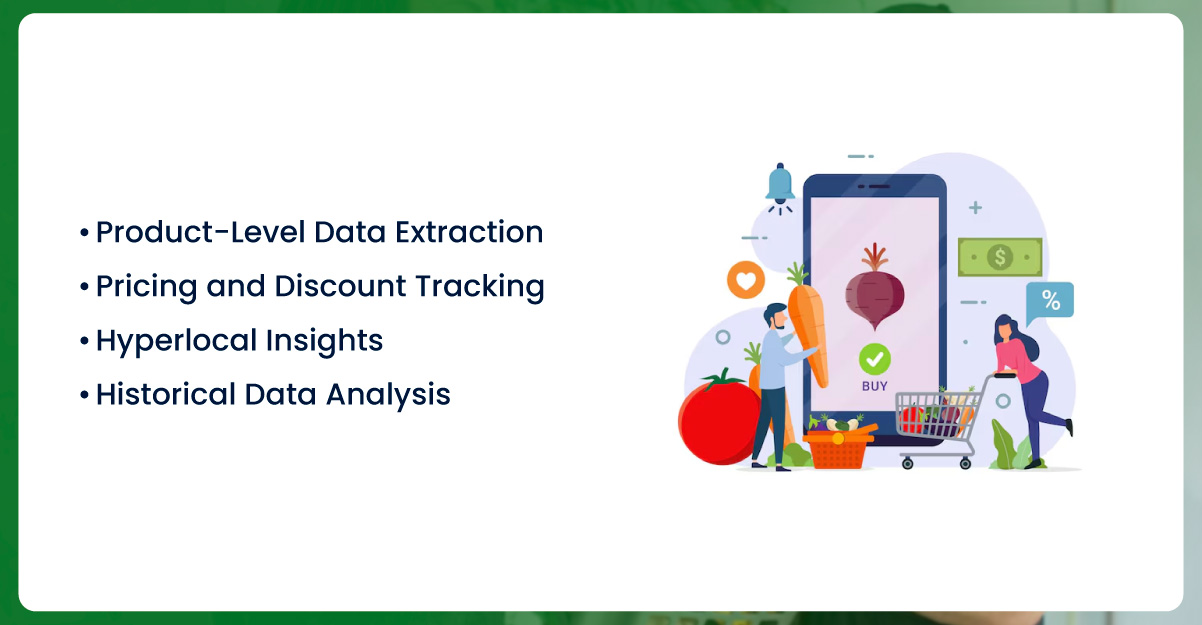
Using the Uber Eats grocery delivery analytics functionality, businesses can uncover hidden patterns and optimize operations. Some of the key features include:
- Product-Level Data Extraction: Collect information such as product names, categories, descriptions, stock levels, and availability.
- Pricing and Discount Tracking: Monitor changes in grocery prices, ongoing promotions, and special deals to stay competitive.
- Hyperlocal Insights: Gain insights from specific regions and neighborhoods to tailor offerings based on localized demand.
- Historical Data Analysis: Analyze past pricing trends and promotional campaigns to forecast future demand and pricing strategies.
These features allow grocery retailers and supermarkets to make informed, data-driven decisions while enhancing their market positioning.
Leveraging Uber Eats Competitor Price Analysis
Competitive pricing is a key factor in driving customer acquisition and retention in online grocery markets. The Uber Eats competitor price analysis capability enables businesses to monitor pricing strategies across different competitors on the platform. This analysis includes evaluating promotions, limited-time deals, and special discounts to identify market opportunities. By comparing prices for similar products, retailers can determine optimal pricing levels to maximize profit margins and improve sales performance.
Moreover, extracting promo and deals extraction From Uber Eats allows businesses to understand which offers resonate most with local audiences. This hyperlocal approach ensures that pricing strategies are aligned with consumer preferences in specific areas, resulting in increased conversions and customer loyalty.
Unlock powerful market insights today—leverage our data scraping services to stay ahead of competitors and boost your business growth!
Importance of Grocery Price Intelligence
Data collected through the hyperlocal grocery insights From Uber Eats provides actionable information that businesses can leverage to improve overall operational efficiency.
Grocery price intelligence of Uber Eat helps organizations identify pricing gaps, seasonal demand trends, and high-performing promotions.
- Price gaps between competitors
- Seasonal demand variations
- High-performing promotions and deals
- Consumer price sensitivity trends
Such insights empower businesses to implement dynamic pricing strategies, manage inventory efficiently, and increase profitability.
Benefits of Using Uber Eats Datasets
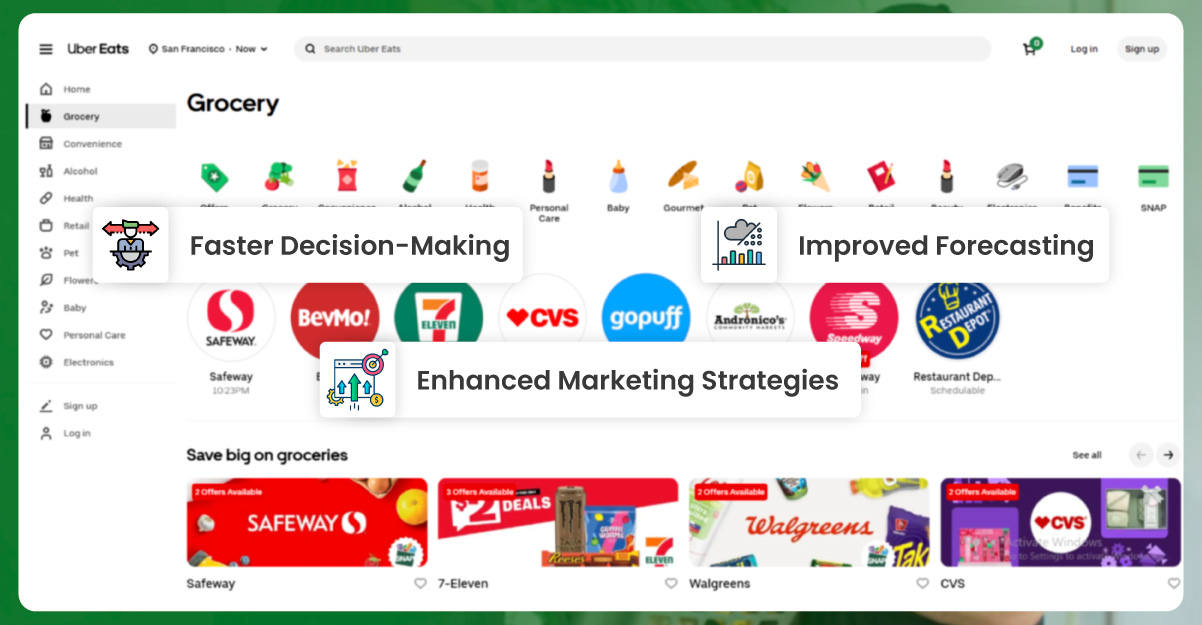
The availability of structured Uber Eats Datasets simplifies complex data analysis for grocery businesses. These datasets provide a consolidated view of product details, pricing trends, discounts, and promotions across various regions. Key benefits include:
- Faster Decision-Making: Ready-to-use datasets reduce the time required for data cleaning and preparation.
- Improved Forecasting: Historical and current pricing data help predict future demand and pricing trends.
- Enhanced Marketing Strategies: Insights from datasets allow retailers to design targeted promotional campaigns.
By leveraging these datasets, grocery retailers can enhance operational efficiency and develop strategies that are closely aligned with market demands.
Real-World Applications of Uber Eats Grocery Data Scraping
The applications of Uber Eats Grocery Data Scraping API extend across multiple areas of grocery business operations. Some practical use cases include:
- Dynamic Pricing Optimization: Adjusting prices in real-time based on competitor offers, discounts, and demand patterns.
- Inventory Management: Using hyperlocal insights to stock products more effectively and reduce wastage.
- Promotional Planning: Analyzing which promotions attract more customers and replicating successful campaigns.
- Consumer Behavior Analysis: Understanding purchasing trends and product preferences across different demographics.
These applications demonstrate how integrating data scraping into grocery operations can directly impact revenue growth and customer satisfaction.
Integrating Hyperlocal Grocery Insights
In the modern grocery landscape, hyperlocal strategies are critical. From Uber Eats hyperlocal grocery insights, businesses can capture neighborhood-specific pricing, promotions, and product availability. This granular insight allows retailers to customize offerings for different locations, enhancing customer experience and increasing conversion rates. Hyperlocal data also supports strategic decisions for regional marketing campaigns, delivery logistics, and inventory allocation.
How iWeb Data Scraping Can Help You?
- Real-Time Market Insights: Our data scraping services collect live pricing, product availability, and promotions, helping you make informed decisions, optimize pricing strategies, and stay ahead in competitive markets.
- Competitor Analysis: Track competitor offerings, discounts, and promotions automatically. Our services provide actionable insights into your rivals’ strategies, enabling you to adjust your marketing and pricing to gain a competitive advantage.
- Hyperlocal Data Extraction: Access granular, location-specific data for better inventory planning, targeted promotions, and tailored services, ensuring your business meets the unique demands of customers in every region.
- Enhanced Operational Efficiency: Automate data collection from multiple platforms, reducing manual effort and errors, allowing your team to focus on strategic tasks like sales optimization, marketing, and customer engagement.
- Actionable Analytics & Reporting: Transform raw data into structured insights with dashboards, reports, and trend analysis. Make data-driven decisions to increase revenue, improve market positioning, and enhance customer satisfaction.
Conclusion
The Uber Eats Grocery Data Scraping API has revolutionized how grocery and supermarket businesses access market intelligence. From Grocery & Supermarket Data Extraction to competitor analysis and promotional tracking, this technology provides end-to-end visibility into the online grocery ecosystem. Leveraging structured Grocery Data Scraping API Services and comprehensive Grocery and Supermarket Store Datasets enables businesses to make informed, data-driven decisions, optimize pricing strategies, enhance marketing campaigns, and ultimately boost profitability in the competitive grocery landscape.
Embracing the power of Uber Eats grocery data Extraction ensures that businesses remain agile, competitive, and customer-centric, transforming the way grocery retailers operate in today’s digital-first world.
Experience top-notch web scraping service and mobile app scraping solutions with iWeb Data Scraping. Our skilled team excels in extracting various data sets, including retail store locations and beyond. Connect with us today to learn how our customized services can address your unique project needs, delivering the highest efficiency and dependability for all your data requirements.