In today’s competitive digital environment, brands can’t rely on guesswork when developing SEO strategies. Data-backed decision-making is now essential to understand competitive positioning, search visibility, and audience demand trends. Businesses need to measure organic performance, monitor keyword opportunities, and track ranking shifts regularly. That is where the ability to Extract Google SERPs and Keyword Volume data becomes a crucial advantage for SEO teams, marketers, and data-driven organizations.
Modern marketing requires structured search intelligence that provides actionable insights on ranking positions, content gaps, and high-value keyword opportunities. With the growth of big data, organizations now rely heavily on SEO data scraping to collect large-scale search engine information quickly and accurately.
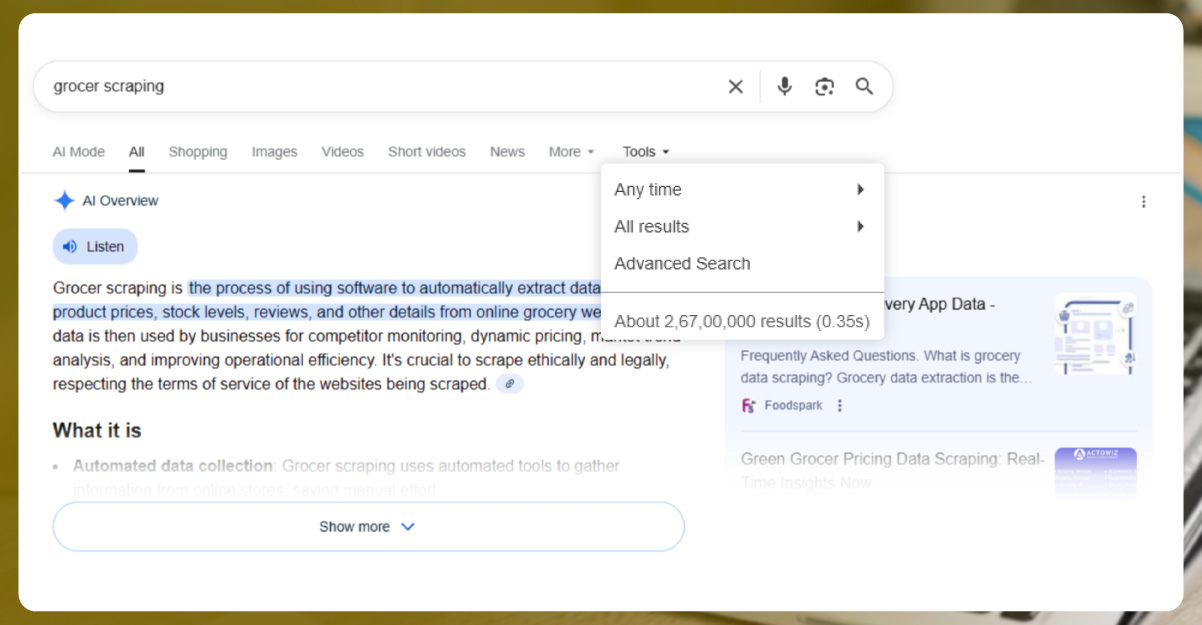
At the same time, search engines are continually evolving, and capturing results in real time provides a deeper understanding of the competitive landscape using SERP scraping, tracking patterns, identifying changes, and enabling smarter optimization strategies.
Analyzing SERPs gives marketers visibility into how search engines interpret intent. Keyword volume analysis helps evaluate audience demand and competitive difficulty. When used together, these insights drive higher-quality content planning, SEO prioritization, and more successful organic acquisition strategies.
Here are the most valuable insights that come from extracting search engine results data:
SERP extraction is more than data collection — it is a foundation for strategy and forecasting. For example, implementing a Google SERP extractor allows businesses to monitor major ranking fluctuations instantly and adjust campaigns accordingly. Combined with SEO competitor analysis scraping, brands gain a complete overview of search performance, including best-performing keywords and top-ranking pages.
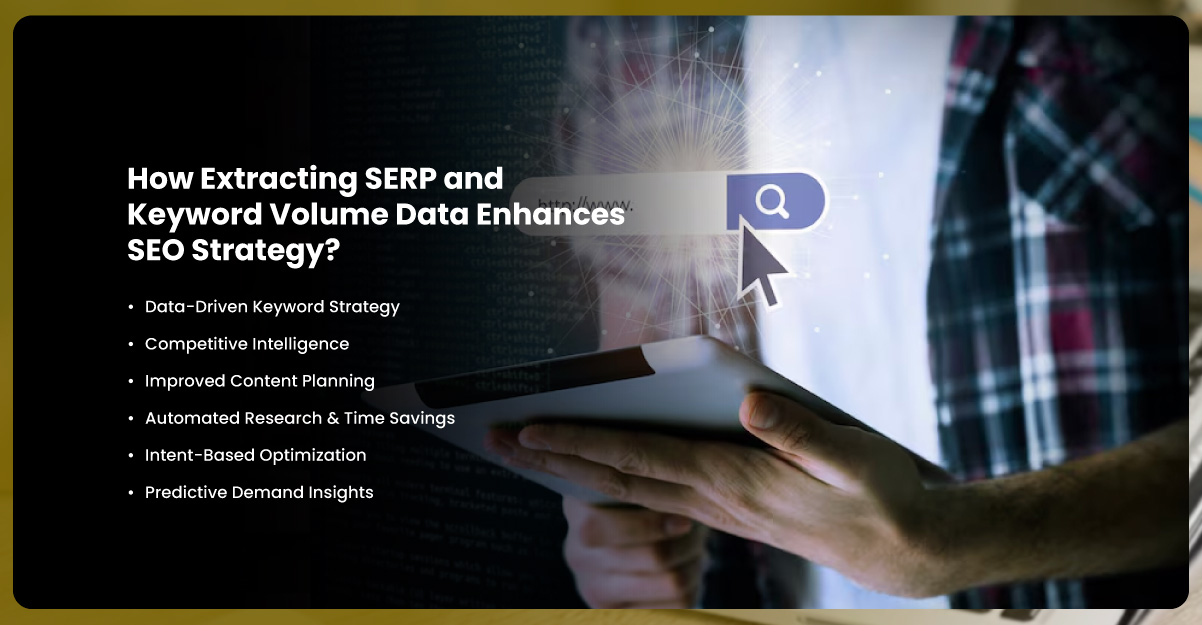
Extracting large-scale search data aligns marketing priorities with measurable outcomes. Here’s how it improves performance:
1. Data-Driven Keyword Strategy
Keyword volume insights provide a realistic picture of search demand and ranking potential, defining clearly which keywords provide maximum ROI.
2. Competitive Intelligence
A Python SERP scraper can extract top pages ranking for every keyword, helping identify competitor strategies and content opportunities.
3. Improved Content Planning
Using an organic ranking data extractor, marketers can analyze the structure and optimization of winning pages and replicate their success.
4. Automated Research & Time Savings
Implementing keyword research automation turns hours of manual research into automated workflows, reducing time spent on repetitive SEO tasks.
5. Intent-Based Optimization
SERP features help analyze the type of content Google prefers — transactional, informational, or navigational. Tools that scrape people-also-ask (PAA) data. reveal user questions that can increase topical authority.
6. Predictive Demand Insights
Tracking keyword volume over time enables forecasting future trends, which supports long-term marketing planning.
As search results evolve frequently, manual analysis becomes inefficient. That’s why organizations increasingly rely on automated scraping, AI-powered systems, and large-scale processing solutions. With SEO data mining, businesses collect structured keyword data consistently and convert raw numbers into valuable insights.
Today’s enterprise-grade extraction systems provide:
This demand has driven growth in solutions like Search Engine Data Scraping Service, offering flexible custom scraping pipelines, integration support, and compliance controls. Organizations seeking end-to-end automation increasingly adopt intelligent AI-focused platforms such as AI Data Scraping Service for high-speed, accurate data collection across thousands of SERPs.
Start transforming your data strategy today—contact us to build smarter decisions with powerful automated scraping solutions!
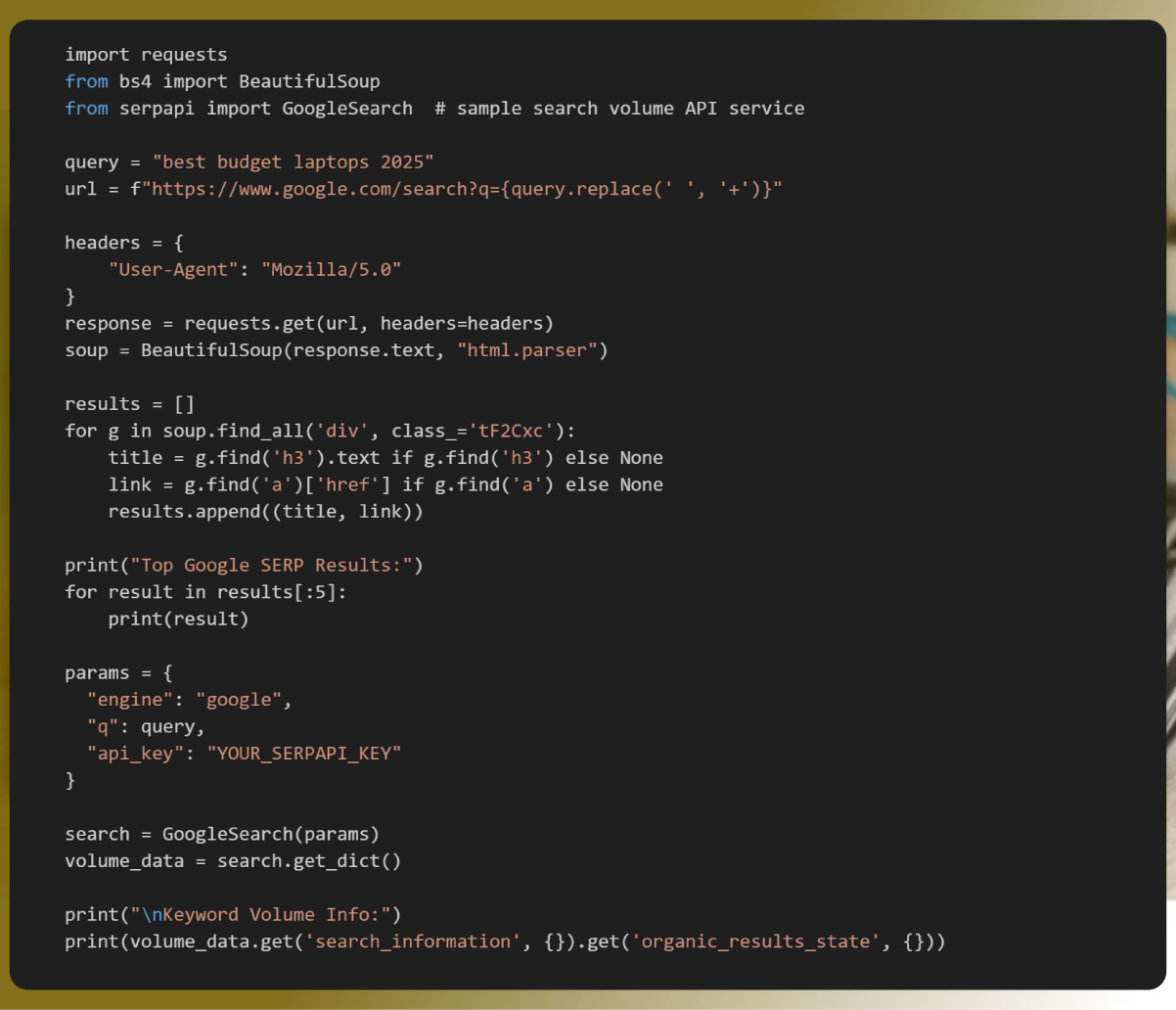
Below is a simple example demonstrating how to extract SERPs from Google results and fetch keyword volume using available libraries and APIs. This demonstration uses Python’s requests and BeautifulSoup to collect search results for the keyword “best budget laptops 2025”.
Note: This example is for educational purposes only. Always respect robots.txt, TOS, and use official APIs for production environments.
With simple modifications, this script can be turned into a production-level tool for performance tracking, campaign management, and market intelligence reporting.
| Industry | Use Case | Example Outcome |
|---|---|---|
| E-Commerce | Pricing & Product Keyword Trends | Increased traffic through optimized category pages |
| SaaS | Competitor Ranking Tracking | Identifying keyword gaps and rewriting content |
| Finance | Trending Demand Analysis | Targeting seasonal investment keyword spikes |
| Travel | Search Intent Mapping | Improving visibility with FAQs and PAA |
| Education | Enrollment Lead Generation | Ranking for high-demand course searches |
Businesses using automated scraping tools develop faster, more accurate SEO strategies, outperforming competitors who rely on guesswork.
Extracting SERPs and keyword volume data enables organizations to convert search insights into measurable competitive advantage. With accurate real-time search data, marketers can strengthen content performance, expand keyword opportunities, and build winning ranking strategies supported by automation. Professional Web Scraping Services provide scalable tools to process large query sets and extract structured insights. In addition, Enterprise Web Crawling Services support high-volume collection of live search ranking metrics across global markets. For companies focused on brand visibility measurement, Share of Search Services delivers deep competitive intelligence to drive smarter SEO and growth decision-making.
Experience top-notch web scraping service and mobile app scraping solutions with iWeb Data Scraping. Our skilled team excels in extracting various data sets, including retail store locations and beyond. Connect with us today to learn how our customized services can address your unique project needs, delivering the highest efficiency and dependability for all your data requirements.
SERP scraping is the process of automatically collecting search engine results pages to analyze keyword rankings, featured snippets, People Also Ask boxes, and competitor positions. It helps marketers understand ranking opportunities, evaluate search intent, and build more effective optimization strategies.
Yes. By extracting ranking positions, ad placements, and keyword targeting strategies regularly, businesses can measure shifts in competitor visibility, benchmark performance, and improve their own content and advertising approach through data-backed decisions.
Python libraries like BeautifulSoup, Requests, and automated browsers such as Selenium are widely used. For high-scale systems, APIs and automation frameworks offer improved reliability when capturing large datasets without manual intervention.
Scraping publicly accessible search data is generally allowed when done ethically, following rate limits, avoiding personal data extraction, and respecting robots.txt guidelines. Many businesses use SERP data for analytics, keyword intelligence, and market research within permissible boundaries.
The frequency depends on search volatility and industry competition. High-competition industries may scrape daily or weekly, whereas stable niches may update data monthly to track ranking trends, keyword movements, and performance shifts effectively.