
67.9K+
TOTAL EVENT ENGAGEMENT RECORDS PROCESSED
Whova Event Data Extraction empowers organizations with attendee insights, exhibitor analytics, engagement tracking, and conference intelligence.
This case study is based on a real-world enterprise scenario where an event intelligence and conference analytics organization leveraged large-scale event data collection to improve visibility into attendee behavior, networking activity, exhibitor participation, and session engagement trends. By implementing Whova Event Data Extraction, the organization transformed fragmented conference information into structured intelligence that supported sponsorship planning, attendee engagement optimization, and event performance forecasting.
The client also required the ability to Scrape Whova Event Management Data in order to maintain continuous visibility into conference schedules, speaker activity, exhibitor participation, attendee registrations, networking interactions, and event engagement metrics across a diverse portfolio of conferences and trade shows.
It is designed for:
The client faced a growing challenge. Event data was scattered across multiple conference environments, making it difficult to understand attendee participation patterns, networking behavior, exhibitor performance, and session popularity in a unified manner. Leadership teams needed a centralized intelligence framework capable of transforming large volumes of event activity into actionable business insights.
A recent industry initiative explored how event intelligence teams could unlock greater value from conference ecosystems through large-scale data extraction and advanced analytics. Organizations deployed automated collection frameworks to monitor attendee interactions, conference growth, exhibitor participation, and engagement performance across hundreds of events.
Analysts leveraged structured datasets to evaluate networking activity, attendee engagement trends, exhibitor performance, and event participation dynamics. Advanced processing systems enabled organizations to Extract Whova conference data and transform complex event information into intelligence-ready datasets suitable for forecasting and strategic planning.
The initiative also introduced comprehensive Whova exhibitor analytics, allowing event operators and sponsors to evaluate exhibitor engagement quality, booth activity levels, audience reach, and lead generation effectiveness across different event categories and industry sectors.
Machine learning models were used to identify attendee engagement clusters, networking intensity patterns, session popularity drivers, and exhibitor performance trends. These insights were delivered through real-time dashboards that enabled stakeholders to improve event planning, sponsorship strategies, attendee engagement initiatives, and portfolio expansion decisions.
The project ultimately demonstrated how large-scale conference intelligence systems can transform fragmented event activity into structured business value. By centralizing attendee, exhibitor, speaker, and session data, organizations achieved stronger forecasting capabilities, improved event visibility, and enhanced strategic decision-making.
The client experienced significant difficulties monitoring attendee activity, exhibitor participation, networking engagement, and conference performance across a rapidly expanding event ecosystem. Existing event intelligence tools lacked the scalability required to process large volumes of conference data efficiently.
Another major challenge was the absence of reliable Whova Event Listings Data Scraping, which limited the organization's ability to track new conference launches, event schedule changes, speaker additions, and exhibitor participation updates across multiple industries.
The client also lacked consolidated Whova conference platform Data insights, making it difficult to compare conference performance, attendee engagement levels, and exhibitor effectiveness across different event categories and geographical markets.
Additionally, limited access to structured Whova event industry intelligence restricted the organization's ability to identify emerging event sectors, high-growth conference categories, and changing attendee preferences within the broader event ecosystem.
Manual monitoring processes required analysts to review event information individually, resulting in delayed reporting cycles and limited operational efficiency. Critical engagement signals were frequently identified after strategic planning decisions had already been made.
The organization also struggled to evaluate networking effectiveness, attendee retention behavior, and sponsorship performance using fragmented event datasets collected from multiple conference environments.
To address these challenges, the client required a scalable intelligence framework capable of continuously collecting, processing, and enriching conference data while maintaining consistency, accuracy, and operational scalability.
Ultimately, they needed a comprehensive event intelligence solution that could unify data collection, improve analytical accuracy, and support faster strategic decision-making across conference operations and event portfolio management.
By implementing a structured Whova intelligence framework, the organization replaced fragmented event monitoring processes with an automated conference analytics pipeline capable of continuously tracking attendee participation, networking activity, exhibitor engagement, and session performance across multiple event ecosystems.
| Dimension | Manual Event Tracking | Client Data Scraping System |
|---|---|---|
| Data Collection | Individual event reviews and manual monitoring | Automated multi-event intelligence collection |
| Insight Delivery | Delayed reporting cycles | Continuous intelligence updates |
| Data Organization | Separate spreadsheets and reports | Centralized structured event datasets |
| Engagement Tracking | Limited attendee visibility | Comprehensive interaction monitoring |
| Exhibitor Analysis | Manual performance reviews | Automated exhibitor intelligence |
| Operational Coverage | Restricted conference visibility | Scalable global event monitoring |
The brand in focus is a rapidly expanding event intelligence and conference analytics organization operating across a diverse network of trade shows, professional conferences, educational summits, and industry exhibitions. Its primary objective is to understand attendee engagement, networking behavior, exhibitor performance, sponsorship effectiveness, and conference growth patterns at scale.
As the organization's event portfolio expanded, leadership faced increasing challenges associated with monitoring thousands of attendee interactions, exhibitor activities, and conference updates occurring across multiple industries. Traditional reporting systems could no longer provide the speed and analytical depth required for effective decision-making.
To overcome these limitations, the organization adopted an intelligence-driven framework powered by automated extraction technologies and advanced analytics pipelines. These systems transformed raw conference information into structured datasets suitable for forecasting, benchmarking, and strategic planning initiatives.
Operating within a rapidly evolving event ecosystem, the organization depends on continuous visibility into attendee participation trends, networking engagement levels, exhibitor performance metrics, and session effectiveness indicators. These intelligence capabilities support conference optimization, sponsorship planning, and audience growth strategies across diverse event categories.
The transition from manual event monitoring to automated conference intelligence significantly improved the organization's ability to identify growth opportunities, evaluate event performance, and respond proactively to changing attendee preferences. As a result, the brand established a scalable foundation for long-term event intelligence generation and data-driven conference management.
We delivered a comprehensive event intelligence solution designed to convert large volumes of conference activity into structured business insights. The framework combined automated extraction technologies, advanced processing pipelines, and cloud-based analytics infrastructure to create a scalable environment for conference intelligence generation.
The system collected attendee interactions, exhibitor activities, session participation metrics, networking engagement signals, speaker information, and conference schedule updates from multiple event environments. Advanced processing layers removed duplicate records, standardized event metadata, and enriched datasets with performance indicators that improved analytical consistency.
The platform also enabled cross-event benchmarking, attendee segmentation, exhibitor performance monitoring, and networking trend analysis. These capabilities allowed the client to identify high-performing events, evaluate audience engagement quality, and uncover opportunities for sponsorship optimization.
To further enhance visibility, the solution integrated Whova location-based event data Extraction capabilities that mapped conference activity across regions, venues, and event categories. This allowed stakeholders to analyze geographic participation patterns and identify emerging event markets with greater accuracy.
Advanced intelligence models measured attendee retention, networking effectiveness, exhibitor engagement quality, and session popularity trends. Real-time dashboards delivered actionable insights to event planners, sponsors, and operational teams while reducing manual reporting efforts significantly.
The final architecture supported continuous event intelligence generation through automated data collection, processing, enrichment, and visualization workflows. As a result, the organization achieved scalable conference analytics capable of supporting strategic planning, event optimization, and portfolio growth initiatives.
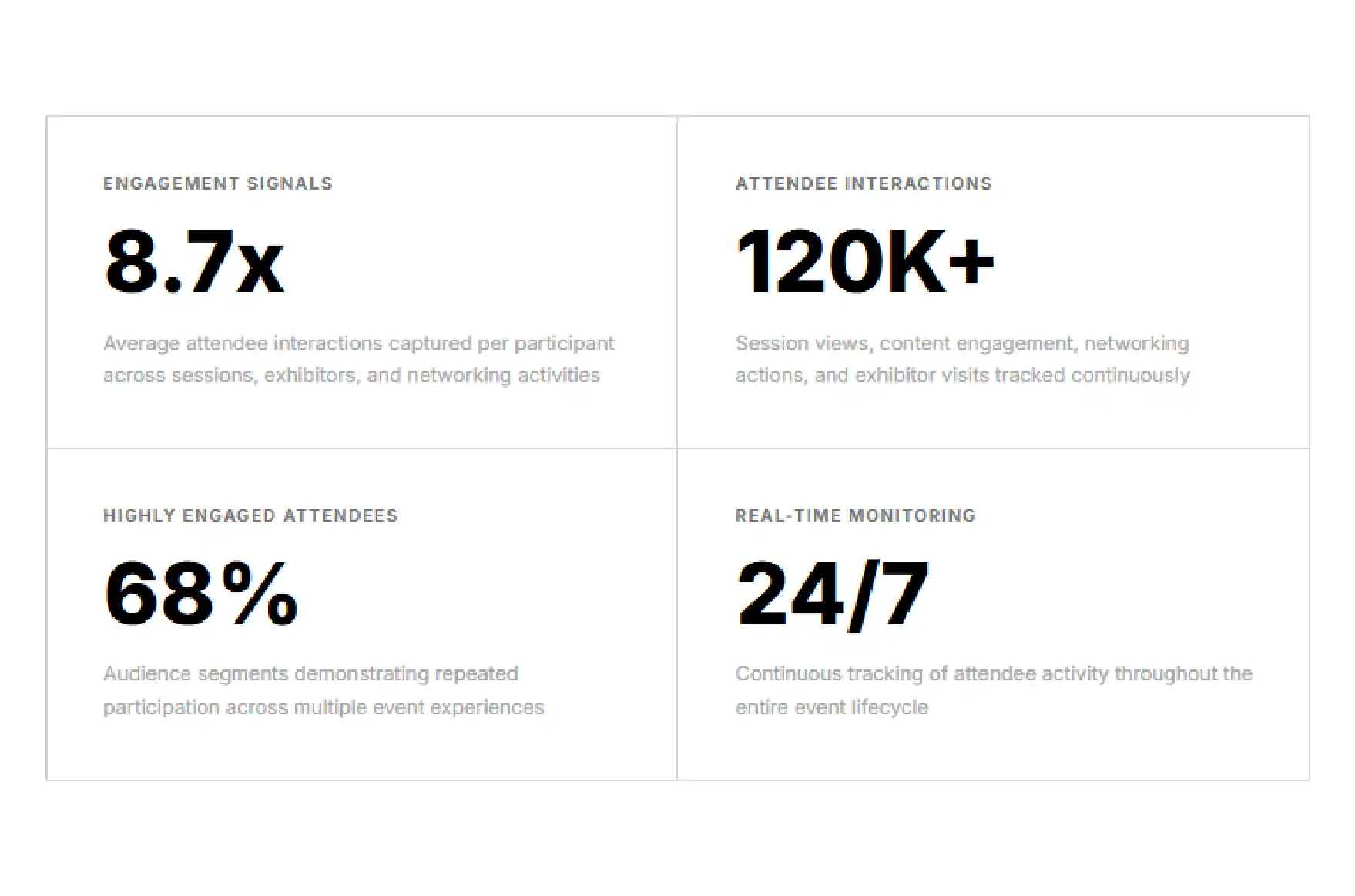
The implementation of continuous conference intelligence monitoring provided the client with a significantly deeper understanding of attendee behavior across multiple event categories. Rather than relying on post-event summaries, stakeholders gained access to real-time engagement indicators that highlighted participation levels as events unfolded.
The system tracked attendee interactions with sessions, exhibitors, networking activities, and event content. This enabled teams to identify highly engaged audience segments and understand which event experiences generated the strongest levels of participation.
As a result, planners were able to adjust engagement strategies more effectively, improve attendee experiences, and optimize conference programming based on actual interaction patterns rather than assumptions.
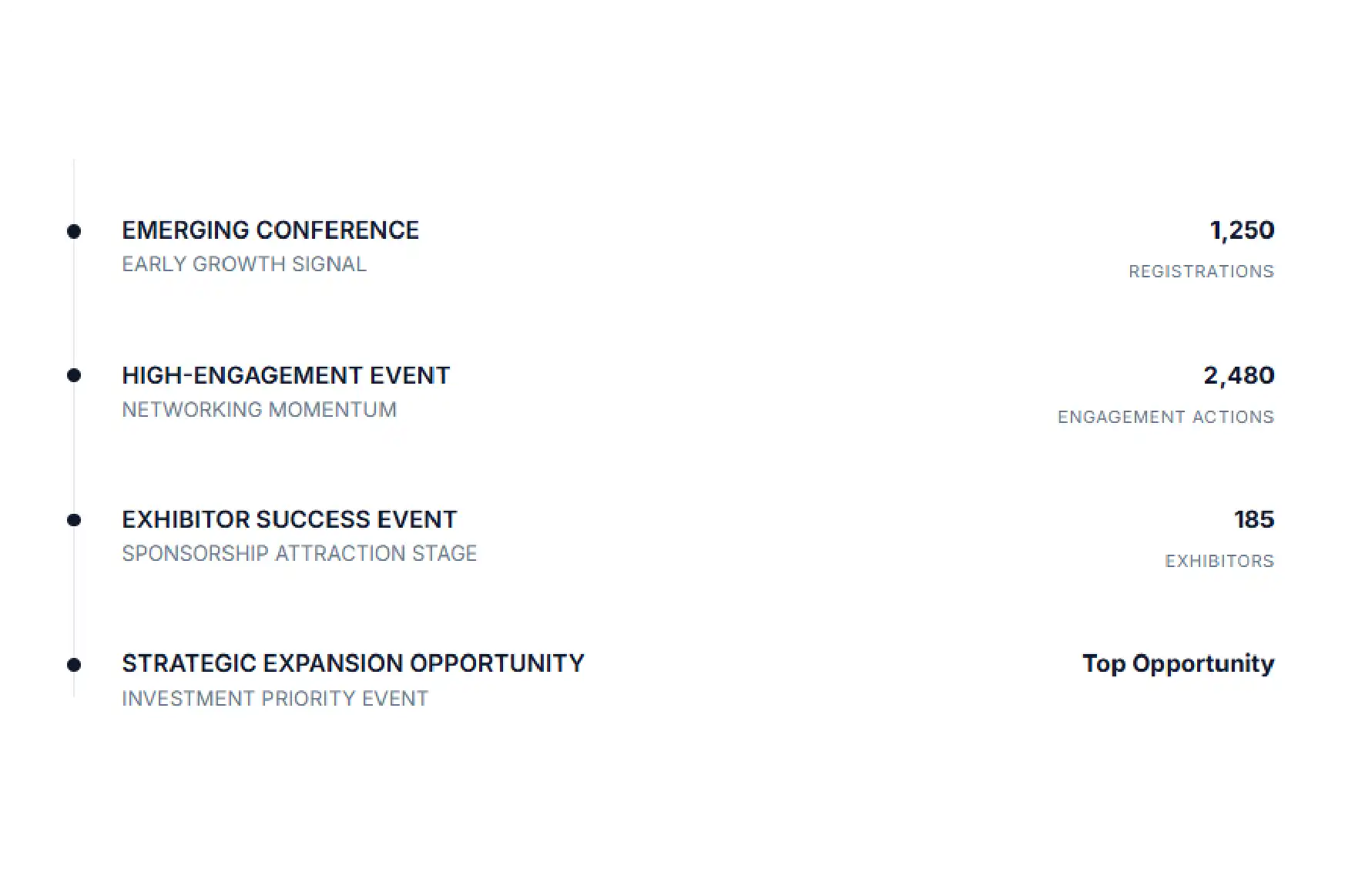
The intelligence framework enabled rapid detection of conferences demonstrating above-average growth in attendee registrations, networking activity, and exhibitor participation. By monitoring event signals continuously, stakeholders could identify emerging opportunities earlier than traditional reporting systems allowed.
The platform highlighted events generating exceptional engagement levels and revealed which conference formats consistently attracted stronger audience participation. These insights supported more effective sponsorship planning, resource allocation, and event expansion decisions.
Organizations could also identify underperforming events more quickly and implement corrective actions before engagement levels declined significantly.
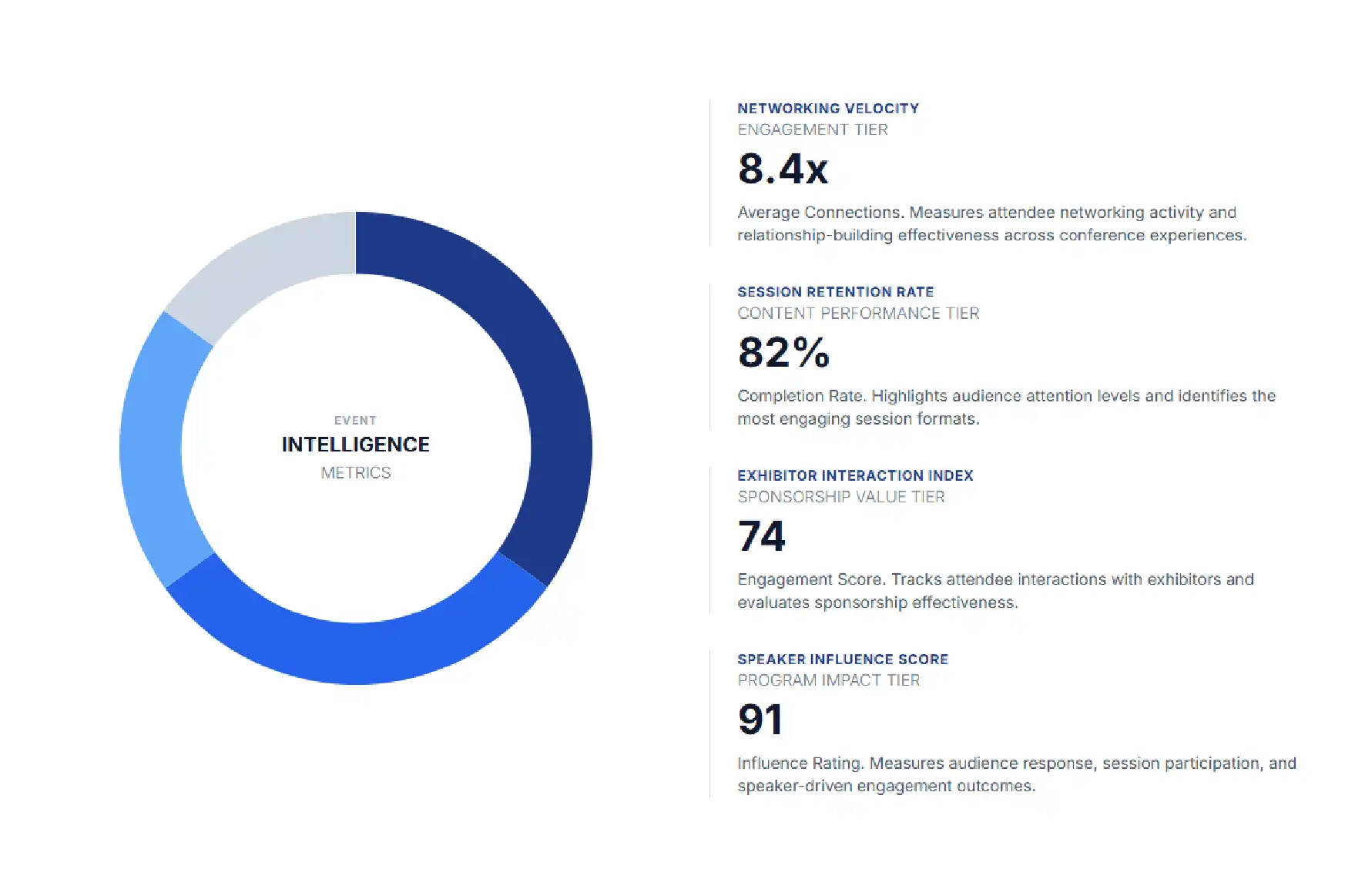
The transformation of fragmented conference information into structured datasets enabled consistent analysis of networking effectiveness and exhibitor performance across event portfolios. Teams gained visibility into how attendees interacted with exhibitors, participated in networking sessions, and engaged with conference experiences.
The structured intelligence environment supported detailed benchmarking initiatives and helped identify factors influencing attendee satisfaction and sponsor value creation.
| Metric | Intelligence Generated | Strategic Value |
|---|---|---|
| Networking Velocity | Attendee connection frequency | Improved engagement planning |
| Session Retention Rate | Average session completion levels | Content optimization |
| Exhibitor Interaction Index | Booth engagement performance | Sponsorship effectiveness |
| Speaker Influence Score | Audience engagement impact | Program enhancement |
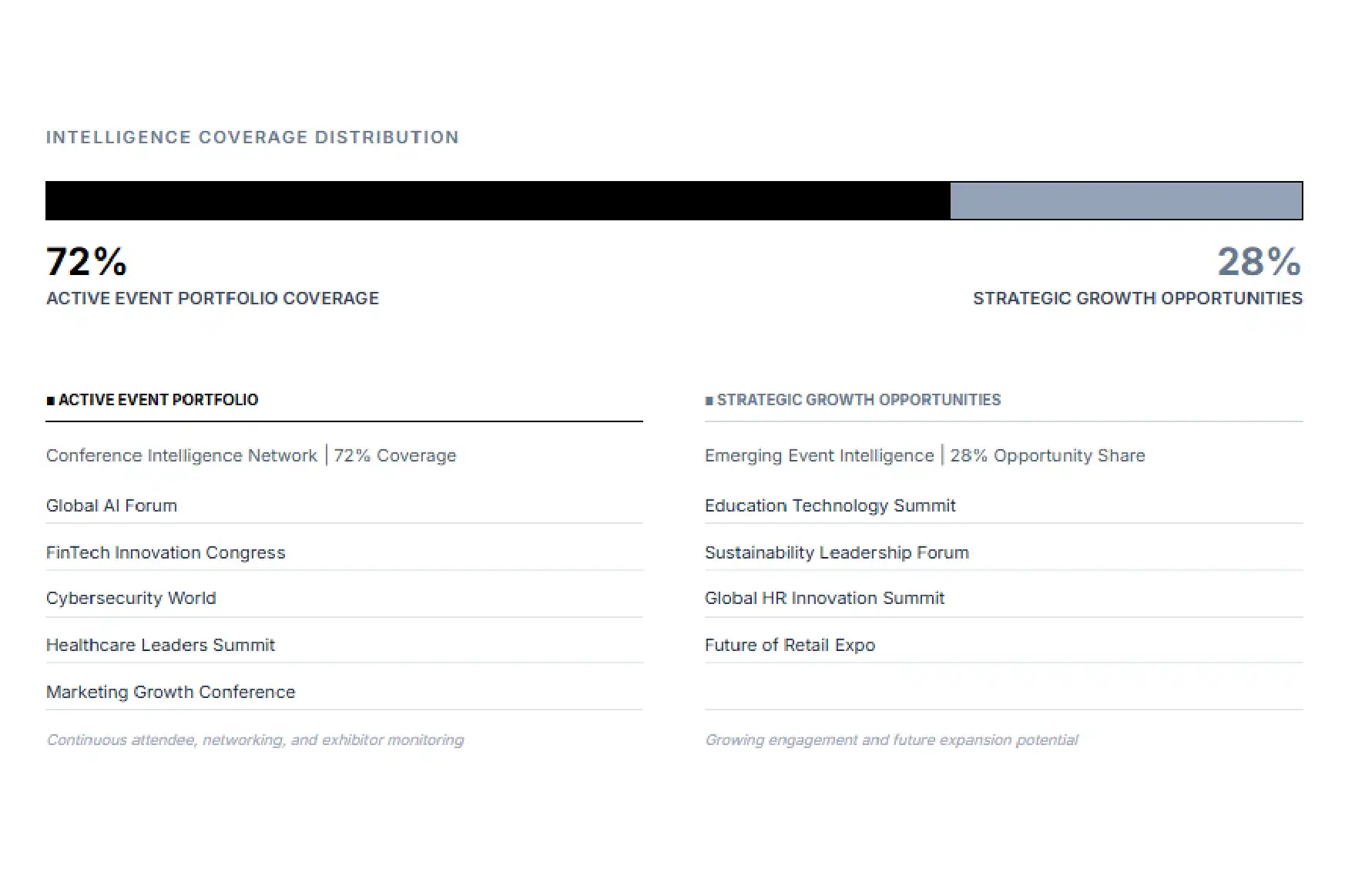
The automated analytics environment enabled the organization to monitor hundreds of conferences, trade shows, and professional events simultaneously. Unlike traditional approaches that relied heavily on manual reviews, the platform continuously processed high volumes of conference activity data while maintaining consistency and analytical accuracy.
This scalability allowed the client to expand intelligence coverage significantly without increasing operational complexity. Event planners gained access to standardized performance measurements across diverse conference categories, enabling more effective portfolio management and strategic decision-making.
The ability to process growing volumes of event intelligence also established a foundation for future analytics initiatives and long-term organizational growth.
The following dataset snapshot illustrates conference engagement patterns across different industries. The data highlights variations in attendee participation, exhibitor activity, networking engagement, and overall event demand.
| Event | Industry | Attendees | Engagement Index | Demand Trend | Key Insight |
|---|---|---|---|---|---|
| Global AI Forum | Technology | 21,450 | High | Growing | Strong Innovation Interest |
| Healthcare Leaders Summit | Healthcare | 16,280 | High | Stable | Executive Participation |
| Future of Retail Expo | Retail | 12,950 | Medium | Growing | Omnichannel Strategies |
| FinTech Innovation Congress | Finance | 18,670 | High | Strong | Digital Banking Growth |
| Education Technology Summit | Education | 11,430 | Medium | Stable | Learning Transformation |
| Smart Manufacturing Expo | Manufacturing | 13,820 | High | Growing | Industry Automation |
| Marketing Growth Conference | Marketing | 15,790 | High | Strong | Customer Acquisition Trends |
| Cybersecurity World | Technology | 19,360 | High | Growing | Enterprise Security Demand |
| Sustainability Leadership Forum | ESG | 10,940 | Medium | Stable | Environmental Initiatives |
| Global HR Innovation Summit | Human Resources | 9,870 | Medium | Growing | Workforce Transformation |
Following the implementation of structured Whova intelligence systems, the client achieved measurable improvements across event planning, engagement monitoring, sponsorship optimization, and conference analytics operations.
Our event intelligence approach enables organizations to unify conference data collection across diverse event ecosystems while transforming fragmented information into structured business value.
The solution continuously captures attendee activity, networking interactions, exhibitor engagement, speaker participation, and session performance metrics. This provides organizations with real-time visibility into conference operations and audience behavior.
Through advanced validation, normalization, and enrichment processes, the platform delivers highly accurate intelligence outputs suitable for forecasting, benchmarking, and strategic planning initiatives.
The architecture is designed for scalability, allowing organizations to process growing volumes of event data while maintaining analytical consistency and operational efficiency.
By converting conference activity into structured intelligence, organizations gain the insights necessary to optimize event performance, improve attendee experiences, strengthen sponsorship outcomes, and support long-term portfolio growth.
The event intelligence platform delivered exceptional value to our organization. Prior to implementation, our teams struggled to consolidate attendee engagement, networking activity, and exhibitor performance information across a growing conference portfolio.
The new solution provided a level of visibility we had never experienced before. We can now monitor conference performance in near real time, identify emerging engagement trends, and make strategic decisions based on accurate intelligence rather than fragmented reports.
The quality of the analytics, speed of processing, and flexibility of the reporting environment have significantly improved our operational effectiveness. The platform has become a critical component of our conference planning and sponsorship strategy initiatives.
— Director of Event Intelligence & Analytics
The project resulted in the deployment of a fully automated event intelligence ecosystem capable of transforming complex conference activity into actionable business insights. The organization achieved faster access to attendee engagement trends, exhibitor performance indicators, networking analytics, and conference growth opportunities.
Implementation of Web Scraping API Services enabled continuous collection and processing of conference information while maintaining high levels of data consistency and reliability. This provided stakeholders with a centralized intelligence environment for monitoring event performance and supporting strategic planning initiatives.
The deployment of Digital Shelf Analytics Solutions strengthened the organization's ability to analyze expanding event datasets while maintaining analytical scalability and operational efficiency. Advanced intelligence capabilities supported improved forecasting, sponsorship optimization, audience segmentation, and conference benchmarking efforts.
Additionally, the implementation of Web Scraping Services provided long-term infrastructure support for large-scale event intelligence generation, ensuring the platform could accommodate future growth without sacrificing performance or analytical quality.
Overall, the initiative delivered measurable improvements in operational efficiency, event visibility, sponsorship effectiveness, and conference intelligence maturity while establishing a scalable foundation for future event analytics initiatives.
Contact our team to discover how Whova event data analytics can help you uncover attendee trends, optimize exhibitor performance, and maximize event success.
Start a projectOur solutions help organizations collect, organize, and analyze conference and event data at scale. This enables stakeholders to gain deeper visibility into attendee behavior, exhibitor performance, networking activity, and event effectiveness.
We use automated validation, cleansing, standardization, and enrichment processes that improve consistency and ensure reliable intelligence outputs suitable for analytics and forecasting applications.
Yes. The infrastructure is designed to continuously process conference activity, attendee engagement, exhibitor participation, and schedule updates, providing stakeholders with timely intelligence and operational visibility.
Absolutely. The architecture supports large-scale event ecosystems and can efficiently process growing volumes of conference information while maintaining analytical performance and reliability.
Our solutions are valuable for event technology companies, conference organizers, exhibition operators, sponsorship teams, marketing organizations, professional associations, and enterprises seeking data-driven event optimization and audience engagement strategies.
We start by signing a Non-Disclosure Agreement (NDA) to protect your ideas.
Our team will analyze your needs to understand what you want.
You'll get a clear and detailed project outline showing how we'll work together.
We'll take care of the project, allowing you to focus on growing your business.