Introduction
The modern grocery industry is becoming increasingly data-driven as retailers, FMCG brands, and analytics firms rely on structured datasets to track pricing, assortment, and inventory trends across multiple platforms. One of the most valuable resources in this ecosystem is the Stop & Shop grocery data API, which enables businesses to collect structured grocery product information, real-time prices, stock availability, and promotional insights from the Stop & Shop ecosystem. In addition, the Stop & Shop product dataset offers detailed SKU-level attributes such as brand names, pack sizes, nutritional labels, and pricing changes, allowing companies to analyze consumer trends and optimize merchandising strategies. These insights are critical for businesses conducting grocery competitor price benchmarking, enabling retailers and brands to compare prices, promotions, and product availability across competing supermarkets.
Data APIs and scraping technologies now provide a scalable way to extract grocery market data automatically. Businesses can integrate such data pipelines into dashboards, BI tools, or machine learning systems to monitor price fluctuations, detect demand patterns, and evaluate product assortment strategies. According to industry sources, grocery data APIs allow real-time access to product listings, pricing updates, stock availability, and promotional campaigns across categories, enabling organizations to make faster and more informed decisions.
Overview of Stop & Shop Grocery Data API
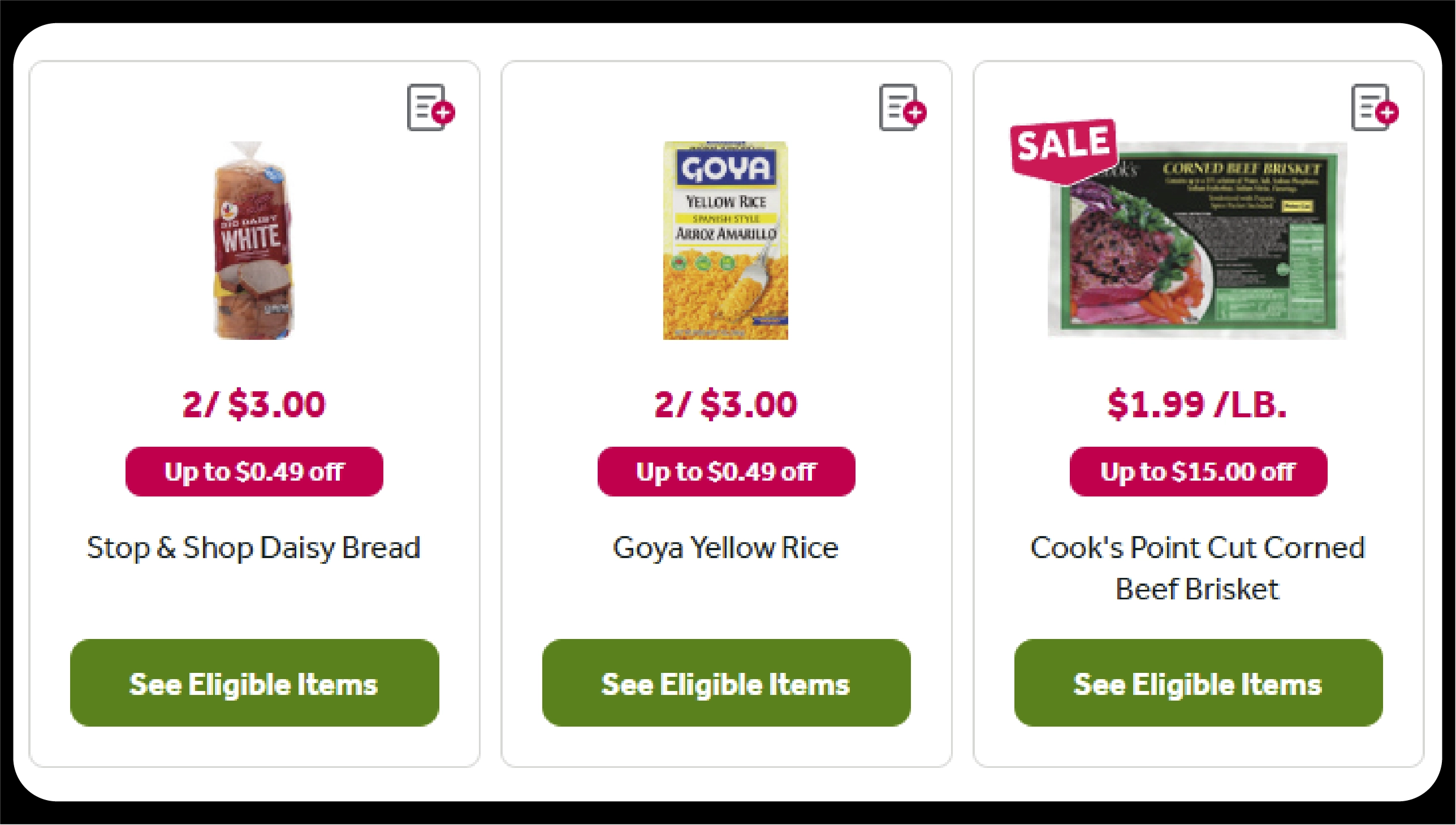
Stop & Shop is one of the major supermarket chains in the United States, operating hundreds of stores and serving millions of customers through both physical stores and online grocery delivery platforms. With the expansion of digital grocery retail, the ability to extract structured product information from these platforms has become a strategic necessity for businesses engaged in retail analytics.
The Stop & Shop grocery data API provides access to several critical datasets:
- Product catalog information
- SKU-level pricing updates
- Category-wise grocery listings
- Discount and promotion tracking
- Inventory availability by location
- Store location data
These APIs typically deliver data in structured formats such as JSON or CSV, enabling seamless integration into data warehouses and analytics systems. Businesses can monitor thousands of SKUs simultaneously and track price changes across categories such as fresh produce, beverages, dairy products, frozen foods, and household essentials.
Key Data Points Extracted Through Grocery APIs
Retail intelligence solutions built around grocery APIs capture a wide range of attributes that help businesses perform strategic analysis. These include product details, pricing updates, promotional offers, and supply-chain indicators.
| Product Name |
Name of the grocery item listed on the platform |
Identifies SKUs and brand positioning |
| Brand Name |
Manufacturer or brand owner |
Enables brand performance analysis |
| Category & Subcategory |
Product classification |
Helps with assortment analysis |
| Price |
Current selling price |
Supports pricing strategy optimization |
| Discount |
Promotional discounts or deals |
Enables promotion tracking |
| Stock Availability |
Inventory status across stores |
Helps forecast demand |
| Product Description |
Ingredients, weight, packaging |
Enhances product intelligence |
| Ratings & Reviews |
Consumer feedback |
Helps understand customer preferences |
| Store Location |
Location of the store or warehouse |
Enables regional analysis |
| Delivery Availability |
Online delivery or pickup options |
Helps analyze omnichannel performance |
Such structured datasets are widely used by retailers, e-commerce platforms, and analytics firms to generate actionable retail price monitoring data and improve pricing decisions across markets.
Retail Pricing Analytics and Market Intelligence
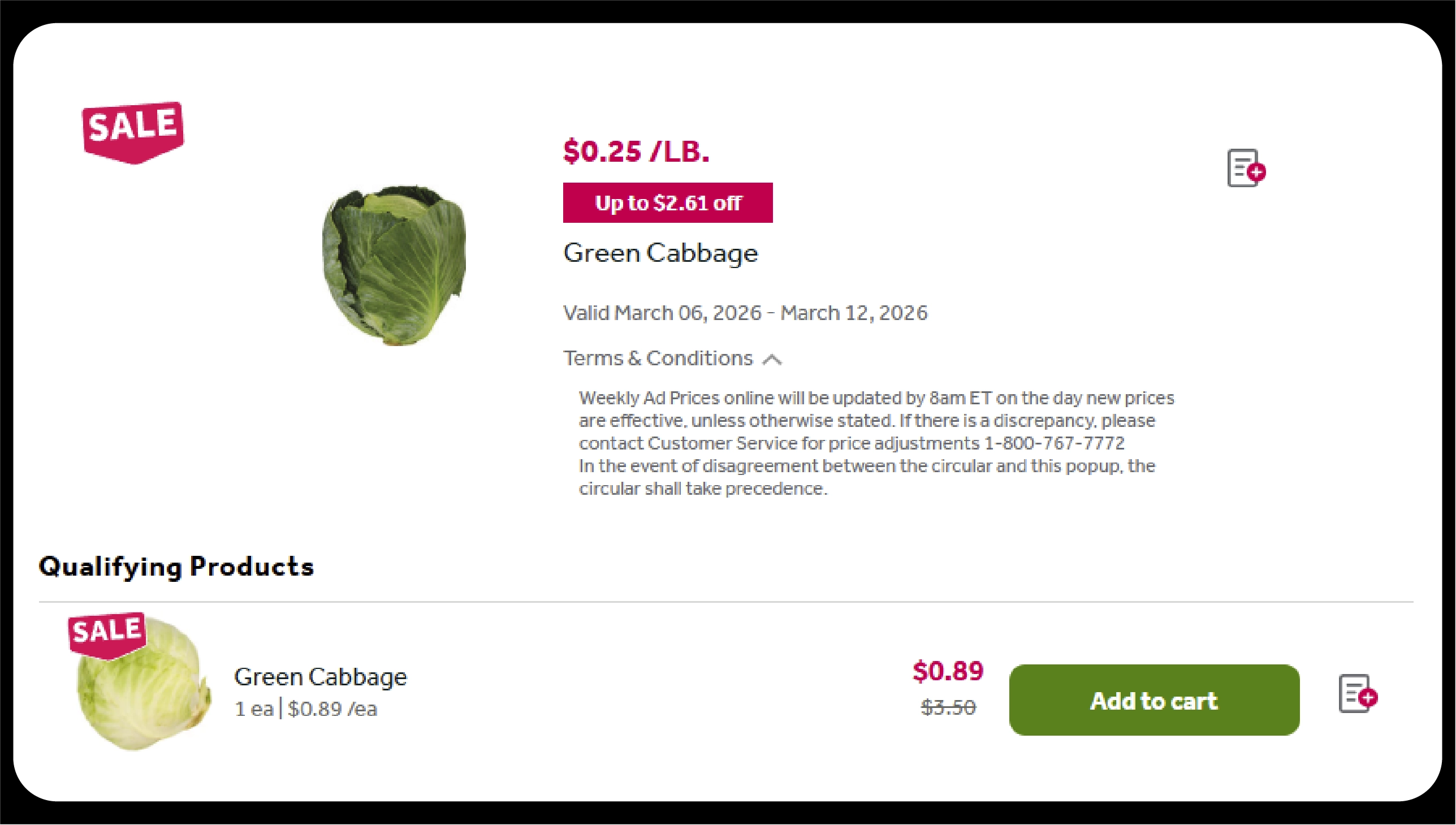
Retailers face intense competition in the grocery sector where even small price differences can influence consumer buying behavior. Therefore, continuous monitoring of competitor pricing is essential for maintaining competitive positioning.
With advanced data extraction systems, companies can generate grocery price intelligence that tracks pricing movements across thousands of products. This enables analysts to:
- Detect sudden price fluctuations
- Identify promotional campaigns
- Track discount frequency by category
- Compare private label vs branded pricing
- Evaluate price elasticity across regions
For example, a grocery analytics dashboard may track price changes for staple items such as milk, bread, rice, and cooking oil across multiple retailers. When integrated with predictive analytics tools, these insights can help retailers adjust prices dynamically and optimize margins.
Example: Category-Wise Grocery Pricing Trends
Below is an illustrative dataset showing category-level pricing insights collected through automated grocery data APIs.
| Fresh Produce |
$2 – $7 |
28% |
1,200 |
High |
| Dairy Products |
$3 – $9 |
22% |
950 |
Medium |
| Frozen Foods |
$4 – $12 |
31% |
800 |
Medium |
| Snacks & Beverages |
$2 – $10 |
35% |
1,500 |
High |
| Bakery Products |
$3 – $8 |
25% |
650 |
Medium |
| Meat & Seafood |
$6 – $25 |
20% |
550 |
High |
| Household Essentials |
$5 – $18 |
18% |
720 |
Low |
| Personal Care |
$4 – $15 |
21% |
640 |
Low |
Such insights help businesses perform Stop & Shop retail assortment monitoring, identifying which categories experience the highest pricing volatility and promotional activity.
Technology Behind Grocery Data APIs
Modern grocery data extraction systems combine several technologies to ensure high-accuracy datasets:
- Automated Web Crawlers – Extract product listings and metadata from grocery websites and delivery platforms.
- API Integration Layers – Deliver structured datasets via endpoints such as /products, /offers, or /availability.
- Real-Time Monitoring Pipelines – Detect price updates and inventory changes instantly.
- Cloud Data Warehouses – Store massive SKU-level datasets for analysis.
- Analytics Dashboards – Visualize pricing trends, promotions, and assortment changes.
These technologies enable businesses to conduct Stop & Shop grocery pricing data scraping at scale, ensuring continuous monitoring of thousands of grocery products across multiple locations.
Use Cases for Stop & Shop Grocery Data
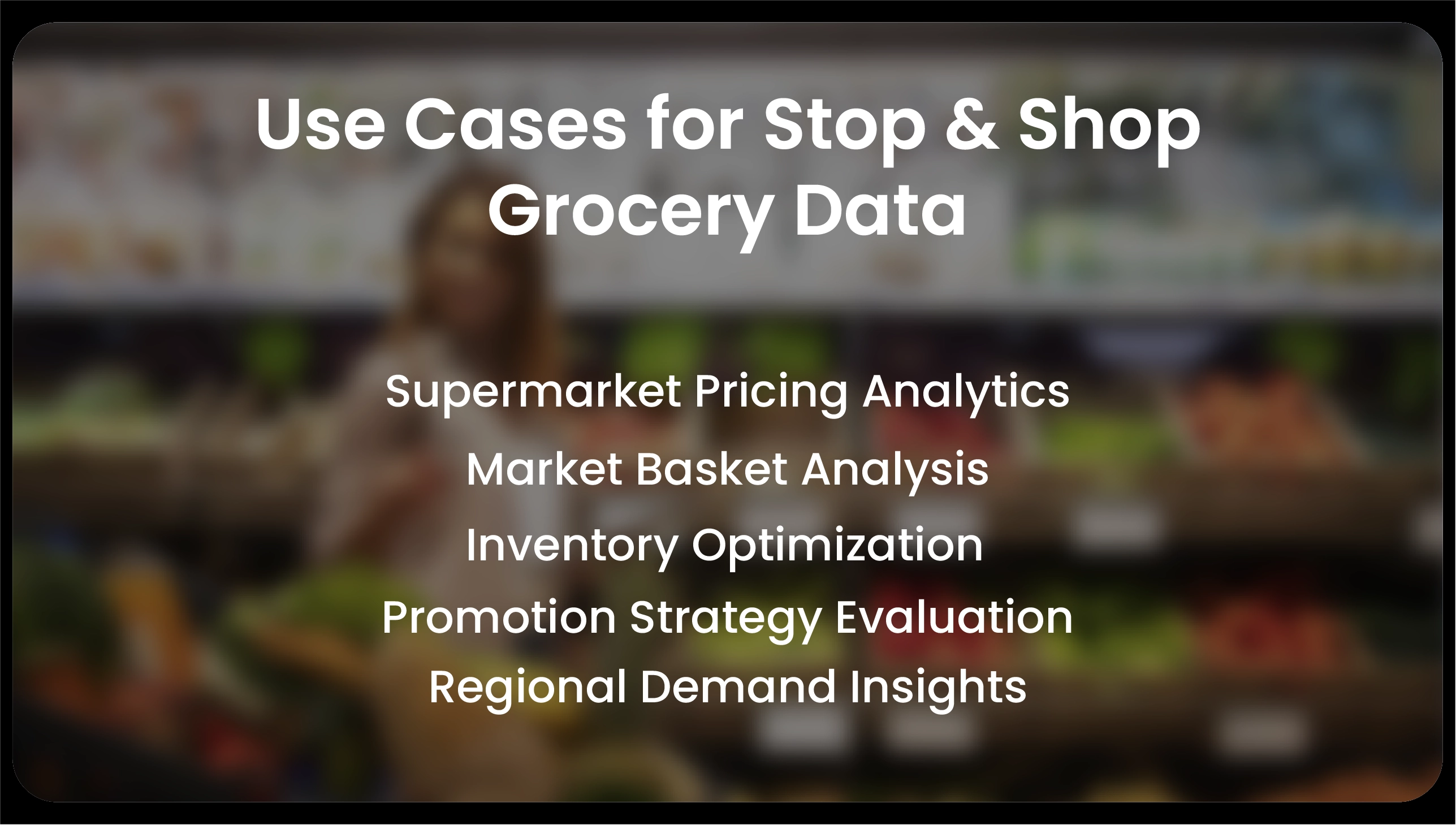
The availability of structured grocery data opens up a wide range of strategic applications.
1. Supermarket Pricing Analytics
Retailers analyze competitor pricing and promotional campaigns using automated datasets. This allows them to optimize their pricing strategies and improve profit margins.
2. Market Basket Analysis
Consumer purchase patterns can be analyzed using product datasets to determine cross-selling opportunities.
3. Inventory Optimization
Monitoring stock availability helps identify fast-moving and slow-moving products, improving supply chain planning.
4. Promotion Strategy Evaluation
Brands can measure the effectiveness of discounts and bundle deals across categories.
5. Regional Demand Insights
By analyzing location-level datasets, companies can understand regional variations in grocery demand.
Such capabilities are essential for large retailers and analytics firms that rely on Stop & Shop supermarket price tracking to maintain competitive intelligence.
Example: Stop & Shop Grocery Pricing Dataset
The following sample dataset demonstrates how structured grocery APIs provide detailed product-level insights.
| Organic Whole Milk |
Dairy |
Nature's Promise |
1 Gallon |
5.49 |
10% |
In Stock |
4.6 |
| Fresh Bananas |
Produce |
Store Brand |
1 lb |
0.79 |
5% |
In Stock |
4.4 |
| Whole Wheat Bread |
Bakery |
Pepperidge Farm |
24 oz |
3.99 |
15% |
In Stock |
4.5 |
| Frozen Pizza |
Frozen Foods |
DiGiorno |
12 in |
7.49 |
12% |
In Stock |
4.3 |
| Greek Yogurt |
Dairy |
Chobani |
5.3 oz |
1.29 |
8% |
Limited |
4.7 |
| Orange Juice |
Beverages |
Tropicana |
52 oz |
4.99 |
10% |
In Stock |
4.6 |
| Chicken Breast |
Meat |
Perdue |
1 lb |
6.99 |
5% |
In Stock |
4.5 |
| Potato Chips |
Snacks |
Lay's |
8 oz |
3.49 |
20% |
In Stock |
4.4 |
| Dish Soap |
Household |
Dawn |
24 oz |
4.29 |
12% |
In Stock |
4.6 |
| Shampoo |
Personal Care |
Pantene |
12 oz |
6.99 |
10% |
In Stock |
4.5 |
Retail analytics teams can transform this dataset into a comprehensive Stop & Shop pricing benchmark report, comparing prices across multiple grocery chains and regions.
Strategic Advantages for Businesses
Organizations using grocery data APIs gain several competitive advantages:
- Automated data collection – Eliminates manual monitoring of thousands of SKUs
- Real-time analytics – Provides instant insights into pricing and inventory changes
- Competitor intelligence – Tracks pricing strategies of competing supermarkets
- Demand forecasting – Identifies seasonal demand patterns
- Retail assortment insights – Detects product launches and category expansion
With these capabilities, businesses can generate robust grocery intelligence reports that guide strategic decision-making.
Challenges in Grocery Data Extraction

While grocery APIs provide powerful insights, there are several challenges in implementing them effectively:
- Frequent Website Changes – Retail websites often modify layouts or APIs.
- Regional Price Variations – Prices may vary significantly by store location.
- Large Data Volumes – Grocery platforms may contain tens of thousands of SKUs.
- Data Normalization – Product names and pack sizes must be standardized across retailers.
Advanced scraping frameworks and data pipelines are therefore required to maintain accurate and reliable datasets.
Future of Grocery Data APIs
The grocery analytics ecosystem is evolving rapidly as retailers embrace automation, AI, and real-time analytics. Future developments may include:
- AI-driven price prediction models
- Automated promotional optimization
- Cross-platform grocery intelligence dashboards
- Integration with supply-chain analytics systems
- Real-time consumer demand forecasting
As grocery retail becomes more digital, structured data will play an increasingly important role in competitive strategy.
Conclusion
In the modern grocery industry, data has become one of the most valuable assets for retailers, brands, and analytics firms. Through automated extraction technologies, businesses can scrape Stop & Shop grocery product prices and transform raw data into actionable insights for pricing strategy, product planning, and market intelligence. These datasets enable the creation of comprehensive dashboards and analytics tools such as the Stop & Shop grocery pricing intelligence report, helping organizations identify pricing trends, promotional patterns, and category performance across markets.
By integrating scalable extraction pipelines and advanced analytics tools, companies can also build robust solutions using a grocery data scraping API, ensuring continuous access to structured grocery data that drives smarter business decisions in the highly competitive supermarket landscape.
Experience top-notch web scraping service and mobile app scraping solutions with iWeb Data Scraping. Our skilled team excels in extracting various data sets, including retail store locations and beyond. Connect with us today to learn how our customized services can address your unique project needs, delivering the highest efficiency and dependability for all your data requirements.