How Do Businesses Use Adzuna Job Data Scraping for Workforce Planning?
Introduction
The modern recruitment landscape is evolving rapidly, driven by digital job boards, remote work opportunities, salary transparency, and location-specific hiring demands. Organizations, staffing agencies, HR technology providers, workforce analysts, and market researchers increasingly rely on structured job market intelligence to understand employment trends and workforce dynamics. Adzuna Job Data Scraping has emerged as a powerful solution for extracting valuable job market insights from one of the world's leading employment search platforms.
Businesses today need access to accurate hiring data to identify emerging opportunities, benchmark salaries, monitor recruitment competition, and evaluate labor market conditions. Through method to Scrape Adzuna remote jobs data, organizations can gain deep visibility into remote work trends, helping them understand how industries are adapting to flexible work models. Similarly, Adzuna daily job listing Data Extraction enables continuous tracking of newly published vacancies, ensuring access to the latest recruitment information across sectors.
Why Adzuna Data Matters?
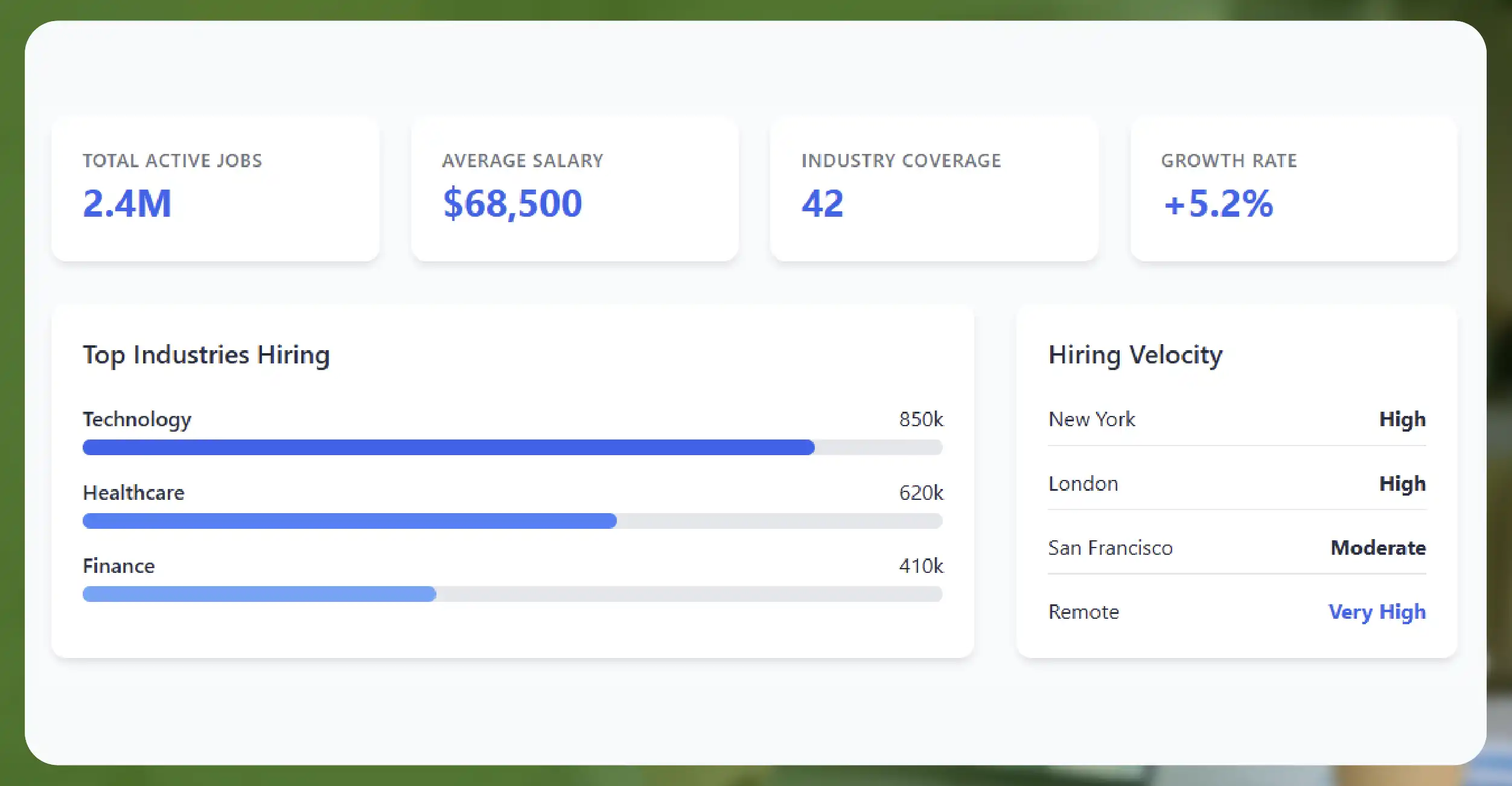
Adzuna aggregates millions of job advertisements from employers, recruitment agencies, and company career portals. This makes it a rich source of labor market intelligence covering multiple industries, regions, and job categories.
The platform contains detailed information such as job titles, employer names, locations, salary ranges, job descriptions, posting dates, employment types, required skills, and industry classifications. Extracting this data provides organizations with a comprehensive view of current hiring activity and workforce demand.
Whether a company wants to understand talent shortages, identify high-growth industries, monitor competitor hiring efforts, or optimize recruitment strategies, Adzuna data offers actionable insights that support informed decision-making.
Key Data Fields Extracted from Adzuna
A robust scraping solution can collect a wide range of structured recruitment information, including:
- Job title and designation
- Employer information
- Job location
- Salary details
- Employment type
- Industry classification
- Posting date
- Required qualifications
- Experience requirements
- Job descriptions
- Remote or hybrid work indicators
- Skills and certifications
These datasets can be integrated into dashboards, analytics systems, recruitment platforms, and workforce planning tools for deeper analysis.
Monitoring Recruitment Trends Across Industries
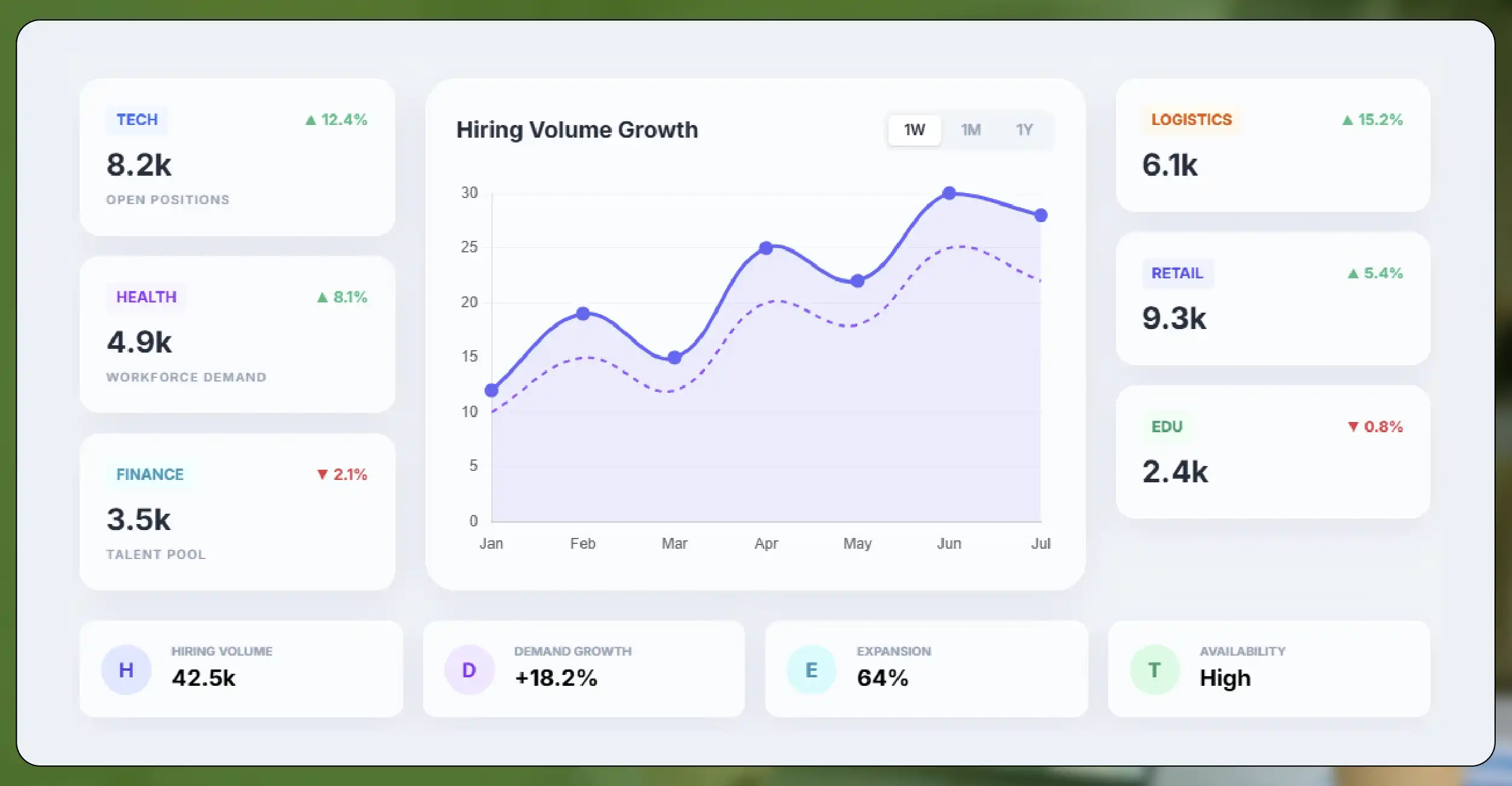
One of the primary benefits of recruitment intelligence is the ability to identify workforce demand patterns. Organizations can use extracted job data to monitor which industries are hiring aggressively and which sectors are experiencing slowdowns.
Through method to Scrape Adzuna recruitment trends, businesses can track hiring volumes across technology, healthcare, retail, logistics, manufacturing, education, finance, and other sectors. This information helps organizations anticipate market shifts, adjust hiring strategies, and align workforce planning initiatives with industry developments.
Recruitment agencies can also use these insights to focus their talent acquisition efforts on industries demonstrating strong employment growth.
Understanding Regional Hiring Patterns
Hiring activity varies significantly by geography. Employers often need visibility into location-specific workforce demand to make strategic expansion decisions.
Using Adzuna location-based hiring tracking, organizations can analyze recruitment activity across cities, regions, states, and countries. This enables businesses to identify labor market hotspots, emerging employment hubs, and regions experiencing rapid workforce growth.
Location intelligence can support decisions related to office expansion, workforce distribution, talent sourcing strategies, and regional compensation planning.
For multinational organizations, location-based job analytics can provide valuable insight into labor market competitiveness across different markets.
Salary Intelligence and Compensation Benchmarking
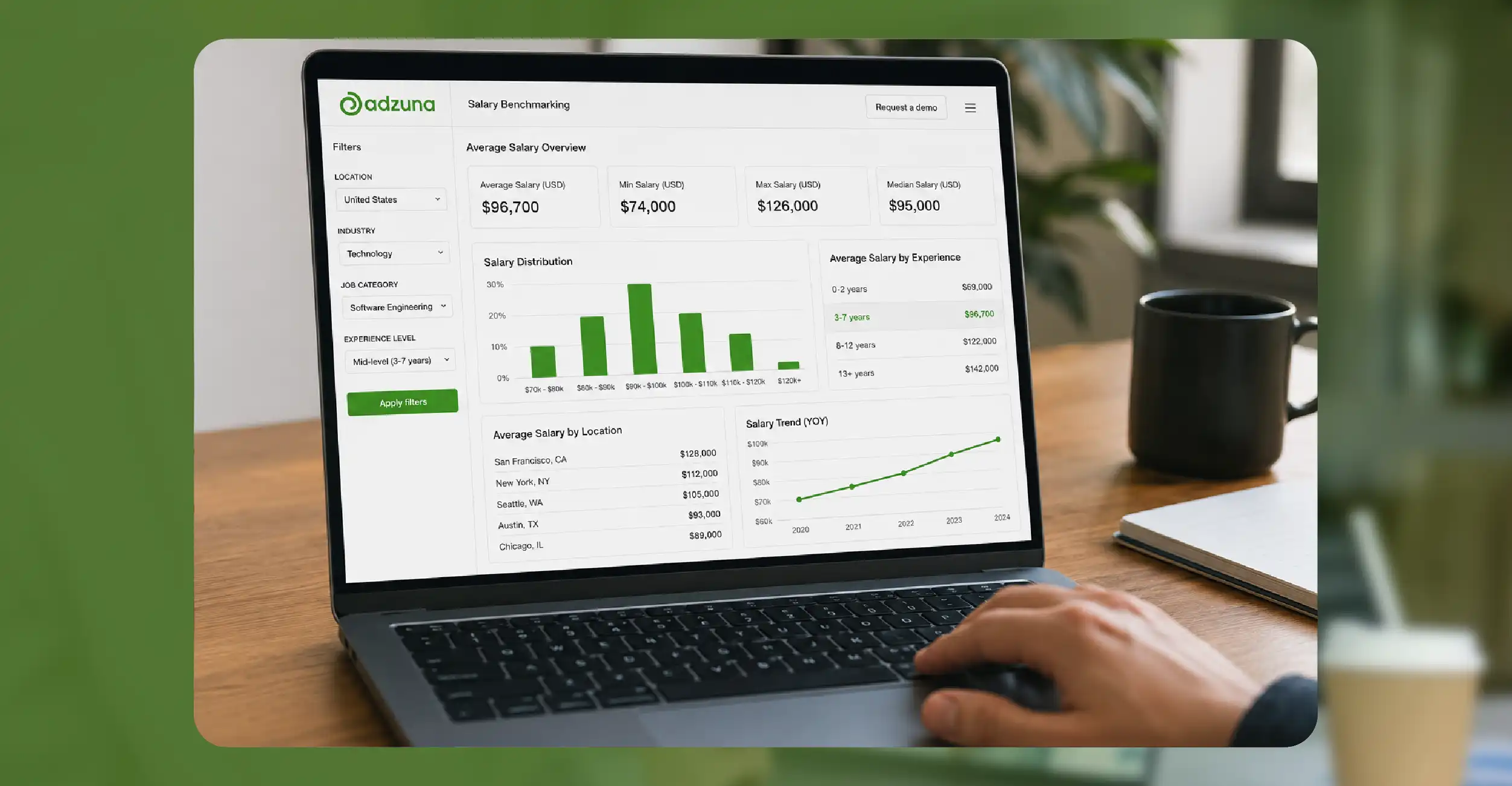
Salary transparency has become increasingly important for employers and job seekers alike. Understanding compensation trends helps organizations remain competitive while managing recruitment budgets effectively.
With Adzuna salary benchmarking analytics, companies can compare salary ranges across industries, locations, job categories, and experience levels. These insights assist HR teams in designing compensation packages that attract qualified candidates while maintaining internal salary consistency.
Recruitment firms can also leverage salary intelligence to advise clients on market rates and hiring competitiveness.
Compensation benchmarking contributes to improved recruitment outcomes by helping organizations align their salary offerings with prevailing market expectations.
Tracking Remote Work Opportunities
Remote and hybrid work have transformed employment markets globally. Businesses increasingly seek data-driven visibility into how remote hiring trends evolve across industries.
By extracting remote job postings, organizations can identify sectors embracing flexible work arrangements, monitor demand for remote talent, and evaluate geographic hiring flexibility.
Remote job intelligence supports workforce planning, talent acquisition strategies, and competitive benchmarking efforts. Companies can assess whether competitors are offering remote opportunities and adapt their recruitment approaches accordingly.
This data is particularly valuable for HR technology providers, workforce researchers, and employment analytics firms seeking to understand evolving workplace models.
Building Recruitment Intelligence Platforms
Large-scale recruitment datasets serve as the foundation for advanced workforce intelligence platforms.
Organizations can use an Adzuna recruitment Data API to integrate structured job information into internal systems, dashboards, talent analytics solutions, and business intelligence environments. Automated data pipelines enable continuous updates and real-time monitoring of labor market activity.
Recruitment intelligence platforms often combine job listings, salary information, skill requirements, and geographic trends to provide comprehensive labor market visibility.
Such solutions help businesses make informed decisions regarding hiring priorities, workforce investments, and talent acquisition strategies.
Supporting Workforce Planning and Talent Acquisition
Recruitment data provides valuable insights for long-term workforce planning initiatives.
Companies can identify skill shortages, emerging job roles, high-demand certifications, and changing qualification requirements. This information enables HR leaders to develop targeted hiring plans and workforce development programs.
By analyzing historical and real-time recruitment patterns, organizations can anticipate future talent requirements and proactively address workforce gaps.
Talent acquisition teams can also improve sourcing strategies by understanding which skills and job categories experience the highest market demand.
Accelerate your hiring intelligence today with our advanced data scraping solutions and transform recruitment data into powerful business growth insights.
Creating Valuable Recruitment Datasets
Organizations often require standardized recruitment information for research, analytics, and forecasting purposes. A structured Adzuna job dataset provides consistent and scalable access to labor market intelligence.
These datasets can be used for:
- Workforce analytics projects
- Salary benchmarking studies
- Labor market forecasting
- Competitive hiring analysis
- Economic research
- Recruitment technology development
- Machine learning applications
Researchers and consulting firms frequently leverage job datasets to evaluate employment trends and assess labor market conditions across industries and regions.
The availability of clean, structured recruitment data significantly improves the accuracy of workforce-related analysis and reporting.
Competitive Hiring Intelligence
Understanding competitor recruitment behavior provides strategic advantages in talent acquisition.
Organizations can analyze hiring volumes, job categories, geographic expansion efforts, and compensation offerings of competing employers. This information reveals business growth patterns, workforce investments, and emerging talent priorities.
Competitive hiring intelligence enables organizations to refine recruitment strategies, improve employer branding initiatives, and maintain a competitive position within their respective industries.
By continuously monitoring recruitment activity, businesses gain valuable visibility into market dynamics and workforce competition.
Data Integration and Advanced Analytics
Extracted recruitment data becomes significantly more valuable when integrated with analytics platforms and visualization tools.
Many organizations combine recruitment intelligence with broader market research initiatives, including Digital Shelf Analytics Solutions, business intelligence systems, and workforce analytics platforms. This integration creates a holistic view of market conditions, enabling deeper strategic analysis.
Advanced analytics can identify hiring forecasts, workforce demand trends, salary movements, skill evolution patterns, and regional employment opportunities. These insights support executive decision-making and long-term business planning.
How iWeb Data Scraping Can Help You?
Real-Time Job Market Intelligence
Our services deliver real-time recruitment insights by continuously extracting Adzuna job listings. This helps businesses monitor hiring demand shifts, emerging roles, and evolving industry trends for faster strategic decision-making.
Accurate Salary Benchmarking Data
We provide structured salary data extraction that enables precise benchmarking across roles, industries, and regions. Organizations can design competitive compensation strategies based on reliable, up-to-date market salary intelligence.
Location-Based Hiring Insights
Our scraping solutions capture geographic job distribution data, helping businesses understand regional hiring demand. This supports expansion planning, talent sourcing strategies, and targeted recruitment in high-growth employment locations.
Remote Work Trend Analysis
We extract remote and hybrid job listings to help organizations track evolving work models. Businesses can analyze remote hiring patterns and adapt workforce strategies to global flexible employment trends.
Scalable Recruitment Data Solutions
Our services deliver scalable, automated data pipelines for large-volume job extraction. This ensures consistent Adzuna recruitment intelligence, supporting analytics platforms, dashboards, and enterprise-level workforce planning systems efficiently.
Conclusion
As labor markets become increasingly dynamic and competitive, access to real-time recruitment intelligence is essential for organizations seeking data-driven workforce strategies. Adzuna provides a rich source of employment information that can be transformed into actionable insights through structured extraction and analysis.
Whether organizations want to monitor hiring activity, benchmark salaries, analyze remote work trends, track regional demand, or build advanced recruitment intelligence platforms, Adzuna job data delivers substantial strategic value. Professional Job Recruitment Data Scraping Services enable businesses to capture accurate workforce intelligence at scale while maintaining data quality and consistency.
With advanced Web Scraping Services, organizations can automate the collection of recruitment information, reduce manual research efforts, and gain continuous visibility into labor market developments. Furthermore, scalable Web Scraping API Services support seamless integration of recruitment data into analytics platforms, dashboards, and enterprise systems, empowering businesses to make smarter hiring and workforce planning decisions.
Experience top-notch web scraping service and mobile app scraping solutions with iWeb Data Scraping. Our skilled team excels in extracting various data sets, including retail store locations and beyond. Connect with us today to learn how our customized services can address your unique project needs, delivering the highest efficiency and dependability for all your data requirements.