What Is Amazon Basics Data Scraping on Amazon and Why Does It Matter?
Introduction
Everyday consumer products rarely receive much attention in market reports, yet they generate some of the richest commercial intelligence available online. Amazon Basics has grown from a limited private-label collection into one of Amazon's most influential product brands, covering electronics, home essentials, office supplies, kitchen accessories, fitness equipment, furniture, automotive products, and much more. Every product listing reflects changing prices, customer preferences, inventory levels, promotional campaigns, and buying behavior. Businesses that monitor this information consistently can transform ordinary product pages into powerful strategic assets.
Amazon Basics data scraping on Amazon has become an essential practice for companies seeking reliable market intelligence. Rather than manually reviewing thousands of product listings every day, automated data collection creates structured datasets that reveal trends, pricing patterns, customer sentiment, and competitive positioning. Organizations can use these insights to improve product development, pricing strategies, inventory planning, and long-term business decisions.
Amazon Basics pricing Data Extraction helps businesses understand how prices fluctuate throughout seasonal sales, Prime events, holiday promotions, and limited-time discounts. Continuous monitoring provides a historical perspective that is far more valuable than isolated price snapshots.
Amazon Basics inventory tracking enables organizations to observe stock availability, replenishment cycles, fulfillment changes, and temporary shortages. These inventory movements often reveal demand trends before they become obvious through sales reports alone.
Why Amazon Basics Has Become a Valuable Source of Market Intelligence?
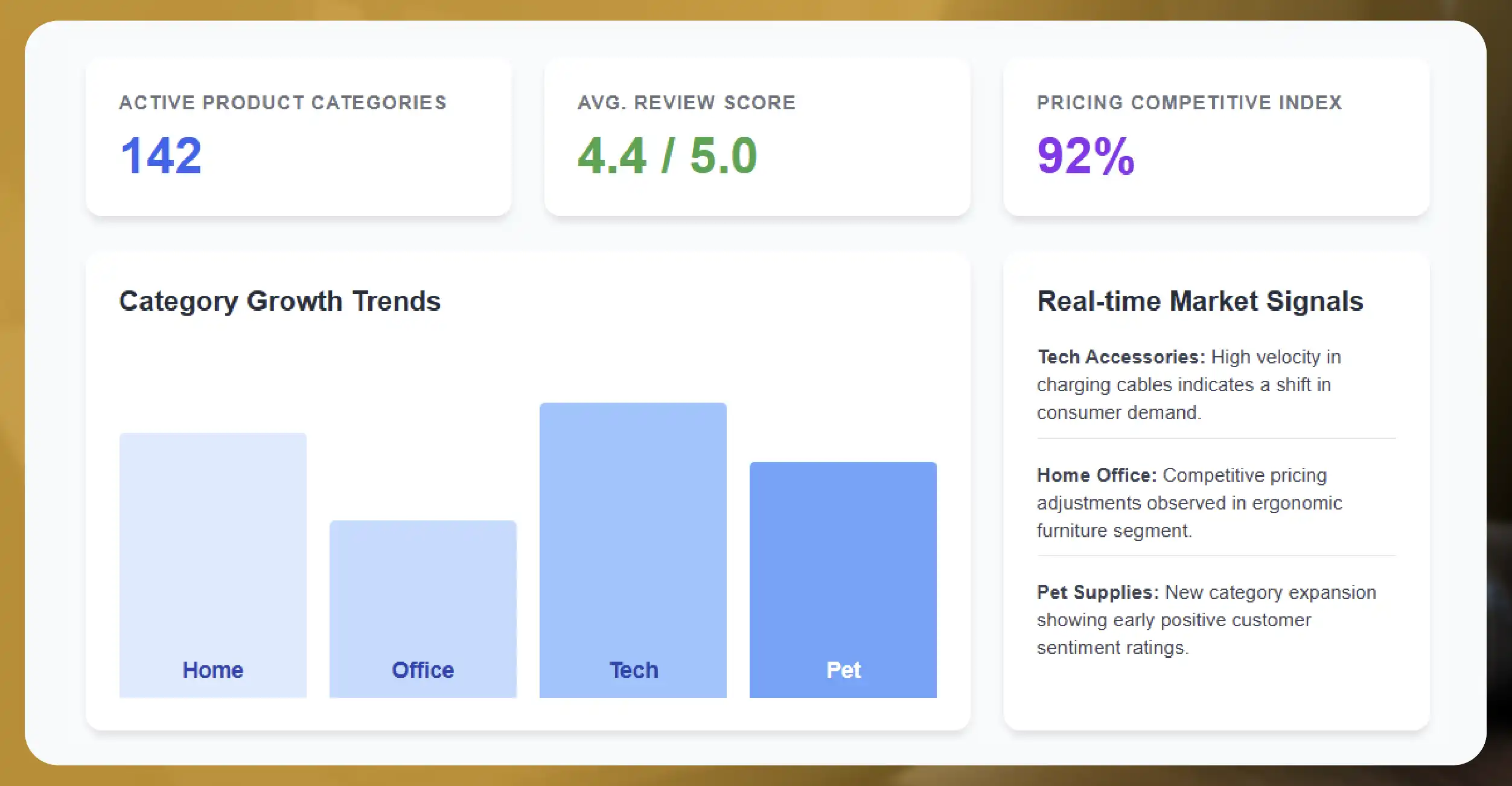
Amazon Basics is no longer viewed simply as an affordable product line. It represents Amazon's own approach to manufacturing, merchandising, and customer engagement. Every product launch, listing update, pricing adjustment, and review contributes to a larger picture of evolving consumer demand.
Manufacturers frequently compare their own products with Amazon Basics offerings to understand market expectations. Retailers monitor category expansion to identify new opportunities, while analysts use historical data to measure commercial performance across multiple product segments.
Unlike traditional market research reports that provide periodic updates, continuous data collection creates an evolving database that reflects marketplace activity in real time. This allows organizations to study how products perform throughout their entire lifecycle rather than relying on occasional observations.
Looking Beyond Product Listings
Many people associate data scraping only with collecting product names and prices. In reality, modern marketplace intelligence extends far beyond these basic elements.
A comprehensive extraction process captures product titles, descriptions, specifications, dimensions, color variants, package sizes, pricing history, promotional offers, customer ratings, review counts, seller information, shipping options, delivery estimates, availability status, category hierarchy, fulfillment methods, and product images.
When these data points are collected consistently over weeks and months, they begin revealing valuable commercial patterns. Businesses can recognize which products receive frequent discounts, which categories experience rapid inventory turnover, and which listings continue attracting strong customer engagement.
Instead of relying on assumptions, companies gain measurable evidence that supports better strategic decisions.
Understanding Pricing Behavior Over Time
Pricing is one of the strongest indicators of marketplace activity. A single price may provide limited information, but historical pricing tells a much deeper story.
Businesses can analyze how products respond to seasonal demand, promotional campaigns, inventory shortages, and changing competition. Historical records reveal whether discounts occur regularly, how long promotional prices remain active, and which products consistently maintain premium pricing.
Historical pricing intelligence also supports predictive analytics. By studying previous sales cycles, organizations can estimate future promotional periods and prepare pricing strategies before competitors react.
This approach transforms pricing from a reactive process into a proactive business advantage.
Monitoring Product Portfolio Expansion
Amazon continuously expands its private-label catalog by introducing new products while discontinuing others that no longer meet market expectations.
Monitoring these changes allows businesses to identify growing categories before they become highly competitive. New product launches often indicate emerging consumer demand, while discontinued products may reveal changing purchasing preferences.
Historical tracking also highlights packaging updates, specification improvements, product redesigns, and category diversification. These observations provide valuable insights into Amazon's long-term retail strategy.
Amazon Basics product trend analysis helps organizations identify which product categories receive ongoing investment and where future market opportunities may emerge.
Learning from Customer Experience
Customer reviews contain valuable information that extends beyond overall ratings.
Thousands of reviews collectively reveal recurring opinions about product durability, ease of use, packaging quality, installation experience, product reliability, customer service, and value for money.
When businesses analyze reviews at scale, they can identify common customer expectations and recurring product issues. Positive feedback highlights features that customers appreciate most, while negative comments reveal opportunities for improvement.
Tracking review sentiment over time also demonstrates whether product updates successfully improve customer satisfaction.
Instead of manually reading thousands of comments, organizations can use structured review datasets to identify trends efficiently.
Competitive Intelligence Through Marketplace Data
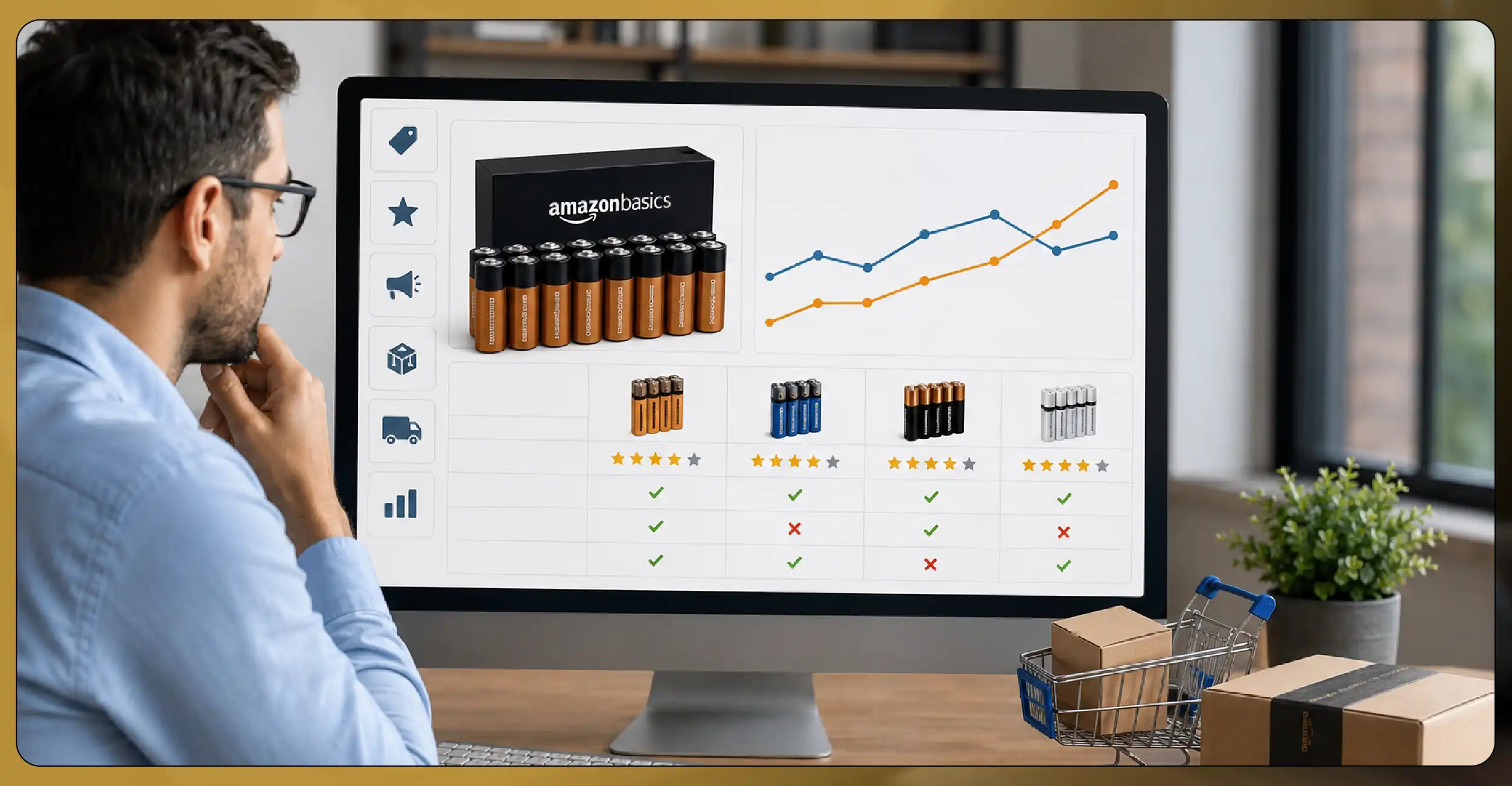
Private-label products have transformed competition across numerous retail industries.
Many manufacturers compare their own offerings directly with Amazon Basics products to understand market positioning, pricing strategies, customer satisfaction, and product differentiation.
Continuous marketplace monitoring provides insights into price gaps, review growth, promotional activity, feature comparisons, inventory availability, and delivery performance.
These observations help businesses determine whether they should compete through innovation, premium quality, competitive pricing, or enhanced customer experience.
Amazon Basics competitor analysis enables organizations to replace assumptions with measurable commercial intelligence that supports informed decision-making.
Identifying Affordable Product Opportunities
Consumers increasingly compare multiple products before making purchasing decisions, especially within budget-friendly categories.
Businesses that understand low-price segments can better position their own offerings while identifying opportunities for product differentiation.
Extract Cheapest Amazon Basics products to analyze affordable product categories, monitor discount strategies, evaluate promotional campaigns, and understand purchasing behavior among value-conscious consumers.
Such intelligence supports recommendation engines, pricing platforms, competitive benchmarking, and retail analytics.
Building Automated Data Pipelines
As marketplaces continue expanding, manual data collection becomes increasingly impractical.
Modern organizations require automated workflows capable of collecting millions of records while maintaining consistency and accuracy.
Collected information can be integrated directly into cloud databases, business intelligence platforms, reporting dashboards, forecasting systems, pricing engines, inventory management software, and machine learning applications.
Scrape Amazon Basics Data API to enable seamless integration between automated data collection and existing business systems, reducing manual effort while improving analytical efficiency.
Automated pipelines also ensure that organizations always work with current marketplace information rather than outdated reports.
Supporting Smarter Business Decisions
Reliable marketplace intelligence influences nearly every business function.
- Pricing teams use historical datasets to optimize promotional strategies.
- Product managers evaluate customer feedback before introducing new features.
- Inventory planners monitor stock availability to anticipate demand changes.
- Marketing departments identify seasonal buying patterns that support campaign planning.
- Business analysts measure category growth to identify future investment opportunities.
Instead of depending on fragmented information, organizations gain a unified view of marketplace performance that supports evidence-based decision-making.
Ready to Transform Amazon Marketplace Data into Actionable Insights?
Unlock the full potential of Amazon marketplace intelligence with our customized data scraping solutions
Scaling Data Collection Across Multiple Categories
Amazon Basics spans hundreds of product categories ranging from batteries and electronics to furniture, fitness accessories, pet supplies, automotive products, and household essentials.
Monitoring only a small subset of products provides limited visibility into broader marketplace developments.
Large-scale automated extraction enables businesses to observe entire categories simultaneously while maintaining consistent update schedules and structured datasets.
eCommerce Data Scraping Services allow enterprises to monitor extensive product portfolios efficiently, ensuring that commercial intelligence remains current, accurate, and ready for advanced analysis.
Scalable data collection also supports multinational organizations operating across multiple Amazon marketplaces, helping maintain consistent visibility into regional pricing, availability, and customer engagement.
How iWeb Data Scraping Can Help You?
Real-Time Marketplace Monitoring
Our automated solutions continuously collect pricing, inventory, ratings, reviews, specifications, promotional activity, and product updates, ensuring businesses receive accurate and timely intelligence for informed commercial decision-making across multiple marketplaces.
Customized Data Collection
Every business has different analytical requirements. We design customized extraction solutions that collect specific attributes, categories, update frequencies, regional marketplaces, and structured outputs aligned with your operational objectives.
Historical Data Intelligence
We build continuously expanding historical datasets that preserve pricing changes, inventory movement, customer engagement, promotional campaigns, and product evolution, enabling accurate forecasting and long-term market analysis.
Enterprise Integration
Our solutions integrate seamlessly with cloud platforms, APIs, databases, business intelligence tools, ERP systems, reporting software, and analytics platforms, simplifying data accessibility throughout your organization.
Scalable Global Operations
Whether monitoring hundreds of products or millions of listings across multiple countries, our infrastructure delivers reliable, validated, and high-quality datasets that support enterprise-scale market intelligence initiatives.
Conclusion
Amazon Basics has become far more than a private-label brand. It represents an evolving marketplace that reflects pricing strategies, customer expectations, inventory behavior, product innovation, and competitive positioning across numerous retail categories. Businesses that continuously collect and analyze this information gain valuable visibility into changing market conditions, enabling faster and more confident decisions.
Leveraging Ecommerce Product Ratings and Review Dataset enables organizations to better understand customer feedback, product quality, and purchasing behavior over time.
Advanced eCommerce Data Intelligence empowers businesses to identify emerging trends, optimize pricing strategies, and make informed decisions using reliable marketplace insights.
Robust Web Scraping API Services simplify automated data collection, delivering structured, real-time information that supports scalable analytics and long-term business growth.
Experience top-notch web scraping service and mobile app scraping solutions with iWeb Data Scraping. Our skilled team excels in extracting various data sets, including retail store locations and beyond. Connect with us today to learn how our customized services can address your unique project needs, delivering the highest efficiency and dependability for all your data requirements.