How Can Amazon Musical Instruments Market Data Scraping Improve Pricing and Market Intelligence?
Introduction
The global musical instruments industry has rapidly embraced eCommerce, with Amazon emerging as one of the most influential marketplaces for musicians, retailers, manufacturers, educators, and hobbyists. From acoustic guitars and digital pianos to microphones, DJ equipment, studio accessories, and orchestral instruments, millions of shoppers compare products, prices, ratings, and reviews before making purchasing decisions. This constant marketplace activity generates valuable business intelligence that can be transformed into actionable insights through Amazon musical instruments market data scraping.
Businesses looking to strengthen their competitive strategies increasingly Scrape Amazon musical instrument listings to understand product assortment, seller performance, and customer preferences across multiple categories. Likewise, Amazon musical instrument price tracking enables organizations to monitor price fluctuations, promotional campaigns, and seasonal discounts in real time. Together, these capabilities provide companies with the visibility required to respond quickly to changing market conditions and customer demand.
Understanding Amazon Musical Instrument Market Data
Amazon hosts an enormous catalog of musical instruments ranging from beginner-friendly products to professional-grade equipment. Every product listing contains a wealth of structured and unstructured information, including titles, specifications, images, pricing, availability, seller details, customer ratings, reviews, technical features, warranty information, and shipping details. Collecting this information consistently allows businesses to create comprehensive datasets that reveal trends across brands, product categories, and geographic marketplaces.
Rather than relying on occasional manual research, automated data collection enables organizations to maintain continuously updated databases that reflect the current state of the marketplace. These datasets become valuable resources for merchandising teams, pricing analysts, market researchers, manufacturers, and supply chain professionals who require timely insights to support strategic decisions.
Why Marketplace Intelligence Matters?
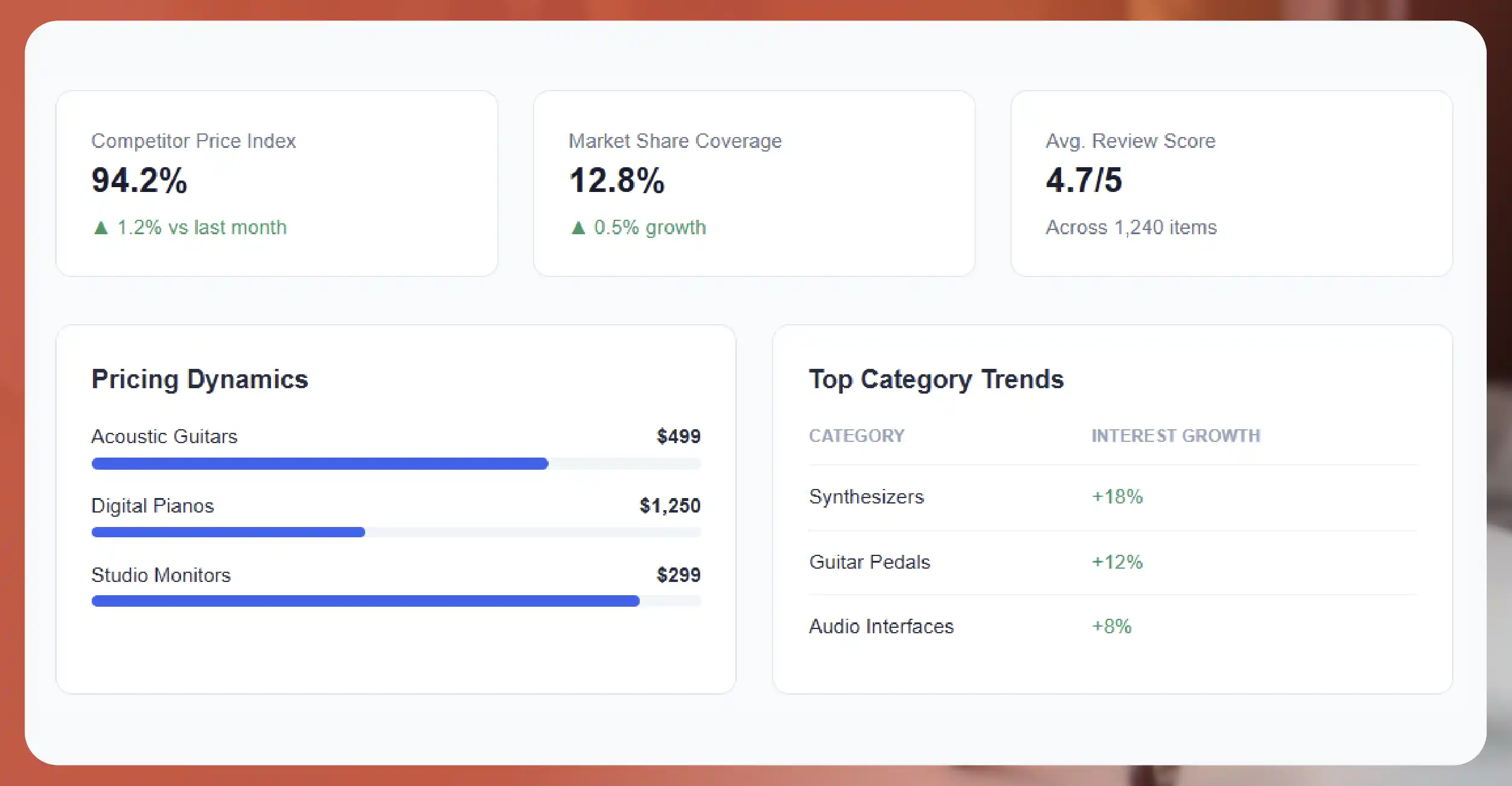
Competition within the musical instruments sector is more intense than ever. Consumers have access to thousands of comparable products, making pricing, product quality, customer reviews, and availability critical factors influencing purchasing decisions. Businesses that monitor these variables continuously are better equipped to adapt to competitor activities, optimize pricing strategies, and improve product positioning.
Marketplace intelligence also helps organizations identify gaps in product assortments, recognize growing customer interests, and evaluate the effectiveness of promotional campaigns. Instead of making assumptions based on limited observations, decision-makers gain access to objective, data-driven insights collected directly from marketplace activity.
Tracking Product Pricing with Greater Accuracy
Pricing is among the most dynamic aspects of online retail. Product prices often change multiple times throughout the day due to promotional campaigns, seller competition, inventory levels, and seasonal demand. Businesses that continuously monitor pricing can understand how competitors respond to market conditions and adjust their own pricing strategies accordingly.
Historical pricing data provides additional value by revealing long-term trends. Retailers can evaluate whether competitors rely heavily on discounts, determine average selling prices across product categories, and identify recurring promotional periods such as holiday sales or back-to-school campaigns. These insights contribute to more effective revenue management and pricing optimization strategies.
Leveraging Customer Feedback
Customer opinions represent one of the richest sources of product intelligence available on Amazon. Amazon musical instrument reviews contain valuable information regarding sound quality, durability, ease of use, packaging, shipping experience, technical performance, and overall customer satisfaction.
When review data is collected over time, businesses can identify recurring compliments as well as common complaints across competing products. Manufacturers may discover opportunities to improve product design, while retailers can identify products with consistently positive feedback that deserve greater promotional emphasis. Review analytics also help organizations understand customer expectations and monitor how product perception evolves following new releases or feature updates.
Monitoring Inventory Availability
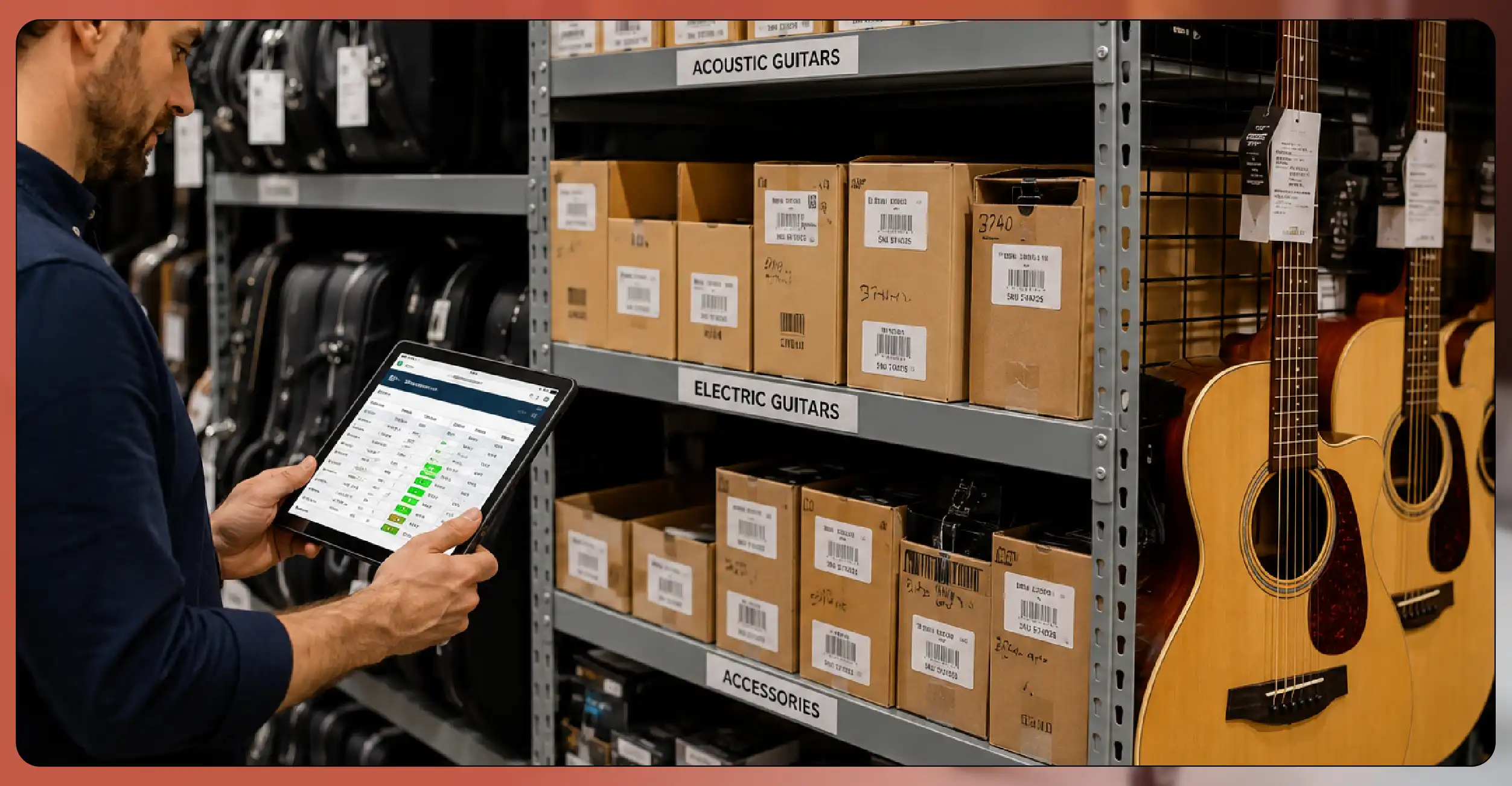
Inventory visibility plays an important role in maintaining a competitive advantage within the musical instruments industry. Products frequently move in and out of stock depending on seasonal demand, manufacturing schedules, and supply chain conditions. Continuous Musical instrument inventory Data Extraction enables businesses to monitor stock availability across numerous product categories without relying on manual observation.
Inventory intelligence assists retailers in anticipating shortages, identifying high-demand products, planning replenishment schedules, and minimizing lost sales opportunities. Manufacturers also benefit by understanding how quickly inventory moves through various marketplaces and distribution channels.
Identifying Emerging Market Trends
Consumer preferences within the musical instruments industry continue to evolve as new technologies, music genres, educational programs, and recording techniques influence purchasing behavior. By analyzing historical marketplace datasets, organizations can identify Musical instrument market trends From Amazon that may otherwise remain unnoticed.
For example, increasing demand for home recording equipment, digital audio interfaces, podcast microphones, or beginner keyboard packages can signal changing customer priorities. Businesses that recognize these trends early are better positioned to introduce relevant products, optimize inventory planning, and allocate marketing resources toward growing segments before competitors react.
Competitive Brand Benchmarking
Manufacturers and retailers frequently compare their products against competing brands to evaluate market positioning. Marketplace datasets enable organizations to benchmark pricing strategies, customer ratings, review volumes, bestseller rankings, inventory availability, and promotional activity across competing product lines.
These comparisons reveal which brands consistently outperform competitors, maintain stronger customer satisfaction, or dominate specific product categories. Such intelligence supports product development, pricing refinement, and long-term business planning by providing measurable competitive benchmarks instead of relying solely on internal sales performance.
Supporting Smarter Product Assortment Decisions
Large retailers often manage thousands of musical instruments and accessories simultaneously. Determining which products deserve additional investment requires accurate marketplace intelligence. Historical sales indicators, pricing behavior, review growth, and customer engagement collectively help businesses identify fast-growing categories while eliminating underperforming inventory.
This data-driven approach improves merchandising efficiency by ensuring that shelf space, advertising budgets, and procurement resources are directed toward products with stronger market potential. Better assortment planning ultimately contributes to higher customer satisfaction and improved profitability.
Enhancing Demand Forecasting
Demand forecasting becomes significantly more accurate when historical marketplace information is incorporated into predictive models. Product pricing, review growth, inventory fluctuations, seasonal demand patterns, promotional schedules, and bestseller rankings collectively provide valuable indicators of future purchasing behavior.
Organizations can anticipate periods of increased demand, prepare inventory accordingly, negotiate supplier agreements more effectively, and reduce the financial impact of stock shortages or excess inventory. Predictive analytics built on comprehensive marketplace datasets enable businesses to make proactive rather than reactive operational decisions.
Automating Data Collection Through APIs
As the volume of marketplace information continues to expand, manual research becomes increasingly impractical. Modern businesses therefore rely on an Amazon product Data scraping API to automate the collection of product information at scale. API-driven solutions simplify scheduled data extraction, accelerate integration with analytics platforms, and ensure that decision-makers always have access to current marketplace information.
Automation also improves consistency by reducing human error while enabling organizations to monitor thousands of products simultaneously across multiple regional Amazon marketplaces.
Business Applications Across Industries
The value of Amazon marketplace intelligence extends well beyond retailers selling musical instruments. Manufacturers use marketplace data to evaluate product performance and benchmark competitors. Consulting firms develop market reports based on continuously updated datasets. Investment organizations analyze consumer demand before evaluating potential business opportunities. Marketing agencies monitor customer engagement trends to improve advertising strategies, while supply chain teams optimize procurement decisions using inventory intelligence collected across multiple product categories.
Because marketplace data supports numerous business functions, it has become an essential resource for organizations seeking to improve operational efficiency and strategic planning.
Turn Amazon marketplace data into actionable business intelligence with our customized data scraping solutions—contact us today to unlock real-time pricing, inventory, reviews, and competitive insights.
The Importance of Professional Data Collection
Professional eCommerce Data Scraping Services provide businesses with reliable access to large-scale marketplace information while maintaining data quality, consistency, and scalability. Rather than investing internal resources in complex extraction processes, organizations receive structured datasets that are ready for business intelligence, reporting, machine learning, and predictive analytics applications.
Professional solutions also enable businesses to monitor multiple Amazon marketplaces simultaneously, maintain historical archives, automate regular updates, and integrate collected information into existing enterprise systems for continuous decision support.
How iWeb Data Scraping Can Help You?
Competitor Product Intelligence
Our data scraping services help you monitor competitor product catalogs, pricing strategies, new launches, promotional campaigns, and assortment changes, enabling faster competitive analysis and smarter business planning across Amazon marketplaces.
Brand Performance Tracking
We collect comprehensive brand-level data, including product rankings, pricing trends, ratings, reviews, and availability, allowing you to benchmark your performance against competitors and identify opportunities for market growth.
Historical Market Data Collection
Our solutions build historical datasets that capture pricing movements, inventory fluctuations, customer engagement, and product performance over time, helping businesses uncover long-term trends and improve forecasting accuracy.
Customized Data Delivery
We tailor data extraction according to your business requirements, providing filtered datasets by brand, category, seller, or region and delivering them through APIs, cloud storage, databases, or scheduled automated reports.
Actionable Business Intelligence
Our data scraping services transform raw marketplace information into structured, analytics-ready datasets that support pricing optimization, demand forecasting, product assortment planning, marketing strategies, and informed decision-making across your organization.
Conclusion
Amazon continues to shape the global musical instruments marketplace by bringing together manufacturers, retailers, professional musicians, educators, and consumers on a single platform. Every listing generates valuable information regarding pricing, availability, customer satisfaction, product specifications, and competitive positioning. Businesses that transform this information into structured intelligence gain significant advantages when responding to market changes, optimizing pricing strategies, forecasting demand, and improving merchandising decisions.
Combining marketplace insights with an Ecommerce Product Ratings and Review Dataset enables organizations to better understand customer sentiment while identifying opportunities for product improvement and competitive differentiation. Advanced eCommerce Data Intelligence platforms further convert raw marketplace information into meaningful dashboards, predictive models, and strategic reports that support long-term business growth. By leveraging scalable Web Scraping API Services, companies can automate data collection, maintain continuously updated datasets, and build comprehensive market intelligence solutions that drive smarter decisions across the musical instruments industry.
Experience top-notch web scraping service and mobile app scraping solutions with iWeb Data Scraping. Our skilled team excels in extracting various data sets, including retail store locations and beyond. Connect with us today to learn how our customized services can address your unique project needs, delivering the highest efficiency and dependability for all your data requirements.