

Introduction
Australian grocery shopping has become increasingly price-sensitive as inflation, supply chain fluctuations, and changing consumer preferences continue to reshape the retail landscape. Consumers now compare prices across multiple supermarket chains before making purchasing decisions, while retailers constantly monitor competitors to maintain their market position. This growing demand for pricing transparency has led to innovative digital platforms capable of Australian App Compared Coles, Woolworths & Aldi Prices in real time, allowing shoppers to identify the best deals available across Australia's largest supermarket chains.
Businesses supporting these applications rely heavily on technologies that Scrape Coles, Woolworths & Aldi grocery Pricing data from numerous product categories every day. Combined with SKU-level grocery pricing analytics, retailers, brands, and market researchers gain detailed insights into pricing movements, promotions, inventory changes, and assortment strategies that influence purchasing behavior.
The success of Australian grocery comparison applications depends on continuously collecting accurate product information from multiple supermarket websites and transforming raw data into meaningful business intelligence. Rather than relying on manual price checks, automated data extraction provides scalable, timely, and comprehensive visibility into the entire grocery market.
Modern grocery comparison platforms deliver far more than simple price comparisons. They analyze historical pricing, identify promotional cycles, monitor stock availability, compare private-label products with branded alternatives, and provide consumers with significant savings opportunities. These insights also help manufacturers understand retailer strategies while enabling retailers to optimize pricing decisions.
As grocery competition intensifies across Australia, access to structured supermarket datasets has become one of the strongest competitive advantages available for both retailers and consumer brands.
Why Grocery Price Comparison Apps Are Becoming Essential?
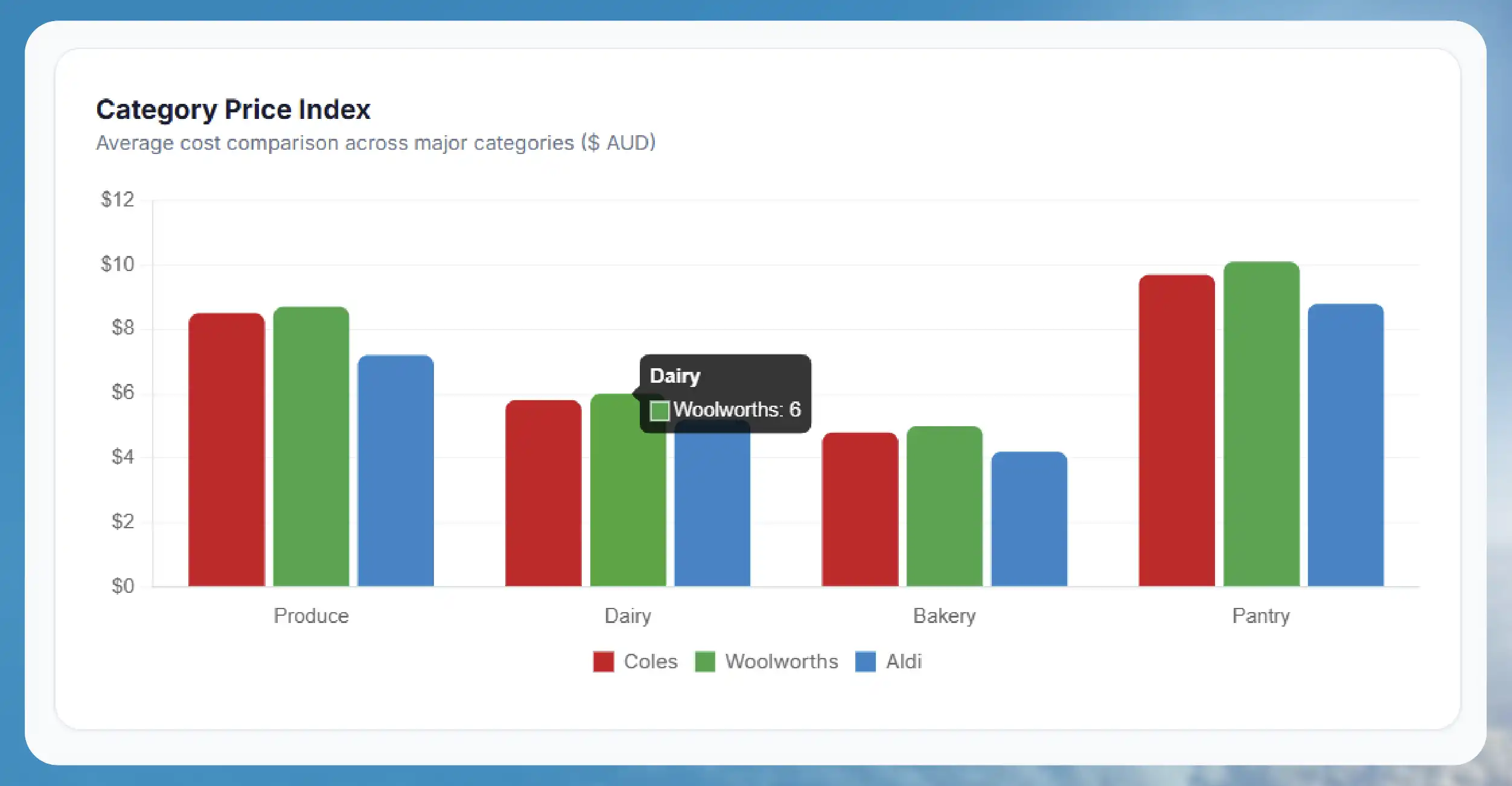
Australian consumers frequently purchase groceries from multiple retailers instead of remaining loyal to a single supermarket. Price differences across Coles, Woolworths, and Aldi often vary by product category, promotional campaigns, regional availability, and seasonal demand.
A comparison application eliminates the need for customers to manually browse several websites. Instead, it aggregates prices into one searchable platform that instantly displays the lowest available prices.
Behind every comparison interface exists an extensive data collection infrastructure capable of processing thousands of products daily while continuously updating prices throughout promotional cycles.
Retailers also benefit from these platforms because market visibility encourages competitive pricing while helping businesses understand changing customer expectations.
The Role of Automated Grocery Data Collection
Large supermarket chains regularly update product prices, promotional offers, availability, packaging, and product descriptions. Manual tracking quickly becomes impossible when thousands of products change simultaneously.
Automated grocery scraping systems collect structured information including product names, categories, package sizes, prices, discounts, promotional labels, nutritional details, images, and stock status.
Once standardized, this information enables comparison applications to accurately match identical products across different retailers despite variations in naming conventions or packaging.
The result is a continuously updated grocery database supporting price comparison, competitive analysis, and consumer savings.
Building Australian Supermarket Market Intelligence
Businesses increasingly depend upon Australian supermarket market intelligence to understand pricing dynamics across grocery retailers.
Historical supermarket data reveals valuable trends including:
- Daily pricing fluctuations
- Seasonal promotions
- Private-label pricing strategies
- Brand competitiveness
- Regional assortment differences
- Consumer purchasing patterns
- Promotional frequency
- Demand forecasting
These insights support pricing optimization, assortment planning, supplier negotiations, and long-term retail strategy.
Instead of reacting after competitors launch promotions, organizations can proactively monitor market movements using continuously updated datasets.
Understanding Woolworths Pricing Strategy
One of Australia's largest supermarket chains frequently introduces promotional campaigns across fresh produce, dairy, beverages, pantry staples, frozen foods, and household essentials.
Continuous Woolworths price monitoring allows businesses to understand how pricing changes influence customer demand.
Historical monitoring reveals:
- Promotion duration
- Discount frequency
- Category-specific markdowns
- Brand versus private-label pricing
- Holiday pricing behavior
- Clearance activities
- Competitive responses
These insights assist manufacturers negotiating retail shelf placement while enabling retailers to optimize promotional calendars.
Monitoring Aldi's Everyday Low Price Model
Unlike traditional supermarkets, Aldi follows a different pricing philosophy emphasizing everyday low prices rather than frequent promotional campaigns.
Comprehensive Aldi price tracking In Australia enables analysts to compare long-term pricing consistency against promotional competitors.
Retail intelligence teams evaluate:
- Average category prices
- Private-label competitiveness
- Regional pricing
- Seasonal product introductions
- Limited-time specials
- Price stability
- Consumer value positioning
Understanding these patterns helps brands develop competitive pricing strategies across Australia's retail landscape.
Collecting Comprehensive Coles Product Intelligence
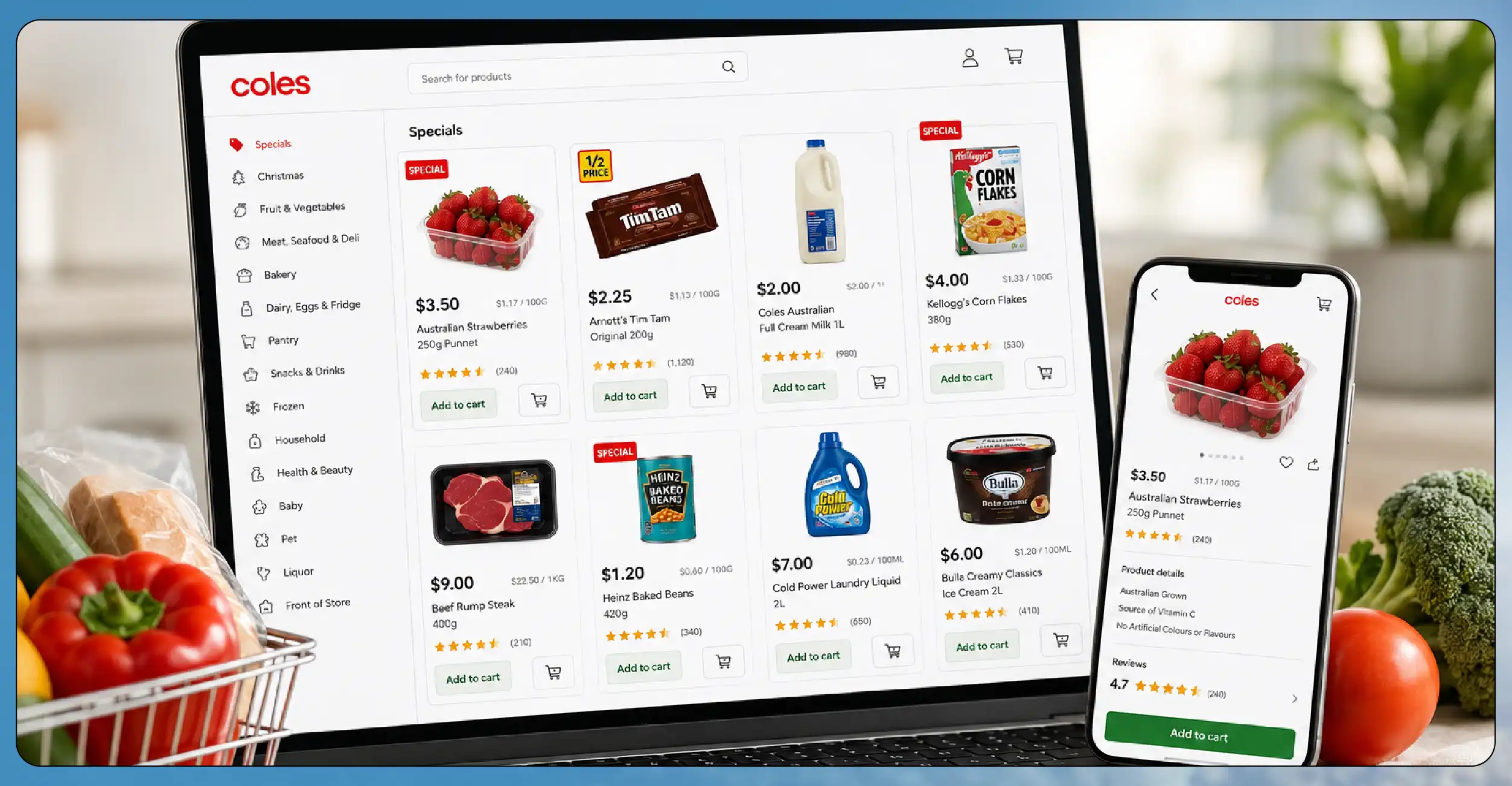
Large supermarkets maintain enormous online catalogs spanning thousands of grocery products.
Using Coles grocery data scraping, organizations capture detailed product information including prices, nutrition facts, product descriptions, images, package sizes, stock availability, promotional badges, categories, and customer ratings.
Once standardized, these datasets support numerous business functions including pricing intelligence, digital shelf monitoring, assortment analysis, inventory forecasting, and promotional planning.
Manufacturers particularly benefit from understanding how products are positioned across various supermarket categories.
Tracking Product Availability Alongside Pricing
Price comparison alone provides incomplete market intelligence.
Retailers also need visibility into inventory changes and assortment shifts.
Organizations increasingly Extract Weekly grocery Product availability & image in Australia to understand stock consistency, product launches, discontinued items, and shelf assortment evolution.
Availability monitoring helps identify:
- High-demand products
- Frequently unavailable items
- Regional assortment differences
- New product launches
- Seasonal inventory
- Promotional stock levels
- Digital merchandising improvements
Together with pricing data, availability insights create a complete retail intelligence solution.
Building High-Quality Grocery Datasets
Accurate supermarket intelligence depends upon structured, standardized datasets.
Comprehensive Coles Australian Grocery Datasets typically include product identifiers, categories, pricing history, promotional labels, package sizes, nutritional attributes, product descriptions, images, availability status, and brand information.
These datasets become valuable assets for retailers, suppliers, research firms, analytics providers, and consumer applications.
Historical archives also enable predictive modeling and long-term pricing analysis.
Understanding Woolworths Product Performance
Comprehensive Grocery Dataset from Woolworths Australia provides organizations with visibility into product assortment, pricing trends, inventory changes, promotional campaigns, and category performance.
Machine learning models built upon these datasets can forecast pricing movements, estimate promotional success, identify demand trends, and optimize inventory planning.
Retail analysts increasingly integrate these structured datasets into enterprise business intelligence platforms for automated reporting and decision-making.
Leveraging Aldi Grocery Intelligence
Growing consumer preference for affordable grocery shopping has increased demand for comprehensive ALDI Grocery Datasets.
These datasets allow organizations to evaluate product assortment, private-label expansion, pricing consistency, seasonal offerings, and promotional events.
Manufacturers compare identical categories across Aldi, Coles, and Woolworths to identify pricing gaps and optimize market positioning.
Retail consultants similarly use these insights to benchmark competitor performance and identify emerging opportunities.
Powering Consumer Applications with Real-Time Data
Modern grocery comparison applications depend on continuously updated data pipelines that automatically process thousands of products every day.
These systems normalize product information across multiple retailers, identify identical products despite naming differences, compare prices, detect promotional changes, and deliver actionable insights directly to consumers.
Advanced analytics further recommend optimal shopping baskets, estimate total savings, compare historical pricing, and notify users when products reach preferred price thresholds.
Such intelligent features transform simple comparison tools into comprehensive grocery shopping assistants.
Supporting Retailers, Brands, and Market Researchers
Beyond consumer applications, supermarket datasets support a wide range of commercial use cases.
- Retailers benchmark competitors and optimize pricing.
- Manufacturers evaluate promotional effectiveness.
- Market researchers analyze pricing trends.
- Investment firms assess retail performance.
- Technology companies develop recommendation engines.
- Delivery platforms improve assortment planning.
- Advertising agencies understand consumer purchasing behavior.
This broad commercial demand makes automated grocery intelligence one of the fastest-growing applications of web data extraction across Australia's retail industry.
How iWeb Data Scraping Can Help You?
Real-Time Price Intelligence
Our solutions continuously monitor supermarket pricing across thousands of grocery products, enabling businesses to respond immediately to competitor price changes and evolving market conditions with accurate, structured retail intelligence.
Complete Product Monitoring
We collect comprehensive product information including pricing, descriptions, availability, promotions, images, categories, brands, and nutritional attributes, delivering reliable datasets supporting competitive analysis, forecasting, merchandising, and business decision-making across Australian supermarkets.
Historical Market Analysis
Our historical grocery databases preserve long-term pricing and promotional trends, allowing organizations to analyze seasonal demand, benchmark competitors, forecast future pricing behavior, and improve strategic retail planning with confidence.
Automated Multi-Retail Coverage
We consolidate grocery information from Coles, Woolworths, Aldi, and additional retailers into standardized datasets, simplifying cross-platform comparisons while reducing manual research efforts and improving operational efficiency for businesses.
Enterprise Data Delivery
Our customized data pipelines integrate seamlessly into dashboards, analytics platforms, APIs, cloud storage, and business intelligence systems, enabling organizations to access reliable supermarket intelligence whenever required for faster decision-making.
Conclusion
Australian grocery comparison applications have transformed how consumers shop by providing transparent pricing across multiple supermarket chains. Businesses behind these platforms rely on automated data extraction to maintain accurate, real-time grocery intelligence that supports smarter purchasing decisions, competitive pricing, and market analysis. As retailers continue expanding their digital commerce capabilities, reliable supermarket datasets have become essential for understanding pricing behavior, promotional strategies, inventory availability, and evolving consumer trends.
Organizations investing in Web Scraping API Services gain access to accurate, automated, and scalable retail data collection that powers real-time market intelligence.
Comprehensive Grocery and Supermarket Store Datasets enable businesses to analyze pricing trends, monitor product assortments, and make informed strategic decisions with confidence.
Scalable Grocery & Supermarket Data Extraction Services deliver timely, structured, and actionable supermarket intelligence, helping retailers, brands, and market researchers achieve long-term business growth.
Frequently Asked Questions
Web scraping automates the collection of supermarket prices, product details, promotions, availability, and images, ensuring comparison applications always display accurate and updated information.
Businesses can collect product names, SKUs, prices, discounts, availability, categories, product images, descriptions, nutritional information, promotional labels, and historical pricing trends.
Many organizations update grocery pricing several times daily to capture promotions, stock changes, and pricing adjustments as quickly as they appear online.
Retailers, grocery brands, manufacturers, market research firms, investment companies, analytics providers, and shopping application developers all benefit from structured supermarket datasets.
Historical datasets reveal pricing trends, seasonal demand, promotional effectiveness, competitor strategies, and consumer purchasing patterns, enabling better forecasting, pricing optimization, and long-term retail planning.