

Introduction
The automotive retail industry is experiencing a major transformation as customers increasingly compare vehicle prices, dealership offers, inventory availability, and financing options before making purchasing decisions. With multiple online marketplaces and dealership platforms providing instant access to pricing information, automotive retailers must continuously evaluate competitor strategies to remain competitive. Traditional pricing methods based only on internal sales history are no longer sufficient in a market where prices fluctuate based on demand, supply, customer preferences, and regional trends.
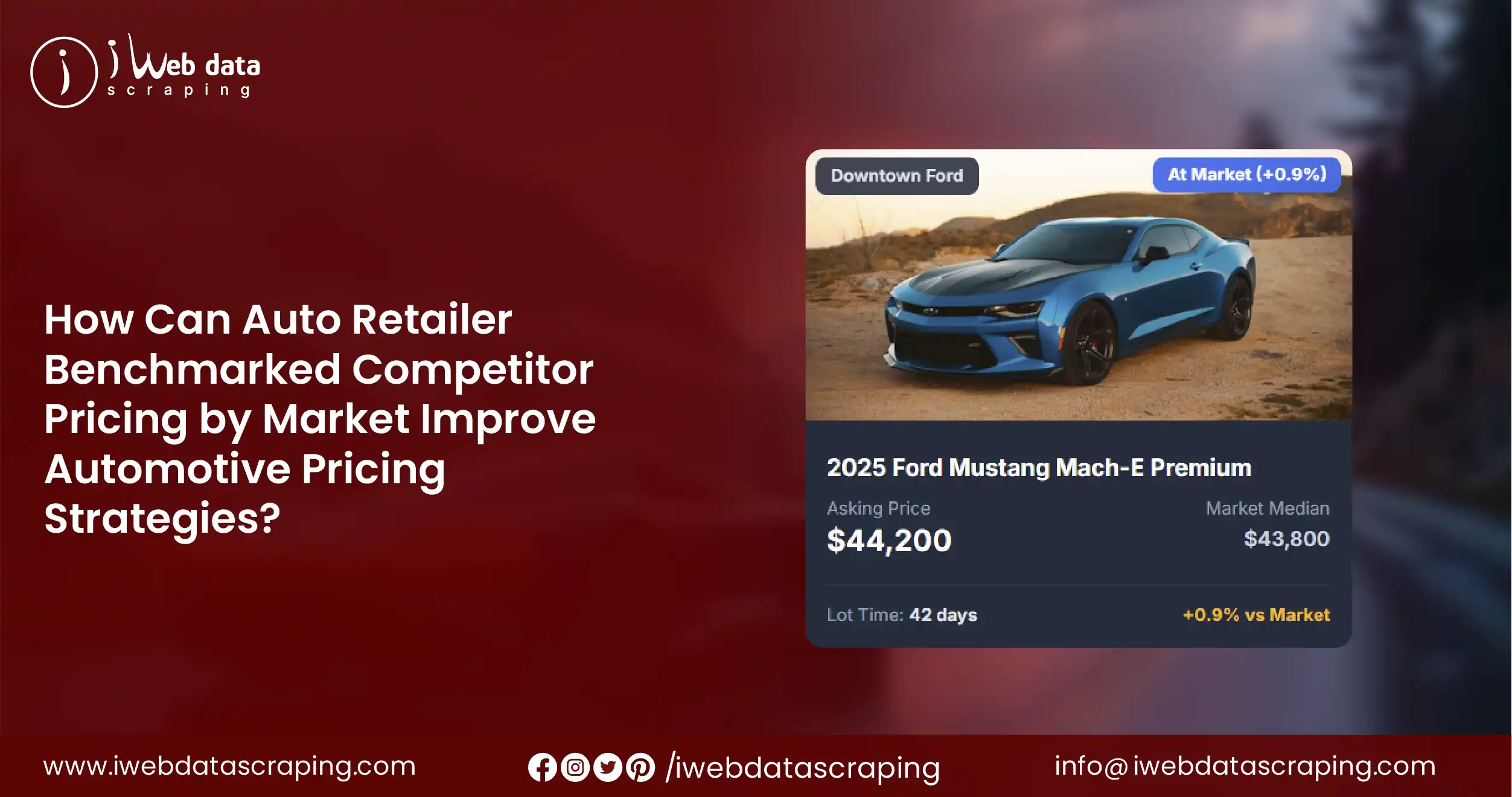
Auto Retailer Benchmarked Competitor Pricing by Market enables dealerships and automotive businesses to understand how their pricing strategies compare with competitors across different locations. By analyzing market-level pricing patterns, retailers can identify pricing opportunities, optimize margins, and create more effective sales strategies. This approach allows businesses to move beyond assumptions and make decisions based on real market intelligence.
Modern dealerships require accurate insights into competitor behavior, including vehicle pricing changes, discounts, promotions, inventory availability, and regional demand patterns. Through Automotive competitor pricing analysis, businesses can evaluate how similar vehicles are positioned across different markets and determine whether their pricing approach aligns with customer expectations.
The growing importance of auto retailer competitor price Monitoring has made continuous market tracking essential for automotive businesses. Competitor prices can change daily due to inventory movement, seasonal campaigns, manufacturer incentives, and market demand. Monitoring these changes helps retailers react quickly and maintain competitive positioning.
The Importance of Competitor Pricing Benchmarking in Automotive Retail
Automotive pricing is influenced by several factors, including geographic location, customer demographics, vehicle popularity, economic conditions, and competitor strategies. A pricing strategy that performs well in one market may not deliver the same results in another region.
Benchmarking competitor pricing provides retailers with a clear understanding of market positioning. By comparing similar vehicles across different dealerships, businesses can identify whether they are overpricing inventory, underpricing valuable assets, or maintaining an optimal price point.
The major advantages of market-based pricing benchmarking include:
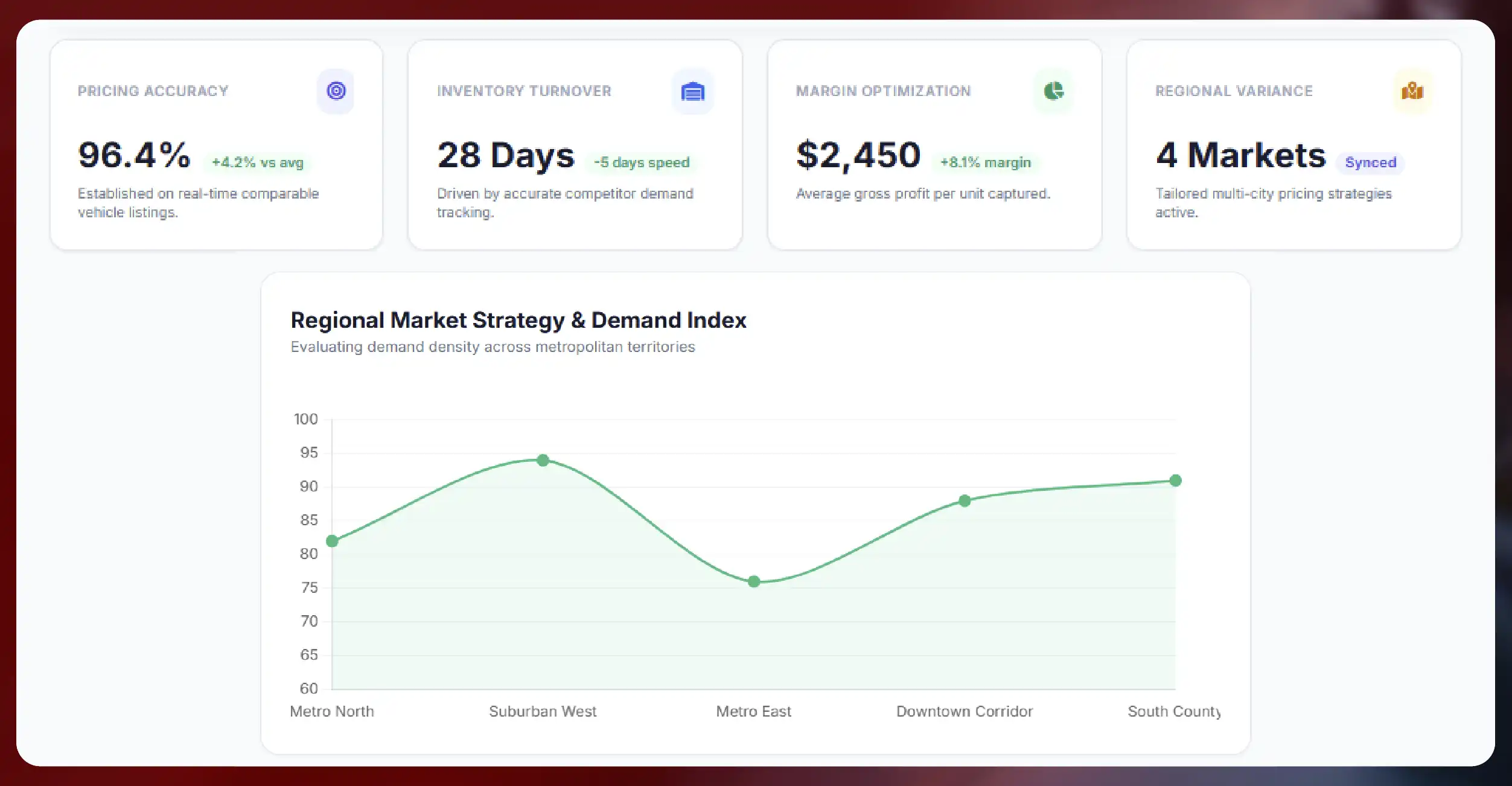
- Improved pricing accuracy: Retailers can compare similar vehicle listings and establish competitive price ranges based on real market conditions instead of assumptions.
- Better inventory decisions: Competitor availability trends help dealerships understand which vehicles are in demand and which models may require promotional strategies.
- Higher profit optimization: Businesses can identify opportunities to increase margins without losing customer interest by analyzing competitor pricing behavior.
- Regional strategy development: Market-specific insights allow dealership groups to create pricing strategies tailored to different cities and customer segments.
Collecting Automotive Pricing and Inventory Intelligence
Gathering competitor pricing information manually from multiple websites, dealership platforms, and automotive marketplaces requires significant time and resources. Vehicle listings frequently change, and important details such as availability, discounts, mileage, and specifications can become outdated quickly.
Advanced data collection solutions allow businesses to automate the process of collecting large volumes of automotive information. Retailers can Extract automotive pricing and inventory data from multiple digital sources to understand current market conditions and competitor activities.
The collected information may include vehicle make, model, trim level, year, mileage, dealer location, listed price, promotional offers, financing details, and availability status. When this data is structured and analyzed properly, it becomes a valuable resource for pricing optimization and market research.
Using Data Analytics to Improve Automotive Retail Performance
Raw pricing information alone does not provide complete business value. The real advantage comes from analyzing collected data to discover patterns, trends, and opportunities. Automotive retailers can evaluate competitor pricing movements, identify popular vehicle categories, and understand customer purchasing behavior.
Businesses can Scrape automotive retail performance information to measure how competitors manage inventory, adjust prices, and promote vehicles across different markets. This enables retailers to understand which vehicles generate strong demand and which models may require pricing adjustments.
Vehicle-Level Competitive Pricing Analysis
Every vehicle has unique characteristics that influence its market value. Factors such as brand reputation, vehicle condition, mileage, features, production year, and regional demand all impact pricing decisions.
Through vehicle Competitor pricing analytics, automotive retailers can compare similar vehicles based on specifications and market positioning. This helps businesses determine whether their pricing is competitive and identify areas where adjustments may improve sales performance.
The Role of Automotive Data Scraping in Competitive Intelligence

Digital transformation has increased the demand for automated solutions that provide continuous access to market information. Manual data collection cannot keep pace with the speed at which automotive pricing changes. This is where Automotive data scraping plays an important role in gathering structured information from multiple online sources.
Automated scraping solutions enable retailers to monitor competitor websites, online marketplaces, and dealership platforms efficiently. The collected data can be integrated with analytics systems to generate reports, dashboards, and pricing recommendations.
Enhancing Revenue Through Smarter Pricing Decisions
Pricing directly influences customer acquisition, sales velocity, and dealership profitability. Incorrect pricing decisions can result in slow-moving inventory, reduced margins, or lost sales opportunities. Competitive intelligence allows retailers to create balanced pricing strategies that support both customer satisfaction and business growth.
The key ways competitive pricing intelligence improves revenue include:
- Faster market response: Retailers can quickly adjust prices when competitors introduce discounts, promotions, or inventory changes.
- Reduced inventory aging: Continuous monitoring helps identify vehicles that require pricing adjustments to improve sales velocity.
- Customer-focused offers: Businesses can design attractive promotions based on actual market expectations and buyer behavior.
- Stronger sales negotiations: Sales teams can use accurate market comparisons to explain vehicle value and competitive advantages.
Expanding Automotive Businesses Across New Markets
Entering new geographic markets requires a detailed understanding of local competition. Automotive retailers expanding into different regions need accurate information about competitor pricing, customer demand, and inventory patterns.
Market-level competitor analysis helps businesses evaluate opportunities before investing resources. Retailers can identify regions with strong demand, understand competitive intensity, and develop pricing strategies suited to local conditions.
The Future of Automotive Competitive Pricing Intelligence
The future of automotive retail will rely heavily on automated intelligence, artificial intelligence, and predictive analytics. As online vehicle purchasing continues to grow, customers will expect transparent pricing and competitive offers across all channels.
Retailers that adopt advanced data-driven solutions will gain stronger visibility into market movements and customer behavior. Predictive systems will help businesses anticipate pricing changes, forecast demand, and optimize inventory decisions before competitors.
How iWeb Data Scraping Can Help You?
Monitor Competitor Vehicle Pricing Trends
Our data scraping services collect real-time pricing information from multiple automotive platforms, enabling retailers to compare competitor prices, identify market changes, and develop effective pricing strategies based on accurate insights.
Optimize Inventory Management Decisions
We help automotive businesses gather vehicle availability, specifications, and inventory movement data from competitors. These insights allow retailers to understand demand patterns, reduce inventory challenges, and improve vehicle stocking strategies.
Analyze Regional Automotive Markets
Our solutions capture location-based pricing and dealership information, helping businesses evaluate market differences, customer preferences, and competitive positioning across regions to create customized pricing approaches for different automotive markets.
Improve Revenue Through Pricing Intelligence
By analyzing competitor offers, discounts, and promotional activities, our data scraping services help retailers identify profitable pricing opportunities, optimize margins, and make informed decisions that improve sales performance and customer engagement.
Build Advanced Automotive Market Insights
We transform complex automotive data into structured insights through automated collection and analysis. Businesses can track market trends, forecast demand, and strengthen strategic planning with reliable competitor intelligence and actionable data.
Conclusion
The automotive retail industry requires smarter approaches to pricing, inventory management, and market analysis. Competitor benchmarking provides dealerships with valuable insights into pricing behavior, customer demand, and regional market differences. By leveraging accurate data, businesses can make informed decisions that improve competitiveness and profitability.
Advanced solutions powered by Location intelligence allow automotive retailers to understand geographic pricing variations, dealership competition levels, and customer preferences across different regions. These insights help businesses create more targeted strategies and improve market performance.
Access to Dynamic pricing data enables retailers to respond quickly to market fluctuations, adjust vehicle prices effectively, and maintain stronger competitive positioning. Real-time information ensures that pricing decisions are based on current market conditions rather than outdated assumptions.
Through Managed web scraping, automotive businesses can efficiently collect and analyze competitor pricing and inventory information at scale. Reliable data collection combined with advanced analytics empowers retailers to optimize pricing strategies, improve operational efficiency, and achieve sustainable growth in an increasingly competitive automotive marketplace.
FAQs
Auto retailer competitor pricing benchmarking is the process of comparing vehicle prices, inventory availability, discounts, and market trends across different dealerships to understand competitive positioning and optimize pricing strategies.
Automotive competitor pricing analysis helps dealerships identify market price trends, monitor competitor strategies, improve inventory decisions, and create pricing models that increase sales opportunities while maintaining profitable margins.
Retailers can collect vehicle details such as make, model, trim, year, mileage, pricing, discounts, dealer location, availability status, financing offers, and competitor inventory trends for detailed market analysis.
Real-time competitor price monitoring allows automotive businesses to quickly respond to market changes, adjust vehicle pricing, track demand fluctuations, and maintain competitive advantages in rapidly changing automotive markets.
Automotive data scraping helps businesses gather large volumes of competitor pricing and inventory information from multiple sources, enabling accurate market analysis, better forecasting, and data-driven pricing decisions.