

Introduction
Modern residential communities generate a continuous stream of operational information, from resident profiles and visitor entries to deliveries, staff movements, security events, amenities, and access requests. For property managers, housing platforms, security companies, and data intelligence providers, turning this information into structured and actionable datasets can significantly improve operational visibility.
Automate Data Collection from MyGate API to transform scattered residential information into organized datasets that can support reporting, monitoring, analytics, and application development. With an appropriately authorized API integration, businesses can collect relevant information systematically instead of depending on repetitive manual exports.
Automate MyGate API data extraction to streamline the movement of approved data from residential management systems into databases, dashboards, analytics platforms, or internal applications.
Extract MyGate access control data API to create structured records around authorized access events, visitor activity, entry patterns, and other operational information available to your organization.
For businesses working with residential technology, the objective is not simply to collect more information. It is to create a dependable data pipeline that converts operational events into usable intelligence while respecting authentication requirements, permissions, privacy obligations, and platform terms.
What Is MyGate API Data Collection?
MyGate is a residential community management platform designed to support interactions between residents, security teams, management committees, and service providers. Depending on the integration and permissions available, data may cover areas such as resident information, visitors, deliveries, domestic staff, notices, amenities, and access-related events.
An automated collection architecture can connect authorized API endpoints with a centralized data environment. Instead of manually downloading records, a scheduled workflow can retrieve approved information, validate it, normalize fields, and store it in a consistent structure.
A typical pipeline may include:
API Authentication → Data Retrieval → Validation → Transformation → Storage → Analytics → Reporting
This approach provides a repeatable framework for collecting information and reduces the operational effort required to maintain datasets.
Why Automate Residential Data Collection?
Manual data collection becomes increasingly difficult as the number of properties, residents, events, and transactions grows. Employees may need to repeatedly export information, clean spreadsheets, remove duplicates, and combine records from different periods.
Automation addresses these limitations by creating a repeatable process.
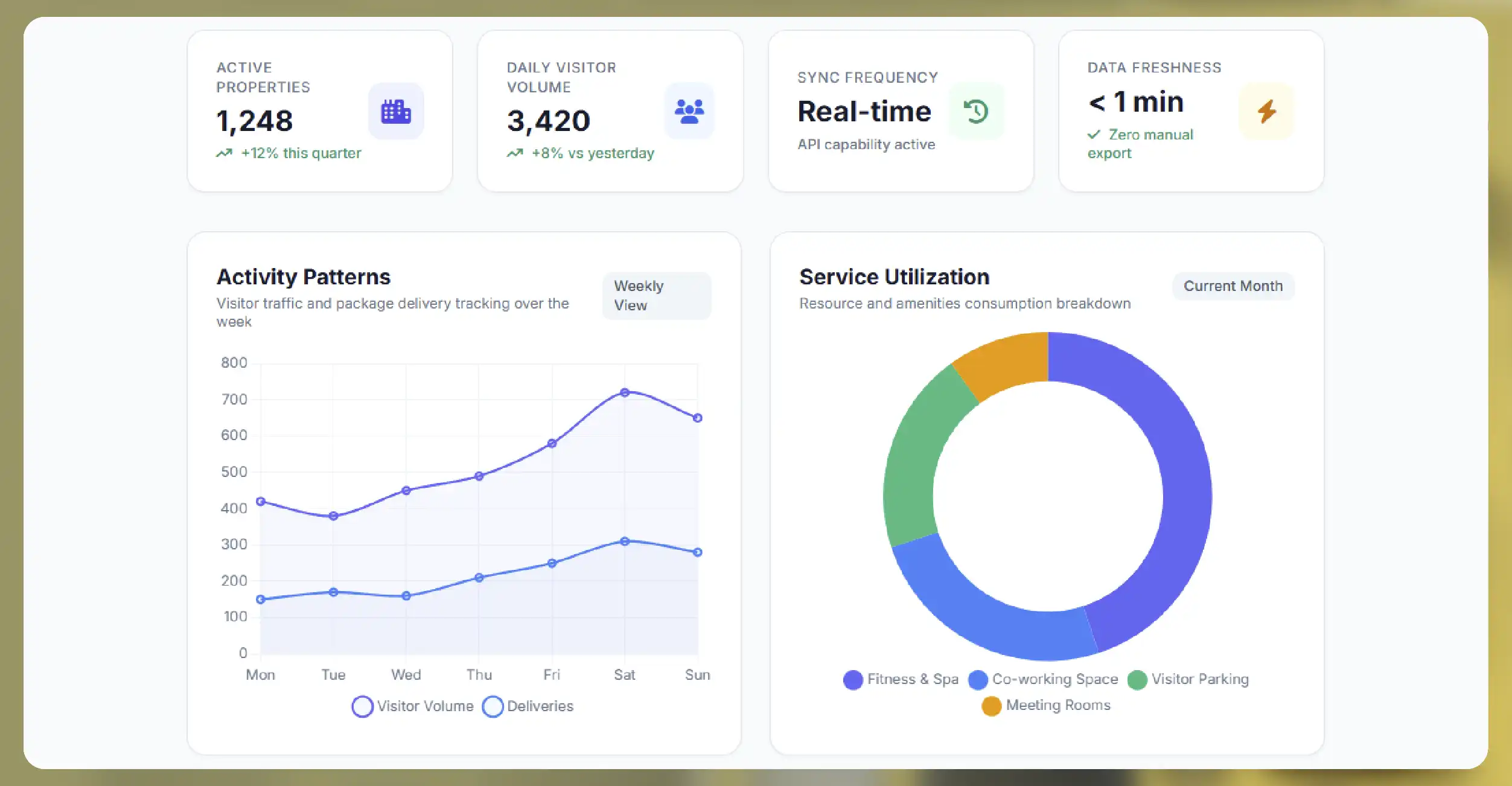
For example, a property management company could maintain structured records of community activity and use them to identify changes in visitor volumes, delivery patterns, service utilization, or access activity.
Automated pipelines can also improve data freshness. Instead of waiting for weekly or monthly reports, organizations can configure scheduled synchronization according to their operational requirements and API capabilities.
This creates a stronger foundation for dashboards, internal applications, forecasting systems, and performance monitoring.
Key Data Categories That Can Be Collected
The exact information available depends on the organization's authorized MyGate integration and access permissions. However, relevant datasets may be organized into several categories.
Resident Information
Authorized resident records can help organizations maintain
structured profiles, community directories, and operational datasets. Common fields may include
resident identifiers, unit references, household relationships, and account-related attributes where
permitted.
Visitor and Access Information
Visitor-related records can provide insight into
entry activity, visitor frequency, approval status, timestamps, and other access events. When
properly authorized, these records can support security reporting and operational analysis.
Delivery Information
Residential communities receive significant volumes of food,
grocery, e-commerce, courier, and service deliveries. Structured delivery information can help
management teams understand delivery frequency, peak periods, and operational workload.
Community Operations
Other datasets may include notices, facility usage,
staff-related information, service requests, and community activities. Bringing these datasets
together can create a more complete operational picture.
Building an Automated Data Pipeline
A successful API data collection system requires more than sending requests to an endpoint. The pipeline should be designed around authentication, reliability, data quality, scalability, and security.
1. Authentication and Authorization
The first stage establishes secure access
using credentials, tokens, or other mechanisms provided through an approved integration. Credentials
should never be hard-coded into scripts or exposed in logs. Access should follow the principle of
least privilege, ensuring that the pipeline retrieves only the information required for its business
purpose.
2. Endpoint Integration
The next stage connects the application to the relevant
API endpoints. Developers can configure requests based on available resources, parameters,
pagination methods, and supported filters. A well-designed connector should also accommodate
authentication expiration, request failures, timeouts, and API changes.
3. Pagination and Incremental Collection
Large datasets are commonly divided into
multiple pages or response batches. The collector should process these pages systematically rather
than assuming that a single API request contains all records. Incremental collection can further
improve efficiency by retrieving newly created or updated records rather than repeatedly processing
the entire dataset.
4. Data Cleaning and Normalization
Raw API responses may contain inconsistent
formats, missing values, duplicate records, or nested structures. A transformation layer can convert
these responses into standardized tables. For example, timestamps can be normalized into a
consistent timezone, identifiers can be validated, and repeated records can be deduplicated before
storage.
5. Database Storage
Processed data can be stored in relational databases, cloud
data warehouses, object storage, or other systems suited to the organization's architecture. A
structured schema might separate residents, units, visitors, access events, deliveries, and
timestamps into related tables. This makes downstream analytics more efficient.
Automating Delivery Data Collection
Residential delivery activity provides a particularly useful example of how automated data pipelines can support operational intelligence.
Automate MyGate delivery data Collection to consolidate authorized delivery records and analyze patterns across communities, buildings, time periods, and service categories.
A delivery analytics system could identify the number of deliveries received per day, peak delivery hours, recurring delivery periods, and changes in activity over time.
Property managers could use this information to optimize security desk staffing, delivery handling procedures, visitor coordination, and community operations.
For businesses developing logistics or residential technology products, structured delivery information can also provide valuable inputs for workflow automation and performance analysis.
Real-Time Analytics and Monitoring
When data is synchronized frequently, organizations can move beyond static reporting toward dynamic operational monitoring.
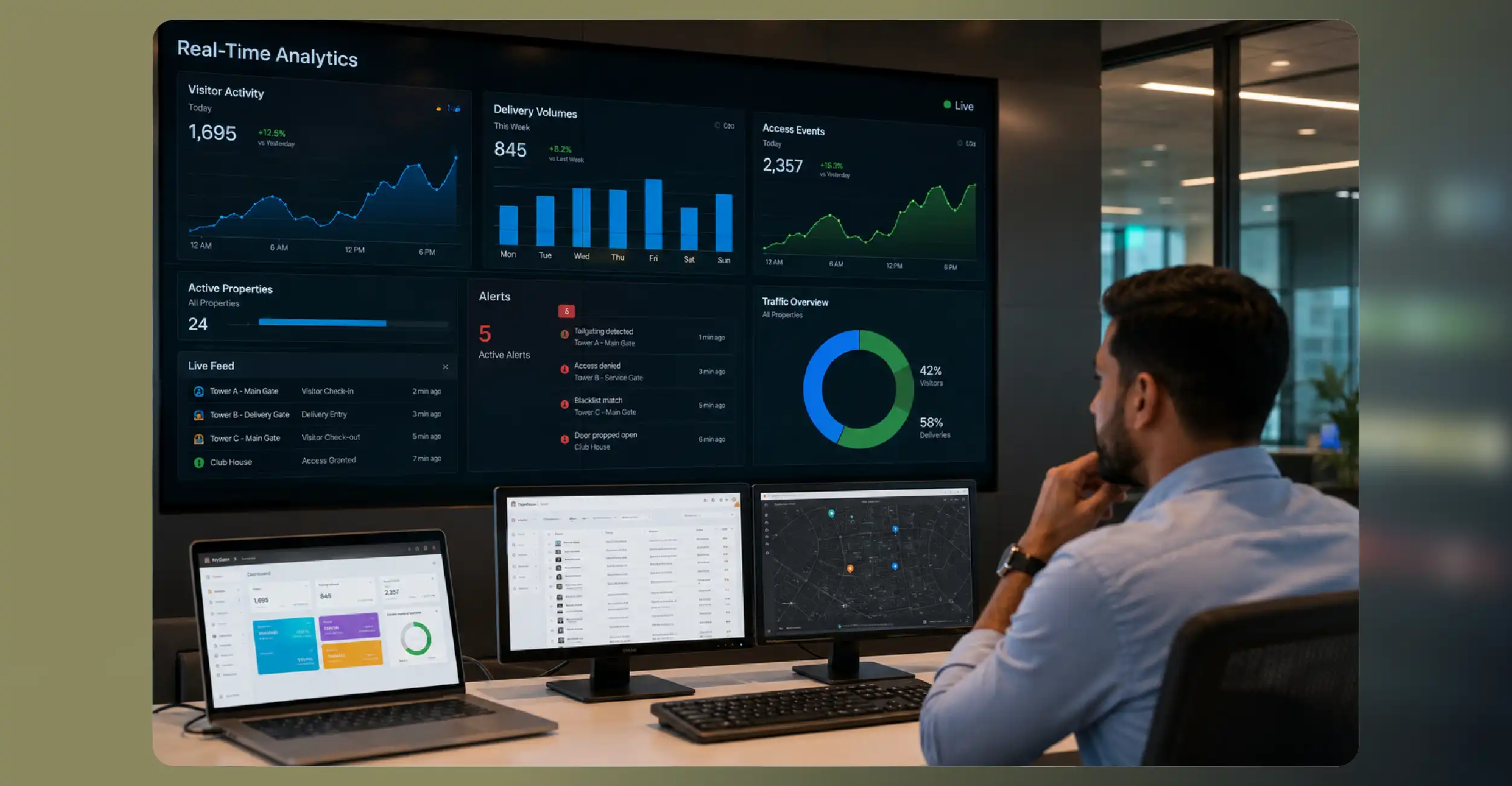
Real-time MyGate data analytics can help transform continuously updated operational records into dashboards that show changing activity patterns.
For instance, an analytics interface might display visitor activity by hour, delivery volumes by day, or access events across multiple properties. Decision-makers can then identify unusual changes or operational bottlenecks without manually compiling reports.
The value of real-time analytics depends on the available API update frequency, system architecture, authentication model, and business requirements. Not every use case requires second-by-second synchronization. In many cases, scheduled collection every few minutes or hours can provide an effective balance between freshness and infrastructure cost.
Location-Based Residential Intelligence
Residential information can become even more valuable when analyzed geographically.
Location intelligence can help organizations compare operational activity across communities, neighborhoods, cities, or property portfolios.
A property management organization could compare delivery volumes across buildings, identify locations with higher visitor activity, or evaluate operational demand by geographic area.
Geospatial analysis can also support resource allocation. For example, properties with consistently higher service activity may require different staffing levels or operational procedures than smaller communities.
When location information relates to identifiable individuals, however, businesses must apply appropriate privacy controls and avoid unnecessary exposure of sensitive personal information.
Challenges to Consider
API-driven data collection can offer major efficiency benefits, but implementation should be approached carefully.
Authentication Management: Tokens and credentials may expire or change, requiring secure refresh mechanisms and monitoring.
Rate Limits: Excessive requests can cause throttling. Efficient pagination, incremental synchronization, caching, and controlled request scheduling can reduce unnecessary traffic.
Schema Changes: APIs can evolve. Monitoring response structures helps identify changes before they disrupt downstream systems.
Data Privacy: Residential datasets can contain sensitive personal information. Organizations should collect only what is necessary, protect stored data, control access, and comply with applicable privacy requirements.
Data Quality: Missing values, duplicates, inconsistent timestamps, and incomplete records can reduce analytical accuracy. Validation rules should therefore be part of the pipeline rather than an afterthought.
Use Cases for Automated Data Collection
Automated MyGate data workflows can support several business applications.
Property management companies can create centralized operational dashboards covering multiple communities. Security teams can analyze visitor and access activity to improve monitoring processes.
Residential technology providers can integrate authorized data into applications that combine community operations with other services.
Logistics companies can study delivery activity to understand residential delivery demand and improve service planning.
Real estate organizations can use aggregated operational insights to compare properties and understand community activity patterns.
Data analytics teams can combine authorized residential datasets with other business information to develop broader operational intelligence models.
The strongest applications are those that connect data collection with a specific business decision rather than collecting information simply because it is available.
How iWeb Data Scraping Can Help You?
Customized Data Pipelines
iWeb Data Scraping can develop customized collection workflows around your approved data sources, helping structure API responses into clean datasets suitable for databases, dashboards, analytics, and business applications.
Automated Data Processing
Our solutions can automate repetitive retrieval, transformation, validation, and formatting tasks, reducing manual spreadsheet work while creating consistent datasets that can support recurring operational and analytical requirements.
Scalable Data Infrastructure
iWeb Data Scraping can design scalable workflows capable of processing expanding datasets across properties, locations, categories, and time periods without requiring teams to manage repetitive collection processes manually.
Analytics-Ready Datasets
We can transform collected information into structured, analytics-ready formats, making it easier for businesses to connect residential operational data with dashboards, business intelligence systems, forecasting tools, and reporting workflows.
Reliable Data Delivery
Our data solutions can support scheduled delivery through suitable formats and infrastructure, helping organizations receive updated datasets consistently while maintaining validation, monitoring, and quality-control processes throughout the collection workflow.
Conclusion
Automating authorized MyGate data collection can help businesses move from fragmented operational records toward structured, continuously updated intelligence. By connecting APIs with secure collection pipelines, databases, and analytics systems, organizations can reduce manual work while improving visibility across residents, access activity, deliveries, and community operations.
The real advantage comes from designing the complete workflow—from authentication and incremental retrieval to normalization, storage, monitoring, and analytics. Businesses should also prioritize privacy, security, access controls, and compliance when handling residential information.
Mobile app scraping can complement API-based workflows when organizations need to collect information from authorized application interfaces or sources where appropriate access mechanisms are available.
Real-time web scraping can support broader data-monitoring strategies when information must be collected from permitted web sources and continuously transformed into actionable datasets.
Web Scraping API Services can further help businesses build scalable data pipelines that connect multiple sources with analytics platforms, databases, dashboards, and enterprise applications.
With the right architecture, automated residential data collection becomes more than a technical process—it becomes an operational intelligence capability that can support faster decisions, improved resource planning, and more efficient property management.
FAQs
The available information depends on the authorized integration and permissions. Potential categories may include resident, visitor, delivery, access, community, and operational records.
Yes. Where the authorized API supports it, a collection workflow can be configured for scheduled synchronization, such as hourly, daily, or other appropriate intervals.
It can reduce manual reporting, centralize operational information, identify activity patterns, support dashboards, and help management teams make more informed staffing and resource decisions.
Security depends on implementation. Organizations should use secure authentication, encrypted connections, controlled permissions, protected storage, credential management, and appropriate privacy practices.
Yes. Structured API data can be transformed and delivered to databases, data warehouses, BI platforms, dashboards, or custom applications depending on the organization's technology environment.