

Introduction
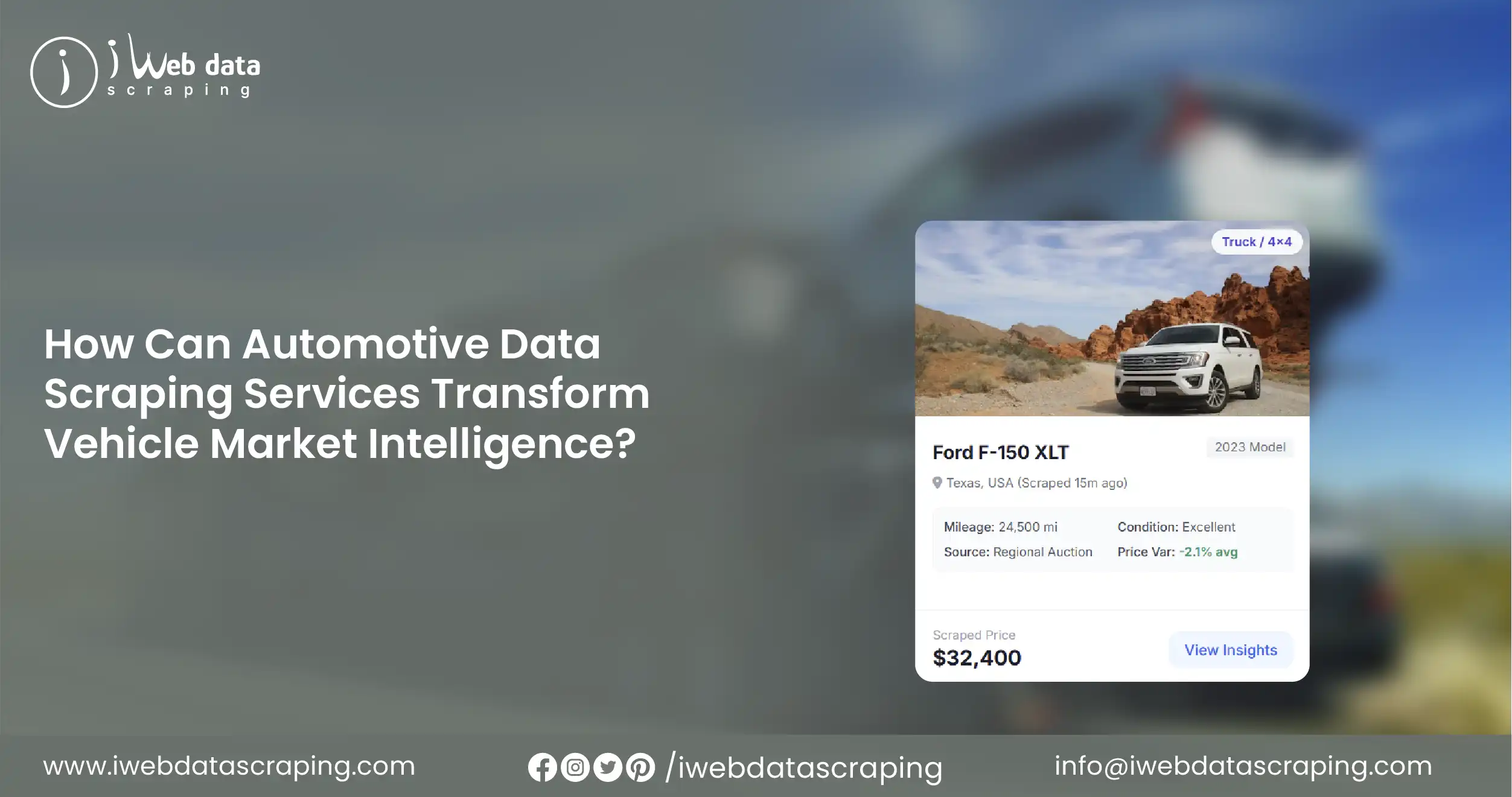
The automotive industry is becoming increasingly data-driven as dealerships, marketplaces, manufacturers, rental companies, leasing providers, parts distributors, and mobility businesses compete across rapidly changing digital channels. Vehicle prices, specifications, inventory, mileage, availability, dealer information, discounts, financing offers, and customer-facing listings are continuously updated across websites and platforms. Businesses that can collect and organize these changes efficiently can build a stronger understanding of the market.
Automotive data scraping services help businesses systematically collect publicly available automotive information from multiple online sources and transform scattered web data into structured, analysis-ready datasets. Instead of manually checking hundreds or thousands of listings, companies can automate collection according to predefined fields, sources, locations, brands, models, and frequencies.
For automotive marketplaces and dealerships, Vehicle listing data extraction can capture vehicle make, model, variant, year, mileage, fuel type, transmission, location, seller information, price, discounts, stock status, and listing URLs. Similarly, Managed automotive data scraping can provide an ongoing workflow where data collection, monitoring, validation, transformation, and delivery are handled according to business requirements.
Why Automotive Data Has Become a Strategic Business Asset?
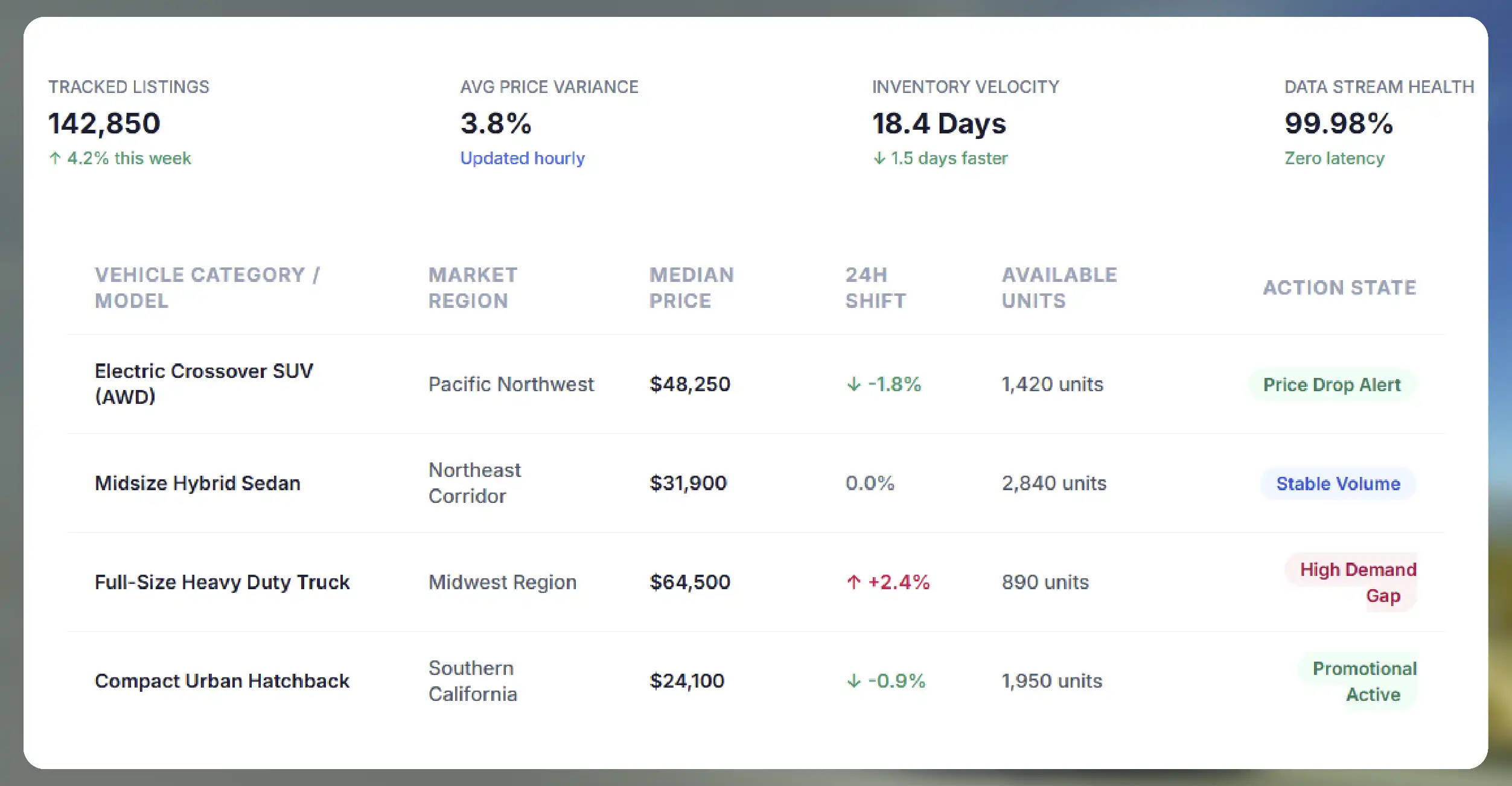
Modern automotive businesses operate in a market where prices and inventory can change rapidly. A vehicle that appears online today may be sold tomorrow, while a competitor can introduce a discount, add a new vehicle, or adjust financing terms within hours.
This makes static datasets less useful for organizations that require current market visibility. Continuous automotive data collection enables businesses to observe changes over time rather than relying on occasional manual research.
For example, dealerships can compare their listings with competing vehicles in the same geographic market. Automotive marketplaces can identify pricing gaps and inventory trends. Manufacturers can monitor model availability and promotional activity. Rental and leasing companies can track vehicle availability and advertised rates.
The value comes not simply from collecting more information, but from converting continuously changing web information into structured intelligence.
What Automotive Data Can Be Scraped?
A well-designed automotive scraping project can capture multiple categories of information depending on the business objective.
Vehicle Listing Information
Vehicle datasets can include:
- Make and model
- Variant and trim
- Manufacturing year
- New or used status
- Mileage
- Fuel type
- Transmission
- Engine specifications
- Exterior and interior features
- Vehicle condition
- Seller or dealer information
- Location
- Listing date
- Availability status
- Listing URL
This information can support marketplace analysis, inventory monitoring, lead generation, and competitive research.
Pricing and Promotional Data
Price intelligence is one of the most important applications of automotive scraping. Businesses can monitor advertised prices, discounts, incentives, financing offers, leasing rates, and price changes across competing websites.
Organizations looking to Extract used vehicle pricing data can compare vehicles according to model year, mileage, trim, location, condition, and other attributes. Normalizing these variables makes it easier to identify pricing patterns and understand how similar vehicles are positioned across different markets.
Historical pricing datasets can also help businesses study depreciation, price fluctuations, seasonal changes, and market movement.
Automotive Data Scraping for Dealers
Dealerships increasingly need competitive intelligence to understand how their inventory compares with nearby and national competitors.
Automotive data scraping for dealers can provide structured information about competing inventory, prices, discounts, vehicle specifications, stock availability, and dealership locations.
A dealer could monitor comparable vehicles across multiple marketplaces and identify whether its own vehicles are priced above or below similar listings. It can also identify which models are becoming more widely available and which vehicle categories have limited supply.
For multi-location dealer groups, automated data collection can create a centralized view of inventory and pricing across different geographic markets.
This data can support pricing teams, sales managers, inventory planners, and marketing departments without requiring employees to repeatedly visit individual websites.
Automotive Parts and Vehicle Data Collection
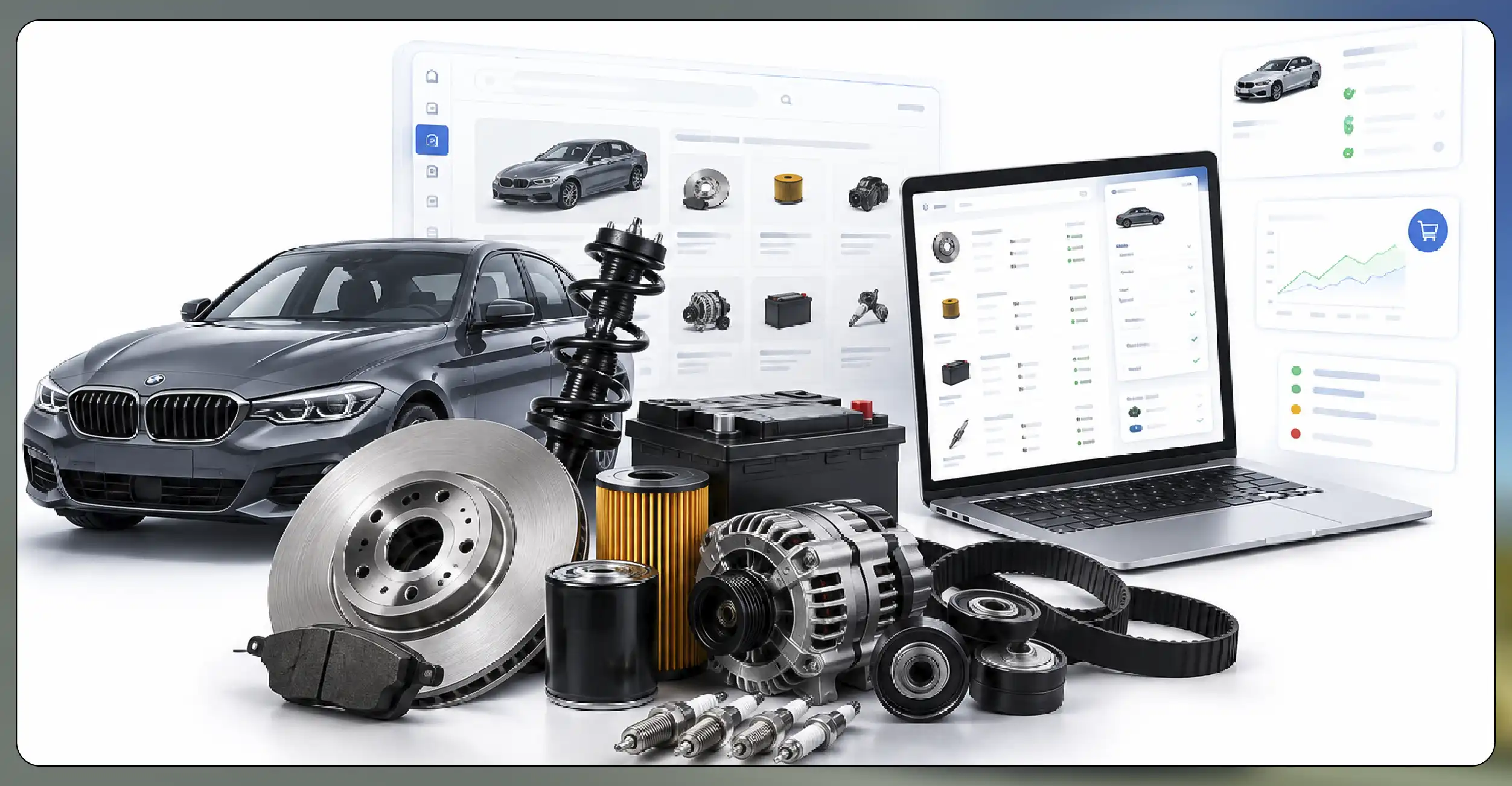
Automotive intelligence extends beyond complete vehicles. Parts manufacturers, distributors, retailers, workshops, and aftermarket businesses also require structured information from digital catalogs.
Automotive parts and vehicle data collection can capture product names, part numbers, OEM references, compatibility information, specifications, prices, availability, brands, vehicle fitment, and product URLs.
Vehicle-to-part compatibility data can be especially valuable for businesses operating large catalogs. Structured datasets can help identify which parts correspond to particular makes, models, variants, and production years.
Price and availability monitoring can also help parts businesses understand competitor positioning and identify products that frequently move in or out of stock.
Automotive Data Scraping for Marketplaces
Vehicle marketplaces depend on accurate and comprehensive inventory information. Automated collection can help marketplace operators monitor competing platforms, discover new listings, identify duplicate vehicles, and understand market coverage.
A marketplace may collect listing information from several sources and normalize it into a consistent schema. For example, different websites may describe the same transmission or fuel type differently. Data processing can standardize those values so analysts can compare listings more accurately.
Location normalization can similarly help businesses analyze inventory by city, state, region, or country.
This structured approach enables organizations to build dashboards showing inventory counts, average prices, model popularity, regional availability, and other market indicators.
Monitoring Automotive Market Trends
Automotive scraping can support broader market research beyond individual listings.
Businesses can monitor:
- Average vehicle prices
- New versus used inventory
- Vehicle availability
- Model popularity
- Regional price differences
- Discount frequency
- Inventory turnover signals
- Electric vehicle availability
- Hybrid vehicle listings
- Used-car depreciation patterns
- Rental vehicle pricing
- Leasing offers
- Parts availability
When collected consistently, these datasets can reveal trends that are difficult to identify through one-time research.
For example, an increase in EV listings across a particular region may indicate expanding inventory, while changes in advertised used-car prices can provide signals about market conditions.
How Automated Automotive Data Collection Works?
A successful scraping workflow generally begins with source identification and field definition. Businesses first determine which websites and data points are relevant to their objectives.
The collection layer then retrieves publicly available information according to defined schedules. Depending on the project, data may be collected hourly, daily, weekly, or at another appropriate frequency.
The raw information is subsequently processed through parsing, normalization, validation, and deduplication. Vehicle names, specifications, prices, locations, and other attributes are converted into consistent formats.
The final dataset can then be delivered through CSV, Excel, JSON, databases, cloud storage, dashboards, or APIs, depending on the organization's workflow.
Quality controls are important throughout this process. Changes in website structures, missing fields, duplicate listings, inconsistent values, and temporary source issues can affect data quality. Monitoring and validation help maintain reliable datasets over time.
Use Cases Across the Automotive Ecosystem
Automotive data scraping can support a wide range of organizations.
- Dealerships can monitor competitor inventory and pricing.
- Automotive marketplaces can benchmark listings and identify market gaps.
- Manufacturers can study model availability, pricing, and promotional positioning.
- Rental companies can compare rates, vehicle categories, and availability across locations.
- Leasing companies can monitor monthly payments, contract terms, mileage allowances, and vehicle offers.
- EV businesses can track electric vehicle availability, specifications, charging information, and pricing.
- Parts retailers can monitor product catalogs, compatibility, pricing, and stock status.
- Investment and research teams can use structured automotive datasets for market intelligence and industry analysis.
Building a Reliable Automotive Data Strategy
Simply scraping a large quantity of information does not automatically create useful intelligence. Businesses should begin by defining the exact decisions the dataset needs to support.
The next step is selecting relevant sources and establishing a standardized schema. Data fields should be designed around business requirements rather than whatever information happens to be available on a particular website.
Frequency is another important consideration. Pricing and inventory information may require frequent updates, while relatively stable specifications may not need the same collection schedule.
Businesses should also establish data-quality rules for duplicate detection, missing values, price validation, location standardization, and historical tracking.
With these components in place, automotive web data can become a reusable business intelligence resource rather than a collection of disconnected records.
How iWeb Data Scraping Can Help You?
1. Customized Automotive Datasets
iWeb Data Scraping can collect vehicle listings, prices, specifications, dealer information, parts details, and availability according to your required fields, markets, sources, and delivery formats.
2. Competitor Price Monitoring
Our automated workflows can help monitor competitor vehicle prices, discounts, inventory changes, and promotional offers, giving businesses structured information for ongoing automotive market and pricing analysis.
3. Multi-Source Data Collection
iWeb Data Scraping can consolidate automotive information from multiple relevant websites into standardized datasets, reducing fragmented research and making cross-source comparison easier for automotive businesses.
4. Data Cleaning and Structuring
Collected automotive information can be processed, normalized, deduplicated, and organized into consistent fields, helping teams work with cleaner datasets suitable for analytics, reporting, dashboards, and business intelligence.
5. Scalable Data Delivery
Whether you require recurring datasets or automated feeds, iWeb Data Scraping can support scalable collection workflows and deliver structured automotive information through formats aligned with your operational requirements.
Conclusion
Automotive businesses increasingly depend on timely market intelligence to understand inventory, pricing, specifications, availability, and competitive movements. Automated data collection can reduce repetitive research while creating structured information that supports pricing, inventory management, market analysis, and strategic planning.
From dealership inventory and used-car pricing to automotive parts catalogs, rental rates, leasing offers, and EV listings, automotive data scraping can support multiple areas of the mobility ecosystem. Businesses can also combine specialized solutions such as Car Rental Data Extraction Services with broader competitive monitoring programs.
For organizations interested in Automating Data Collection from Leasing & EV Websites, structured web data can provide a practical foundation for monitoring fast-changing digital automotive markets. A scraping API can further help businesses integrate continuously collected automotive information into internal applications, analytics systems, dashboards, and databases.
The strongest automotive data strategy is not necessarily the one that collects the most records. It is the one that captures the right information consistently, structures it accurately, and makes it accessible when business teams need it.
FAQs
Automotive data scraping services automate the collection of publicly available information such as vehicle listings, prices, specifications, inventory, dealer details, parts information, rental rates, and leasing offers from relevant online sources.
Depending on the project, datasets can include make, model, variant, year, mileage, fuel type, transmission, specifications, price, discounts, seller details, location, availability, listing URLs, and other relevant attributes.
Yes. Automated datasets can track advertised used-vehicle prices and associated attributes such as model year, mileage, trim, location, and vehicle condition, enabling structured comparison and historical price analysis.
Yes. Automotive parts datasets can include product names, part numbers, OEM references, compatibility information, specifications, brands, prices, availability, and vehicle fitment details, depending on the source and project requirements.
Automotive datasets can be delivered in formats such as CSV, Excel, JSON, databases, cloud storage, dashboards, or API-based feeds. The appropriate delivery method depends on the business's analytical and operational requirements.