How Does Barcode to Product Resolution Using UPC, EAN & GTIN Improve Product Identification Across Platforms?
Introduction
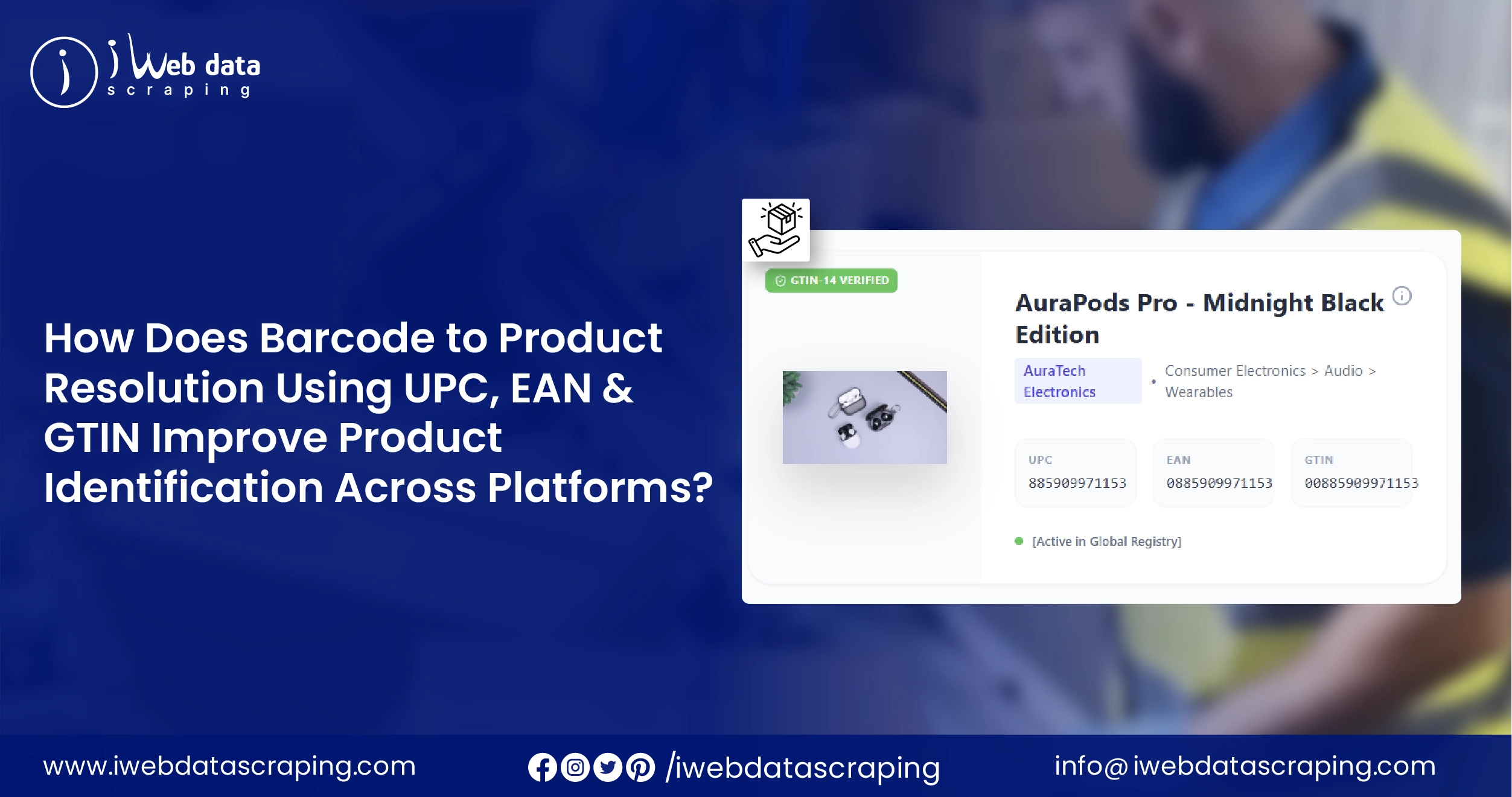
In today’s data-driven retail and e-commerce landscape, identifying products accurately across platforms is critical for pricing intelligence, inventory management, and competitive benchmarking. One of the most reliable ways to achieve this is through barcode-based product resolution using globally standardized identifiers such as UPC, EAN, and GTIN. These codes act as universal product fingerprints, enabling businesses to match, track, and analyze items across multiple marketplaces and data sources with precision.
Barcode to Product Resolution Using UPC, EAN & GTIN plays a foundational role in ensuring consistent product identification across fragmented digital ecosystems. Scrape data for barcode-to-product matching to gather real-time product information from diverse sources and unify it into structured datasets. UPC, EAN & GTIN barcode product matching data scraping empowers companies to create accurate mappings between products listed on different platforms, reducing duplication and inconsistencies.
This blog explores how barcode systems work, why they are essential for product resolution, and how modern data scraping techniques enable scalable and efficient product matching.
Understanding UPC, EAN, and GTIN
Barcodes are not just random sequences of numbers—they follow standardized formats that ensure global compatibility. The three most widely used barcode systems include:
UPC (Universal Product Code):
Primarily used in North America, UPC consists of 12 numeric digits and is commonly found on retail products. It helps retailers track inventory and sales efficiently.
EAN (European Article Number):
EAN is widely used internationally and typically contains 13 digits. It extends the UPC system and supports global product identification.
GTIN (Global Trade Item Number):
GTIN is an umbrella term that includes UPC, EAN, and other barcode formats. It standardizes product identification across regions and industries, making it ideal for cross-border commerce.
These identifiers ensure that a product can be uniquely recognized regardless of where it is sold, forming the backbone of barcode-to-product resolution.
Why Barcode-Based Product Resolution Matters?
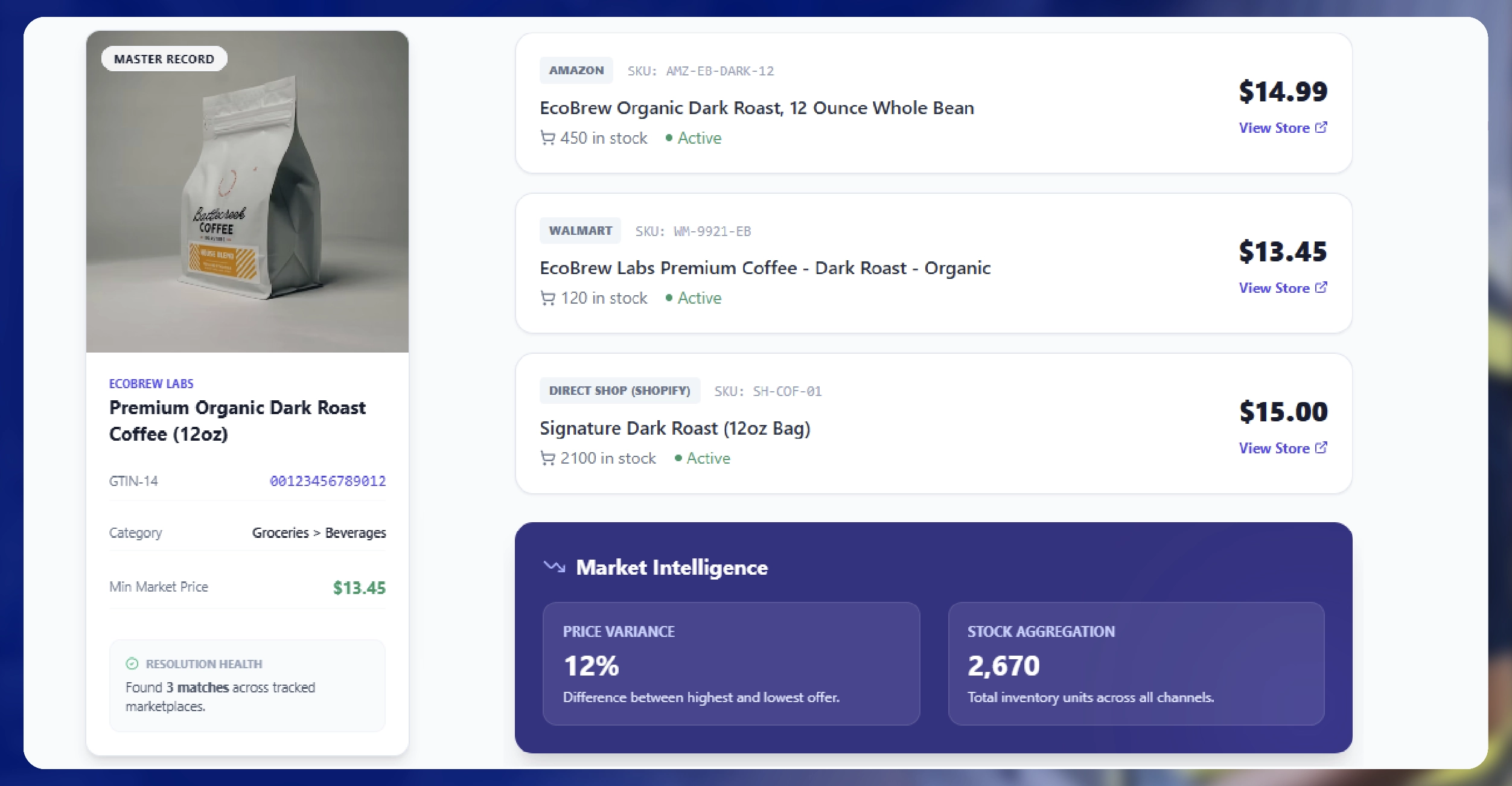
In multi-channel retail environments, the same product often appears under different names, descriptions, or SKUs across platforms. This creates challenges in tracking, pricing, and analytics. Barcode-based resolution solves these issues by providing a consistent identifier.
For example, a beverage listed on multiple e-commerce sites may have slightly different titles or packaging descriptions. However, if all listings share the same GTIN, they can be accurately matched and analyzed as a single product.
This capability is especially valuable for:
- Price comparison and competitive intelligence
- Inventory synchronization across channels
- Eliminating duplicate product listings
- Enhancing catalog accuracy
Role of Data Scraping in Barcode Matching
Barcode resolution becomes truly powerful when combined with advanced data scraping techniques. By extracting product data from various online platforms, businesses can build comprehensive datasets that link barcodes to product attributes such as price, availability, ratings, and descriptions.
Barcode data extraction for analytics enables organizations to transform raw barcode-linked data into actionable insights for decision-making.
Scraping tools collect structured and unstructured data from e-commerce websites, retailer portals, and supplier databases. This information is then cleaned, normalized, and matched using barcode identifiers.
SKU Matching and Product Identification
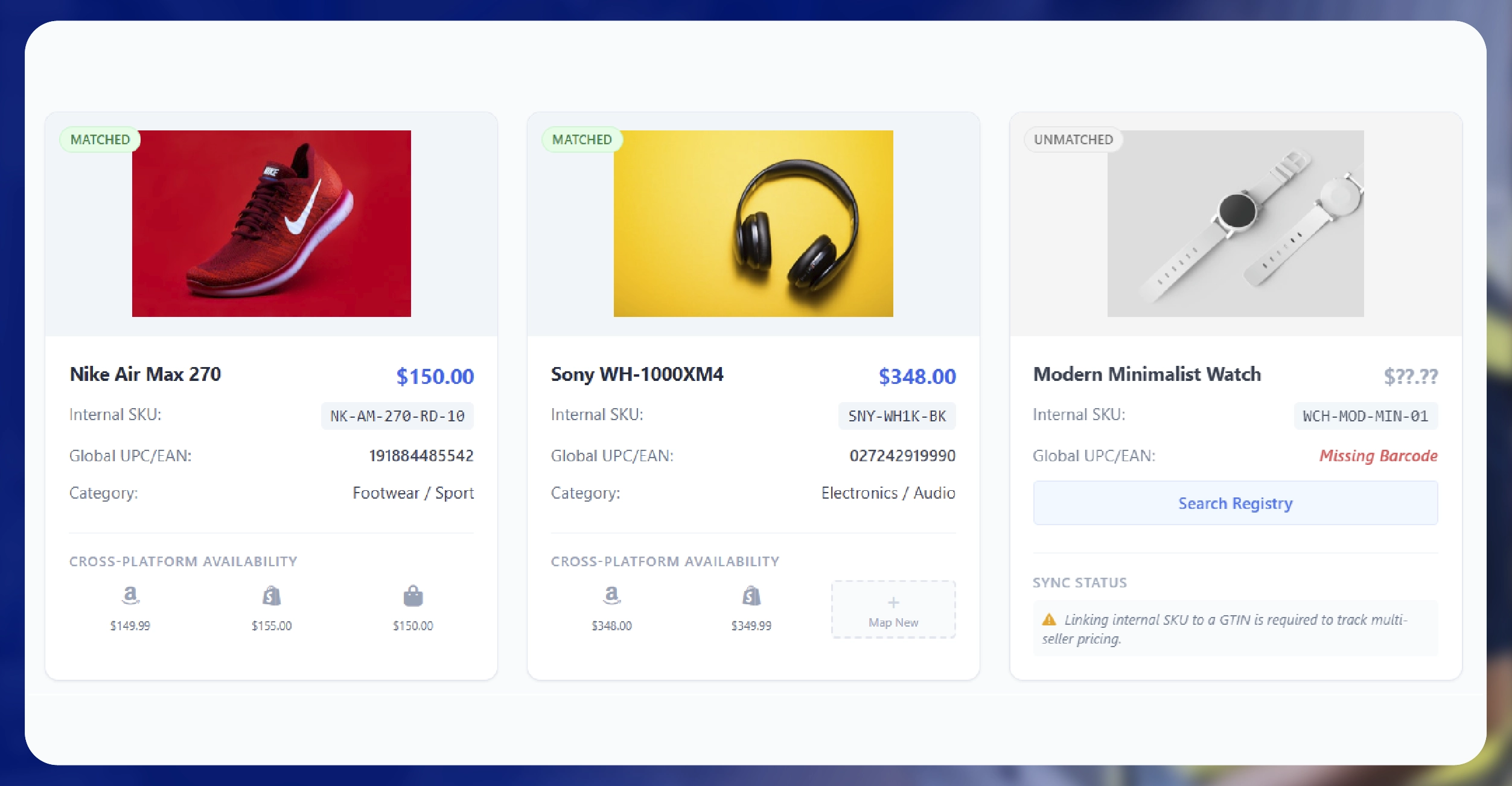
Stock Keeping Units (SKUs) are internal identifiers used by retailers, but they are not standardized across platforms. This makes cross-platform matching difficult without a universal reference point.
SKU Matching via Barcode Data scraping bridges this gap by linking internal SKUs to globally recognized barcode identifiers.
When businesses map SKUs to UPC, EAN, or GTIN codes, they can:
- Align product catalogs across multiple platforms
- Track the same item sold by different sellers
- Maintain consistency in product listings
Eliminating Duplication and Improving Accuracy
Duplicate listings are a common issue in large product catalogs, leading to confusion and inefficiencies. Barcode-based resolution helps eliminate these duplicates by identifying products with identical barcodes.
The steps to identify same SKU using barcode data ensures that identical products are grouped together, even if their listings differ in naming or formatting.
This process improves catalog hygiene, enhances search accuracy, and ensures better customer experiences by presenting unified product information.
Cross-Platform Product Tracking
Modern consumers shop across multiple platforms, and businesses must track product performance across all these channels. Barcode identifiers make this possible by acting as a common link between different marketplaces.
Cross-platform product tracking using UPC, EAN & GTIN allows companies to monitor pricing, availability, and demand trends across various platforms in real time.
This capability is crucial for:
- Competitive pricing strategies
- Market trend analysis
- Demand forecasting
- Brand performance tracking
Integration with Web Scraping APIs

To scale barcode-based product resolution, businesses rely on automation tools and APIs that streamline data extraction and processing.
Web Scraping API Services provide structured access to large volumes of product data, enabling real-time updates and seamless integration with analytics systems.
These APIs allow companies to:
- Continuously monitor product listings
- Extract barcode-linked data at scale
- Integrate datasets into dashboards and BI tools
- Automate product matching workflows
Applications Across Industries
Barcode-to-product resolution is not limited to retail—it has applications across multiple industries:
- E-commerce: Ensures accurate product listings, price comparisons, and inventory tracking.
- FMCG (Fast-Moving Consumer Goods): Helps brands monitor product distribution and availability across retailers.
- Pharmaceuticals: Supports drug identification, compliance, and supply chain transparency.
- Logistics and Supply Chain: Enables efficient tracking of goods from manufacturers to end consumers.
Challenges in Barcode-Based Matching
While barcode systems are highly effective, they are not without challenges:
- Incomplete or Missing Barcode Data: Some products may lack barcode information, especially in smaller marketplaces.
- Data Inconsistencies: Errors in barcode entries can lead to mismatches.
- Multiple Barcodes for Variants: Different packaging sizes or variations of a product may have unique barcodes.
- Dynamic Listings: Frequent updates in product listings require continuous data monitoring.
These challenges highlight the importance of robust data validation and enrichment processes.
Start transforming barcode data into actionable insights with our powerful, scalable data scraping solutions today.
Best Practices for Effective Barcode Resolution
To maximize the benefits of barcode-based product matching, businesses should follow best practices such as:
- Maintaining a centralized barcode database
- Validating barcode formats during data collection
- Regularly updating product datasets
- Using AI and machine learning for enhanced matching accuracy
- Combining barcode data with additional attributes like product names and categories
These strategies ensure higher accuracy and reliability in product resolution.
Future of Barcode-Based Product Intelligence
As digital commerce continues to evolve, barcode-based product resolution will become even more critical. Emerging technologies such as AI, machine learning, and big data analytics are enhancing the capabilities of barcode matching systems.
Future advancements may include:
- Real-time product intelligence dashboards
- Automated anomaly detection in product data
- Enhanced cross-border product tracking
- Integration with IoT-enabled supply chains
These innovations will further strengthen the role of barcodes in enabling seamless product identification and tracking.
How iWeb Data Scraping Can Help You?
Accurate Product Matching
Our data scraping services map UPC, EAN, and GTIN codes to products, ensuring precise identification across marketplaces and eliminating duplicates effectively.
Real-Time Data Extraction
We continuously scrape product listings, prices, and availability, delivering up-to-date datasets that support faster decision-making and competitive intelligence strategies.
Cross-Platform Tracking
Track the same product across multiple e-commerce platforms using barcode data, enabling consistent monitoring of pricing, demand, and performance trends globally.
Scalable API Integration
Our solutions integrate seamlessly with your systems through APIs, allowing automated data collection, processing, and synchronization at scale without manual intervention.
Enhanced Analytics Support
We provide clean, structured barcode-linked datasets that empower advanced analytics, helping businesses uncover insights, optimize pricing, and improve operational efficiency significantly.
Conclusion
Barcode-to-product resolution using UPC, EAN, and GTIN is a powerful approach to solving one of the biggest challenges in modern commerce—accurate product identification. By leveraging standardized barcode systems and advanced data scraping techniques, businesses can achieve unmatched precision in product matching, tracking, and analytics.
From eliminating duplicate listings to enabling cross-platform insights, barcode-based resolution is essential for organizations aiming to stay competitive in today’s fast-paced digital marketplace. Web Scraping Services play a crucial role in extracting and maintaining high-quality barcode-linked datasets for analysis and decision-making.
Product Matching Services help businesses align their catalogs across platforms, ensuring consistency and accuracy in product identification. Product Availability Services enable real-time tracking of stock levels and distribution, empowering companies to respond quickly to market changes. By adopting these solutions, businesses can unlock the full potential of barcode-driven product intelligence and drive smarter, data-backed strategies.
Experience top-notch web scraping service and mobile app scraping solutions with iWeb Data Scraping. Our skilled team excels in extracting various data sets, including retail store locations and beyond. Connect with us today to learn how our customized services can address your unique project needs, delivering the highest efficiency and dependability for all your data requirements.