Introduction
India's dry fruits and nuts market is experiencing a significant transformation as consumers increasingly purchase almonds, cashews, walnuts, raisins, pistachios, makhana, and mixed nuts through quick-commerce platforms. Blinkit has emerged as an important digital marketplace for this category, offering consumers multiple brands, pack sizes, product varieties, promotional prices, and convenient doorstep delivery. The increasing availability of premium and everyday dry fruits is creating new opportunities for brands to compete across affordability, product quality, packaging, and digital visibility.
A detailed Dry Fruits and Nuts on Blinkit 2026 data Scraping exercise helps businesses understand how products are positioned across different categories, brands, and price segments. Monitoring Blinkit dry fruits price data provides insights into regular pricing, promotional discounts, pack-size variations, and competitive positioning. It also helps identify how established and emerging dry fruits brands India are competing for consumer attention through product assortment and marketplace visibility.
The research examines Blinkit's dry fruits and nuts listings using publicly visible product information captured around November 20, 2026. It evaluates brand presence, observed prices, pack sizes, promotional positioning, and category-level competition. The objective is to understand which brands are building stronger digital shelf visibility and how pricing strategies influence their competitive positioning.
Research note: Prices below represent observed Blinkit listings on the stated date, not nationwide fixed prices. Availability, discounts, and assortment can vary by delivery location and dark store. The analysis is a marketplace snapshot rather than an audited sales or market-share study.
Understanding the Dry Fruits and Nuts Market on Blinkit
Blinkit's dry fruits category combines traditional grocery products with premium packaged snacks and health-oriented alternatives. Consumers can explore conventional products such as almonds, cashews, raisins, and walnuts alongside roasted pistachios, flavoured makhana, trail mixes, and specialty nut combinations.
The platform features established names such as Tata Sampann, Nutraj, Happilo, Farmley, Rajdhani, and Jabsons. It also offers its private-label-oriented Whole Farm and Whole Farm Grocery ranges, which compete through everyday pricing and multiple pack configurations.
This assortment creates different competitive segments: everyday consumption (raw almonds, cashews, peanuts, raisins, and walnuts), premium dry fruits (California almonds, walnut kernels, premium cashews, and pistachios), healthy snacking (roasted nuts, flavoured makhana, and seed combinations), value packs (larger quantities designed for households and repeat purchases), and gift-oriented products (assorted dry fruit packs and premium combinations). The breadth of these segments means that brands compete on more than just product price. Packaging, quantity, discounts, perceived quality, and listing visibility also influence their marketplace position.
Brand Competition and Digital Shelf Positioning
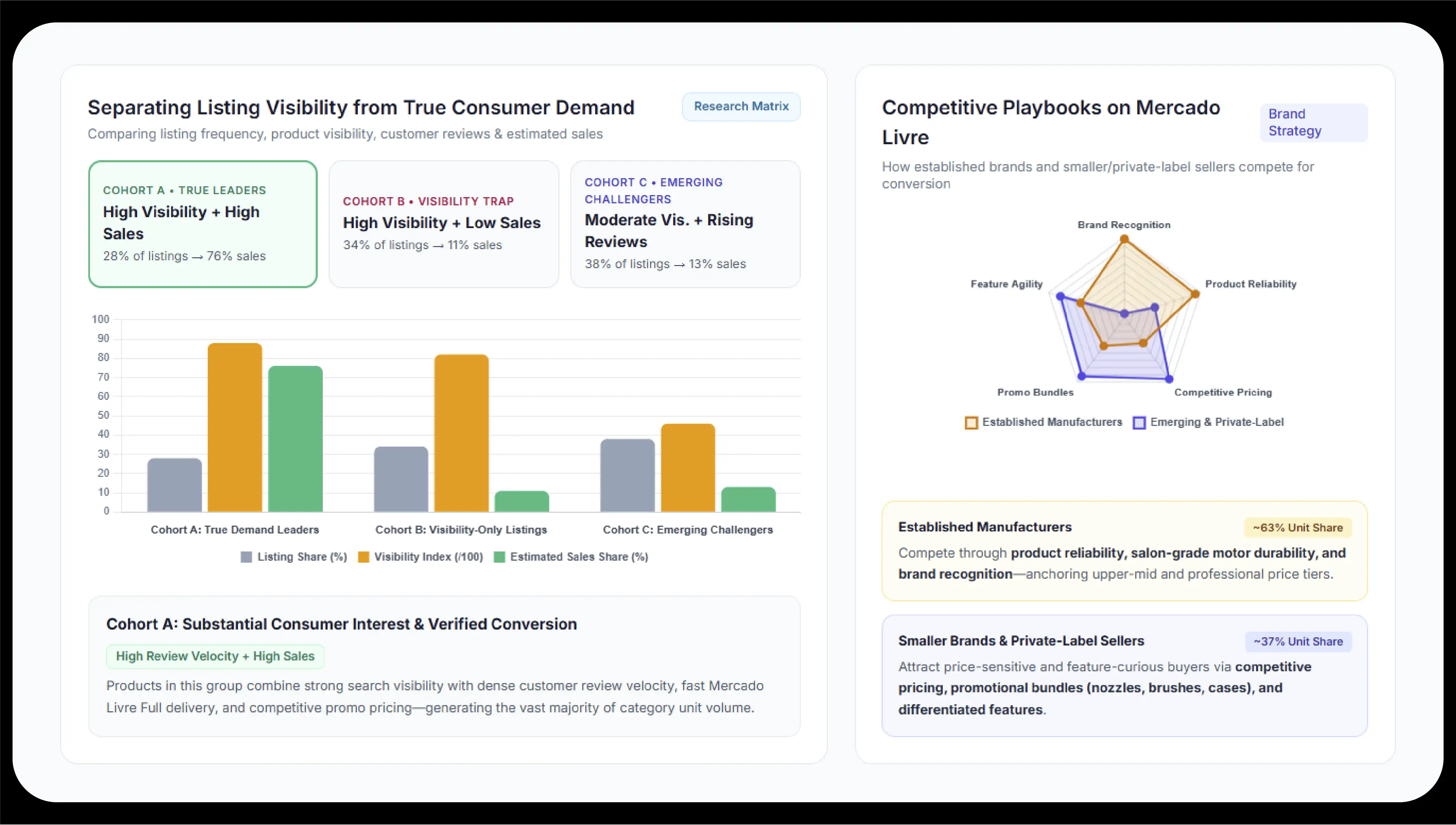
The competitive landscape on Blinkit reveals two broad strategies: established brands focusing on recognition and quality, and value-oriented offerings competing through affordability and accessible pack sizes.
Whole Farm has a noticeable presence across everyday dry fruits, including almonds, cashews, walnuts, raisins, and makhana. Its products provide several price-entry points, making the range relevant to consumers comparing smaller purchases with household requirements. Tata Sampann competes through established brand recognition and packaged grocery positioning. Its California almonds, premium cashews, and seedless raisins provide alternatives for consumers who prioritize familiarity and consistent product presentation.
Nutraj has a diversified assortment covering whole cashews, broken cashews, raisins, walnuts, apricots, and trail mixes. Its variety helps it participate in both traditional dry fruit consumption and premium snacking. Farmley focuses on convenient consumption formats, including roasted nuts, flavoured makhana, and date-based snacks. Its assortment reflects the growing intersection between traditional dry fruits and ready-to-eat health snacks. Other competitors, including Happilo, Rajdhani, AMAYU, Nutty Gritties, and Mr. Makhana, strengthen competition across premium nuts, traditional makhana, and innovative snack formats.
Blinkit Dry Fruits Pricing and Pack-Size Comparison
Price comparison is one of the most important elements of digital shelf analysis. Consumers do not necessarily select the product with the lowest displayed price. They also evaluate quantity, normalized price per 100 grams, discounts, brand reputation, and product specifications.
The following table compares selected products observed on Blinkit. Unit prices are calculated from displayed selling prices and pack weights.
Table 1: Blinkit Dry Fruits and Nuts Product Pricing Analysis 2026
| Whole Farm Grocery |
Raw Makhana |
100 |
125 |
210 |
40.5 |
125.00 |
| Whole Farm Grocery |
Cashew |
200 |
232 |
299 |
22.4 |
116.00 |
| Tata Sampann |
California Almonds |
500 |
641 |
845 |
24.1 |
128.20 |
| Whole Farm Premium |
American Almonds |
100 |
152 |
190 |
20.0 |
152.00 |
| Whole Farm Premium |
Walnut Kernels |
100 |
166 |
240 |
30.8 |
166.00 |
| Tata Sampann |
Seedless Raisins |
200 |
188 |
224 |
16.1 |
94.00 |
| Rajdhani |
Plain Raw Makhana |
100 |
150 |
230 |
34.8 |
150.00 |
| Farmley |
Roasted Flavoured Makhana |
77 |
200 |
239 |
16.3 |
259.74 |
| Nutraj |
Whole Cashew |
400 |
430 |
599 |
28.2 |
107.50 |
| Nutraj |
Whole Cashew Nuts |
200 |
272 |
399 |
31.8 |
136.00 |
| Whole Farm Grocery |
Almonds |
200 |
282 |
395 |
28.6 |
141.00 |
| Whole Farm Grocery |
Raisins |
200 |
114 |
200 |
43.0 |
57.00 |
| AMAYU |
Premium Dry Fruits & Seeds Trail Mix |
900 |
679 |
2,396 |
71.7 |
75.44 |
| Nutraj |
Recipe Ready Broken Walnuts |
250 |
346 |
499 |
30.7 |
138.40 |
| Whole Farm Premium |
Cashew Halves |
100 |
127 |
160 |
20.6 |
127.00 |
Source: Publicly visible Blinkit product listings captured around November 19–20, 2026. Discounts and normalized prices are calculated from the displayed figures. Products may not be available in every location.
The comparison highlights several interesting pricing patterns. Whole Farm Grocery raisins offer an observed price of ₹57 per 100 grams, while Tata Sampann seedless raisins are listed at ₹94 per 100 grams. This creates a considerable price difference between two products within the same broad category. Similarly, Nutraj's 400-gram whole cashew pack offers a lower normalized price than its 200-gram alternative. This demonstrates how larger packaging can improve perceived value and encourage bulk purchases. Makhana presents a different pricing structure. Raw varieties are available at substantially lower per-gram prices than flavoured and roasted products. Consumers purchasing ready-to-eat snacks are paying for processing, seasoning, convenience, and packaging in addition to the underlying ingredient.
Which Brands Win on Price, Pack Size and Product Variety?
The almonds cashews prices Blinkit comparison demonstrates how different brands target different consumer budgets. Whole Farm Grocery competes through accessible pricing, while Tata Sampann positions its California almonds and premium cashews toward established-brand consumers.
Nutraj offers a combination of larger packs and specialized formats. Its whole cashews, broken cashews, and walnut products provide choices for different consumption requirements. Farmley, meanwhile, competes in the convenience-led segment through roasted and flavoured products.
Pack size is particularly important because it affects both the initial purchase price and the normalized cost of consumption. A 100-gram pack may attract trial purchases, while 200-gram and 500-gram packs can appeal to regular household buyers. Larger trail-mix packs also allow brands to communicate value through quantity and promotional pricing. The makhana price data further illustrates the differences between traditional and processed products. Whole Farm Grocery and Rajdhani offer plain raw makhana, whereas Mr. Makhana and Farmley compete through flavoured and roasted formats. For brands, the opportunity lies in developing a balanced portfolio covering entry-level, mid-range, and premium consumers rather than relying on a single packaging format.
Detailed Brand-Level Product and Shelf Competition
Evaluating individual brands requires examining their assortment, product formats, pack sizes, and observed price positioning. The following table summarizes selected competitive listings and their digital marketplace characteristics.
Table 2: Brand-Level Dry Fruits and Nuts Competition on Blinkit 2026
| Whole Farm |
Makhana |
Raw Makhana |
100 |
125 |
125.00 |
Value |
| Whole Farm |
Almonds |
American Almonds |
100 |
152 |
152.00 |
Mid-range |
| Whole Farm |
Cashews |
Cashew Halves |
100 |
127 |
127.00 |
Value |
| Whole Farm |
Walnuts |
Walnut Kernels |
100 |
166 |
166.00 |
Mid-range |
| Tata Sampann |
Almonds |
California Almonds |
500 |
641 |
128.20 |
Established brand |
| Tata Sampann |
Cashews |
Premium Cashew |
200 |
259 |
129.50 |
Established brand |
| Tata Sampann |
Raisins |
Premium Seedless Raisins |
200 |
188 |
94.00 |
Mid-range |
| Nutraj |
Cashews |
Whole Cashew |
400 |
430 |
107.50 |
Value-oriented |
| Nutraj |
Cashews |
Broken Cashew |
100 |
140 |
140.00 |
Cooking use |
| Nutraj |
Walnuts |
Broken Walnut Kernels |
250 |
346 |
138.40 |
Convenience |
| Nutraj |
Walnuts |
Whole Chilean Walnuts |
500 |
349 |
69.80 |
Bulk-oriented |
| Farmley |
Makhana |
Roasted Himalayan Salt |
77 |
200 |
259.74 |
Premium snacking |
| Farmley |
Makhana |
Peri Peri Flavoured |
20 |
47 |
235.00 |
Trial pack |
| Farmley |
Makhana |
Cream & Onion Flavoured |
77 |
200 |
259.74 |
Flavoured snacking |
| Rajdhani |
Makhana |
Plain Raw Makhana |
100 |
150 |
150.00 |
Traditional |
| Mr. Makhana |
Makhana |
Pudina Party |
21 |
46 |
219.05 |
Affordable trial |
| Mr. Makhana |
Makhana |
Himalayan Salt & Pepper |
55 |
132 |
240.00 |
Flavoured snacking |
| Happilo |
Pistachios |
Jumbo Californian Roasted & Salted |
200 |
565 |
282.50 |
Premium |
| Happilo |
Almonds |
Californian Roasted & Salted |
— |
351 |
— |
Premium snacking |
| Nutty Gritties |
Mixed Nuts |
Daily Mix Nuts |
35 |
100 |
285.71 |
Single-serve |
| AMAYU |
Trail Mix |
Dry Fruits & Seeds Mix |
250 |
299 |
119.60 |
Mixed nutrition |
| AMAYU |
Trail Mix |
Premium Mix Dry Fruits & Seeds |
900 |
679 |
75.44 |
Large value pack |
Source: Blinkit listings captured around November 19–20, 2026. A dash indicates that the pack weight was not established in the retrieved listing. Price positioning is an analytical classification, not an official brand designation.
The table demonstrates that no single brand dominates every product segment. Whole Farm competes across traditional categories, Tata Sampann combines recognized branding with larger packs, and Nutraj provides considerable variety in nuts and ingredient formats. Farmley and Mr. Makhana have a stronger presence in the convenience-snacking proposition. Their products demonstrate how processing and flavour innovation can create higher per-100-gram price points. Happilo's roasted pistachios are positioned at a premium price, while AMAYU's larger trail-mix packs illustrate how assortment combinations can create competitive unit economics.
Understanding Shelf Share and Product Visibility
Shelf share is an important indicator of competitive strength in online grocery marketplaces. However, it should not be confused with sales market share. A brand can occupy several visible product positions without necessarily generating the highest revenue or order volume.
On Blinkit, digital shelf visibility can be evaluated through listing count (number of active SKUs available for each brand), search visibility (position of products for relevant category and brand searches), category coverage (number of dry fruit and nut subcategories represented), promotional visibility (frequency of discounted listings and promotional badges), and pack-size diversity (number of packaging formats available for consumers).
A brand offering almonds, cashews, raisins, walnuts, and makhana can achieve broader category coverage than a competitor specializing in one product. However, visibility also depends on location, inventory availability, search relevance, and product ranking. A useful quick commerce dry fruits report should therefore measure both overall assortment and individual SKU performance. It should distinguish between total listings, active listings, out-of-stock products, and products that appear prominently in search results. For example, Whole Farm's assortment across multiple traditional dry fruit categories gives it broad category representation. Nutraj benefits from product-format diversity, while Farmley and Mr. Makhana target specialized snack segments. These are qualitative shelf-positioning observations, not verified numerical market-share rankings.
D2C Brands and Emerging Competitive Opportunities
The increasing presence of specialized dry fruit and healthy-snacking brands creates opportunities for differentiated product positioning. The D2C dry fruits brand analysis should examine how digital-first companies compete against established packaged-food businesses and marketplace private labels.
Brands such as Farmley, Happilo, AMAYU, and Nutty Gritties demonstrate different approaches to product differentiation. Their assortment includes roasted nuts, premium pistachios, trail mixes, flavoured makhana, and convenient individual servings. Three major opportunities stand out: premiumization (specialty almonds, pistachios, walnuts, and curated combinations for higher-value consumers), convenience packaging (smaller packs for portion-controlled snacks and first-time purchases), and product innovation (flavoured makhana, roasted cashews, and customized trail mixes creating additional consumption occasions).
The Blinkit data scraping approach enables companies to monitor these competitive developments systematically. By collecting product names, brands, pack weights, selling prices, MRP, discount percentages, availability, and search positions, businesses can identify emerging pricing patterns and assortment gaps.
Key Insights and Strategic Recommendations
The marketplace snapshot provides several actionable findings for dry fruit manufacturers, distributors, retailers, and digital-first brands:
- Value pricing matters: Whole Farm's competitive pricing across traditional dry fruits makes it an important competitor in everyday consumption categories.
- Pack size influences competitiveness: Larger packs can offer lower normalized prices, as demonstrated by selected Nutraj and AMAYU listings.
- Premium products command higher unit prices: Roasted pistachios and flavoured makhana demonstrate how processing and convenience contribute to higher per-100-gram pricing.
- Assortment diversity strengthens positioning: Brands offering multiple categories can reach consumers with different purchase preferences.
- Promotions influence digital visibility: Discount percentages and promotional badges can affect how consumers evaluate competing products, although their actual impact on conversions requires transaction data.
For businesses, the recommended approach is to monitor product listings across multiple cities and dark stores, compare prices using standardized pack-weight calculations, and track changes in assortment and search rankings over time.
Conclusion
Blinkit's dry fruits and nuts category reflects a competitive marketplace where affordability, pack-size diversity, brand recognition, and product innovation influence digital positioning. Whole Farm competes across everyday essentials, Tata Sampann benefits from established brand recognition, Nutraj offers assortment diversity, and Farmley, Happilo, and other emerging brands target premium and convenience-led consumption.
For manufacturers and retailers, continuous digital shelf analytics can reveal changes in product availability, pricing, promotional activity, and competitor positioning. Measuring share of search alongside listing visibility can help brands understand their competitive presence across important product categories.
Implementing structured FMCG data scraping enables businesses to transform marketplace listings into actionable intelligence, identify pricing opportunities, optimize product assortments, and develop more effective competitive strategies. As quick commerce expands, systematic marketplace monitoring will become increasingly important for brands seeking sustainable growth in India's dry fruits and nuts market.
Experience top-notch web scraping service and mobile app scraping solutions with iWeb Data Scraping. Our skilled team excels in extracting various data sets, including retail store locations and beyond. Connect with us today to learn how our customized services can address your unique project needs, delivering the highest efficiency and dependability for all your data requirements.