
52.6K+
MOVIE SHOW RECORDS PROCESSED

BookMyShow Data Scraping for Movie Ticket Pricing, Theatre Seat Availability, Show-Level Intelligence, and Box Office Performance Analytics Across India.
This case study explores an enterprise movie intelligence scenario in which an entertainment analytics company wanted to transform fragmented online cinema ticketing information into structured datasets for market research, theatre performance evaluation, ticket pricing analysis, and box office forecasting. By implementing BookMyShow data scraping, the organization aimed to collect movie listings, theatre information, show schedules, seat categories, ticket prices, and seat availability across multiple Indian cities.
It is designed for:
The client operated in a competitive entertainment market where movie popularity, ticket prices, show availability, and theatre occupancy could change significantly throughout the day. However, collecting these indicators manually across multiple locations, cinema chains, and movie listings was time-consuming and inconsistent.
The client wanted to develop a comprehensive movie analytics platform using structured ticketing intelligence collected from online cinema booking environments. The existing research process relied on manual searches, disconnected spreadsheets, and limited theatre-level observations, preventing analysts from developing a consistent understanding of movie demand across different Indian markets.
iWeb Data Intelligence implemented a scalable extraction framework designed to collect publicly accessible cinema information and transform it into structured analytical datasets. The solution focused on theatre seat occupancy data, enabling analysts to evaluate available and unavailable seat indicators across different movie screenings, subject to the information exposed by the booking interface.
The framework also captured show-level ticket pricing data, including ticket categories, advertised prices, convenience charges where displayed, and differences between standard, premium, recliner, and other seating options. This helped stakeholders compare pricing structures across theatres and screening schedules.
Another important component involved generating box office analytics data by combining show availability, pricing information, theatre coverage, and observable demand indicators into a unified analytical framework. These datasets supported movie performance comparisons, regional demand evaluation, and cinema market intelligence.
The client faced several challenges while collecting and analyzing cinema ticketing information across India's highly fragmented movie exhibition ecosystem. Although online booking platforms provided valuable information, the data was distributed across individual movie pages, theatre listings, showtime selections, and seat-selection interfaces.
Fragmented Movie and Theatre Information
The client struggled to consolidate movie listings, theatre details, and screening schedules from multiple locations. Different theatres displayed information using varying formats, making comparisons difficult. Analysts needed a standardized database to evaluate movie availability, theatre coverage, and regional screening patterns.
Limited Visibility into Screening Schedules
The absence of structured cinema showtimes data made it difficult to compare screening frequencies across cities and theatre chains. Manual research could not efficiently capture changes in show schedules, newly added screenings, cancelled listings, and differences between weekday and weekend programming.
Difficulty Tracking Changing Ticket Prices
Ticket prices varied according to theatre location, movie popularity, seating category, screening time, and promotional offers. The client lacked a consistent mechanism to capture these variations, making competitive pricing analysis and premium seating comparisons difficult.
Inconsistent Seat Availability Monitoring
The client wanted to understand seat-level availability across different movie screenings. However, seat-selection interfaces displayed information dynamically, and the available information could change between consecutive observations. Building reliable historical snapshots required a structured collection process.
To overcome these challenges, the client required a structured BookMyShow ticketing intelligence pipeline capable of automated collection, normalization, validation, and analytical processing.
By implementing a structured BookMyShow ticketing intelligence pipeline, the client replaced fragmented manual research with automated data collection, normalization, validation, and analytical processing.
The solution enabled stakeholders to compare movie performance across theatres and locations while maintaining consistent records for show-level and seat-level analysis.
| Dimension | Manual Ticket Tracking | Client's Data Scraping System |
|---|---|---|
| Movie discovery | Individual movie searches | Automated movie listing collection |
| Theatre coverage | Limited theatre monitoring | Multi-city theatre information aggregation |
| Showtime tracking | Manual schedule checking | Structured screening schedule extraction |
| Ticket pricing | Individual price comparisons | Standardized category-wise price records |
| Seat availability | Occasional seat-map inspection | Repeated seat availability snapshots |
| Data consistency | Different spreadsheet formats | Normalized database structure |
| Historical analysis | Limited historical records | Timestamped observation datasets |
| Demand evaluation | Subjective performance assumptions | Availability-based demand indicators |
| Reporting | Manual report preparation | Automated dashboard-ready datasets |
| Scalability | Resource-intensive expansion | Configurable multi-city monitoring |
The comparison demonstrates how automated data collection improves the consistency, coverage, and usability of movie ticketing intelligence.
The brand in focus is an established entertainment intelligence and market research organization operating within India's expanding cinema and digital ticketing ecosystem.
The organization wanted to develop a centralized movie analytics solution that could provide visibility into movie schedules, theatre availability, ticket prices, seating categories, and observable booking activity across multiple geographical markets.
Its research teams regularly evaluated movie releases, cinema chains, screening schedules, and audience demand indicators. However, the increasing number of movie listings and theatre locations made manual data collection difficult to sustain.
The organization required a dependable information infrastructure that could capture publicly displayed ticketing information and convert it into standardized datasets for analytical applications.
BookMyShow was selected as an important data source because its publicly accessible booking interface presents several useful dimensions of cinema information, including movie details, theatre listings, show schedules, pricing categories, and seat-selection availability.
iWeb Data Intelligence developed a structured data extraction and processing solution focused on publicly accessible BookMyShow movie and theatre information. The approach combined automated page monitoring, structured information extraction, data validation, historical snapshot management, and analytics-ready dataset generation.
Movie Listing and Metadata Extraction
The first component focused on collecting movie-level information across selected cities and locations. The extraction framework captured movie title and unique movie identifier where available, language and genre, release date and movie classification where displayed, movie format including 2D, 3D, IMAX and other available formats, movie description and publicly displayed metadata, and listing status and available theatre coverage. The extracted records were standardized to ensure consistent movie identification across different theatre listings and screening schedules.
Theatre and Location-Level Data Collection
The second component focused on consolidating cinema information. The system collected theatre names, location details, city information, available screen identifiers, and cinema formats where exposed by the source. The framework also established standardized theatre identifiers to connect individual screenings with their respective cinema locations. This helped the client compare movie availability across different cinema chains and geographical markets.
Show-Level Ticketing Data Extraction
The third component captured screening-level information. Each show record was connected with its corresponding movie, theatre, date, and screening time. The dataset included movie title, theatre name, cinema location, screening date, showtime, screen or auditorium identifier where available, movie format, advertised ticket price, available seating categories, booking availability status, and observation timestamp. This structure allowed analysts to compare screening schedules and advertised ticket prices across different theatres.
Seat-Level Availability Intelligence
The fourth component focused on seat-selection information. Where publicly accessible booking interfaces exposed seat maps and availability indicators, the extraction system captured relevant seat-level attributes including seat category, row identifier, seat number or displayed seat identifier, availability status, advertised seat price where available, screen identifier, associated show identifier, and observation timestamp. Seat records were linked to individual screening records to maintain analytical consistency. Repeated observations allowed the client to compare changes in available seats over time.
Data Cleaning and Normalization
Raw ticketing information was processed through automated validation and cleaning pipelines. The system removed duplicate records, standardized movie and theatre names, normalized date and time formats, and validated numerical pricing fields. It also maintained relationships between movies, theatres, screenings, and seat categories. This ensured that the final datasets could support consistent comparisons across different analytical dimensions.
The first major finding was the improved visibility into movie screening distribution across different cities and theatre locations.
Previously, analysts relied on individual searches to identify which theatres were screening specific movies. This made it difficult to compare regional coverage and screening frequency.
The structured dataset connected movie titles with theatres, screening dates, and showtimes. This enabled analysts to identify movies receiving wider theatre coverage, cities with higher screening availability, theatre chains offering more screenings, locations with limited screening schedules, and differences in movie availability across weekdays and weekends. The client could now evaluate screening distribution using consistent and comparable records.

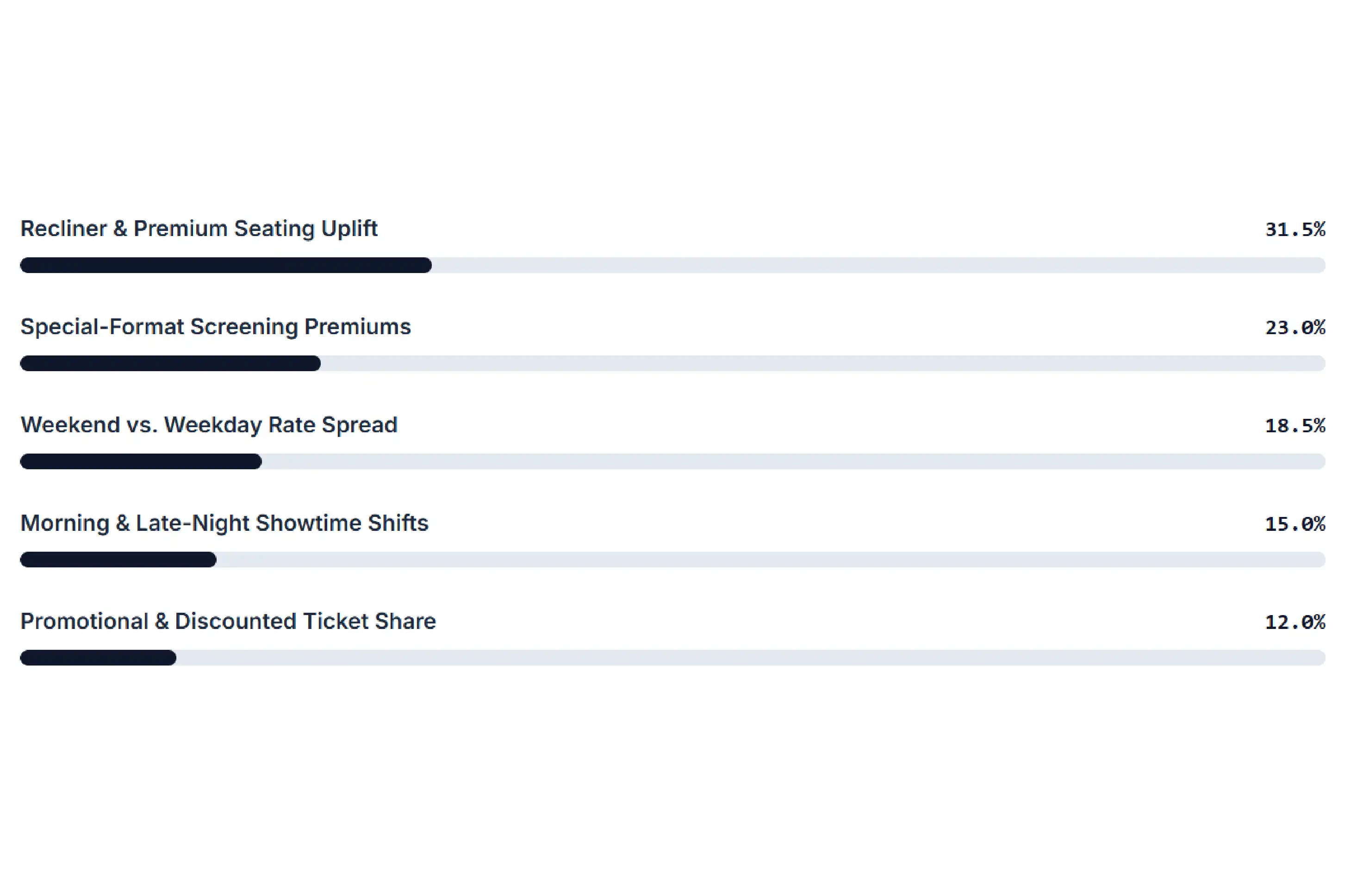
The second finding involved differences in ticket prices across cinema locations and seating categories.
The extracted records revealed that advertised ticket prices could vary according to theatre positioning, seating category, movie format, screening time, and promotional conditions.
The following dimensions became available for comparison: standard seating prices, premium seating prices, recliner ticket prices, special-format screening prices, morning and late-night screening prices, weekend and weekday advertised prices, and promotional and discounted ticket prices. This enabled the client to evaluate pricing structures and identify premium ticketing opportunities across different cinema locations.
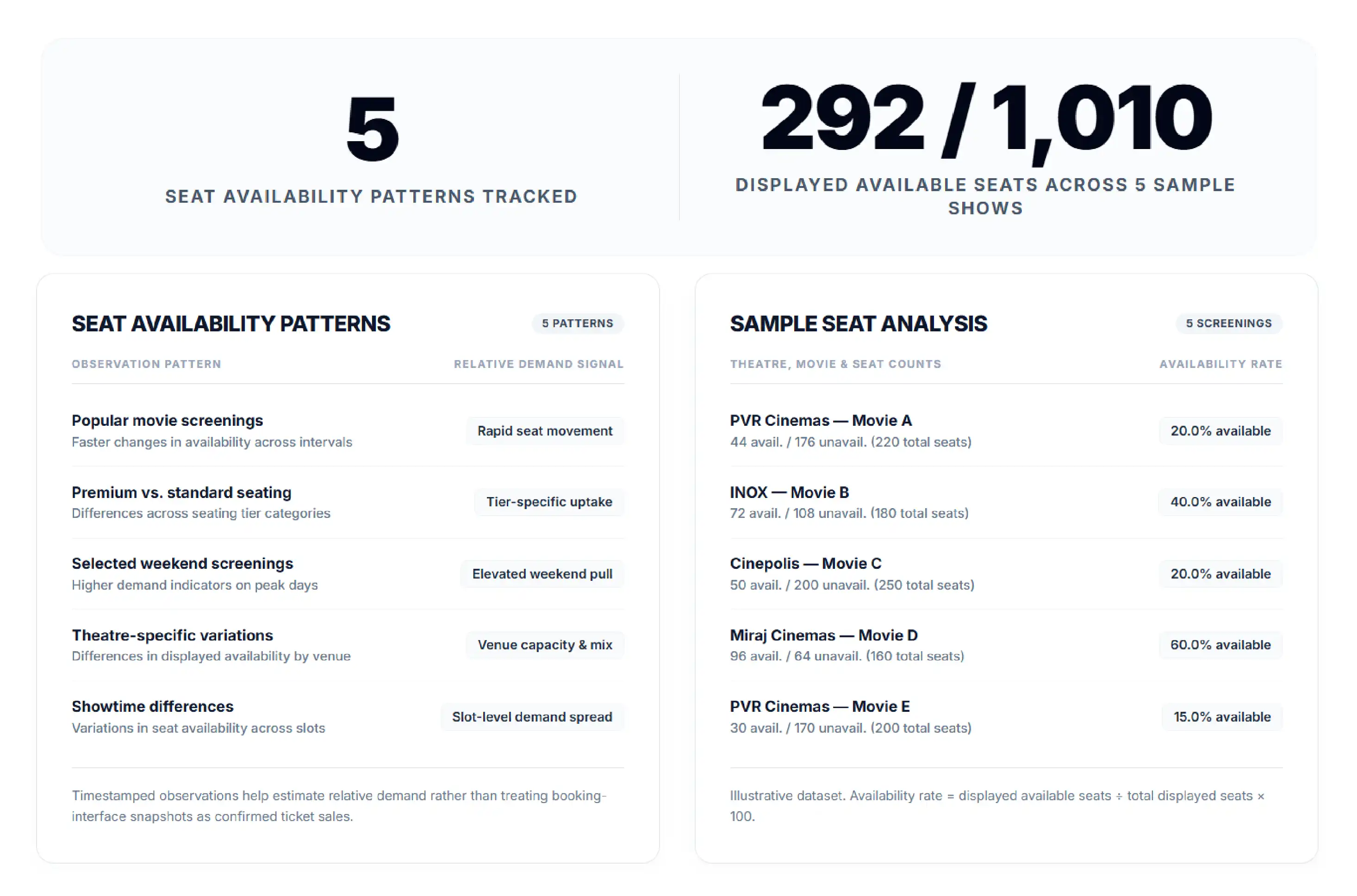
The third finding focused on seat-level availability. By maintaining timestamped observations, the client could compare the number of seats displayed as available at different intervals.
The system helped identify patterns such as faster changes in availability for popular movie screenings, differences between premium and standard seating categories, higher demand indicators for selected weekend screenings, theatre-specific availability variations, and differences in displayed seat availability across showtimes.
The client used these observations to estimate relative demand rather than treating individual booking-interface snapshots as confirmed ticket sales.
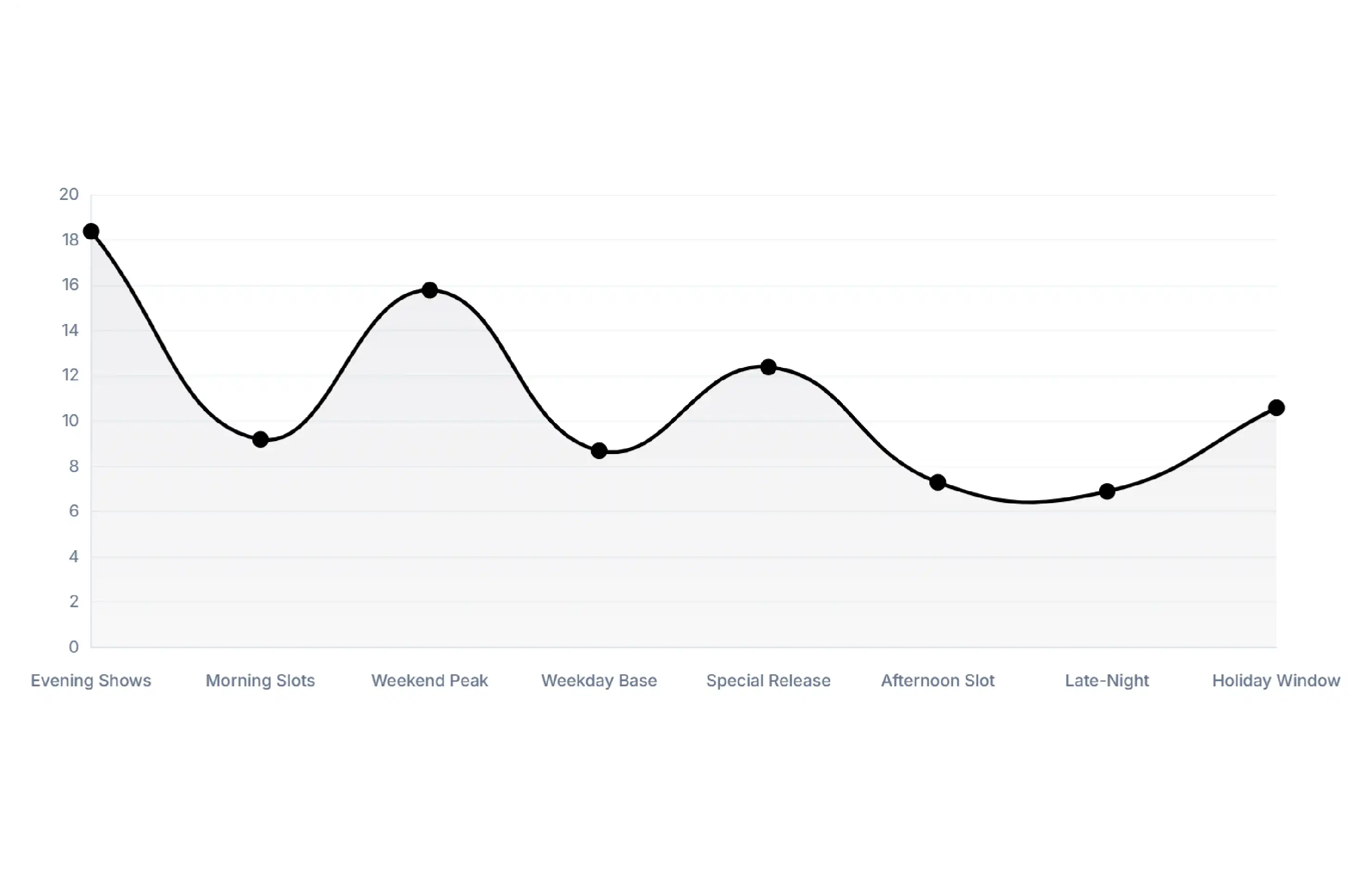
The fourth finding involved screening time analysis. The client wanted to understand whether particular time slots consistently demonstrated stronger booking activity than others.
By connecting showtime records with repeated seat availability observations, analysts could compare changes across different time windows.
The following patterns could be evaluated: morning screening availability, afternoon screening availability, evening screening availability, late-night screening availability, weekday versus weekend patterns, and holiday and special-release screening patterns. The resulting information provided a more detailed understanding of screening-level demand and helped analysts identify time slots requiring closer monitoring.
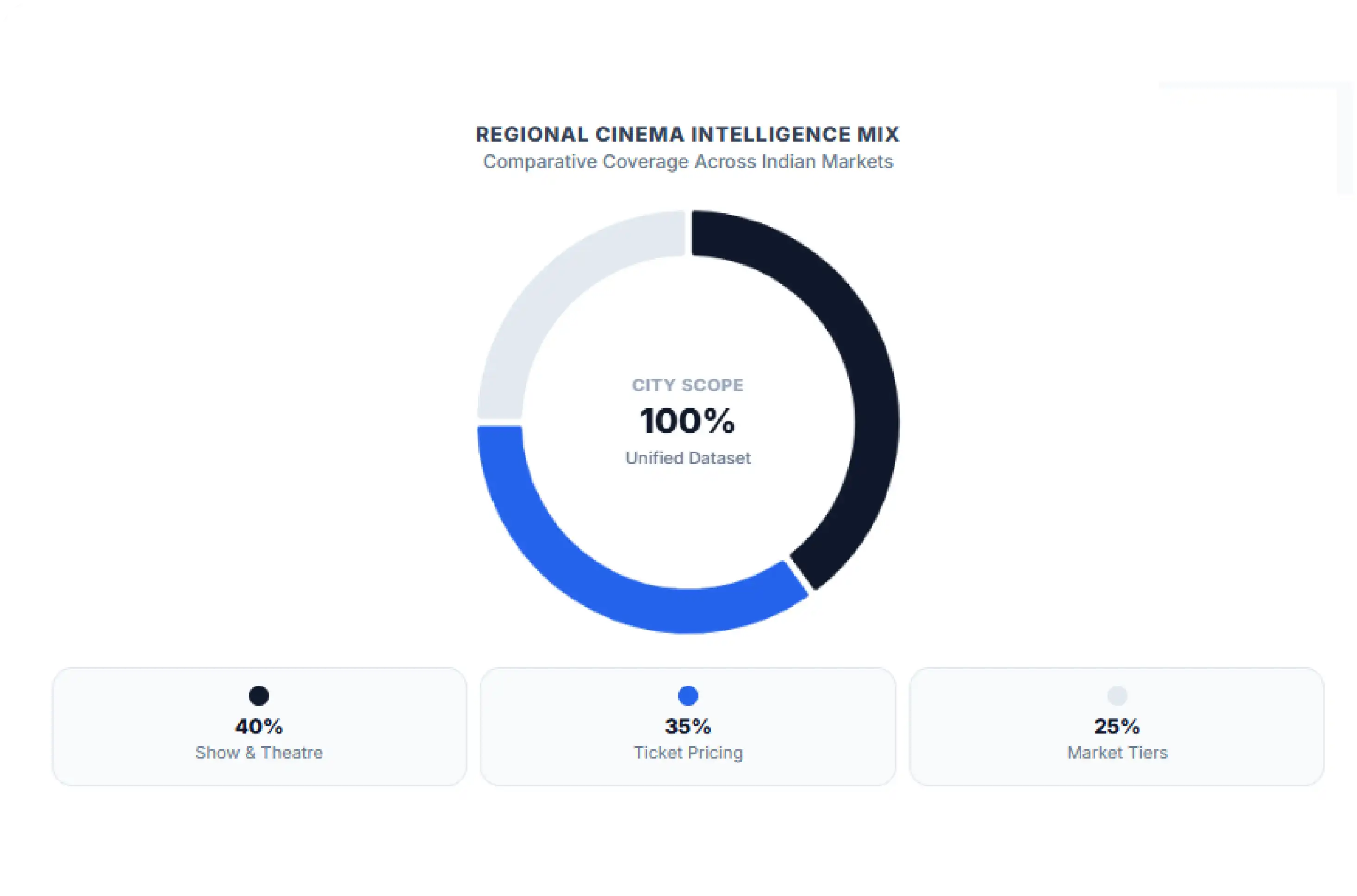
The fifth finding focused on city-level movie intelligence. The consolidated dataset allowed analysts to compare movie listings, theatre coverage, show availability, and advertised ticket prices across different Indian markets.
This enabled the client to investigate regional variations in movie distribution and ticketing patterns.
For example, a movie with extensive screening availability in metropolitan markets might demonstrate a different distribution pattern in smaller cities. Similarly, premium cinema formats and seating categories could show different advertised pricing structures depending on location. These insights helped the client develop more detailed regional cinema market reports.
The structured dataset combined movie metadata, theatre information, screening schedules, advertised ticket prices, and observable seat availability into a unified analytical framework.
The following sample demonstrates how the extracted records could be organized for business intelligence applications.
| Movie | City | Theatre | Showtime | Format | Seat Category | Ticket Price |
|---|---|---|---|---|---|---|
| Dhurandhar | Mumbai | PVR Cinemas | 10:30 AM | 2D | Classic | ₹180 |
| Saiyaara | Mumbai | PVR Cinemas | 2:15 PM | 2D | Premium | ₹250 |
| Chhaava | Delhi | INOX | 6:30 PM | 2D | Club | ₹280 |
| Avatar: Fire and Ash | Bengaluru | Cinepolis | 7:45 PM | IMAX | Premium | ₹450 |
| War 2 | Hyderabad | PVR Cinemas | 9:15 PM | 2D | Recliner | ₹550 |
| Thamma | Pune | Miraj Cinemas | 11:00 AM | 2D | Standard | ₹160 |
| Kantara: Chapter 1 | Chennai | INOX | 4:30 PM | 3D | Premium | ₹320 |
| Coolie | Kolkata | PVR Cinemas | 8:00 PM | 2D | Classic | ₹220 |
Note: Movie titles are illustrative replacements. Ticket prices, theatres, showtimes, and formats are hypothetical and are not verified BookMyShow listings.
| Theatre | Show ID | Seat Category | Total Seats | Available Seats | Unavailable Seats | Price |
|---|---|---|---|---|---|---|
| PVR Mumbai | SH001 | Classic | 100 | 20 | 80 | ₹180 |
| PVR Mumbai | SH001 | Premium | 70 | 12 | 58 | ₹250 |
| INOX Delhi | SH002 | Club | 80 | 32 | 48 | ₹280 |
| Cinepolis Bengaluru | SH003 | Premium | 120 | 24 | 96 | ₹450 |
| PVR Hyderabad | SH004 | Recliner | 40 | 8 | 32 | ₹550 |
| Miraj Pune | SH005 | Standard | 90 | 54 | 36 | ₹160 |
| INOX Chennai | SH006 | Premium | 100 | 35 | 65 | ₹320 |
| PVR Kolkata | SH007 | Classic | 110 | 22 | 88 | ₹220 |
Note: Availability rate = displayed available seats ÷ total displayed seats × 100. Unavailable seats do not necessarily represent sold tickets.
After implementing the structured BookMyShow data intelligence framework, the client improved its ability to monitor cinema ticketing information, evaluate regional movie distribution, and analyze screening-level pricing and availability indicators.
The automated pipeline reduced dependence on manual research and created a centralized dataset for entertainment analytics.
iWeb Data Intelligence provides structured data extraction and analytics solutions designed to transform publicly accessible online information into reliable business intelligence. For the entertainment and cinema industry, our approach focuses on collecting, processing, and organizing movie listings, theatre information, showtimes, ticket prices, and observable seat availability into unified datasets.
Centralized Movie Intelligence
Our data extraction framework consolidates movie information from selected digital ticketing sources into a centralized structure. This enables businesses to evaluate movie distribution, theatre coverage, screening availability, and pricing information without relying on fragmented manual research.
Continuous Data Monitoring
Automated monitoring workflows support repeated collection of available information, allowing organizations to identify changes in advertised ticket prices, screening schedules, and seat availability. Timestamped observations also help establish historical comparisons and improve analytical visibility.
Accurate Data Cleaning and Validation
Raw data passes through validation, normalization, and deduplication processes. Movie names, theatre identifiers, screening dates, ticket categories, and pricing fields are standardized to improve consistency and reduce errors across analytical datasets.
Scalable Data Processing
Our infrastructure is designed to support growing data volumes across multiple cities, theatres, movies, and screening schedules. Configurable extraction workflows allow businesses to expand monitoring coverage according to their analytical requirements and source accessibility.
"We are extremely satisfied with the movie ticketing data intelligence solution delivered by the iWeb Data Intelligence team. Our previous research process involved manually reviewing movie listings, theatre schedules, and ticket prices across multiple locations. This made it difficult to maintain consistent information and develop meaningful comparisons. The structured data collection framework has significantly improved our ability to monitor movie availability, compare advertised ticket prices, and analyze seat-level availability patterns. The organized datasets have also strengthened our reporting capabilities and helped our research teams identify important market trends more efficiently. We particularly appreciate the team's focus on data quality, scalable collection workflows, and flexible dataset delivery. The solution has created a strong foundation for our future entertainment analytics initiatives."
— Head of Entertainment Research & Analytics
The project delivered a scalable movie ticketing intelligence framework that transformed fragmented online cinema booking information into structured datasets for movie analytics, theatre benchmarking, and regional market research.
The client gained improved visibility into movie listings, theatre distribution, show schedules, seating categories, advertised ticket prices, and observable seat availability across selected Indian markets.
By maintaining historical observations, the organization could compare changes in availability and pricing, identify screening-level demand indicators, and evaluate differences between cinema locations and seating categories.
The system also supported deeper analysis of dynamic pricing data, allowing analysts to investigate advertised ticket price variations across movie formats, theatre locations, screening schedules, and seat categories. These insights helped stakeholders understand pricing structures and evaluate potential opportunities for cinema market research.
Implementation of a scalable web scraping API enabled structured delivery of collected information into the client's internal databases, reporting systems, and analytics platforms. This improved data accessibility and reduced the effort required to transfer information between research and business intelligence teams.
BookMyShow data scraping involves extracting publicly accessible movie and cinema ticketing information, including movie titles, theatre listings, showtimes, advertised ticket prices, seating categories, and seat availability indicators. The collected information is organized into structured datasets for movie analytics, competitive research, and entertainment market intelligence.
Depending on source accessibility and permitted collection methods, datasets can include movie metadata, theatre names, locations, screening dates, showtimes, movie formats, seating categories, advertised ticket prices, seat identifiers, and displayed availability statuses.
Yes, where the booking interface publicly exposes seat-selection information and collection is permitted, the system can capture seat categories, displayed seat identifiers, and availability statuses. Repeated observations can help analyze availability changes. However, unavailable seats should not automatically be classified as confirmed ticket sales.
Show-level pricing analysis helps businesses compare advertised ticket prices across different theatres, cities, movie formats, screening schedules, and seating categories. These comparisons support competitive benchmarking, pricing research, and a better understanding of cinema ticketing structures.
Yes. Movie listings, theatre coverage, show schedules, pricing information, and historical seat availability observations can contribute to box office research. However, these indicators alone do not establish actual box office collections or confirmed ticket sales.
Gain better visibility into movie schedules, theatre coverage, advertised ticket prices, and seat availability with iWeb Data Intelligence. Our customized data extraction solutions help entertainment businesses transform publicly accessible ticketing information into structured datasets for market research, competitive benchmarking, and data-driven decision-making.
Start a projectFields marked * are required. Everything else just helps us scope faster — skip what you don't know yet.