

Introduction
The rapid growth of food, grocery, pharmacy, and last-mile delivery has changed customer expectations. Users now want instant ordering, transparent pricing, accurate delivery estimates, convenient payment options, and real-time order visibility from a single application. For businesses entering this competitive market, APIs can significantly reduce development complexity by connecting applications with structured delivery and marketplace information.
Build On-Demand Delivery Solutions with the Snoonu API to create data-driven applications that can support restaurant discovery, menu intelligence, product comparison, order monitoring, delivery analysis, and location-based services. A well-designed API architecture can help businesses connect multiple data sources while building a smoother experience for customers and operational teams.
The Snoonu API for On-Demand Delivery Solutions can serve as an important data integration layer for applications that need structured information related to restaurants, food items, pricing, availability, locations, and delivery services. Instead of relying entirely on manually collected information, developers can establish automated workflows for collecting and processing relevant marketplace data.
For companies exploring Snoonu API integration for on-demand delivery applications, the objective is not simply to retrieve information. The larger opportunity is to transform delivery marketplace data into actionable intelligence that supports better customer experiences, operational decisions, competitive analysis, and business growth.
Understanding the Snoonu Ecosystem
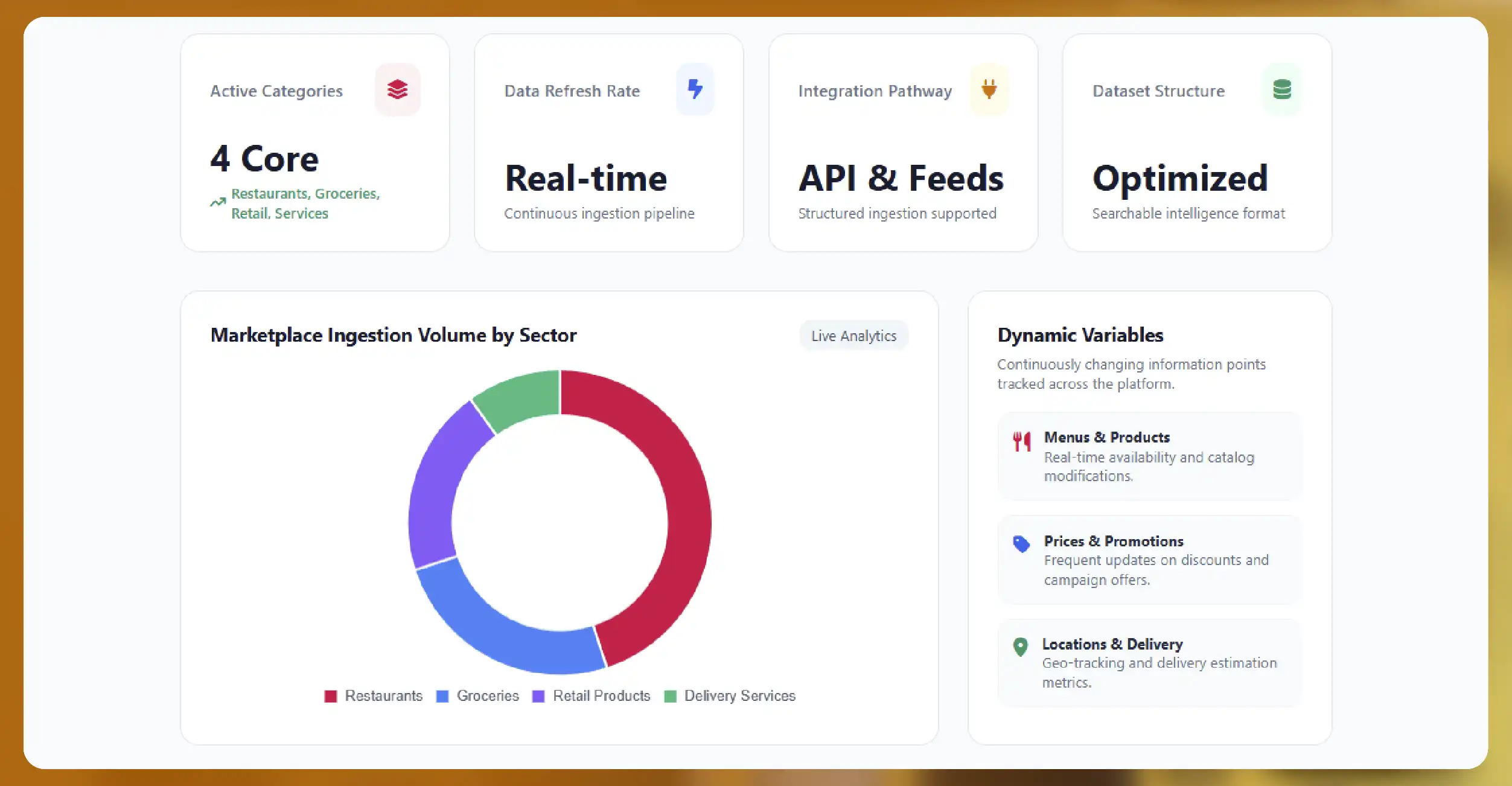
Snoonu is a prominent delivery and commerce platform serving customers in Qatar. Its ecosystem brings together restaurants, groceries, retail products, delivery services, and other categories through a digital marketplace. Such platforms generate continuously changing information, including menus, product availability, prices, ratings, locations, promotions, and delivery-related details.
For developers and data-focused businesses, this environment creates opportunities to build applications that depend on fresh marketplace intelligence. A structured integration can help applications organize information into searchable and usable datasets rather than requiring users or analysts to manually inspect individual listings.
The most useful implementation depends on the specific capabilities, permissions, documentation, and access conditions available for the intended Snoonu integration. Where direct API access is unavailable or restricted, businesses may use compliant data collection approaches to obtain publicly available information.
What Can a Delivery Solution Collect?
A comprehensive delivery data architecture can capture many fields that are useful for application development and analytics. Restaurant-level information may include restaurant name, cuisine type, location, rating, delivery information, operating status, and category.
Menu-level information can include dish names, descriptions, prices, images, sizes, modifiers, dietary attributes, and promotional pricing. Grocery-oriented applications can additionally collect product names, brands, pack sizes, categories, prices, discounts, and availability.
The resulting dataset can be structured according to the application's requirements. For example, a restaurant discovery platform may prioritize restaurant and cuisine information, while a competitive pricing dashboard may focus on product prices, discounts, and historical changes.
Build Food and Grocery Delivery Applications
Businesses can Build food and grocery delivery apps using Snoonu API data to develop experiences tailored to specific audiences. A food discovery application could allow customers to compare restaurants by cuisine, rating, price range, distance, or delivery availability.
A grocery application could organize products by category and compare prices across stores. A meal-planning application could use menu information to recommend dishes according to customer preferences. Meanwhile, a business intelligence platform could monitor marketplace changes and provide dashboards for pricing, promotions, and assortment analysis.
The key advantage is flexibility. Instead of building an application around static information, businesses can create systems designed to consume regularly refreshed marketplace data.
Designing an On-Demand Data Pipeline
A successful On-demand delivery API integration generally involves several technical layers. The first layer handles data acquisition. Depending on authorized access, this could involve API endpoints or compliant automated collection mechanisms.
The second layer processes the incoming information. Raw responses may contain nested objects, inconsistent naming conventions, missing values, or duplicated records. Data-processing scripts can normalize these fields and convert them into a consistent structure.
The third layer stores the cleaned information. Businesses may use relational databases, cloud storage, data warehouses, or structured files depending on project requirements.
Finally, an application layer can expose the processed information through dashboards, search interfaces, recommendation engines, analytics platforms, or internal business systems.
Real-Time Tracking and Delivery Intelligence
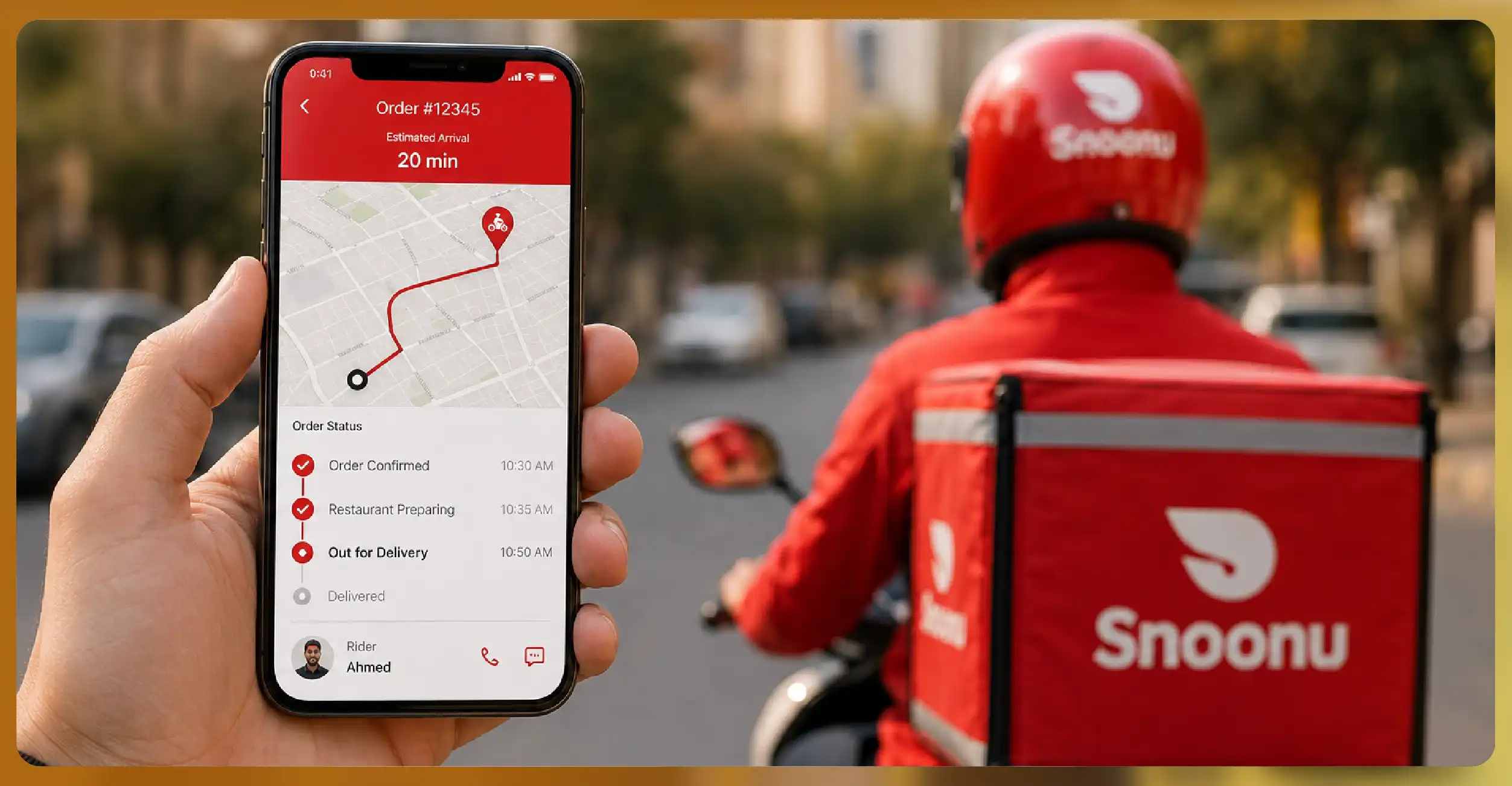
One of the most valuable capabilities in modern delivery applications is visibility into order and delivery status. Real-time delivery tracking From Snoonu can support customer-facing experiences when appropriate authorized data access is available.
Tracking-related information can help applications monitor delivery progress, estimated arrival times, order stages, and operational changes. For analytics teams, historical tracking data can also reveal patterns in delivery performance.
Businesses can analyze delivery duration by location, time period, restaurant, or order category. These insights may help identify delays, understand service-level performance, and improve delivery planning.
Real-time information is particularly useful when combined with historical datasets. A single delivery event provides limited context, but thousands of records can reveal recurring operational patterns.
Extracting Structured Marketplace Information
Businesses interested in Extract Snoonu food delivery Data API workflows can develop automated systems for collecting relevant marketplace information and converting it into structured datasets.
A typical workflow begins by identifying required fields and relevant data sources. The collection layer then retrieves authorized information at predefined intervals. A parser extracts important attributes, while validation rules identify missing, malformed, or duplicated records.
The processed dataset can subsequently be stored in JSON, CSV, Excel, PostgreSQL, or cloud-based data warehouses. Automated scheduling can refresh records daily, hourly, or according to business requirements.
This approach creates a repeatable pipeline instead of a one-time data collection exercise.
Competitive Pricing and Menu Monitoring
Restaurant marketplaces change rapidly. Prices may increase, dishes may disappear, new restaurants may enter a neighborhood, and promotional campaigns may appear for limited periods.
Automated Food Delivery App Scraping can help businesses monitor these changes at scale when performed in accordance with applicable laws, platform terms, and access permissions.
For example, a restaurant chain could compare its menu prices against competitors. A food-tech startup could identify popular cuisines within selected locations. A market research company could analyze changes in restaurant assortment over several months.
Historical snapshots are especially valuable because they allow analysts to compare current conditions with previous periods instead of relying solely on today's marketplace view.
Menu Intelligence for Restaurants
Restaurants can use marketplace intelligence to understand how competitors position their menus. Data can reveal common dishes, price ranges, portion sizes, add-ons, meal combinations, and promotional strategies.
Suppose a restaurant discovers that competitors within a five-kilometer radius consistently offer specific meal combinations at lower prices. Management can investigate whether its own menu architecture needs adjustment.
Similarly, menu intelligence can identify underserved categories. If a particular cuisine or product segment has relatively low competition but strong marketplace visibility, it could indicate an opportunity for expansion.
This turns delivery marketplace data into a strategic resource rather than simply a collection of listings.
Building Better Customer Experiences
Data-driven applications can also improve customer discovery. Instead of presenting hundreds of unorganized listings, an application can categorize restaurants and products according to customer preferences.
Filters can include cuisine, price, rating, location, delivery time, dietary preferences, discounts, and availability. Recommendation engines can then combine these attributes to suggest relevant options.
Historical pricing can additionally help customers understand whether a promotion represents a meaningful discount. Businesses can create price histories, deal trackers, and personalized alerts around changing marketplace conditions.
The result is an application that provides more value than a simple directory.
Scaling the Data Infrastructure
As data volume grows, scalability becomes critical. A small prototype might process several hundred records per day, while a commercial intelligence platform could process thousands or millions of records across locations and categories.
Cloud infrastructure, distributed processing, queues, caching, and automated validation can help maintain performance. Technologies such as Python, Requests, Scrapy, Selenium, Pandas, PostgreSQL, Spark, and cloud storage can be selected according to project requirements.
A scalable architecture should also account for failures. Network interruptions, changed page structures, unavailable endpoints, authentication issues, and unexpected response formats can affect automated pipelines. Monitoring and retry mechanisms help maintain reliable data operations.
Turning Data Into Business Intelligence
Raw marketplace data becomes significantly more valuable when converted into business intelligence. Dashboards can display price movements, restaurant counts, cuisine distribution, discount activity, menu changes, and availability trends.
Executives can use these dashboards for strategic decisions, while category managers can investigate individual products or restaurants. Marketing teams can analyze promotions, and operations teams can evaluate service coverage.
Machine learning models can further use historical data for demand forecasting, price prediction, recommendation systems, and anomaly detection.
The objective should therefore be to design the data pipeline around measurable business outcomes rather than simply collecting the largest possible dataset.
How iWeb Data Scraping Can Help You?
Automated Marketplace Monitoring
iWeb Data Scraping can automate the collection of relevant restaurant, menu, pricing, availability, and location information, helping businesses maintain structured marketplace intelligence without relying on repetitive manual monitoring.
Historical Data Collection
Regular data extraction creates historical datasets that help organizations analyze price changes, menu updates, restaurant additions, promotional activity, and marketplace trends across selected locations and time periods.
Competitive Intelligence
Businesses can compare restaurant assortments, menu prices, promotions, ratings, and availability to understand competitive positioning and identify market opportunities that may otherwise remain difficult to detect.
Customized Data Delivery
Collected information can be transformed into structured formats such as JSON, CSV, Excel, databases, or cloud-ready datasets, allowing teams to integrate marketplace intelligence into existing analytical workflows.
Scalable Data Infrastructure
iWeb Data Scraping can support scalable extraction workflows designed around project-specific requirements, refresh frequencies, geographic coverage, data fields, validation processes, and downstream analytics applications.
Conclusion
The future of delivery applications is increasingly data-driven. Businesses that can access, organize, analyze, and operationalize marketplace information can create stronger customer experiences while improving competitive intelligence and decision-making.
A carefully designed Snoonu-focused data architecture can support restaurant discovery, menu intelligence, pricing analysis, availability monitoring, delivery analytics, and customized application experiences. However, successful implementation requires attention to authorized access, data quality, scalability, platform policies, and applicable regulations.
By combining API-based workflows, automated extraction, structured processing, cloud infrastructure, and analytics, companies can transform dynamic marketplace information into valuable business intelligence. Food Data Scraping can provide the foundation for continuously updated restaurant and menu datasets, while Real-Time Food Delivery Data Scraping can support applications that depend on timely marketplace changes.
For organizations looking to develop scalable data pipelines, competitive dashboards, or delivery intelligence products, professional Web Scraping API Services can simplify the technical process and create reliable data workflows tailored to specific business requirements.
FAQs
The Snoonu API can be used, where authorized access is available, to connect applications with relevant marketplace or delivery information and support data-driven food, grocery, and delivery experiences.
Yes. Businesses can develop food discovery, menu intelligence, pricing comparison, grocery analysis, and other applications using appropriately accessed and structured Snoonu marketplace information.
Depending on authorized access and available data sources, relevant information may include restaurant details, menus, dishes, prices, categories, ratings, locations, promotions, availability, and delivery-related information.
Refresh frequency depends on the application. Pricing and availability monitoring may require frequent updates, while restaurant profiles or category information may need less frequent collection.
Automation reduces repetitive manual work, improves consistency, enables scheduled updates, and helps businesses build historical datasets that can support competitive analysis, dashboards, forecasting, and decision-making.